" On one side of the South China Sea, a colossal culinary machine. On the other, a river delta teeming with life, where shrimp are more than just food – they're the lifeblood. "
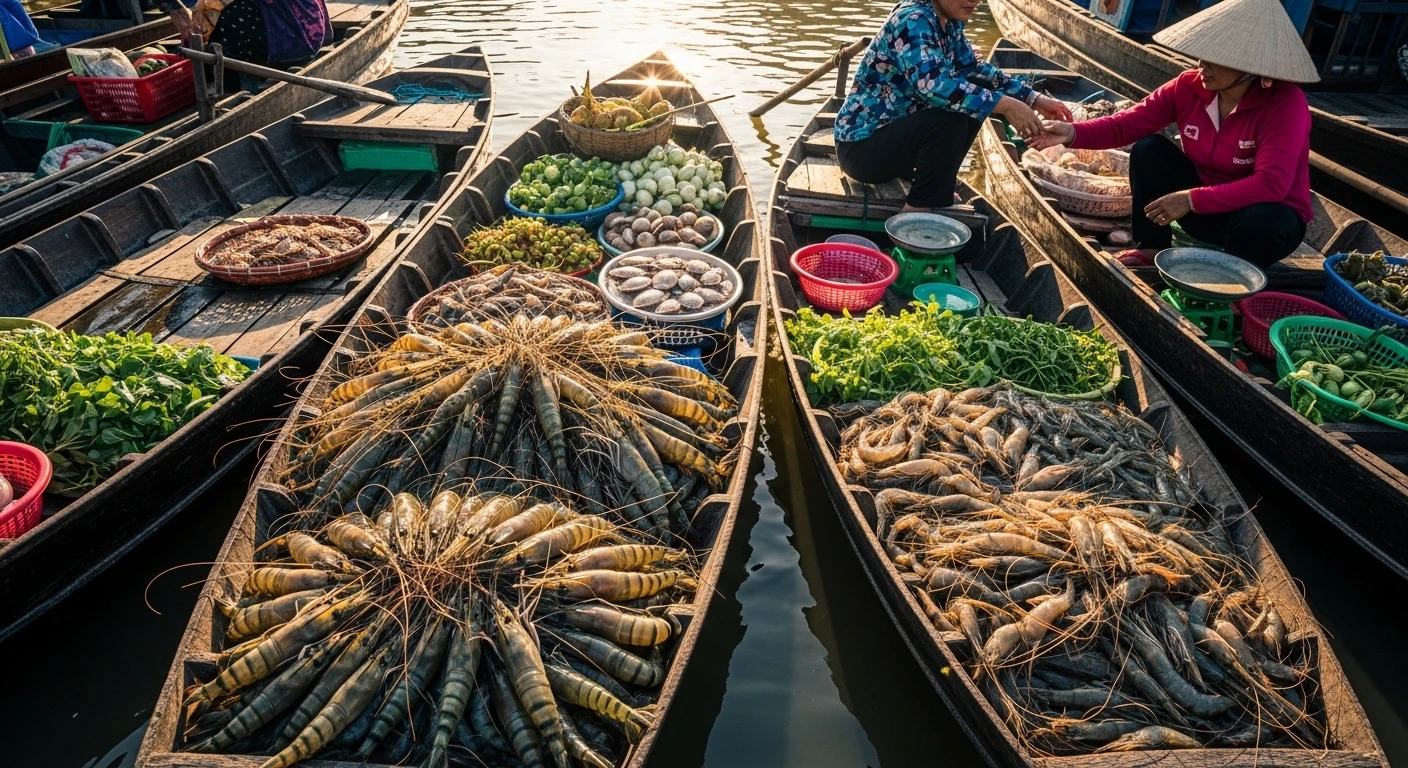
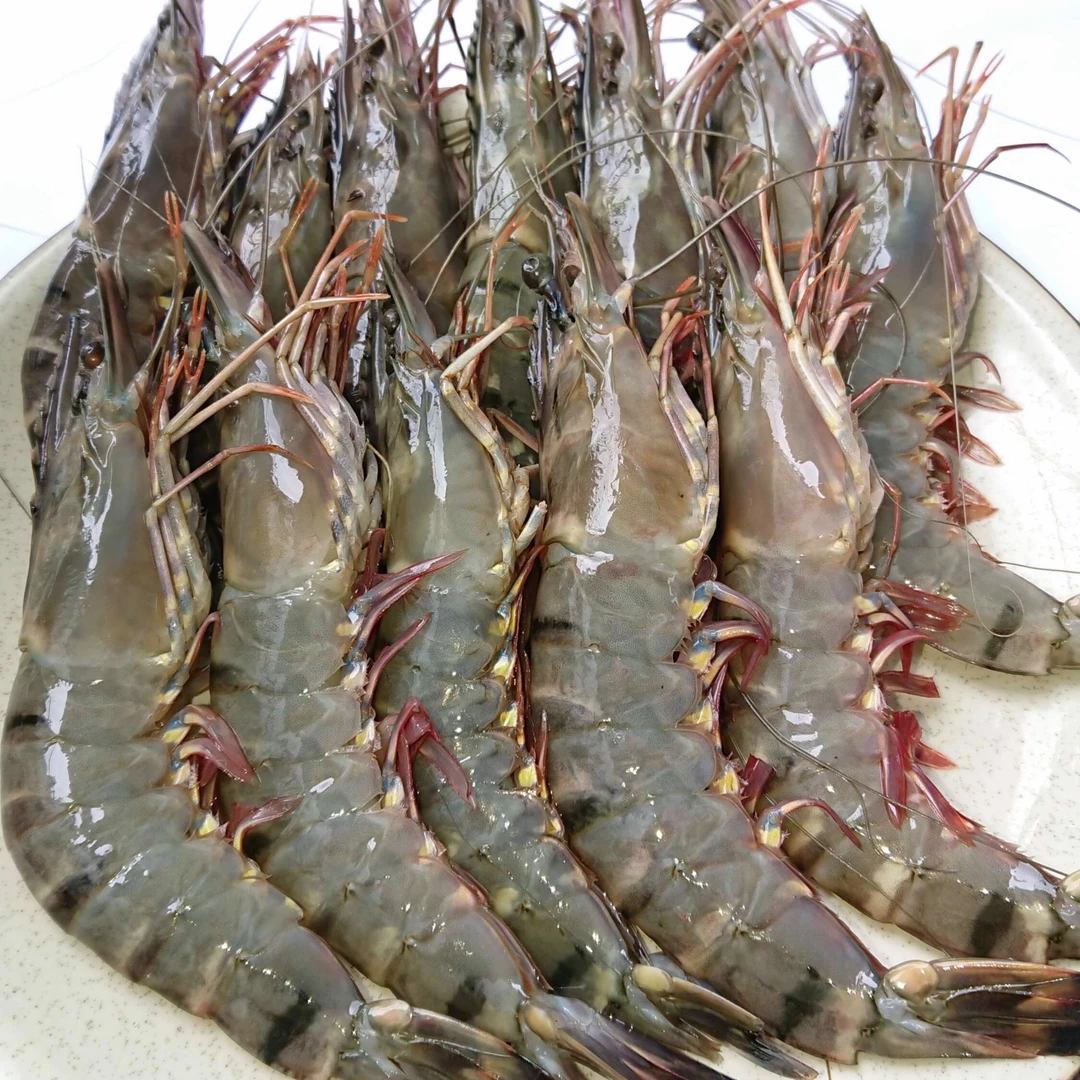
📸 The signature of the Mekong: Ca Mau Black Tiger Shrimp, gleaming under natural light.
1 China: The Land of Abundant Plates
To understand China's relationship with shrimp is to grasp the sheer scale of its domestic market. For centuries, seafood has been a cornerstone of Chinese cuisine, from humble stir-fries in regional kitchens to extravagant banquets celebrating every facet of life. Shrimp, with its delicate flavor and versatile texture, holds a place of honor.
Consider the typical Chinese restaurant experience, especially for banquets or large family gatherings. Shrimp often appear in multiple forms: steamed with garlic and scallions, stir-fried with vibrant vegetables, coated in a sweet and sour glaze, or even as the star of a luxurious noodle dish. The emphasis is frequently on abundance, visual appeal, and a flavor profile that caters to a broad palate – often leaning towards sweet, savory, and umami notes.
Chinese aquaculture, particularly for species like the Whiteleg Shrimp (Litopenaeus vannamei), has achieved unparalleled efficiency. Vast inland ponds and coastal farms produce staggering volumes. This industrial approach allows for consistent availability and competitive pricing, making shrimp a readily accessible protein for a nation of 1.4 billion people. While quality can vary, the sheer availability means that when you order shrimp in China, you can expect a generous portion, prepared with familiar and comforting flavorings.
Key Characteristics:
- Volume & Variety: Emphasis on multiple dishes, generous servings.
- Flavor Profile: Often sweet, savory, umami-rich; complex sauces are common.
- Aquaculture: Highly industrialized, focused on efficiency and yield.
- Texture: Can range from tender (steamed) to slightly firm (stir-fried).
Common Dishes:
- Garlic Steamed Shrimp
- Sweet and Sour Shrimp
- Shrimp Fried Rice
- Kung Pao Shrimp
- Shrimp in Hot Pot
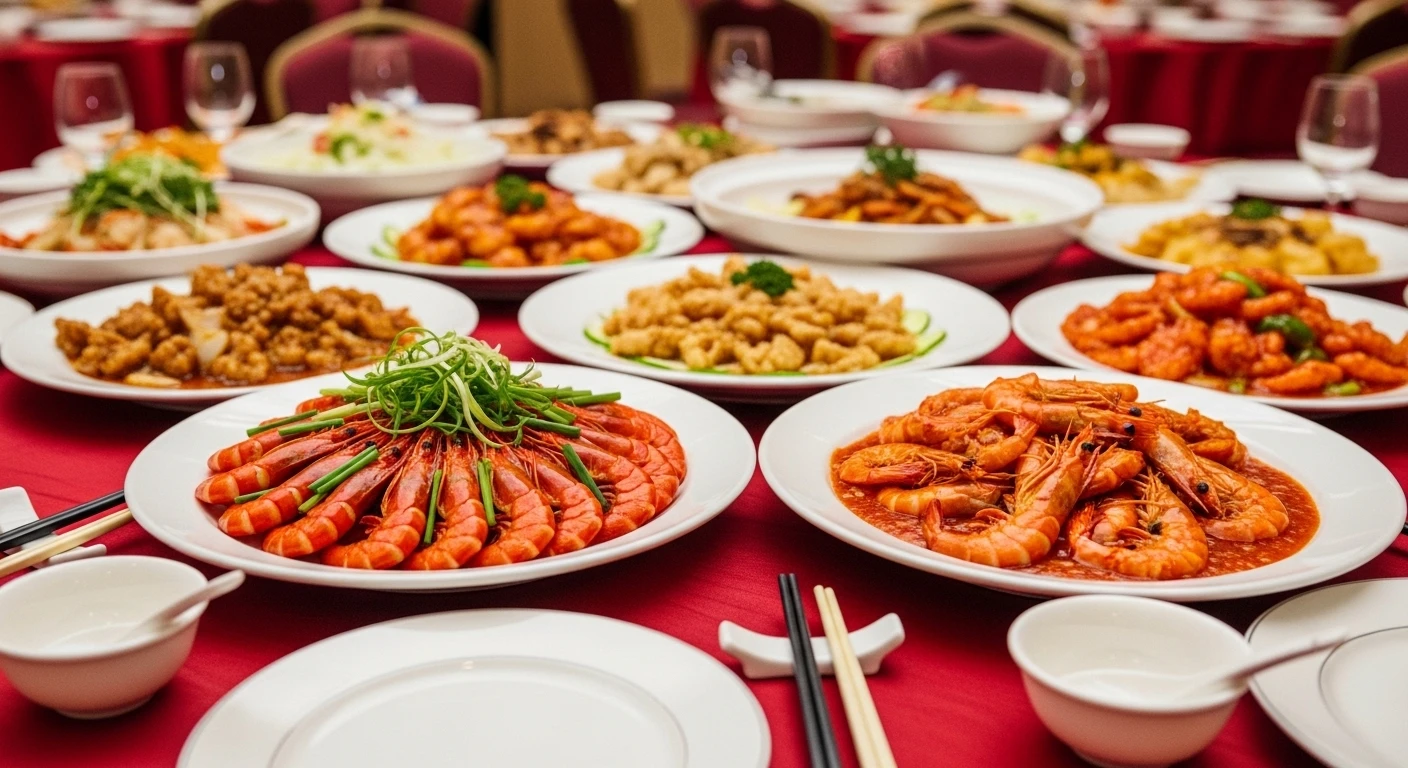
📸 A feast for the eyes: A typical Chinese banquet showcasing the abundance and variety of seafood, with shrimp often taking center stage.
2 Vietnam: The Purity of the Delta
Venture into the intricate waterways of Vietnam's Mekong Delta – a vast network of rivers, canals, and brackish estuaries. Here, shrimp farming is not just an industry; it's an ancient tradition deeply interwoven with the landscape and the livelihoods of millions. The pride of the Delta, particularly from provinces like Ca Mau and Bac Lieu, is a different breed of shrimp altogether.
We're talking about the legendary Ca Mau Black Tiger Shrimp (Tom Su Ca Mau). These aren't mass-produced, feed-intensive specimens. They are grown in extensive, semi-intensive systems, often within mangrove forests. This unique environment imbues the shrimp with a distinct character: a firmer, more resilient texture and a cleaner, sweeter flavor that speaks of the natural, untamed environment. The mangrove ecosystem, with its rich biodiversity, acts as a natural filter and provides essential nutrients, contributing to a superior taste and quality that intensivly farmed shrimp struggle to replicate.
Beyond the black tiger, the Mekong Delta is a haven for Giant Freshwater Prawns (Tom Cang Ca Mau). With their impressive size and striking blue claws, these prawns are a delicacy. Their rich, buttery head fat is prized, and their naturally sweet, succulent meat makes them ideal for simple preparations like grilling or steaming, where their inherent flavor can truly shine.
The Vietnamese approach to shrimp, especially in the Mekong Delta, is often ingredient-first. While bold flavors are cherished in Vietnamese cuisine, when it comes to premium shrimp, the philosophy leans towards letting the quality of the shrimp itself be the star. Dishes are designed to complement, not overwhelm. Think simple preparations: grilled with a touch of salt and chili, steamed with fresh herbs, or lightly sautéed to preserve that delicate sweetness.
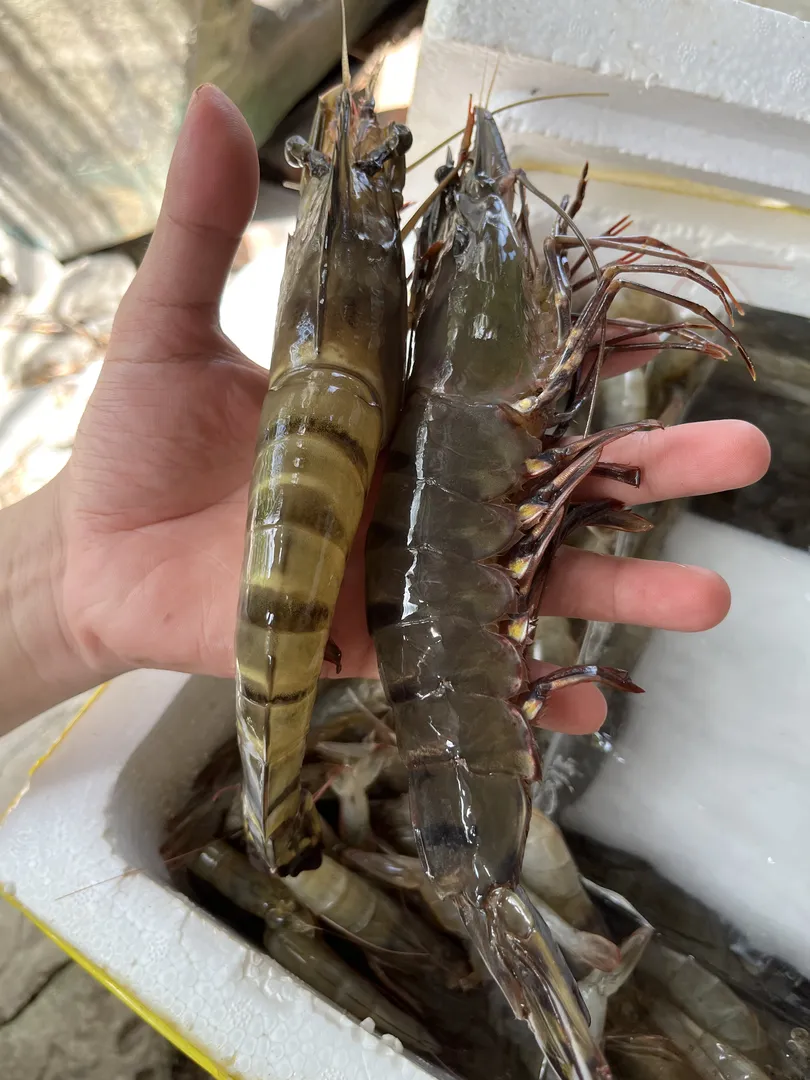
Heritage Ingredient
Ca Mau Black Tiger Shrimp
Ca Mau Black Tiger Shrimp
Large black tiger shrimp associated with mangrove aquaculture in Ca Mau, known for firm flesh and a cleaner, sweeter finish than intensively farmed shrimp.
Where every ingredient captures the essence of the wind and tides, weaving a vibrant culinary tapestry of the Mekong region.
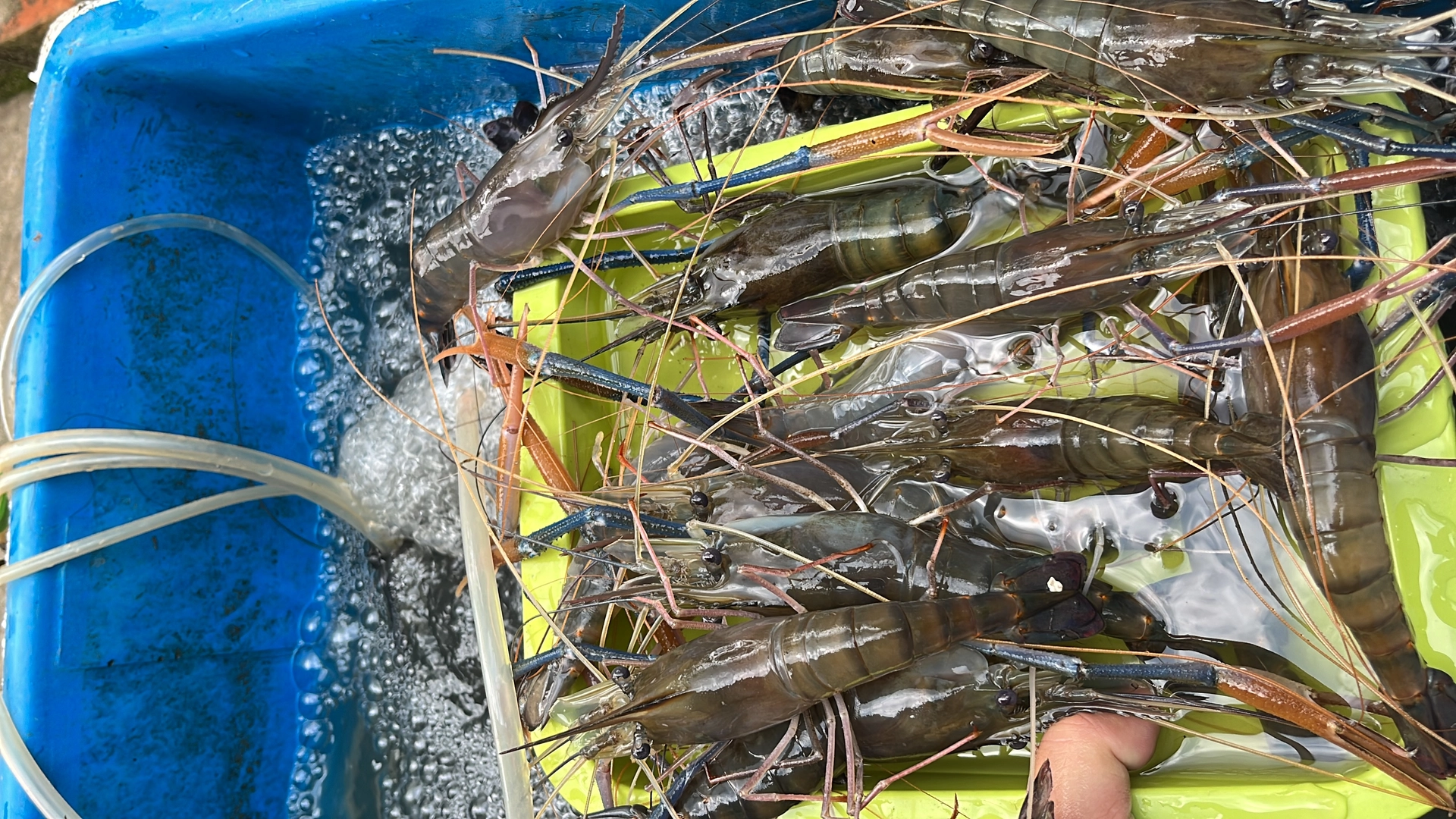
Heritage Ingredient
Mekong Giant Freshwater Prawn
Mekong Giant Freshwater Prawn
A river prawn with long blue claws and rich head fat, common in grilled prawn dishes and hotpot traditions across the Mekong basin.
Where every ingredient captures the essence of the wind and tides, weaving a vibrant culinary tapestry of the Mekong region.
The emphasis is on freshness. Markets in the Delta overflow with live seafood. The journey from farm to table is often short, ensuring that the shrimp you eat retain their peak flavor and texture. This commitment to purity and natural cultivation is what defines the Mekong Delta's shrimp culture.
3 Sauces vs. The Pure Taste
The most striking difference between China's and Vietnam's typical shrimp preparations lies in their relationship with sauces and seasonings. In China, sauces are often integral to the dish, providing layers of flavor that transform the shrimp into part of a complex culinary narrative. Think of a vibrant sweet and sour sauce, a rich oyster sauce glaze, or a spicy chili bean paste – these are not mere accompaniments, but co-stars.
In the Mekong Delta, however, the philosophy is largely one of balance and enhancement. While Vietnamese cuisine is celebrated for its complex flavor profiles, premium shrimp often receive a more minimalist treatment. The goal is to highlight the shrimp's natural sweetness and delicate marine notes. A dip in lime salt and pepper, perhaps with a whisper of chili, is a classic for a reason. This simple condiment provides a salty, acidic counterpoint that accentuates the shrimp's flavor without masking it. Another popular Vietnamese pairing is green chili condensed milk sauce (muối ớt xanh), offering a creamy, spicy, and savory kick that's still refined.
Heritage Ingredient
Whiteleg Shrimp
Whiteleg Shrimp
A widely used shrimp in Vietnamese home kitchens, suitable for stir-fries, soups, steamed dishes, and practical cooking articles that need a familiar shrimp reference.
Where every ingredient captures the essence of the wind and tides, weaving a vibrant culinary tapestry of the Mekong region.
This isn't to say Vietnamese cuisine lacks bold flavors. However, when it comes to showcasing the quality of a Ca Mau black tiger or a Mekong giant prawn, restraint often reigns supreme. It's a testament to the quality of the ingredient itself, a confidence that the shrimp's inherent flavor is enough to captivate.
4 Texture and Terroir: The Delta's Edge
The subtle differences in how shrimp feel in your mouth – their texture – can speak volumes about their origin and how they were raised. China's efficient, high-volume aquaculture often results in shrimp that are uniformly tender, sometimes bordering on mushy if not cooked perfectly. This is not inherently bad, as it lends itself well to absorbing sauces in stir-fried dishes.
However, the unique environment of the Mekong Delta confers a distinct textural advantage on its shrimp. The brackish waters and mangrove ecosystems promote slower growth and a firmer muscle structure. Ca Mau Black Tiger Shrimp, for instance, are renowned for their satisfying bite – a firm, resilient texture that holds up well to simple cooking methods. When you bite into one, there's a pleasant resistance, followed by a burst of clean, sweet flavor. This firmness is a direct indicator of the shrimp's health and the purity of its environment.
The Giant Freshwater Prawns, with their substantial size, offer an even more luxurious texture. Their meat is dense and substantial, with the prized head fat adding a creamy, rich dimension. This textural complexity is something that often eludes shrimp from more intensely farmed or less naturally diverse environments.
5 Social Plates vs. Family Favors
To truly appreciate the differences, one must consider the cultural context. Chinese shrimp culture often revolves around the communal banquet. Shrimp dishes are placed in the center of the table, meant to be shared amongst family and friends. The presentation is key – abundant platters, vibrant colors, and dishes that can be easily portioned. The shared experience and the variety offered are paramount.
In contrast, while sharing is central to Vietnamese dining, the reverence for specific, high-quality ingredients often leads to a more focused appreciation. A perfectly grilled giant freshwater prawn, a plate of steamed Ca Mau black tigers – these are often savored individually or shared with a close circle, with the understanding that each piece is a testament to the Delta's bounty. It's less about overwhelming the senses with variety and more about deeply appreciating the intrinsic qualities of that one exceptional ingredient.
Consider the market itself. In China, you'll find vast seafood markets catering to immense demand, with efficiency being a driving factor. In the Mekong Delta, the scene is often more intimate: bustling riverside markets where vendors hawk their morning catch, the air thick with the scent of brine and fresh produce. This more direct connection to the source fosters a different kind of appreciation for the shrimp.
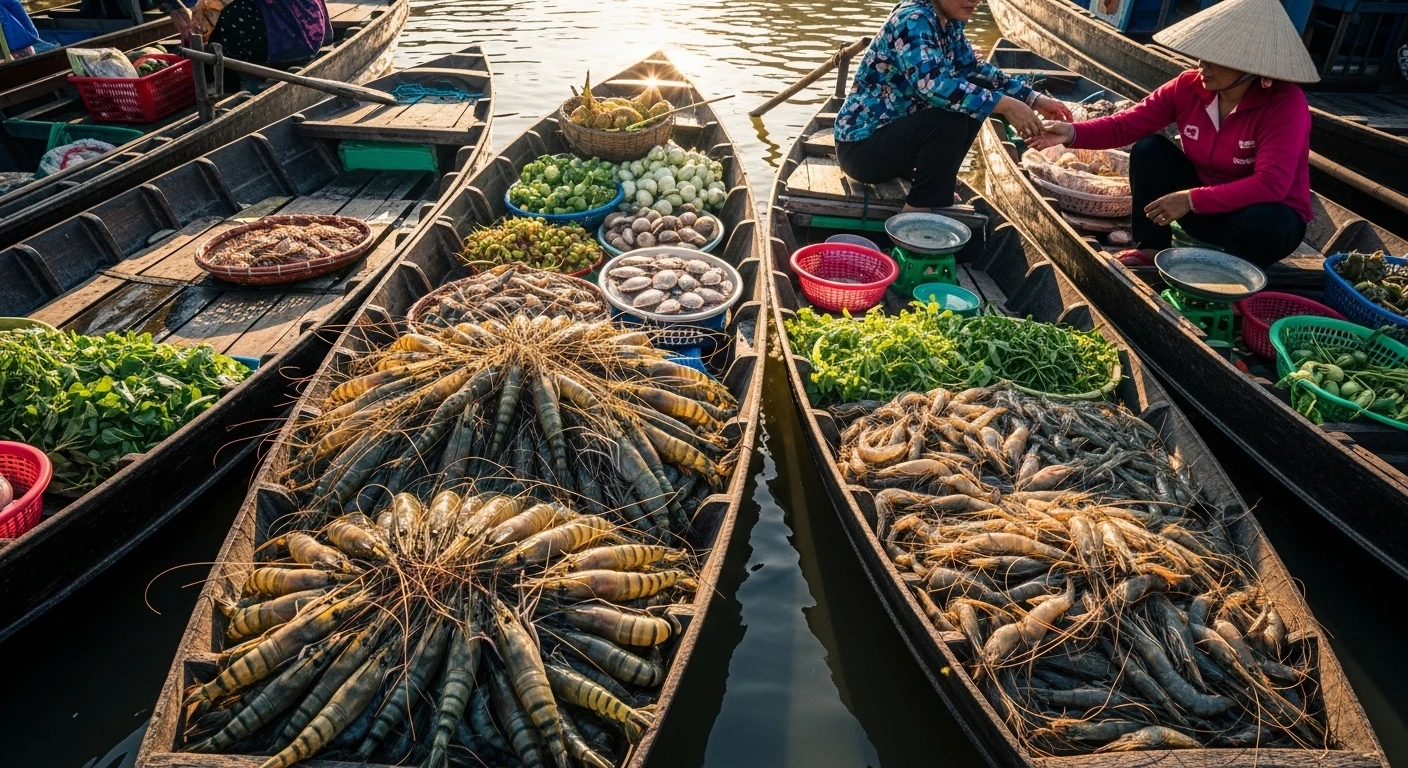
📸 The heart of the Delta: A bustling Mekong market, where the freshest catch dictates the day's menu.
6 Planning Your Shrimp Pilgrimage
If the idea of experiencing shrimp culture firsthand has piqued your interest, the Mekong Delta beckons. The best time to visit for peak shrimp experiences generally aligns with Vietnam's dry season, from December to April. During these months, the weather is pleasant for exploring the region's waterways and enjoying fresh seafood al fresco.
Consider basing yourself in cities like Can Tho or Ca Mau. From here, you can arrange boat trips to local shrimp farms, visit floating markets laden with daily catches, and dine at riverside restaurants where the shrimp is plucked from the water and prepared before your eyes. Look for dishes simply grilled, steamed, or in light broths to truly taste the Delta's signature flavor.
While China offers an unparalleled culinary journey in terms of variety and scale, for a deep dive into the purity, terroir, and artisanal cultivation of shrimp, the Mekong Delta offers an authentic and unforgettable experience. It’s a place where every bite tells a story of the river, the mangroves, and a way of life that cherishes its precious marine gifts.
7 Beyond the Plate: Understanding Quality
For the discerning consumer, understanding quality is key. While both China and Vietnam are major producers, the metrics for quality can differ. In China, you might find grading based on size (e.g., 30/40 count per pound) and presentation for mass market appeal.
In the Mekong Delta, the emphasis is on the entire lifecycle. When selecting Ca Mau Black Tiger Shrimp, look for:
- Shell Integrity: A firm, intact shell, free from blemishes.
- Color: A deep, even color, with the characteristic dark stripes of the Black Tiger.
- Firmness: The shrimp should feel solid and resilient to the touch.
- Odor: A clean, fresh scent of the sea – never fishy or ammoniated.
- Source: Reputable farms or markets that can attest to mangrove or natural brackish water cultivation.
For Giant Freshwater Prawns, size is a significant factor, but so is the richness of the head fat, which indicates a healthy, well-fed prawn. These indicators are the silent promise of a superior culinary experience, far beyond mere abundance.
8 A Tale of Two Shrimp Cultures
China's shrimp culture is a marvel of scale, efficiency, and culinary diversity. It provides the world with accessible, abundant, and often delicious shrimp preparations that are central to countless meals and celebrations. It is a testament to modern aquaculture's power to feed a nation and the globe.
Vietnam's Mekong Delta shrimp culture, on the other hand, offers a story of purity, terroir, and a deep respect for nature. It’s about cultivating not just a product, but an experience that connects diners to the vibrant ecosystem that produces it. The Ca Mau Black Tiger Shrimp and Mekong Giant Prawns are ambassadors of this unique environment, offering a taste that is both distinct and profoundly satisfying.
Both traditions have their unique charms and appeal. Whether you're drawn to the comforting abundance of a Chinese banquet or the pristine, ingredient-focused purity of the Mekong, the world of shrimp is vast and rewarding. But for those seeking a truly special, taste-of-place experience, the rivers and mangroves of Southern Vietnam offer a journey that will tantalize your palate and capture your imagination.
Discover More Culture & Cuisine
View More Travel & Culture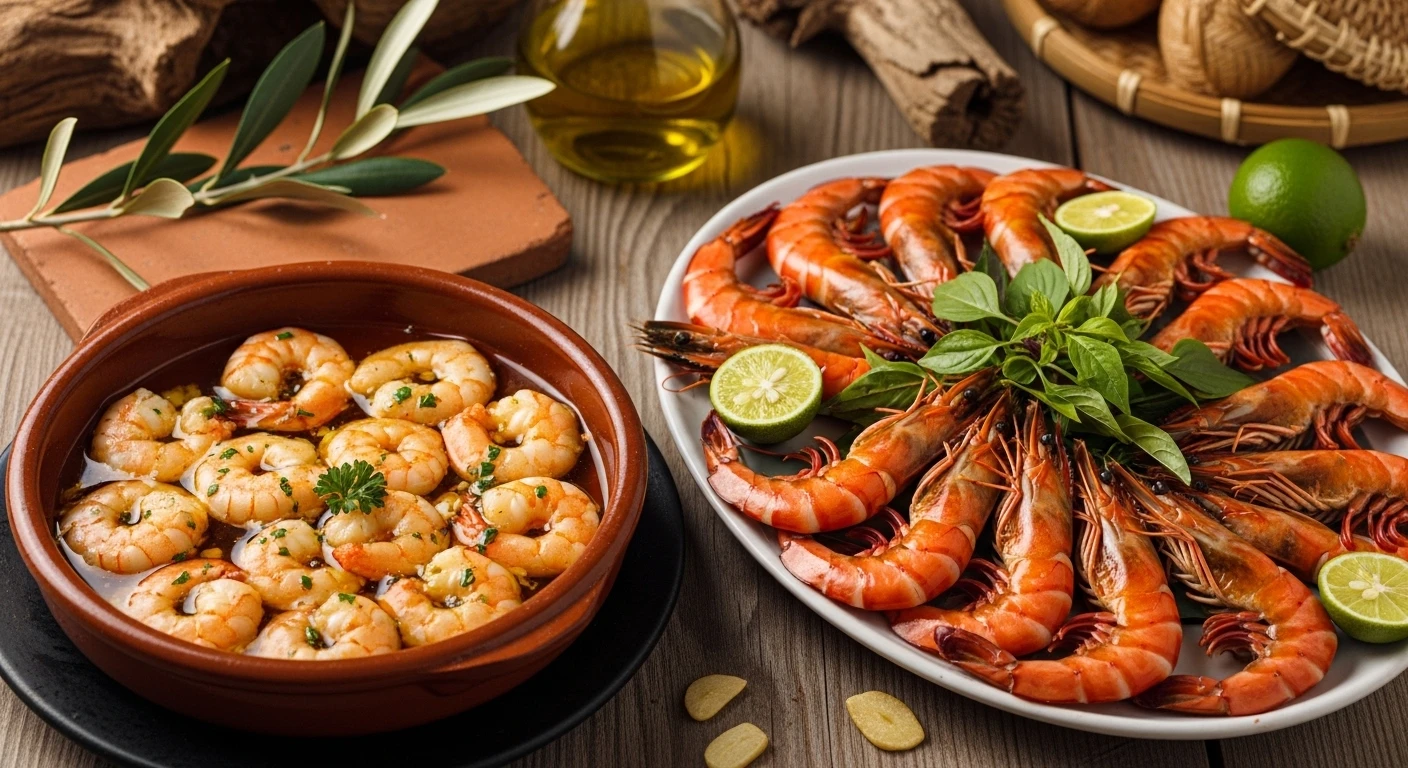
Vietnam Shrimp vs Spanish Shrimp: Mediterranean Refinement Meets the Mekong Delta
A comparison between Vietnamese shrimp and Spain’s famous gambas culture, from tapas bars to brackish-water farms.
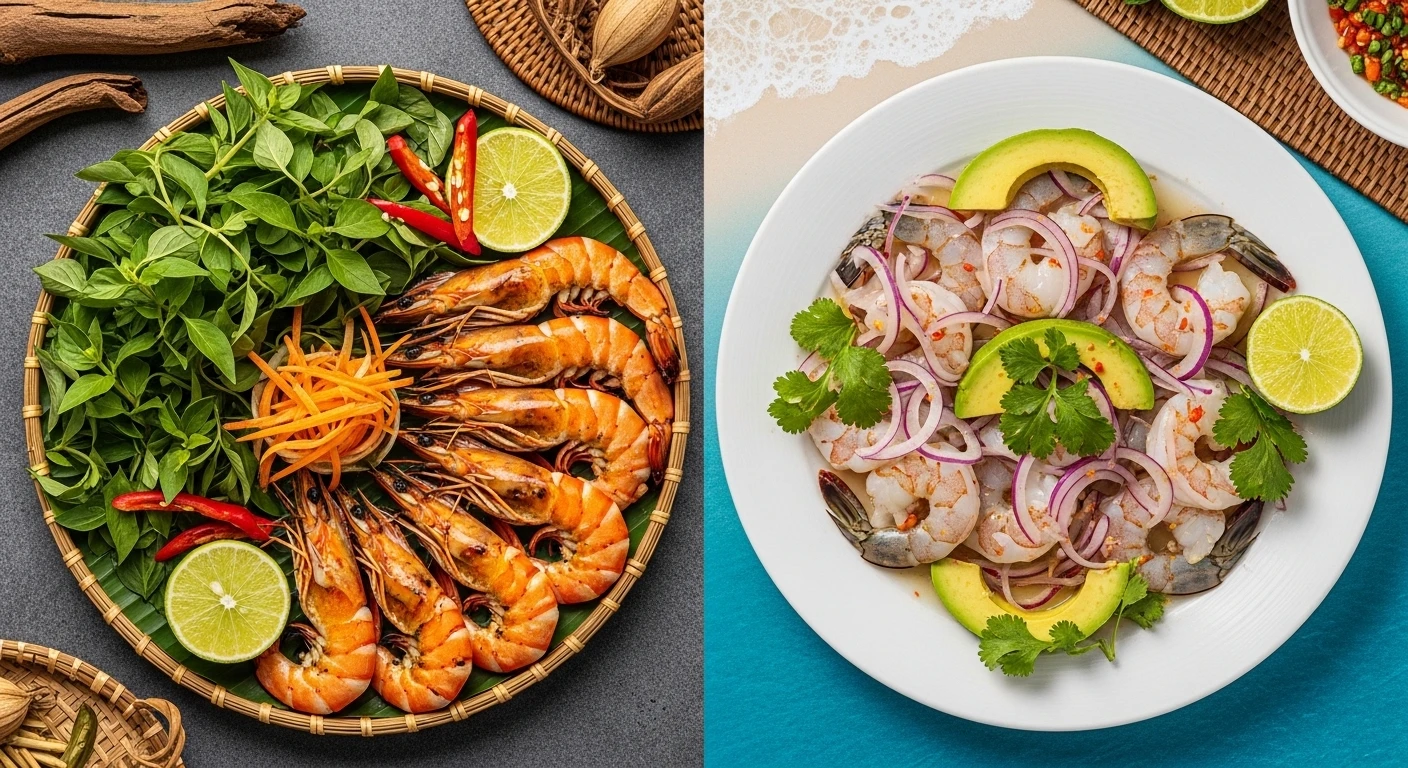
Vietnam Shrimp vs Ecuadorian Shrimp: Export Giants with Very Different Tastes of Place
Vietnam and Ecuador are both shrimp powerhouses, but their farming environments and culinary identities produce different results.
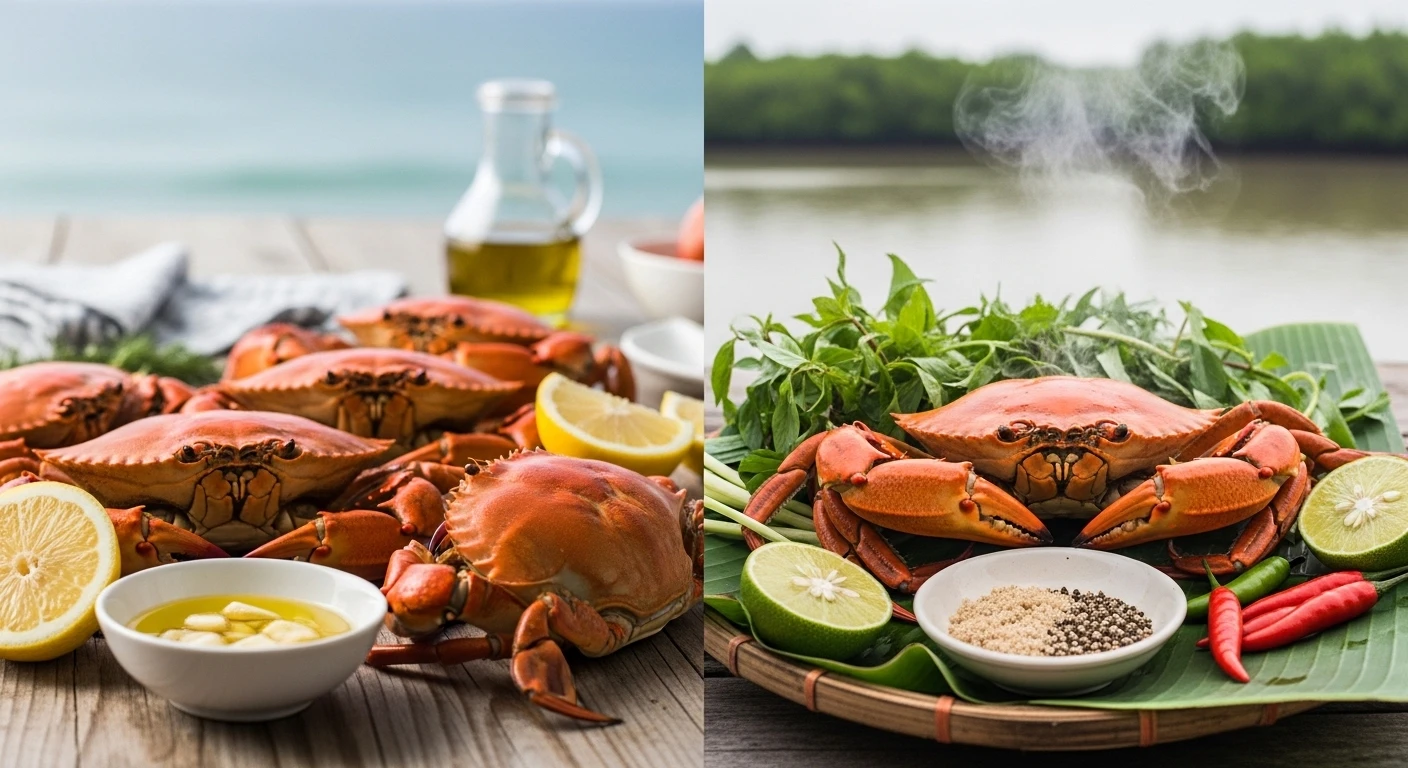
Vietnam Crab vs Portuguese Crab: Atlantic Brine Meets the Mekong Delta
A practical guide to how Vietnamese crab compares with Portugal’s shellfish culture in taste, markets, and coastal dining.
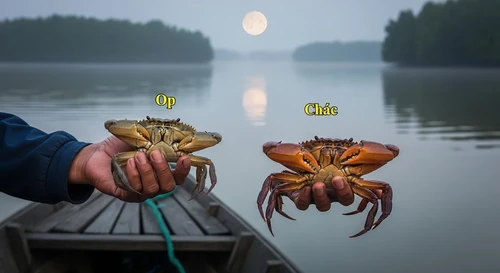
The Moon and The Crab: Harvesting Cycles
How the lunar calendar affects crab quality (Op vs Chac).
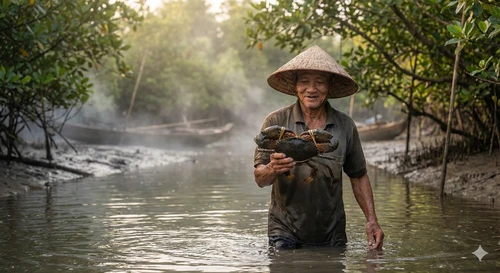
A Day in the Life of a Crab Farmer
From sunrise to sunset: The hard work behind your meal.
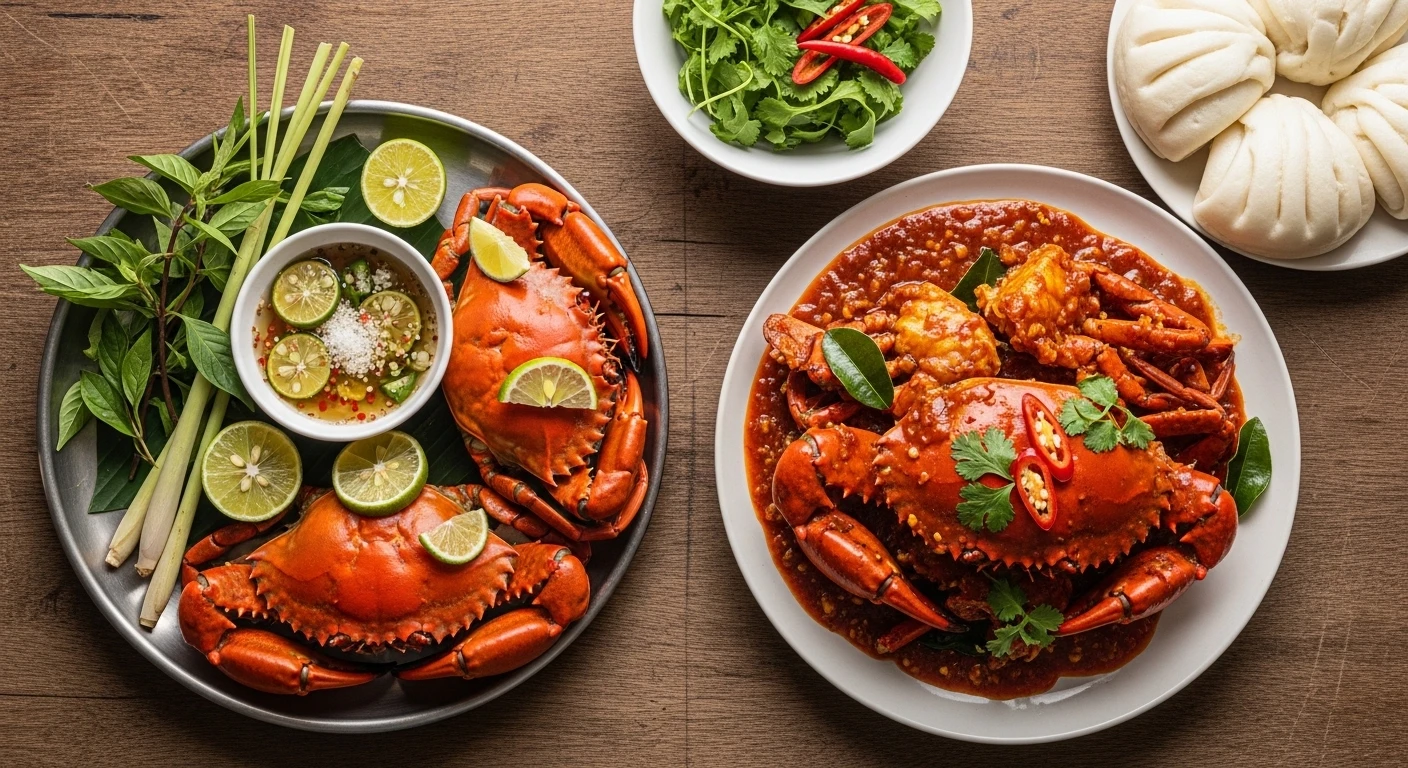
Vietnam Crab vs Malaysian Crab: Sweet Delta Crab vs Sauce-Heavy Hawker Culture
A flavorful comparison between Mekong Delta crab traditions and Malaysia’s beloved crab dishes from hawker centers and coastal kitchens.
Vietnam Crab vs German Crab: North Sea Precision vs Delta Abundance
A surprising comparison between Germany’s colder-shellfish traditions and the muscular mud crab culture of Ca Mau.
Vietnam Crab vs French Crab: Rustic Delta Crab vs Refined Coastal Gastronomy
What happens when the humble power of Mekong mud crab is compared with French coastal seafood elegance?
Bamboo Bridges and Crab Ponds
The iconic imagery of the Mekong Delta landscape.