" In Southeast Asia, the humble crab is king. It graces the humble village pond and the bustling city plate with equal aplomb. But when you pit the sweet, delicate treasures of Vietnam’s Mekong Delta against Malaysia’s robust, sauce-laden hawker icons, a fascinating culinary dialogue emerges. "
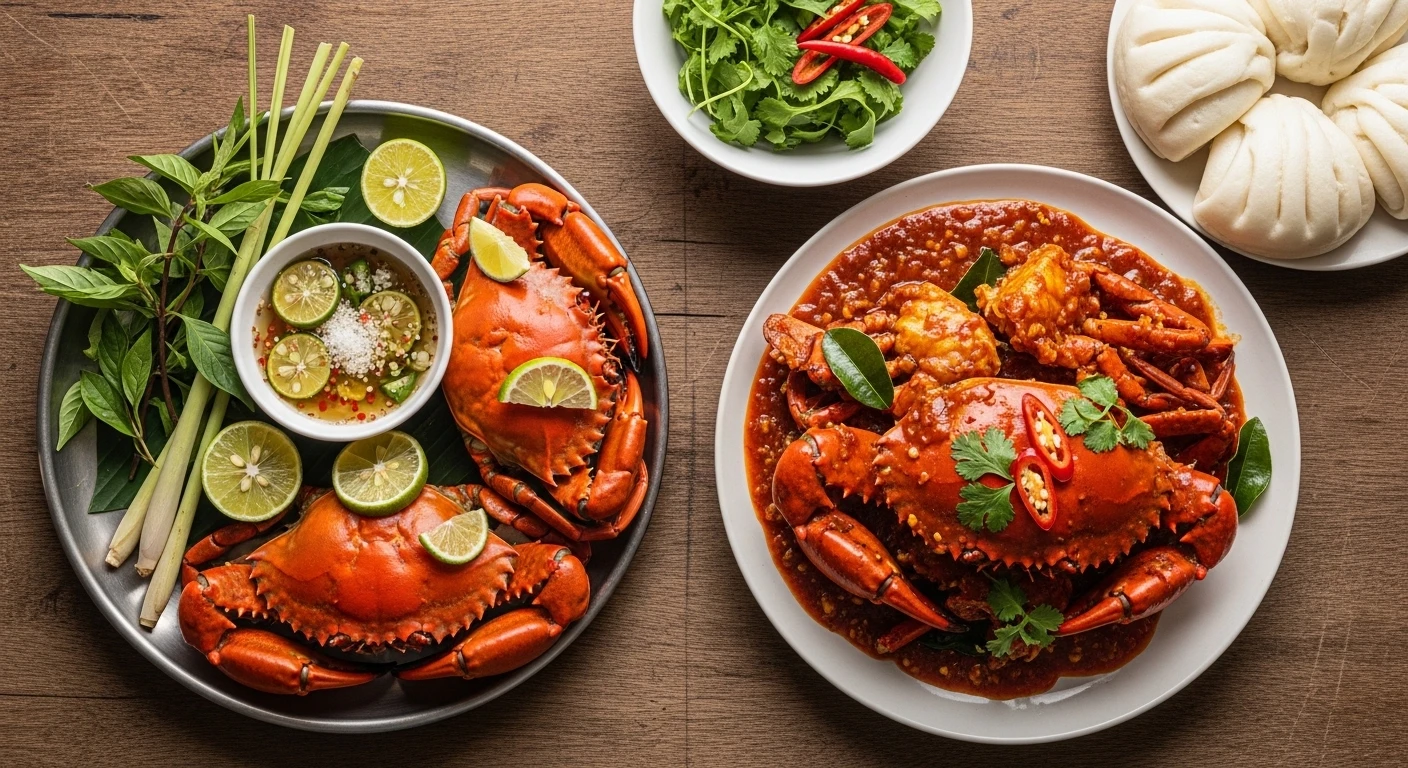
📸 A Tale of Two Crabs: The nuanced sweetness of Mekong Delta crab meets the bold flavors of Malaysian hawker cuisine.
1 The Delicate Allure of the Mekong Delta
Venture into the labyrinthine waterways and verdant mangroves of Vietnam's Mekong Delta, and you’ll find crab is more than just food; it’s a way of life. The region, blessed with brackish waters and a rich ecosystem, is home to some of the most prized mud crabs in the country, particularly from the Ca Mau province.
Here, the focus is on showcasing the crab's intrinsic sweetness. Methods are often simple: steaming, grilling, or simmering in light broths. The aim is to let the crab speak for itself, unadulterated by overpowering spices or sauces. The star is the meat—dense, succulent, with a subtle hint of the sea and the unique terroir of its upbringing.
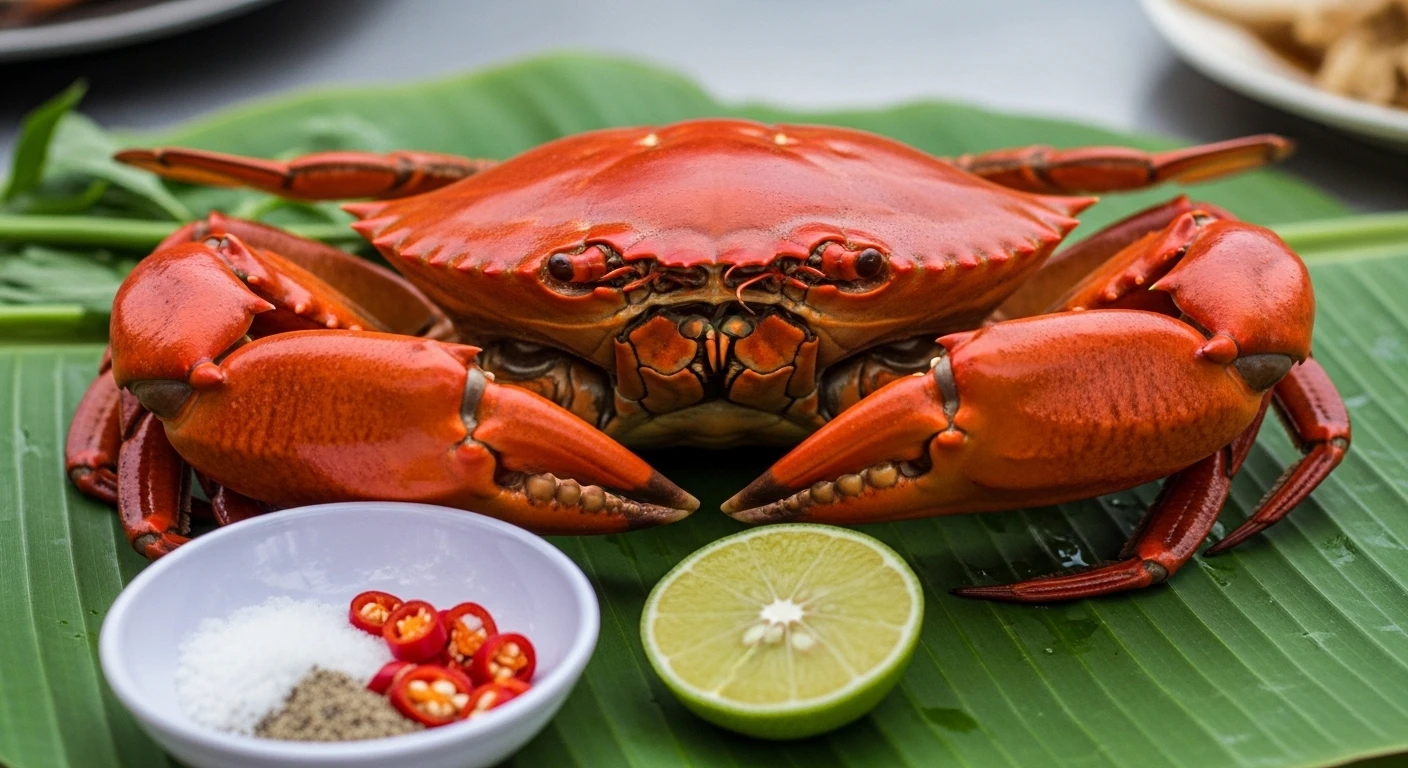
Steamed to perfection, highlighting the natural sweetness.
Terroir and Texture
The muddy seabed of the Mekong Delta imbues these crabs with a distinctive flavor profile. Male crabs, often prized for their dense, meaty claws (like the Ca Mau Jumbo Mud Crab), offer a satisfying bite. Female crabs, sought after for their rich, creamy roe (Ca Mau Roe Mud Crab), provide a luxurious, melt-in-your-mouth experience, especially during mating season. There's even the rare "butter crab" or molting crab (Soft-Shell Butter Crab), a local delicacy that approaches the creamy richness sought by Western palates in soft-shell crab dishes.
The accompanying 'sauce' in the Delta is often a minimalist affair: lime wedges, a sprinkle of salt and pepper, perhaps some fiery bird's eye chilies. It’s an acidic counterpoint that elevates, rather than masks, the crab's natural flavors. This ingredient-led philosophy is the hallmark of Southern Vietnamese seafood cuisine.
2 Malaysia's Bold Hawker Scene
Fly over to Malaysia, and the crab experience takes a decidedly different, yet equally captivating, turn. Malaysian crab culture is inextricably linked to its vibrant hawker scene and its rich tapestry of culinary influences—Malay, Chinese, and Indian. Here, the crab is often a canvas for bold, complex flavors.
The iconic Malaysian crab dishes are not shy. Think of the legendary Black Pepper Crab, where the crustacean is wok-tossed in a fiercely aromatic, spicy, and savory black pepper sauce that coats every crevice. Or the Chili Crab, a national dish often debated between Singapore and Malaysia, featuring a thick, sweet, and tangy tomato-chili gravy, sometimes enriched with eggs to thicken it into a luscious emulsion. These are meals meant to be savored with rice, soaking up every drop of sauce.
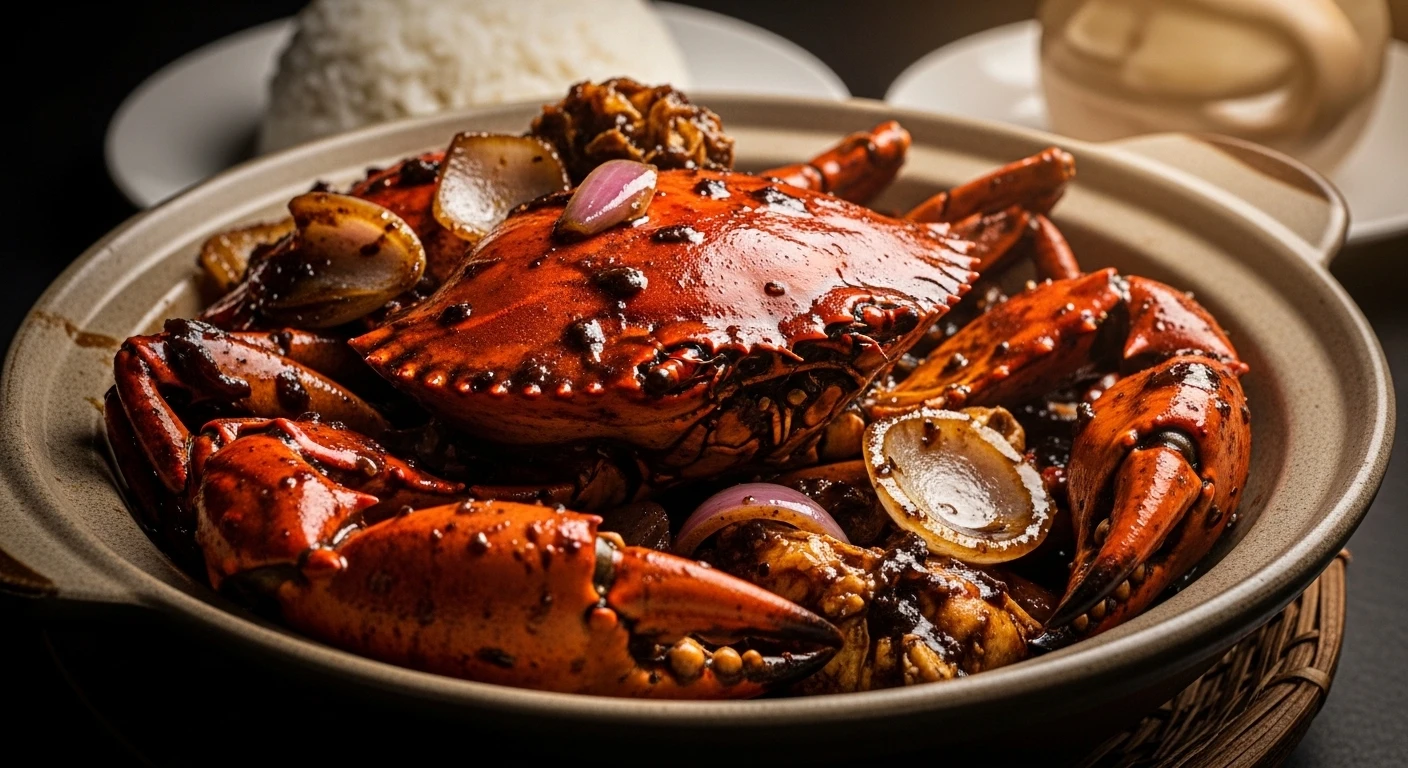
A symphony of spice: Malaysian Black Pepper Crab is a flavor explosion.
A Culinary Melting Pot
Beyond the heavy hitters, Malaysian crab traditions are diverse. You'll find Kam Heong Crab (auditorily fragrant crab) infused with dried shrimp, curry leaves, and chilies, or Salted Egg Crab, where the crab is enveloped in a rich, savory, and slightly gritty coating of salted duck egg yolk. The sauces are often the main event, designed to be addictive, complex, and utterly satisfying. The crab itself, while still of good quality, often plays a supporting role to the sauce's star power.
This approach celebrates the communal dining experience, where sharing plates and dipping is the norm. It’s a style that embraces intensity, inviting diners to get their hands dirty and fully engage with the food.
3 From Mangrove to Estuary: Where the Crabs Come From
The fundamental difference in these crab cultures begins with the crabs themselves and their environments.
Mekong Delta: The Mud Crab Specialist
The primary crab in the Mekong Delta is the mud crab, specifically the species Scylla serrata. These crabs thrive in the intertidal zones, mangrove forests, and brackish estuaries of provinces like Ca Mau, Bac Lieu, and Soc Trang. Their diet, influenced by the nutrient-rich silt and diverse marine life, contributes to their famously dense and sweet meat. The muddy habitat also means their shells are often darker and thicker, requiring careful preparation before cooking.
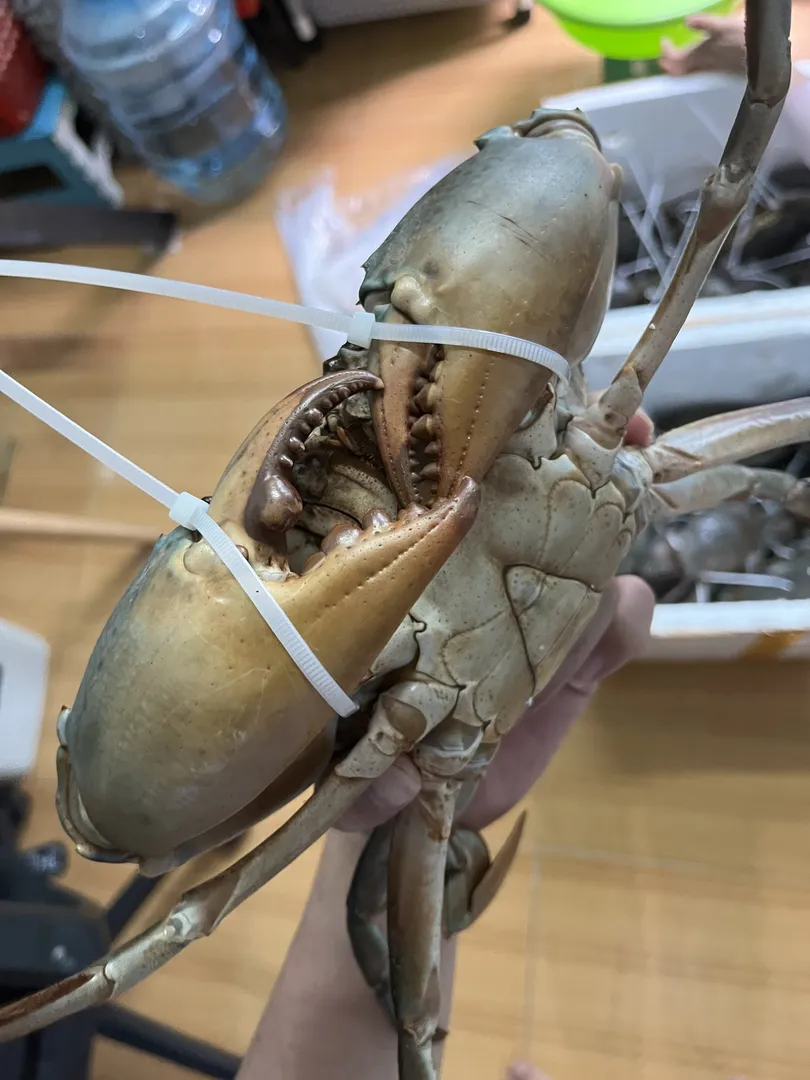
Heritage Ingredient
Ca Mau Jumbo Mud Crab
Ca Mau Jumbo Mud Crab
A large male mud crab prized for dense, sweet meat and thick claws, commonly used in steamed crab and grilled crab dishes across the Mekong Delta.
An icon of coastal culinary heritage, featuring firm, sweet meat that captures the raw power and freshness of Ca Mau's tides.
Malaysia: Diverse Coastal and Farmed Varieties
Malaysia, with its extensive coastline and widespread aquaculture, benefits from a wider range of crab availability. While mud crabs (often of the same species as in Vietnam) are popular, other types like the flower crab (portunus pelagicus) or the much smaller, sweet mud shrimp crab (telphusidae) also make appearances. Some of the most celebrated crab dishes, like Chili Crab, are made with a robust mud crab that can hold its own against the potent sauces. The sourcing might be from wild catch along the coasts of Sabah, Sarawak, peninsular Malaysia, or from well-managed aquaculture farms.
This difference in habitat and primary species fundamentally shapes how the crab is treated in the kitchen. The inherent, pure sweetness of the Mekong mud crab is best revealed with minimal intervention, while the slightly milder, more robust flesh of some Malaysian varieties lends itself beautifully to absorbing complex spice blends.
4 Technique as Philosophy: Steaming vs. Stir-Frying
The cooking methods employed are perhaps the most telling difference between these two crab cultures.
Vietnam: The Gentle Art of Steaming
In the Mekong Delta, steaming is king. Whether it’s simple water steaming, beer steaming (an aromatic trick), or coconut water steaming (for added sweetness), the principle remains the same: gentle heat applied indirectly to cook the crab, preserving its delicate texture and oceanic essence. Grilling is also popular, often over charcoal, imparting a subtle smoky char. These methods celebrate the crab’s purity. Even when a dipping sauce is offered, it’s usually a bright, fresh condiment, like lime, salt, and chili, designed to enhance, not overpower.
Malaysia: The Fiery Wok and Bold Sauces
Malaysian crab dishes are often born from the wok. High heat, rapid cooking, and generous amounts of aromatic sauces define this style. Stir-frying, sautéing, and braising are common. The vibrant chili crab, black pepper crab, and salted egg crab are all masterclasses in sauce-making. These dishes are about creating a complex flavor profile where the sauce, spices, and aromatics meld together, clinging to the crab meat. The use of ingredients like chilies, garlic, ginger, shallots, and often tamarind or tomatoes, creates an experience that is rich, savory, and deeply satisfying.
This divergence in technique reflects a broader culinary philosophy: Vietnam often prioritizes the ingredient's natural state, while Malaysia excels at transforming ingredients into something even more exciting through skillful application of bold flavors and spices.
5 Sweet Symphony vs. Spice Spectacle
The most profound difference lies in the resulting flavor profiles.
Mekong Delta: The Natural Sweetness
The flavor of Mekong Delta crab is about subtlety and sweetness. It’s the pure, briny essence of the sea, a delicate sweetness that speaks of fresh water meeting saltwater, and the clean diet of well-raised crabs. The simple accompaniments—lime, salt, pepper, chili—serve to amplify these notes. It's a flavor that requires your full attention, a quiet appreciation of the ingredient’s quality. It’s the difference between a fine single malt and a complex cocktail; both are good, but they offer entirely different experiences.
Malaysia: The Bold and Unforgettable
Malaysian crab dishes are a riot of flavor. The spicy kick of black pepper, the tangy sweetness of chili sauce, the umami depth of salted egg yolk—these create an addictive profile that is instantly gratifying. The sauces are designed to coat the palate, to be mopped up with rice or bread, and to leave a lasting impression. It’s a culinary bravado that celebrates the joy of eating and the art of flavor layering, reflecting the country’s vibrant multicultural food heritage.
While Vietnamese crab is about experiencing the ingredient in its purest form, Malaysian crab is about celebrating the transformative power of cooking and the harmonious marriage of diverse flavors. Both are essential expressions of Southeast Asian culinary genius.
6 Mekong Life vs. Hawker Culture: A Social Feast
Beyond the plate, the way crab is enjoyed offers a window into the societies that cherish it.
Mekong Delta: Riverine Rhythms
In the Mekong Delta, crab is often a part of everyday life, but also features in special occasions. Meals are frequently enjoyed outdoors, by the river, or in simple homes. Sharing a steamed crab with family, perhaps accompanied by fresh rice paper rolls and herbs, is a picture of rustic Vietnamese hospitality. It’s intimate, relaxed, and focused on the quality of the produce. The appreciation is quiet, reverent. The labor of love in raising and harvesting these crabs is reflected in the meal's significance.
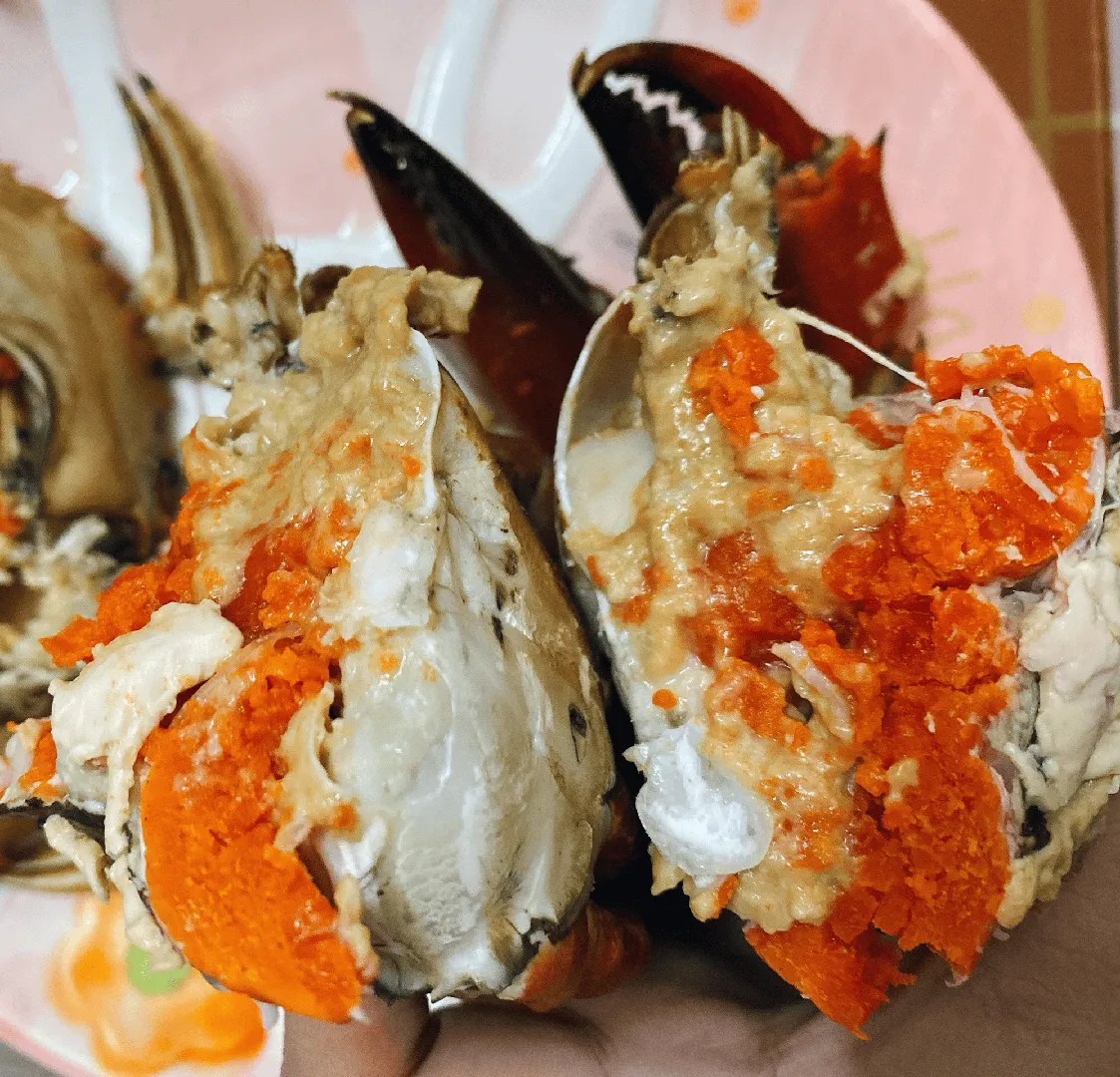
Heritage Ingredient
Ca Mau Roe Mud Crab
Ca Mau Roe Mud Crab
A female mud crab known for deep orange roe and a rich, creamy finish, often featured in celebratory Southern Vietnamese seafood meals.
A crimson treasure hidden within a shell, boasting rich, creamy roe that melts on your tongue like a golden sunset over the delta.
Malaysia: The Hawker Hubbub
Malaysian crab dishes are often synonymous with the vibrant, bustling hawker centers. These are places of social congregation, where the aroma of countless dishes fills the air, and families and friends gather for an affordable, yet incredibly flavorful, feast. The act of eating chili crab or black pepper crab is often a communal, hands-on affair. It's loud, it's energetic, and it’s about the shared joy of indulging in bold, exciting flavors. It’s a democratic way of enjoying premium ingredients, making them accessible to all.
Each setting provides a unique lens through which to appreciate the crab. The Delta offers a serene connection to nature and ingredient purity, while Malaysian hawker culture offers a lively, flavor-driven celebration.
7 Your Culinary Compass: Where to Seek What
So, where should a discerning crab lover direct their culinary compass?
For Purity & Delicate Sweetness: Head to the Mekong Delta
If your palate craves the unadulterated taste of the sea, the natural sweetness of impeccably fresh crab, and a more serene dining experience, the Mekong Delta is your destination. Seek out restaurants in Can Tho, or visit coastal towns like Ha Tien for the freshest catches. A simple plate of steamed Ca Mau mud crab, served with nothing more than lime, salt, and chili, is a revelation. This is where you learn to truly taste the crab itself, appreciating its subtle nuances. Consider exploring the specialized crab markets and eateries that dot the region.
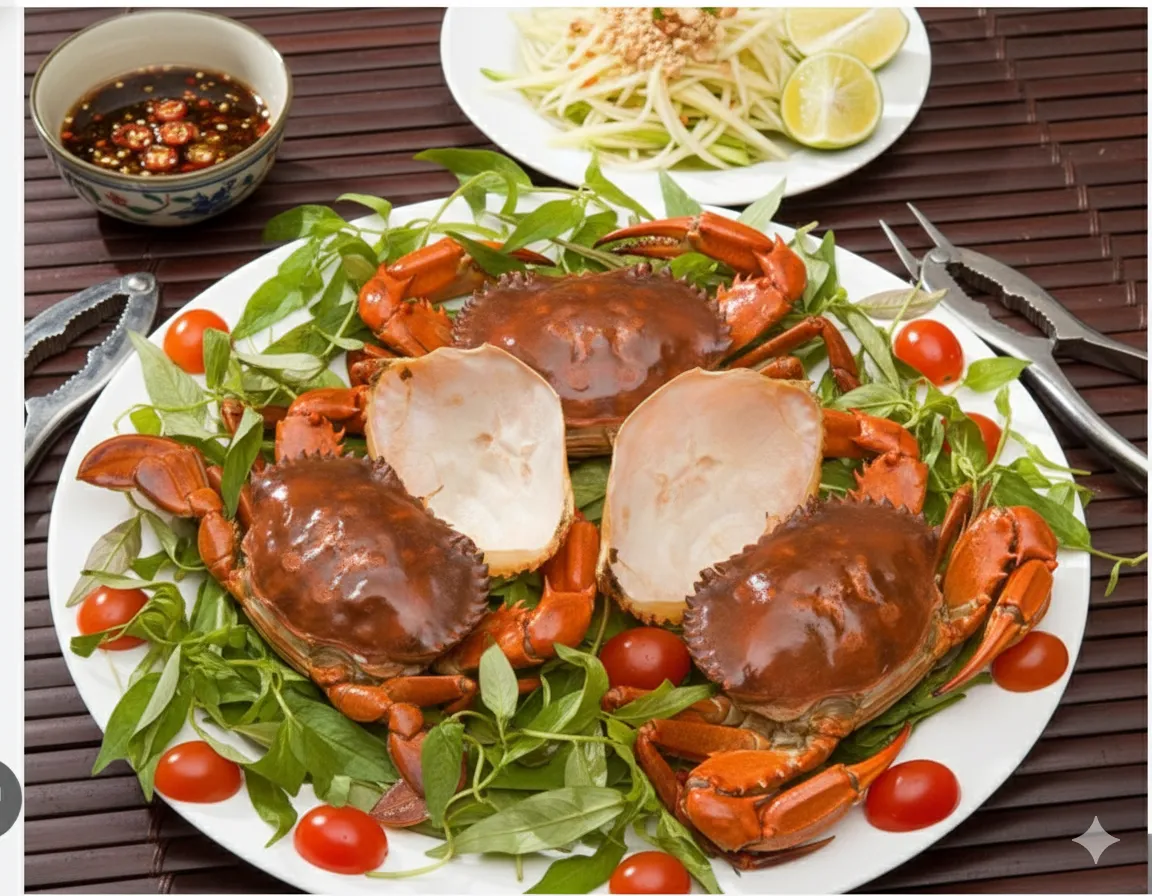
Heritage Ingredient
Soft-Shell Butter Crab (Molting Crab)
Soft-Shell Butter Crab (Molting Crab)
A rare molting mud crab from Ca Mau, valued for its edible soft inner shell and exceptionally creamy roe, making it the closest local equivalent to soft-shell crab concepts familiar abroad.
Nature's rare masterpiece—a delicate transition where a soft inner layer protects golden, custard-like roe in a fleeting moment of flavor.
For Flavor Explosions & Hawker Adventures: Explore Malaysia
If you’re a devotee of bold flavors, complex sauces, and the exhilarating atmosphere of street food culture, Malaysia beckons. Hit the hawker centers in Kuala Lumpur, Penang, or Ipoh for an unforgettable crab journey. Be prepared to get your hands delightfully messy with chili crab, black pepper crab, or salted egg crab. This is where crab is celebrated with a theatrical flourish, a testament to the country’s rich culinary heritage and its ability to create globally beloved dishes from local ingredients.
8 A Shared Passion, Divergent Paths
Ultimately, the comparison between Vietnam's Mekong Delta crab and Malaysia's hawker crab culture isn't about declaring a winner. It's about celebrating two distinct, yet equally valid, expressions of a shared passion for this magnificent crustacean.
Vietnam’s approach, rooted in the fertile lands of the Mekong Delta, honors the inherent sweetness and delicate texture of its prized mud crabs, offering a pure, ingredient-focused experience. Malaysia, on the other hand, uses the crab as a magnificent vessel for its vibrant, multicultural palate, creating dishes that are as much about the exhilarating sauce as they are about the crab itself.
For the traveler and the food lover, this diversity is a gift. It means that the journey through Southeast Asia’s waters and kitchens offers not just one, but countless unforgettable crab experiences. Each country offers a unique perspective, a different story told through claw and shell, inviting us to explore, taste, and appreciate the boundless culinary creativity that the humble crab inspires.