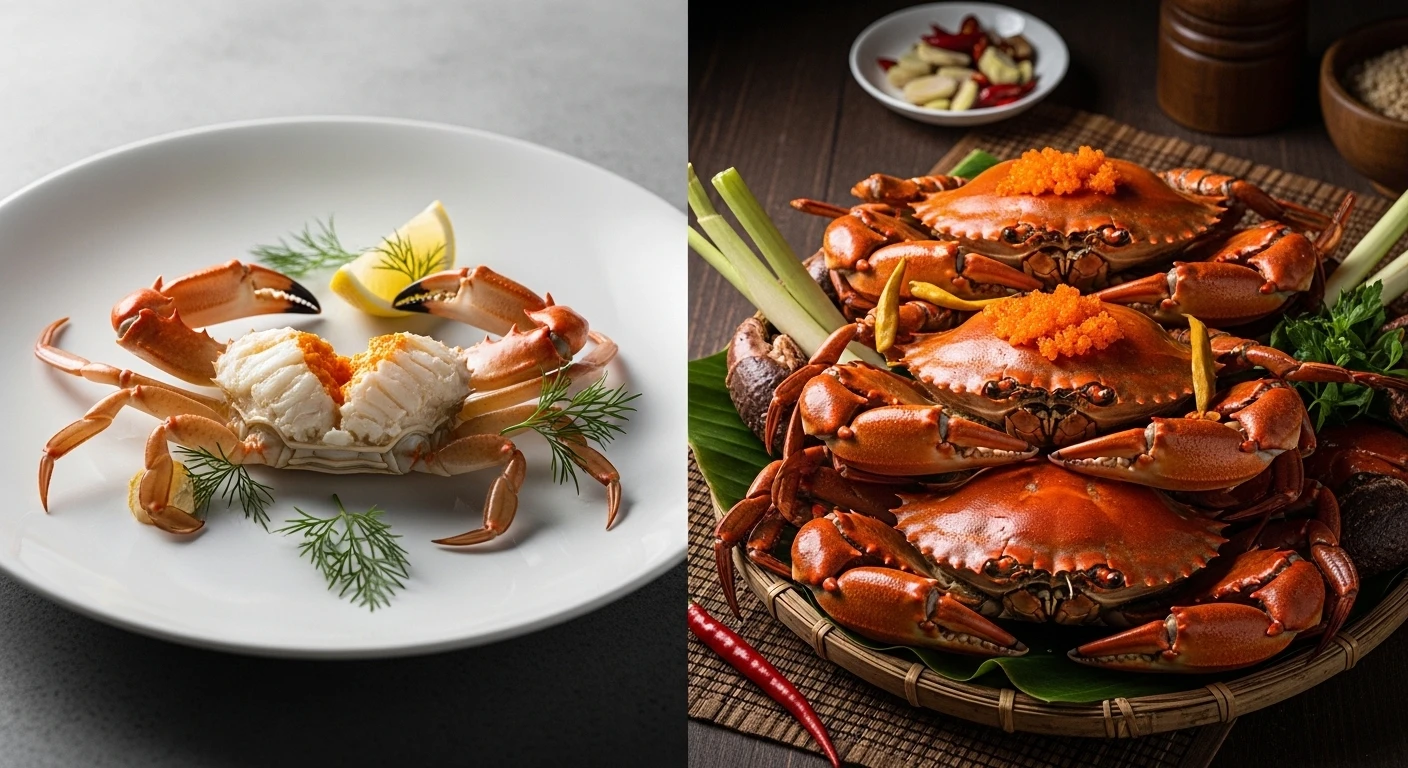
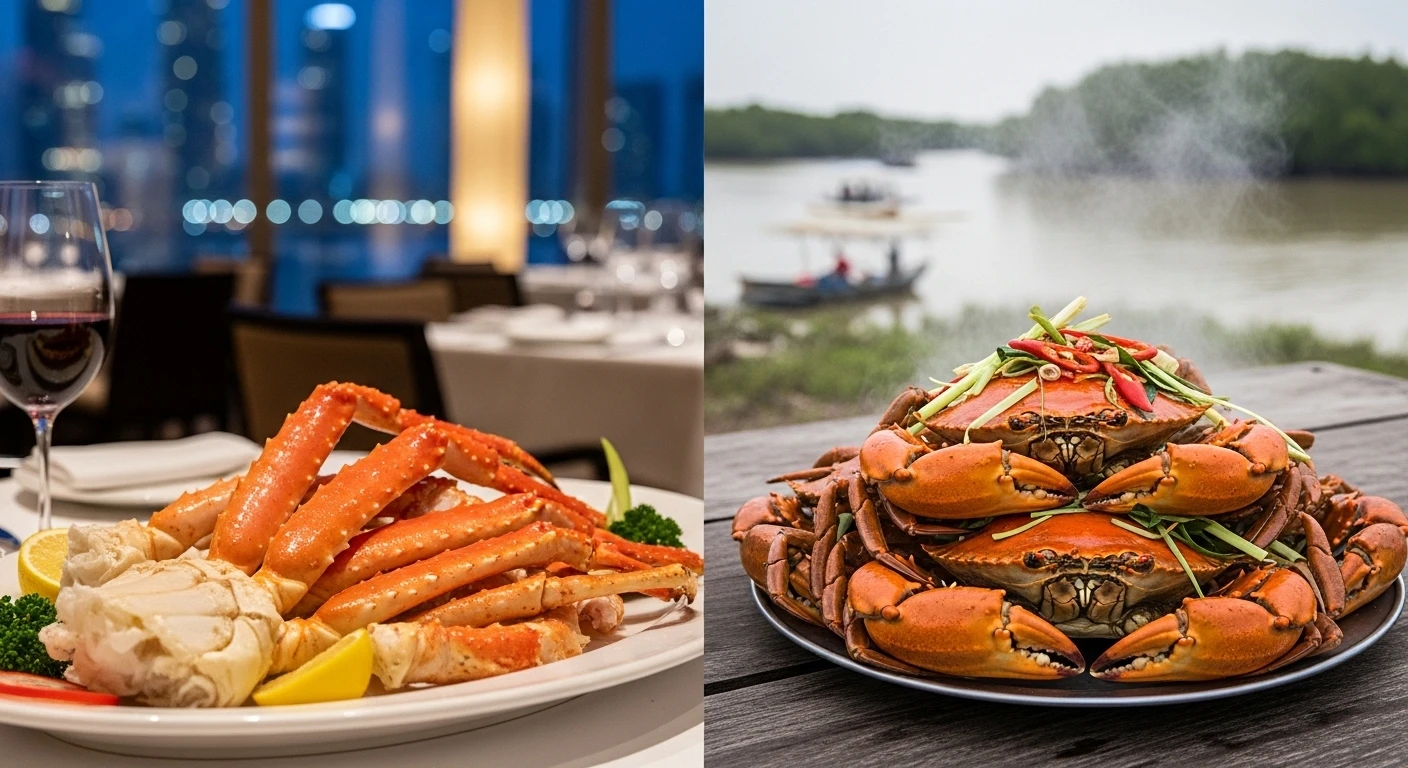
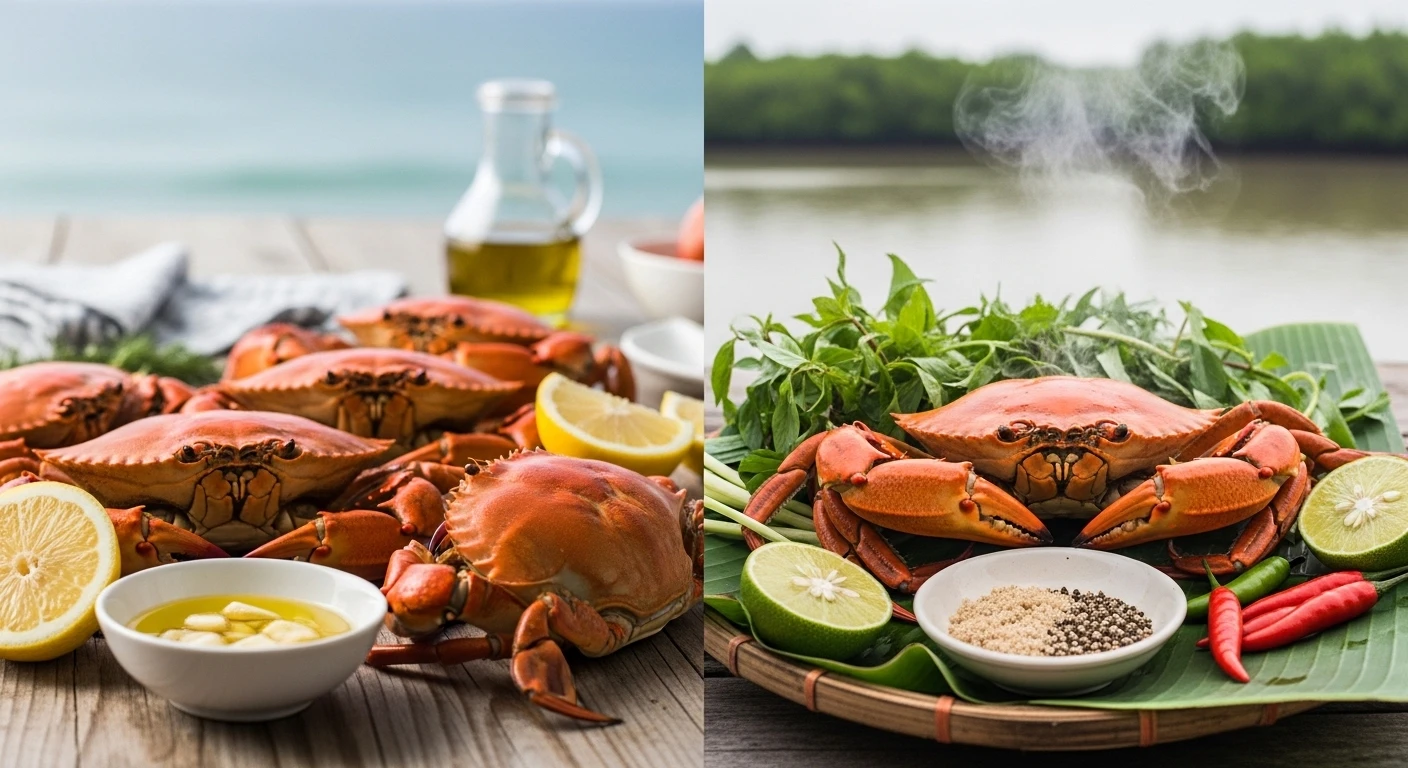
" There are few creatures on this planet as universally adored as the crab. Yet, the journey from brackish estuary to dinner plate can be worlds apart. Imagine the humble, muddy hands of a Vietnamese crabber versus the meticulous touch of a French oyster shucker. It’s a contrast as stark as the rice paddies and the Atlantic coast. "
1 The Raw Power of Mekong Mud Crab
Venturing into the Mekong Delta feels like stepping into a living, breathing organism. A labyrinth of rivers, canals, and mangrove forests, this fertile crescent in Southern Vietnam is a biodiversity hotspot, and its waters teem with some of the most prized mud crabs in the world. Here, crab isn't just food; it's livelihood, tradition, and a cornerstone of regional identity.
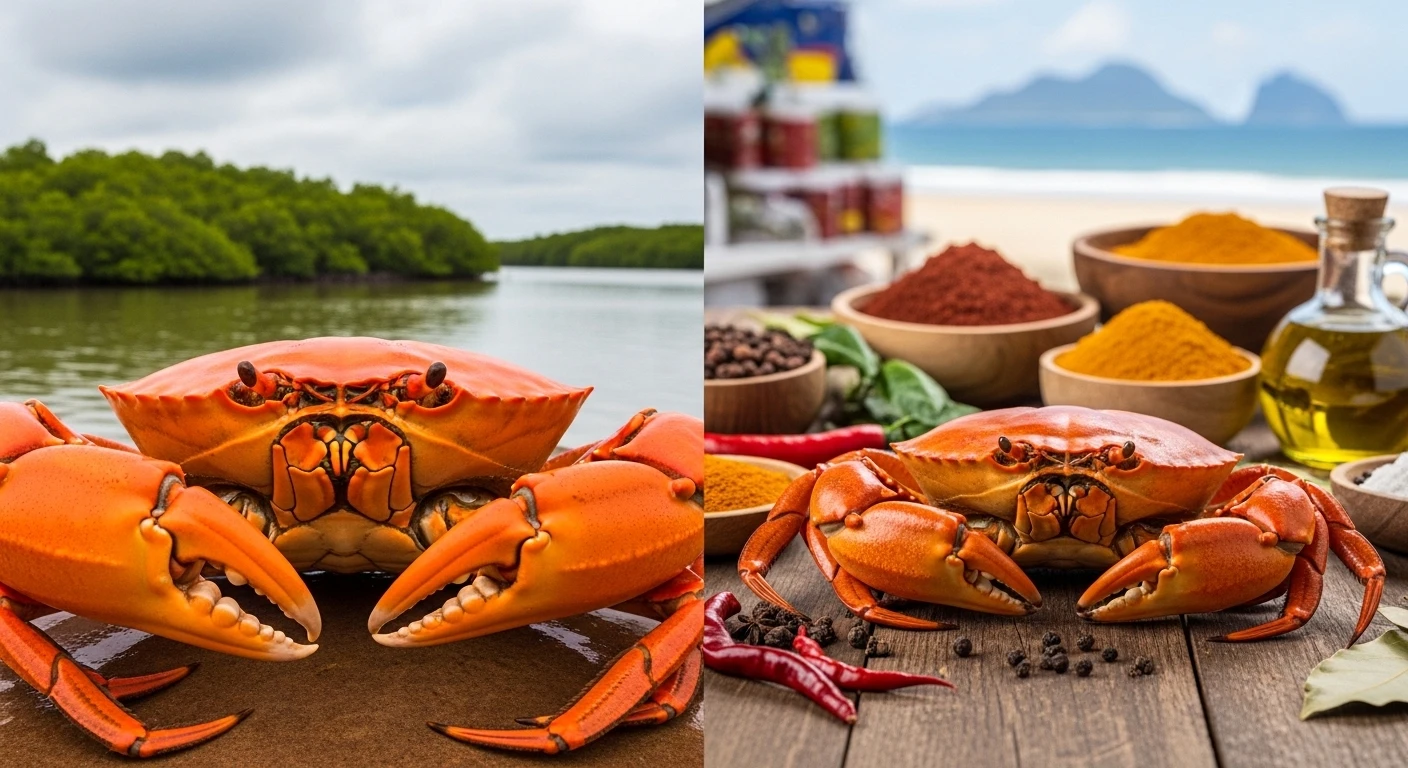
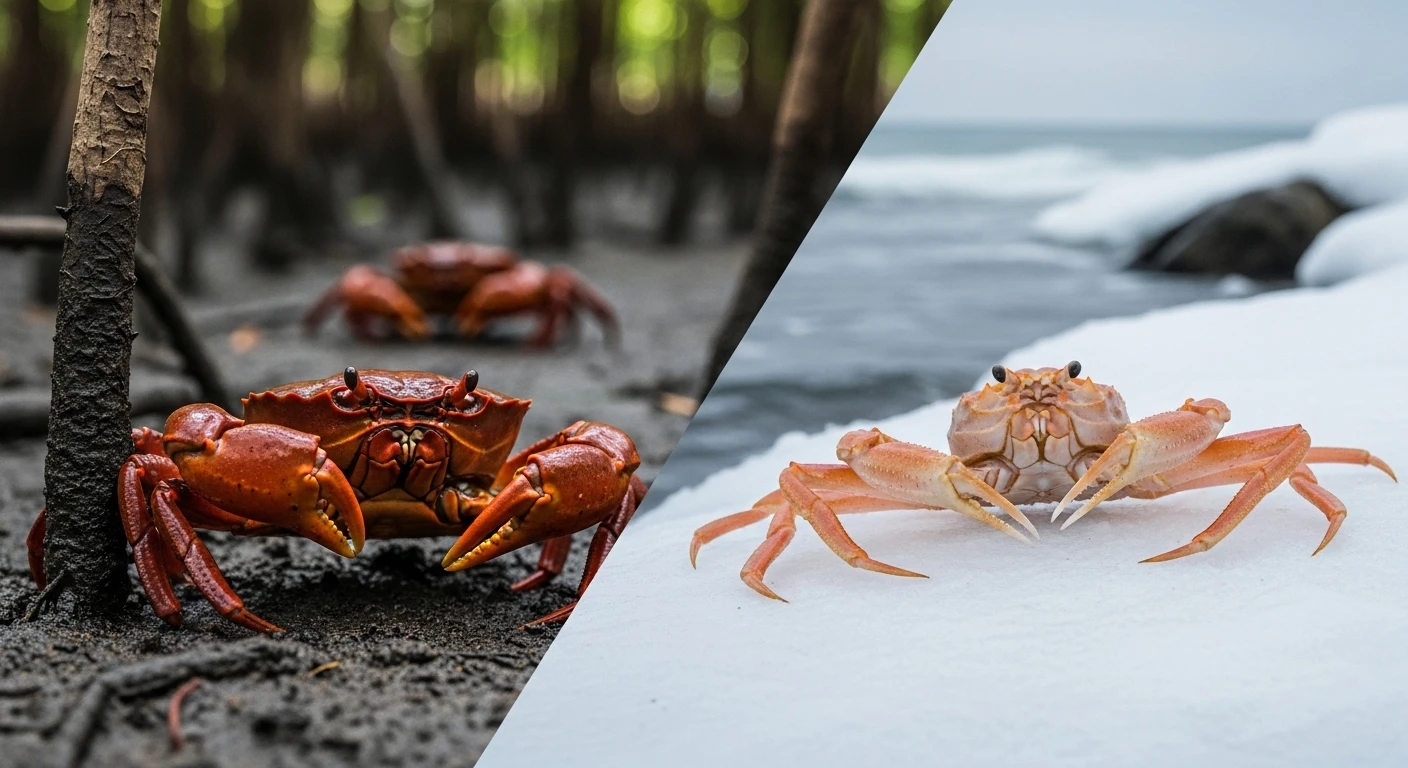
The star of this aquatic theater is the Ca Mau mud crab (Scylla serrata). Imagine vast, muddy estuaries where these formidable crustaceans scuttle. Ca Mau, the southernmost province, is synonymous with exceptional seafood, its extensive mangrove systems providing a natural, nutrient-rich habitat. Unlike the meticulously cultivated mollusks of France, the Mekong crab is a creature of the wild – its flavor profile shaped by the complex saline and freshwater mix, the plankton blooms, and the very earth it inhabits.
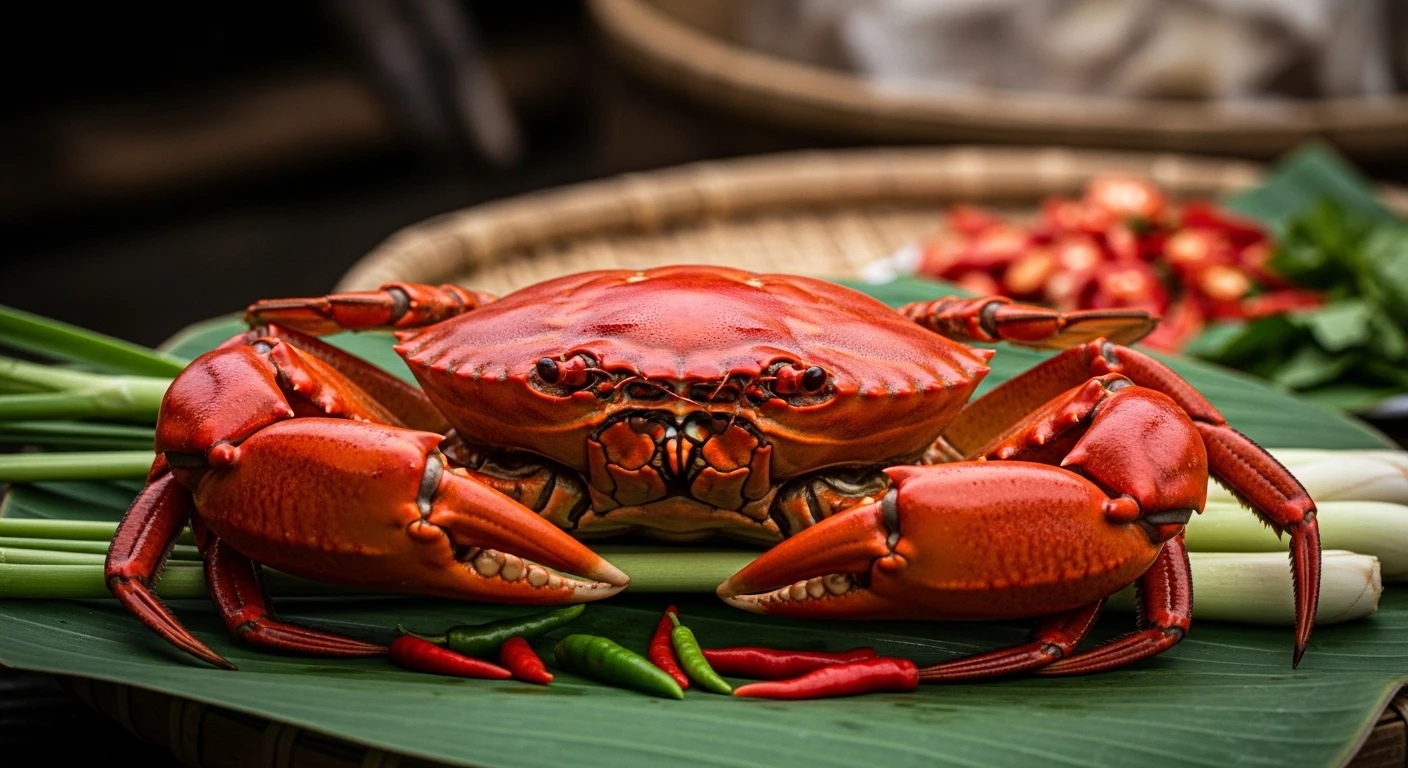
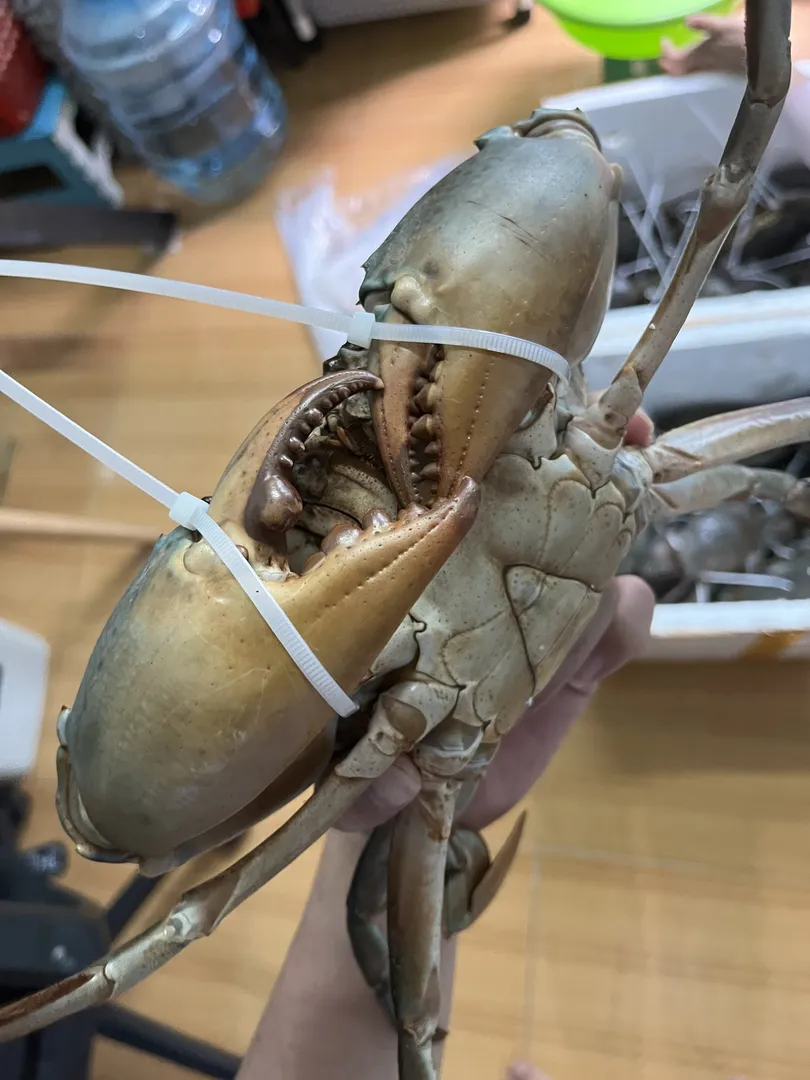
The Vietnamese approach is often about extracting the crab’s inherent sweetness. Take, for instance, the robust Jumbo Mud Crab from Ca Mau. These giants, with their impressive claws, are prized for their dense, succulent meat. Often, preparation involves minimal intervention: steaming, grilling over charcoal, or simmering in a rich broth. The focus is on the crab itself. The primal satisfaction of cracking open a claw, revealing sweet, almost buttery meat, is a fundamental pleasure.
Heritage Ingredient
Ca Mau Jumbo Mud Crab
Ca Mau Jumbo Mud Crab
A large male mud crab prized for dense, sweet meat and thick claws, commonly used in steamed crab and grilled crab dishes across the Mekong Delta.
An icon of coastal culinary heritage, featuring firm, sweet meat that captures the raw power and freshness of Ca Mau's tides.
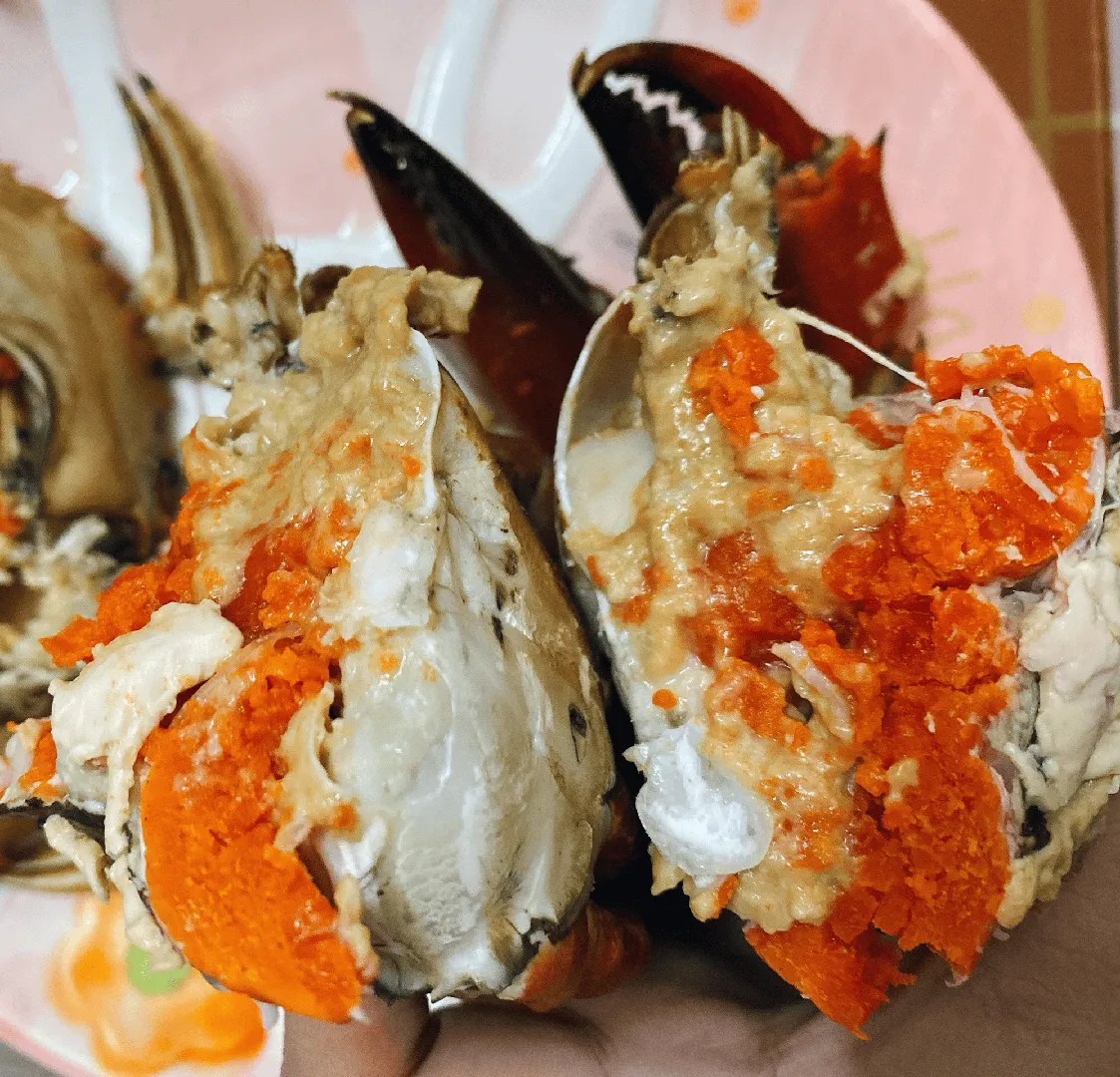
Then there’s the Ca Mau Roe Crab. These female crabs are a delicacy for their rich, deep orange roe, a creamy, almost custard-like treasure that signifies a mature, healthy crab. This roe is often reserved for special occasions, a symbol of abundance and culinary luxury in Southern Vietnamese cuisine. It’s a textural and flavor experience entirely distinct from the meat-focused crab, offering a velvety counterpoint that speaks of the delta's fertility.
Heritage Ingredient
Ca Mau Roe Mud Crab
Ca Mau Roe Mud Crab
A female mud crab known for deep orange roe and a rich, creamy finish, often featured in celebratory Southern Vietnamese seafood meals.
A crimson treasure hidden within a shell, boasting rich, creamy roe that melts on your tongue like a golden sunset over the delta.
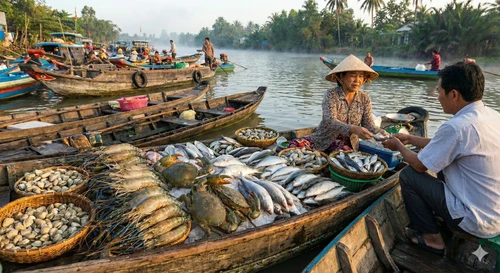
Markets in the delta towns—bustling hubs like those in Can Tho or Soc Trang—are a sensory overload. Fishermen haul in their catch, the air alive with the calls of vendors, the glint of silver scales, and the unmistakable briny scent of the sea and river. Here, crabs are sold by size, sex, and roe content, a vibrant display of nature's bounty, much of it destined for local homes, street food stalls, and simple riverside restaurants where the preparation is as unpretentious as the setting.
2 The Elegance of French Coastal Shellfish
France’s relationship with crab is deeply rooted in its long maritime history and its celebrated *terroir*. Along the Atlantic coast, from Brittany to Normandy, the focus is often on crabs that thrive in cooler, mineral-rich waters. Unlike the muddy depths of the Mekong, these waters lend a distinct character to the shellfish – a clean, crisp minerality, and a delicate sweetness often described as "iodized" or "oceanic."
While France has its share of large, meaty crabs like the brown crab (Cancer pagurus), the national palate often leans towards a more refined appreciation. Think of the classic *tourteaux* from Brittany, its meat carefully extracted and often used in delicate pâtés, terrines, or served simply with a lemon wedge and a dollop of mayonnaise. The emphasis here is on subtlety, on allowing the pure, unadulterated flavor of the sea to shine through, often presented with an almost architectural precision.
French seafood markets, like the historic ones in cities such as Nantes or Arcachon, are temples of order and quality. Here, shellfish are displayed with artistic flair – meticulously arranged oysters, glistening mussels, and, of course, crabs. The crab is often presented whole, its shell gleaming, a testament to its freshness and the care taken in its handling. The emphasis is on provenance, on the specific bay or coastline it hails from, as this is intrinsically linked to its flavor.
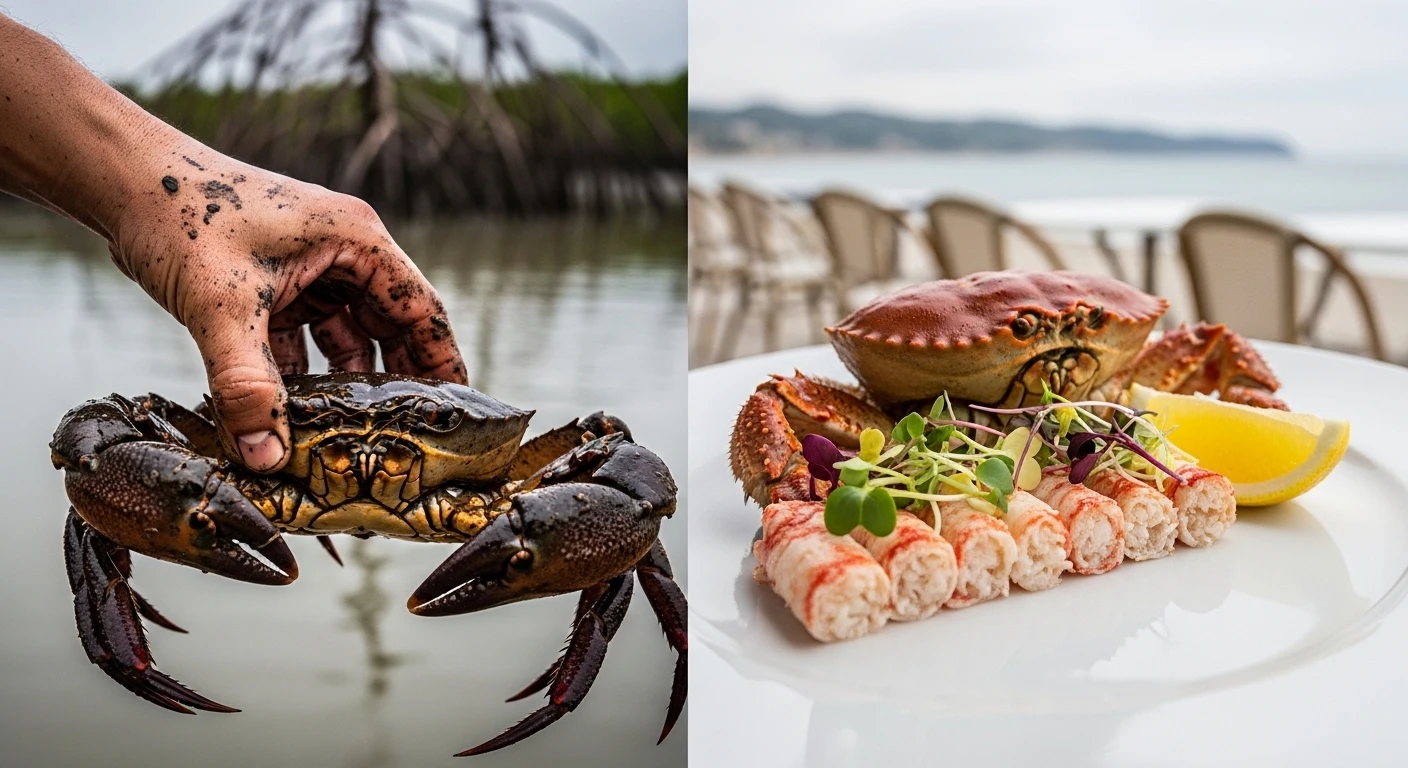
The French culinary tradition also excels in transforming crab into sophisticated dishes. Crab bisque, a rich, creamy soup, showcases the depth of flavor that can be coaxed from crab shells and meat. Crab salads, often elevated with tarragon, chives, and a light vinaigrette, highlight the crab's delicate texture. Even a simple preparation might involve a brush of garlic butter or a sprinkle of fines herbes, always serving to enhance, never to overpower, the natural essence of the crab.
3 The Crab Market: A Tale of Two Worlds
To truly grasp the difference, one must experience the local markets. In the Mekong Delta, the scene is vibrant, boisterous, and wonderfully chaotic. Crabs are often still alive, sometimes in woven baskets bobbing in the water, ready to be selected by discerning shoppers who might haggle over price based on the crab’s heft and the fullness of its roe. The atmosphere is earthy, primal, and deeply connected to the source.
Contrast this with a typical French fish market. Precision is key. Crabs are often neatly presented, their species clearly labeled. The transaction is polite, efficient, and informed by an understanding of seasonality and provenance. The focus is on the *quality* as defined by established gastronomic standards – shell integrity, meat consistency, and that signature oceanic flavor. It's a world where the butcher's craft meets the chef's palate.
Mekong Delta Market
Vibrant, chaotic, sensory-rich. Focus on freshness, size, and roe. Emphasis on direct extraction of natural sweetness. Hands-on selection.
French Coastal Market
Orderly, refined, focused on provenance. Emphasis on clean, oceanic flavor and delicate texture. Expertly curated selection.
The Crab Itself
Mekong: Intense, sweet, often earthy/muddy notes. France: Clean, mineral, briny, subtly sweet. Both exceptional in their own right.
4 Culinary Philosophies: Extraction vs. Enhancement
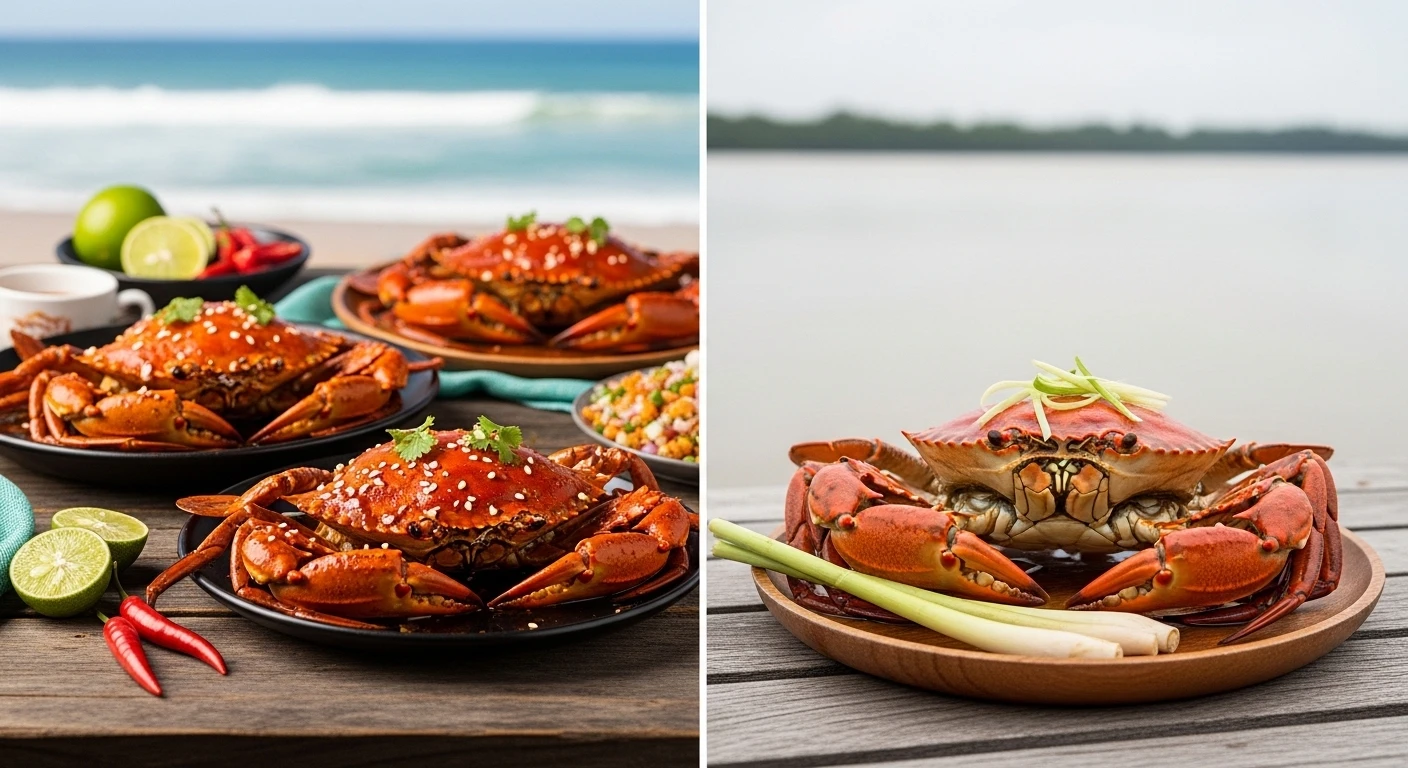
At its core, the difference boils down to philosophy. In the Mekong Delta, the approach is often one of extraction. The goal is to pull out the crab's natural, unadulterated sweetness, its rich roe, and its firm, moist flesh. This is why simple preparations like steaming with a bit of salt and lime, or grilling over embers, are so popular. The crab is the star, and other ingredients play a supporting role. Think of the classic Vietnamese dipping sauce: fresh lime juice, sea salt, and a hint of chili—a bright, sharp counterpoint that amplifies the crab's flavor without masking it.
In France, the philosophy often leans towards enhancement. The exquisite, clean flavor of Atlantic crab is seen as a base upon which to build more complex gastronomic experiences. This isn't to say French cooking is heavy-handed; far from it. It's about elevating the ingredient through technique and judicious pairing. Crab bisque, crab thermidor, or delicate crab gratins demonstrate how French chefs masterfully weave crab into a tapestry of rich flavors and textures, respecting its essence while creating something entirely new.
5 A Surprising Bridge: The Quest for Soft-Shell Crab
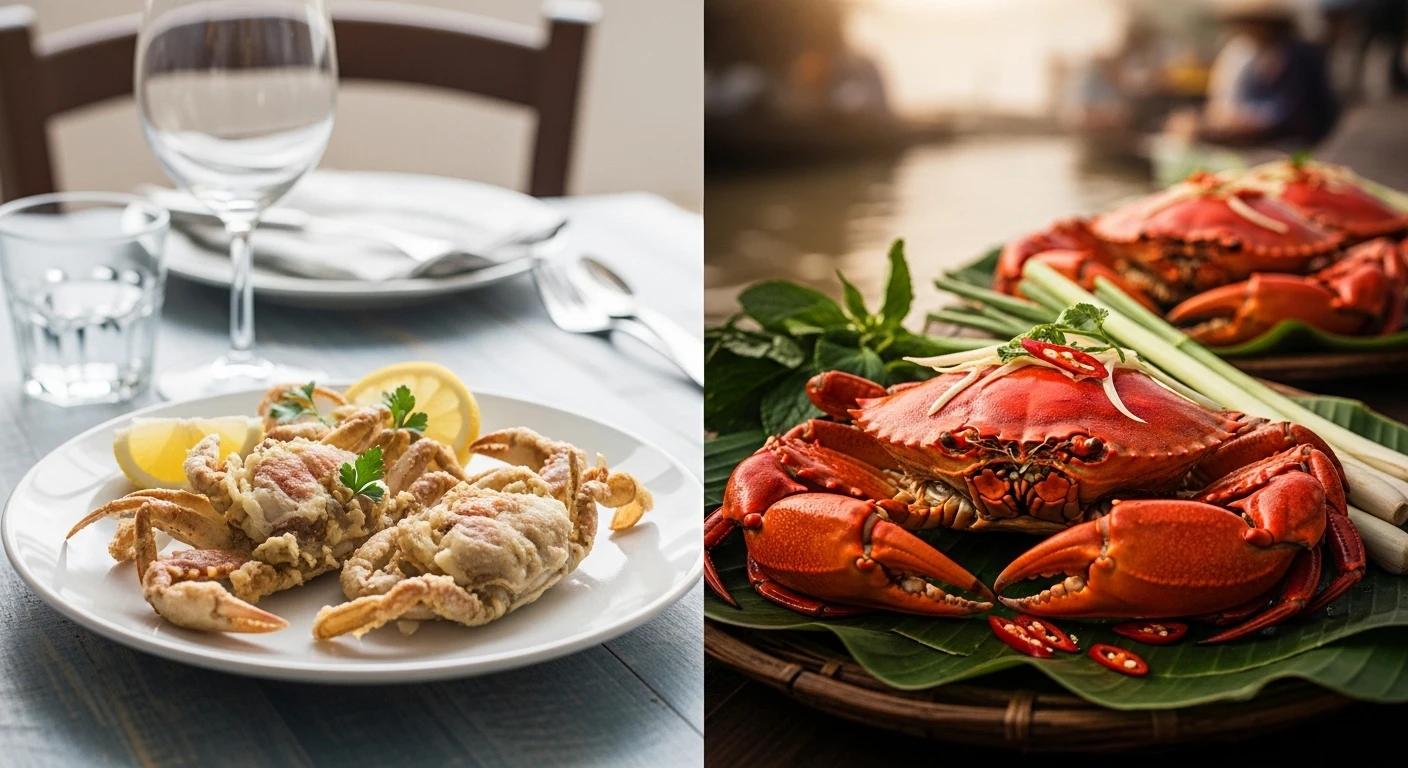
While the primary comparison lies between hard-shell crabs, it's fascinating to note a point where culinary desires might converge: the soft-shell crab. In France, while less common than in North America, soft-shell crab preparations exist, often fried to a delicate crisp. In Vietnam, specifically the Mekong Delta, there’s a rare delicacy known as Molting Mud Crab (Cua Cốm).
This is a crab that has just shed its hard exoskeleton. Its new shell is soft and edible, and its roe is exceptionally creamy. It’s often fried until crispy and eaten whole. While not precisely the same as the American soft-shell, it represents a similar appreciation for a crab in its transitional phase, where the entire creature is edible and offers a unique textural experience – a crunchy exterior giving way to rich, unctuous innards. It’s a testament to how chefs worldwide seek out novel ways to enjoy this beloved crustacean.
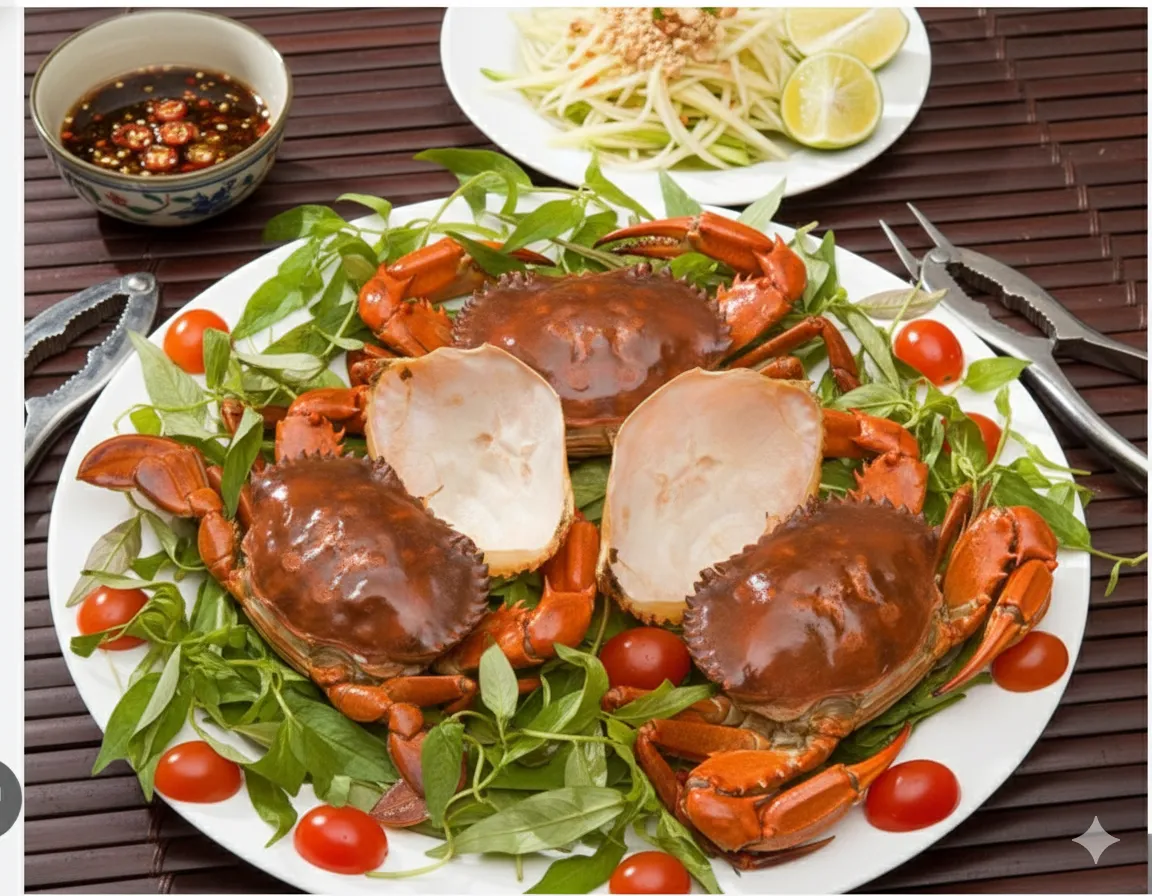
Heritage Ingredient
Soft-Shell Butter Crab (Molting Crab)
Soft-Shell Butter Crab (Molting Crab)
A rare molting mud crab from Ca Mau, valued for its edible soft inner shell and exceptionally creamy roe, making it the closest local equivalent to soft-shell crab concepts familiar abroad.
Nature's rare masterpiece—a delicate transition where a soft inner layer protects golden, custard-like roe in a fleeting moment of flavor.
6 Beyond the Shell: Livelihoods and Culture
The life of a crab farmer or fisher in the Mekong Delta is one of deep connection to the water. Generations have relied on these intricate waterways, developing an intimate knowledge of tides, seasons, and crab behavior. This connection is not just economic; it’s cultural. Crab feasts are communal events, reinforcing family bonds and community ties. The sustainability of the crab populations is a matter of daily survival and long-term heritage.
In France, while coastal communities also have deep ties to the sea, the seafood industry is often more structured, with regulations governing fishing quotas, seasons, and aquaculture practices. The appreciation for crab is also deeply embedded in the nation’s gastronomic identity. Crab dishes are staples in bistros and fine dining establishments alike, reflecting a sophisticated culinary landscape where seafood is revered for its quality and its contribution to national cuisine.
7 The Traveler's Palate: Why Vietnam Beckons
For the global food enthusiast, the comparison is not about declaring a winner, but about appreciating the vast spectrum of culinary experiences. If you cherish the clean, refined flavors of French coastal crab, imagine your delight discovering the robust, intensely sweet, and earthy character of Mekong mud crab. The journey to Vietnam, particularly the Mekong Delta, offers an unparalleled opportunity to experience crab in its most natural, unadorned, and culturally rich setting.
Picture yourself in a small Mekong town, the air thick with humidity and the scent of cooking. You’re seated at a simple table, a steaming platter of freshly caught Ca Mau crab before you, its shell a vibrant orange. You crack it open, the sweet aroma filling the air, and dip a piece into a fiery lime-salt sauce. This is not just a meal; it's an immersion. It’s a chance to connect with the land and the people through their most treasured ingredient. It's an adventure for the palate that no discerning foodie should miss.
8 A Symphony of the Sea
From the briny, mineral depths of the Atlantic to the nutrient-rich, muddy estuaries of the Mekong, crab culture offers a fascinating lens through which to view the world. France provides elegance, refinement, and a deep-rooted gastronomic heritage. Vietnam, especially the Mekong Delta, delivers raw power, intense sweetness, and a profound connection to the natural environment. Both offer a symphony of flavors, textures, and traditions, each a testament to the enduring allure of this magnificent crustacean. For those who seek culinary adventure, the journey from the sophisticated shores of France to the vibrant waters of Vietnam is one of discovery, where every crab tells a story.