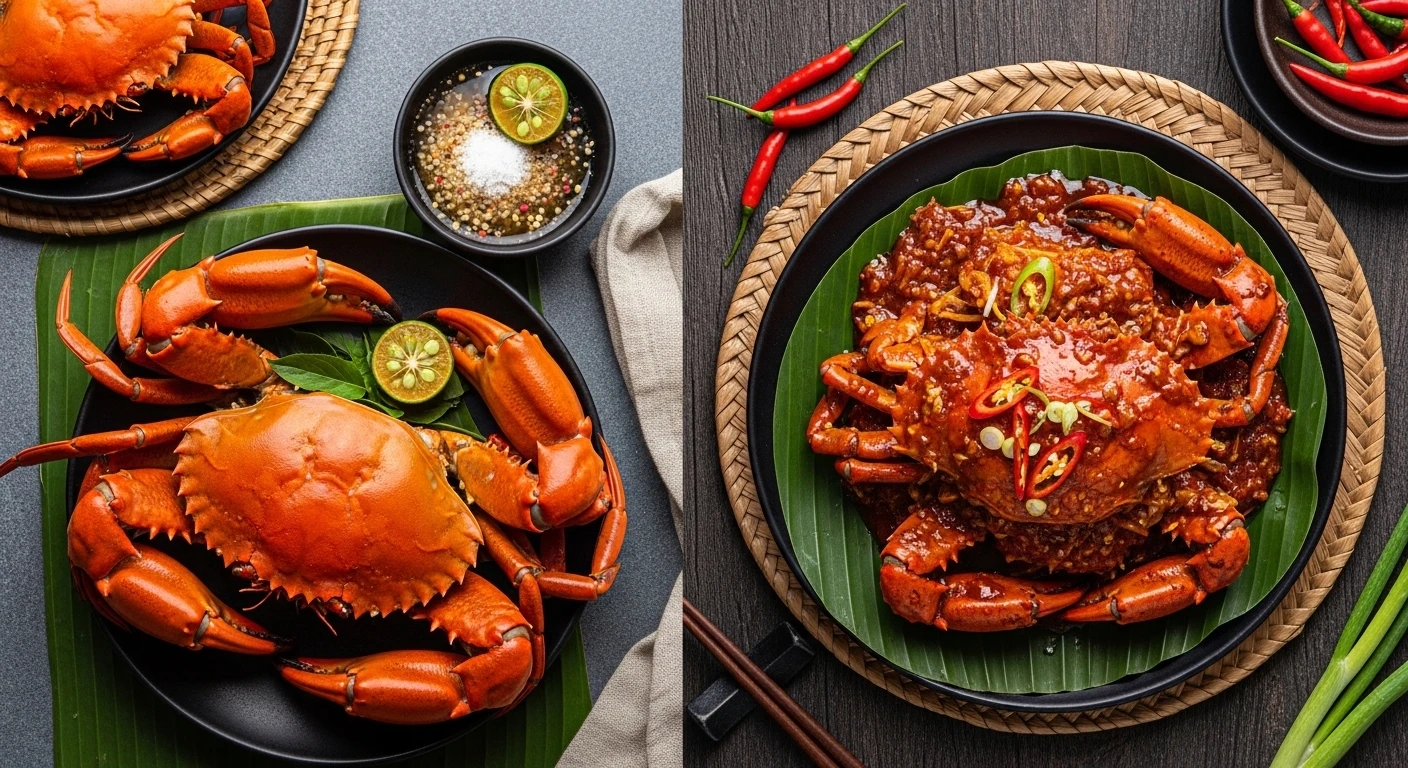
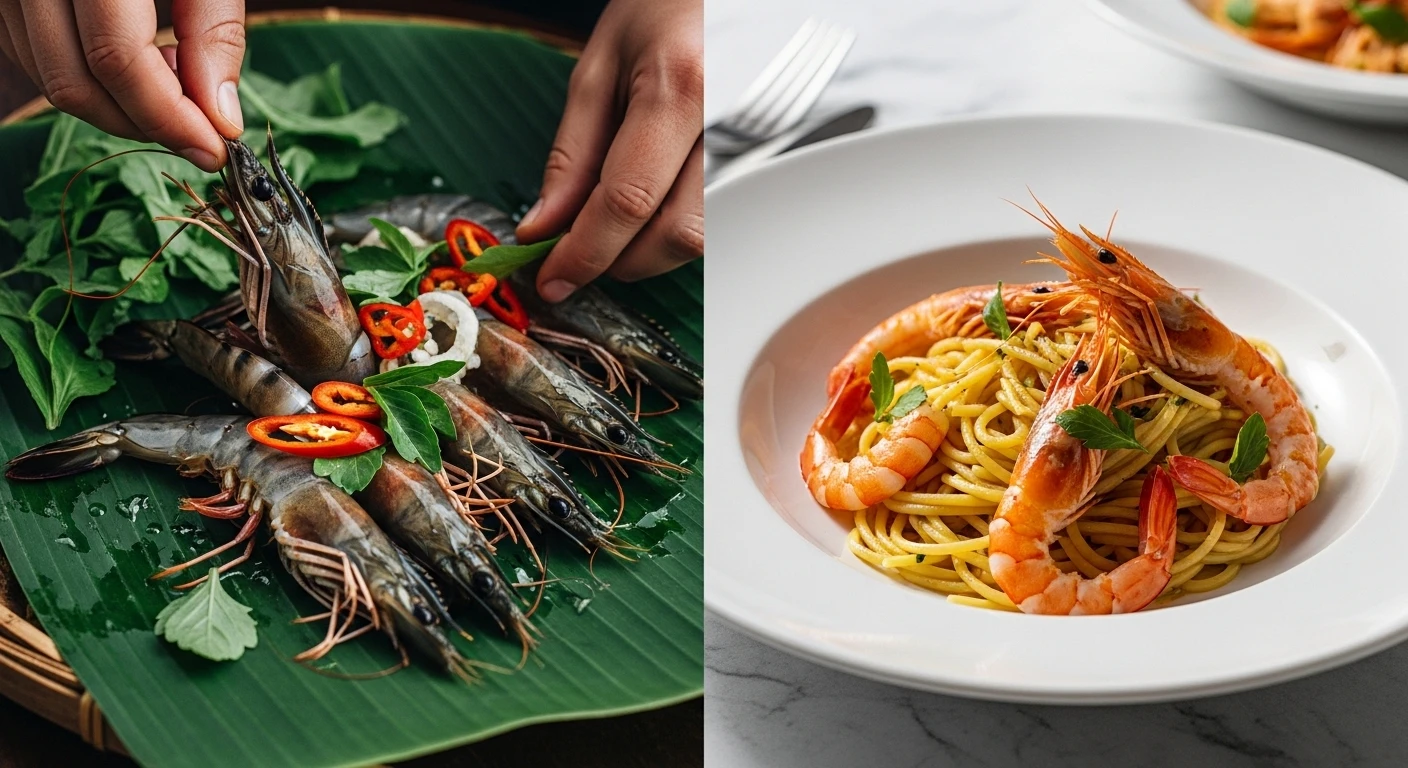
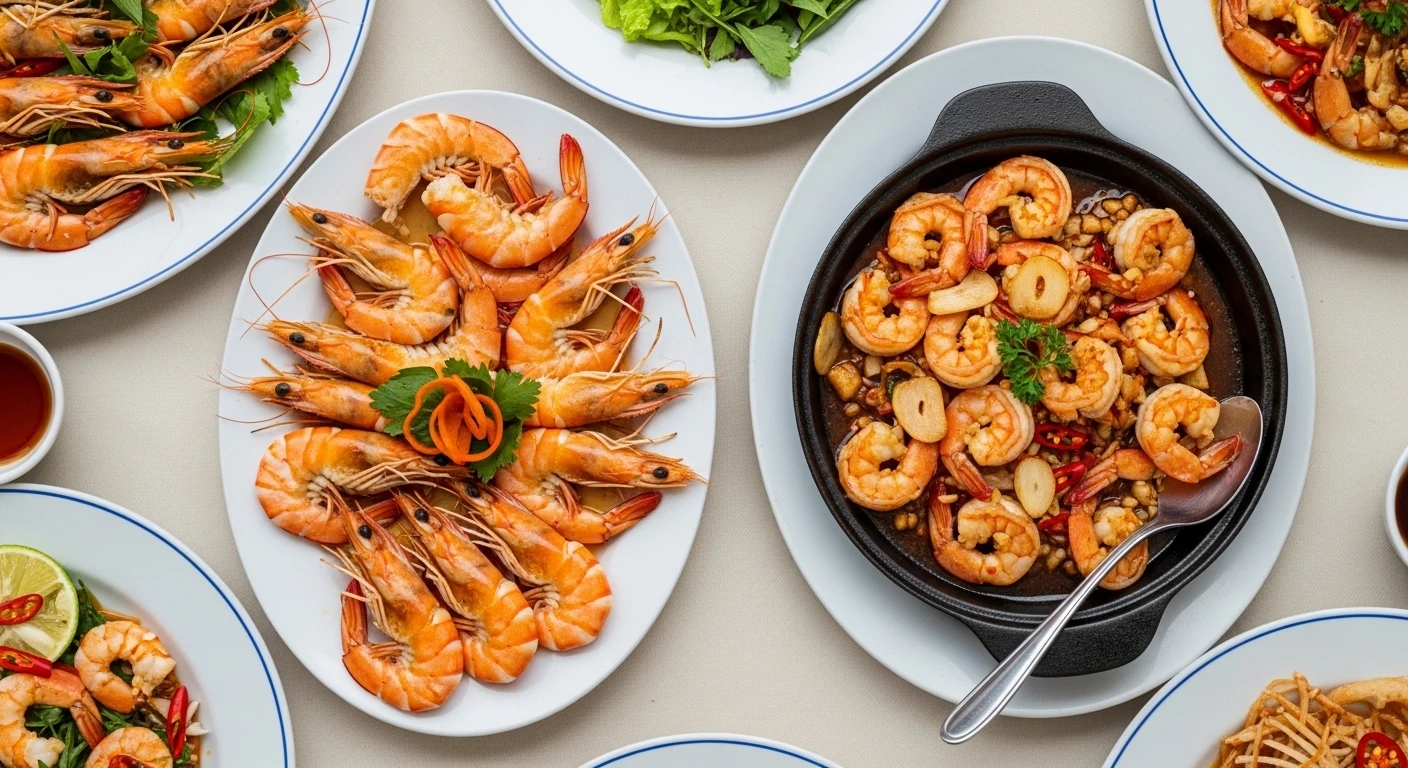
" The world over, coastlines and river deltas birth a primal fascination with crab. It's a creature that embodies both brute force and delicate sweetness, a canvas for human culinary creativity. Mexico and Vietnam, separated by oceans but united by warm waters and vibrant traditions, offer distinct yet equally compelling narratives around this crustacean king. "
1 Mexico: A Symphony of Spice and Citrus
Venture along Mexico's extensive coastlines – from the Pacific's rugged shores to the Gulf's warmer embrace – and you'll find crab treated with an exuberance that mirrors the vibrant culture itself. Mexican crab dishes are often about amplification: bold spices, zesty lime, and a festive spirit that demands sharing.
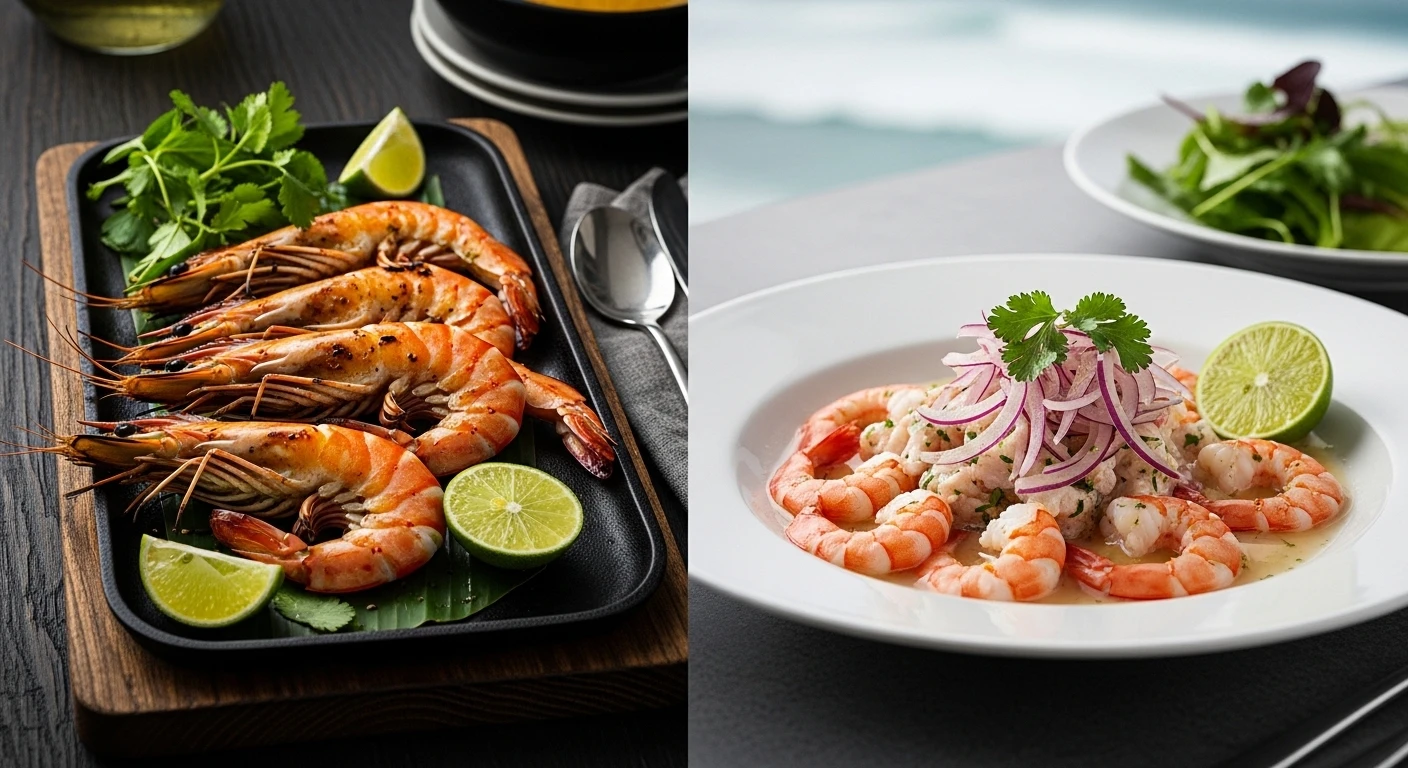
Think Cangrejo al Ajillo, where crab is sautéed in copious amounts of garlic and olive oil, creating an intoxicating aroma that fills seaside cantinas. Or the iconic Jaibas Rellenas, where the sweet crab meat is mixed with vegetables, spices, and sometimes breadcrumbs, then baked back into its shell to create a rich, decadent appetizer. These aren't subtle preparations; they are bold statements of flavor.
The Mexican approach often highlights the crab's natural sweetness as a counterpoint to its potent seasonings. Chili peppers, from mild guajillos to fiery habaneros, provide a backbone of heat. Lime juice, essential to almost every Mexican savory dish, cuts through richness and brightens the palate, making each bite sing. It’s a style that's as much about the communal joy of eating as it is about the quality of the ingredient, a true celebration of the ocean's bounty.
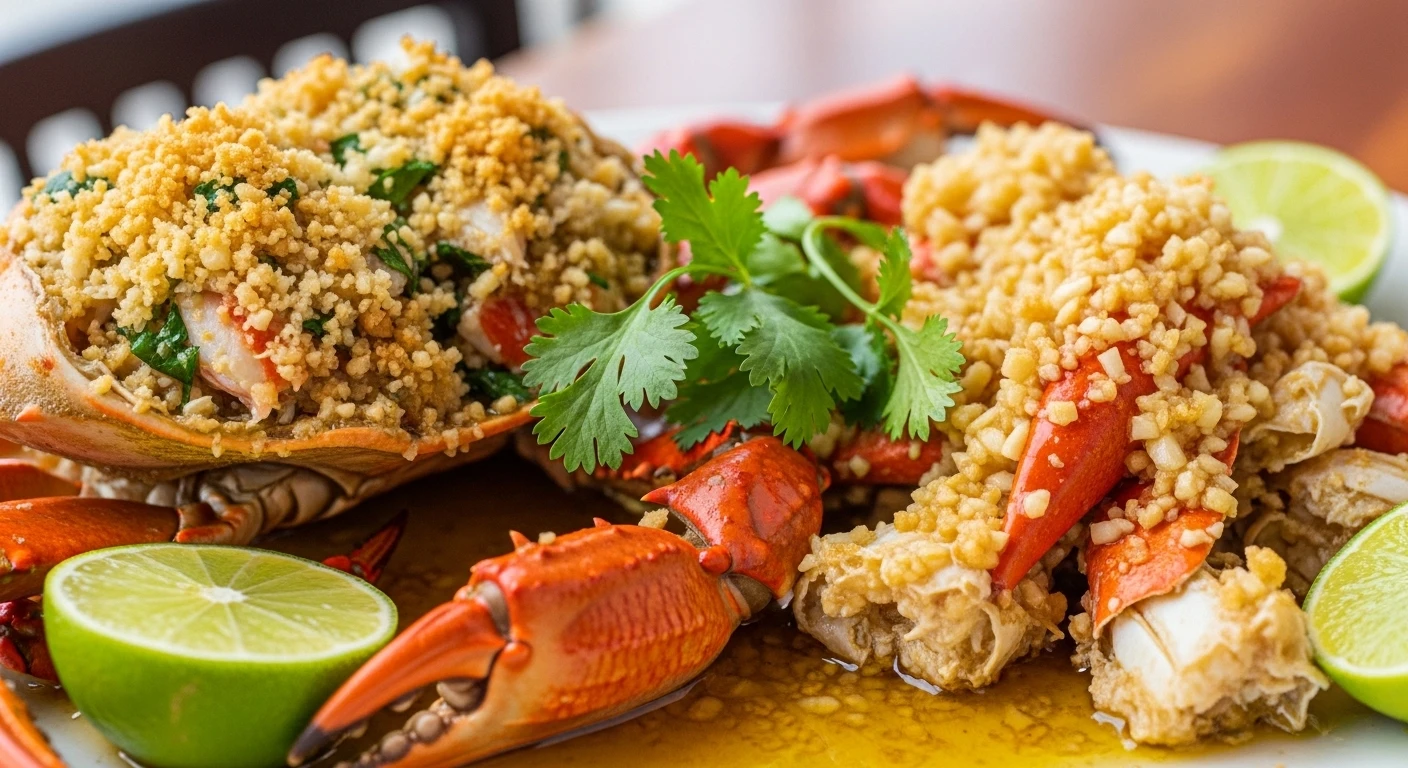
📸 Fiesta on a Plate: Mexican crab dishes are known for their bold flavors and colorful presentation.
2 The Mekong Delta: Where Sweetness Reigns Supreme
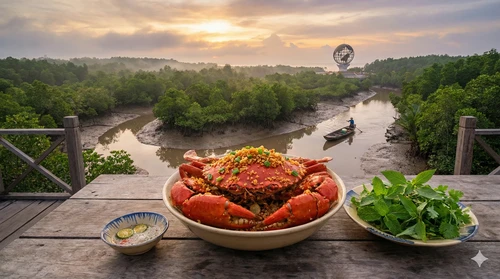
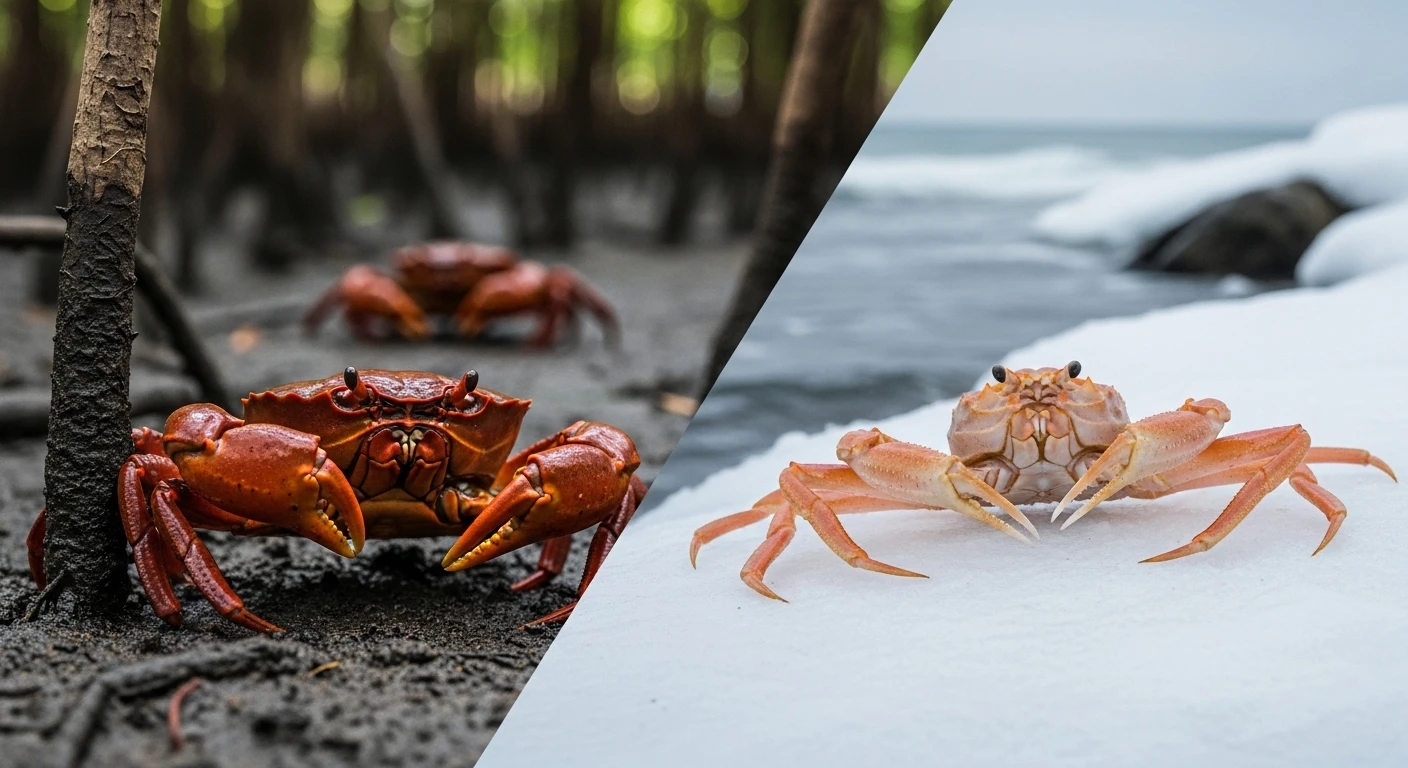
Journey inland to the labyrinthine waterways of Vietnam's Mekong Delta, and the crab narrative shifts dramatically. Here, the focus is on purity, on coaxing out the inherent sweetness and subtle oceanic character of the crab itself. This is a land where mud, mangroves, and freshwater rivers meet, creating a unique terroir that imbues its seafood with a distinct, almost delicate, flavor profile.
The stars of this region are often the mud crabs, particularly those from the Ca Mau province. These aren't just crabs; they are a product of an ecosystem. They thrive in brackish waters, feeding on a diet that shapes their firm, succulent meat and often, in the case of female crabs, a rich, deep orange roe that is pure luxury. The prized Ca Mau sea crab, known for its dense, sweet meat and formidable claws, is a testament to this rich environment.
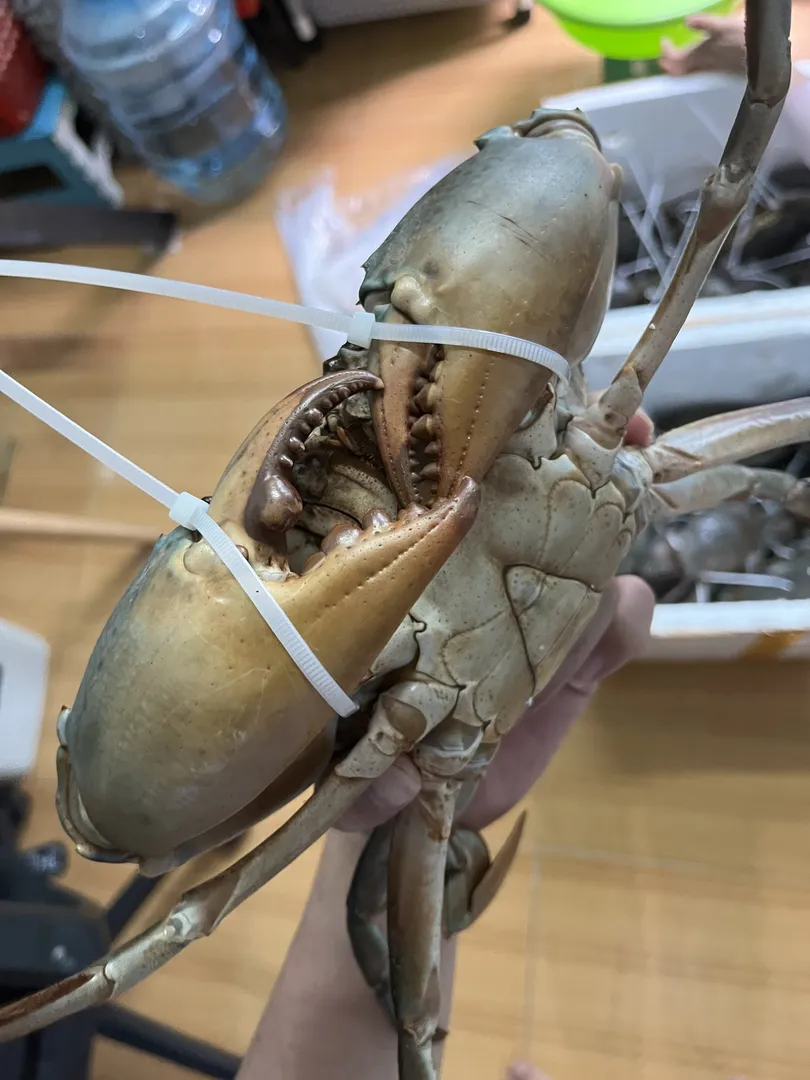
Heritage Ingredient
Ca Mau Jumbo Mud Crab
Ca Mau Jumbo Mud Crab
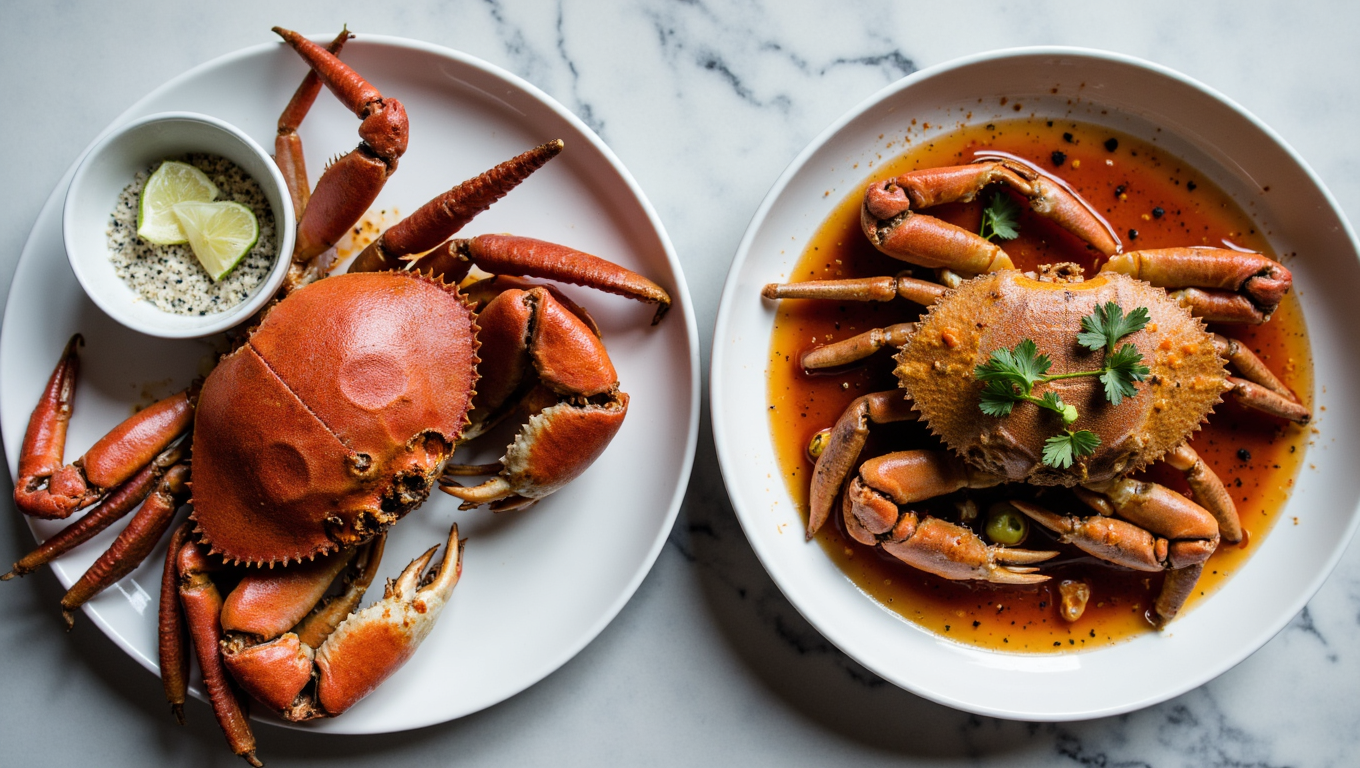
A large male mud crab prized for dense, sweet meat and thick claws, commonly used in steamed crab and grilled crab dishes across the Mekong Delta.
An icon of coastal culinary heritage, featuring firm, sweet meat that captures the raw power and freshness of Ca Mau's tides.
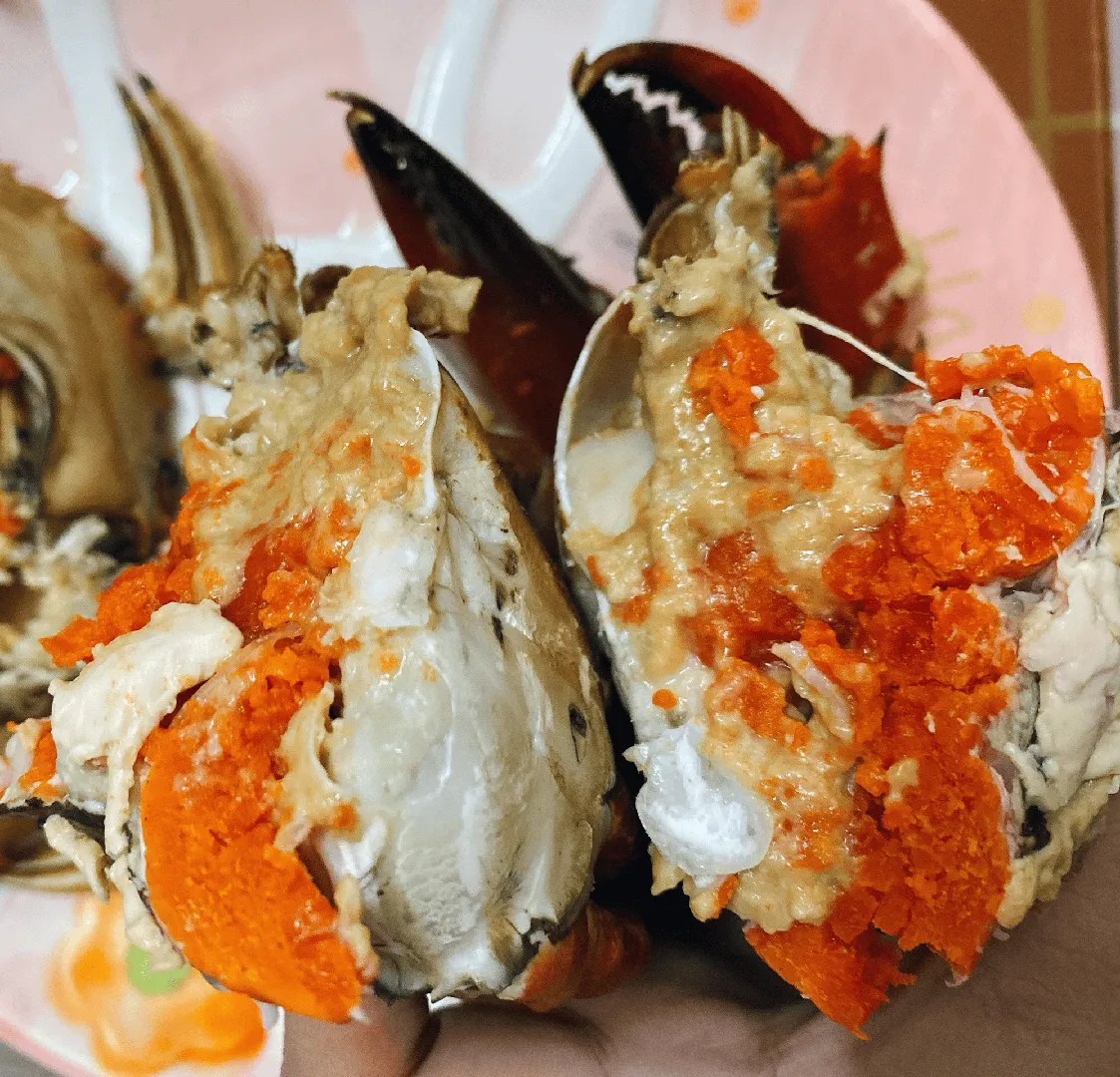
Heritage Ingredient
Ca Mau Roe Mud Crab
Ca Mau Roe Mud Crab
A female mud crab known for deep orange roe and a rich, creamy finish, often featured in celebratory Southern Vietnamese seafood meals.
A crimson treasure hidden within a shell, boasting rich, creamy roe that melts on your tongue like a golden sunset over the delta.
Cooking methods in the Mekong Delta tend to be minimalist, respecting the crab's natural essence. Steaming, grilling over charcoal, or simmering in light broths are common. The objective is to enhance, not mask. Accompaniments are usually simple: a lime-salt-chili dip that provides just enough tang and heat to awaken the palate, or fresh herbs that offer aromatic notes without overpowering the crab's inherent sweetness. It's a philosophy of less is more, allowing the quality of the ingredient to truly shine.
3 Flavor Profile: A Tale of Two Worlds
The most striking difference lies in the fundamental flavor profiles. Mexican crab cuisine is characterized by its boldness. Dishes are often robust, spicy, and assertively seasoned. The heat from chilies, the sharpness of lime, and the punch of garlic are central, creating an exciting, sometimes fiery, culinary experience. It’s designed to excite the senses and encourage lively conversation.
Vietnamese crab, particularly from the Mekong Delta, leans towards subtlety and sweetness. The goal is to highlight the natural, almost delicate, flavor of the crab meat. Cooking methods are chosen to preserve this sweetness, and accompaniments are minimal, designed to complement rather than dominate. The rich roe of a female Ca Mau crab is often considered a delicacy in itself, savored for its creamy texture and profound flavor.
4 Preparation: From Sizzle to Steam
Mexican kitchens often feature high-heat cooking. Sautéing in garlic-infused oil (al ajillo), grilling over open flames, or baking stuffed crabs are common. These techniques often incorporate a complex layering of spices and aromatics.
In contrast, the Mekong Delta champions gentler methods. Steaming, especially with aromatics like lemongrass and beer (a popular Vietnamese technique), allows the crab's natural juices to be retained, concentrating its sweetness. Grilling is also popular, often with a simple marinade or just brushed with a little oil and salt, letting the smoke add an additional layer of flavor. For dishes like Lẩu Cua (crab hotpot), the crab is simmered briefly in a flavorful broth, its essence infusing the entire soup.
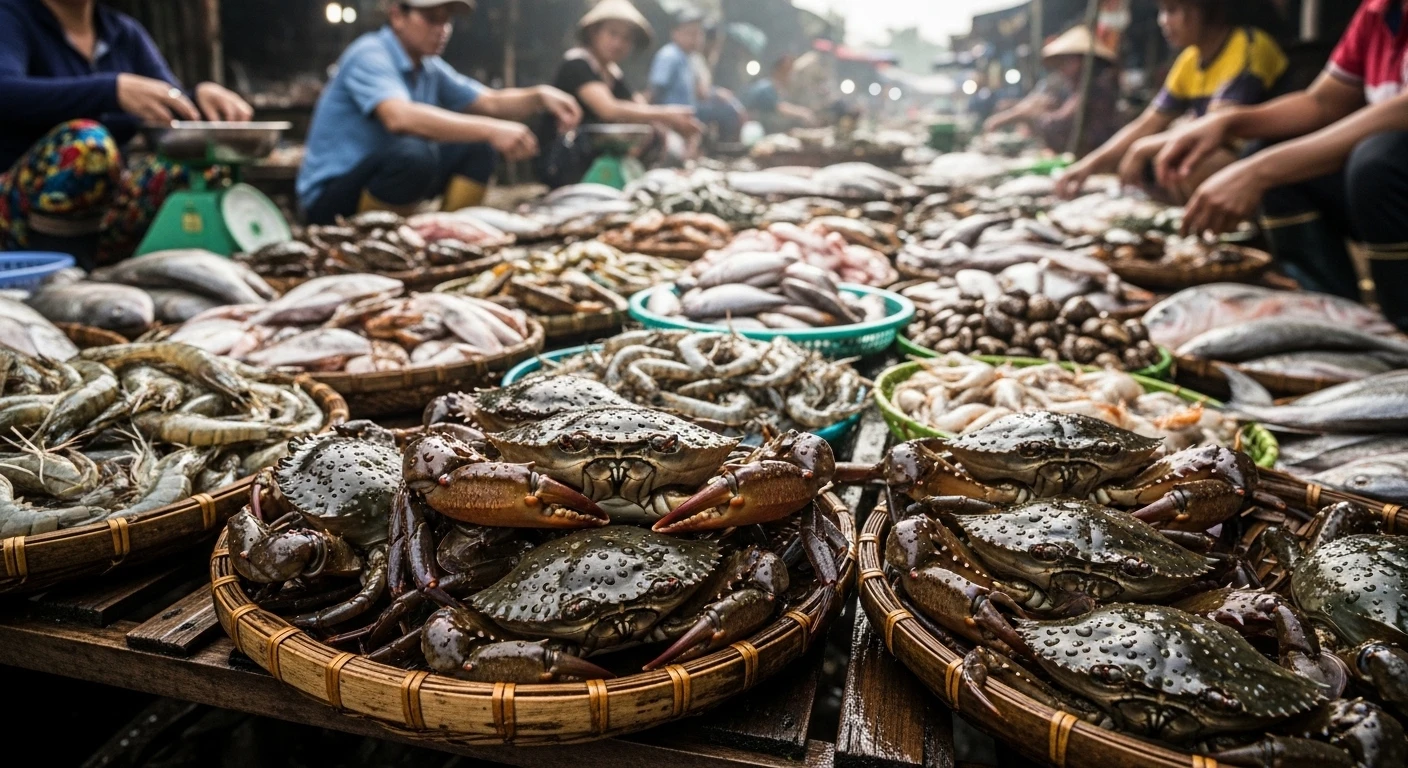
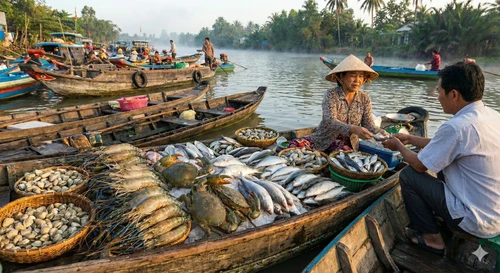
📸 Mekong Market Scene: Freshness is paramount, with crabs often displayed live and glistening.
5 Condiments: The Supporting Cast
Mexican crab often comes with a side of salsas – ranging from mild tomato-based concoctions to fiery chili-lime blends – or creamy, rich sauces that complement the crab's texture. Tortillas are almost always present, whether for scooping up sauces or building delightful crab tacos.
In Vietnam, especially the Mekong Delta, the condiment is far more elemental. The ubiquitous salt, pepper, and lime dip is a masterclass in minimalist perfection. The saltiness of the sea salt, the sharp bite of cracked black pepper, and the bright acidity of fresh lime juice together elevate the crab's sweetness without hiding it. Fresh herbs like cilantro or mint might offer a fragrant garnish. For a richer experience, some might opt for a garlic butter sauce, though this is less common for the truly prized crabs.
6 Dining Together: A Shared Crustacean Experience
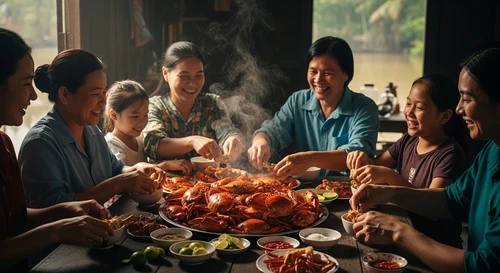
Both cultures hold crab in high esteem, often serving it as a celebratory dish or a centerpiece for social gatherings. In Mexico, a table laden with garlic shrimp, ceviche, and a platter of steaming crab legs is a common sight at seaside restaurants, a feast meant to be enjoyed with family and friends, often accompanied by cold beers or margaritas.
The Mekong Delta sees crab as a symbol of abundance and a staple of festive meals. Communal dining is central; a large steamed crab is often cracked open at the table, its treasures shared. The act of peeling and eating crab is itself a social ritual, fostering connection. The presence of diverse crab types, from meaty male crabs to the coveted roe-filled females like the Ca Mau Roe Crab, adds a layer of appreciation for nature's bounty and careful cultivation.
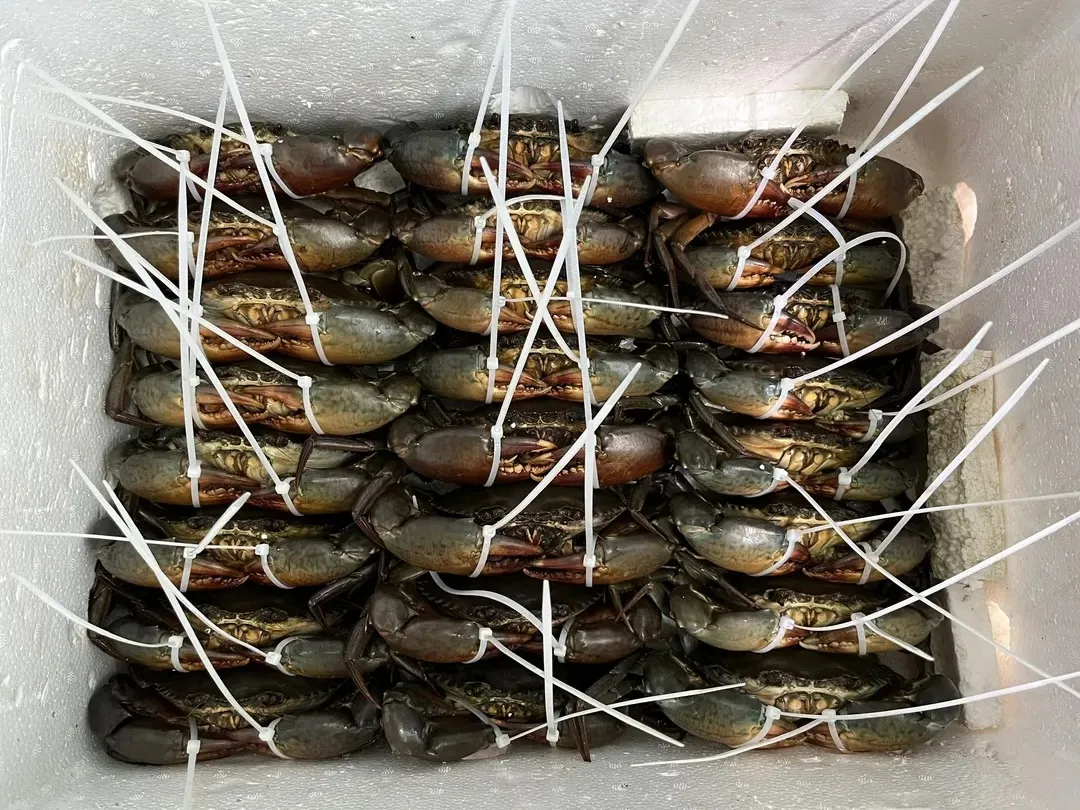
Heritage Ingredient
Export-Grade Ca Mau Roe Crab
Export-Grade Ca Mau Roe Crab
A carefully sorted roe crab selected for size, shell quality, and roe consistency, suitable for explaining premium grading in Vietnamese crab culture.
The pinnacle of perfection—pristine shells and bursting roe, meticulously selected to conquer the hearts of global gourmets.
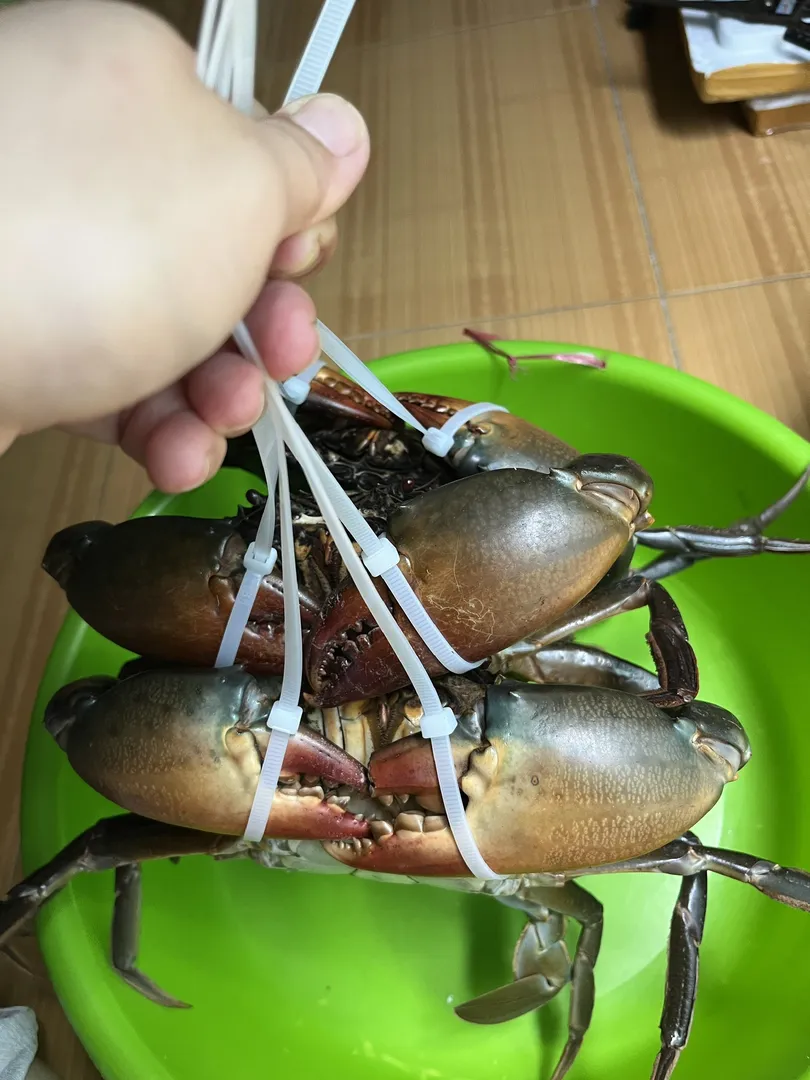
Heritage Ingredient
Giant Ca Mau Mud Crab
Giant Ca Mau Mud Crab
A larger export-grade mud crab with dramatic claws and thick meat, often used to illustrate oversized crab categories in Vietnamese seafood markets.
A titan of the ocean, offering colossal claws filled with muscular, succulent meat that elevates every feast into a royal experience.
7 The Call of the Delta: Your Next Culinary Adventure
If you are captivated by the bold, zesty flavors of Mexican coastal cuisine, but find yourself yearning for a more refined, ingredient-focused seafood experience, then Vietnam, and especially the Mekong Delta, beckons. It offers a journey into the subtle art of letting exceptional ingredients speak for themselves.
Imagine yourself in a bustling riverside market in Can Tho, the air thick with humidity and the scent of fresh produce. You select a live mud crab, its shell gleaming. Later, you watch as it’s steamed to perfection with a few stalks of lemongrass, its aroma filling the air. The first bite is pure, unadulterated sweetness, a flavor that is profoundly satisfying precisely because it hasn’t been disguised.
The unique ecosystems of the Mekong, from the brackish mangroves of Ca Mau to the freshwater rivers, yield crabs with a quality and flavor profile distinct from any other. It's an experience that will redefine your understanding of what crab can be. You'll discover the luxury of simplicity, the profound satisfaction of purity, and the warm hospitality that defines Southern Vietnamese food culture.
8 A Culinary Dialogue
Ultimately, the comparison between Mexican and Vietnamese crab traditions isn't about declaring a winner. It’s about appreciating two distinct, yet equally valid, philosophies of celebrating the ocean's gifts. Mexico offers a vibrant, full-throttle embrace of flavor, a joyous fiesta of spices and zest. Vietnam, particularly the Mekong Delta, presents a more introspective, elegant approach, focusing on the intrinsic sweetness and delicate nuances of the crab, honoring its origin and purity.
Both offer unforgettable experiences, but for those who seek to understand the essence of crab, to taste its purest form, and to immerse themselves in a culture that reveres the ingredient above all else, the journey to the Mekong Delta and the celebrated Ca Mau sea crab awaits. It's a pilgrimage for the palate, a chance to taste sweetness, texture, and terroir in perfect harmony.
Craving Delta Delicacies?
Explore the unique flavors of Vietnamese mud crab. Learn more about the prized Ca Mau varieties.
Discover Vietnamese Crab