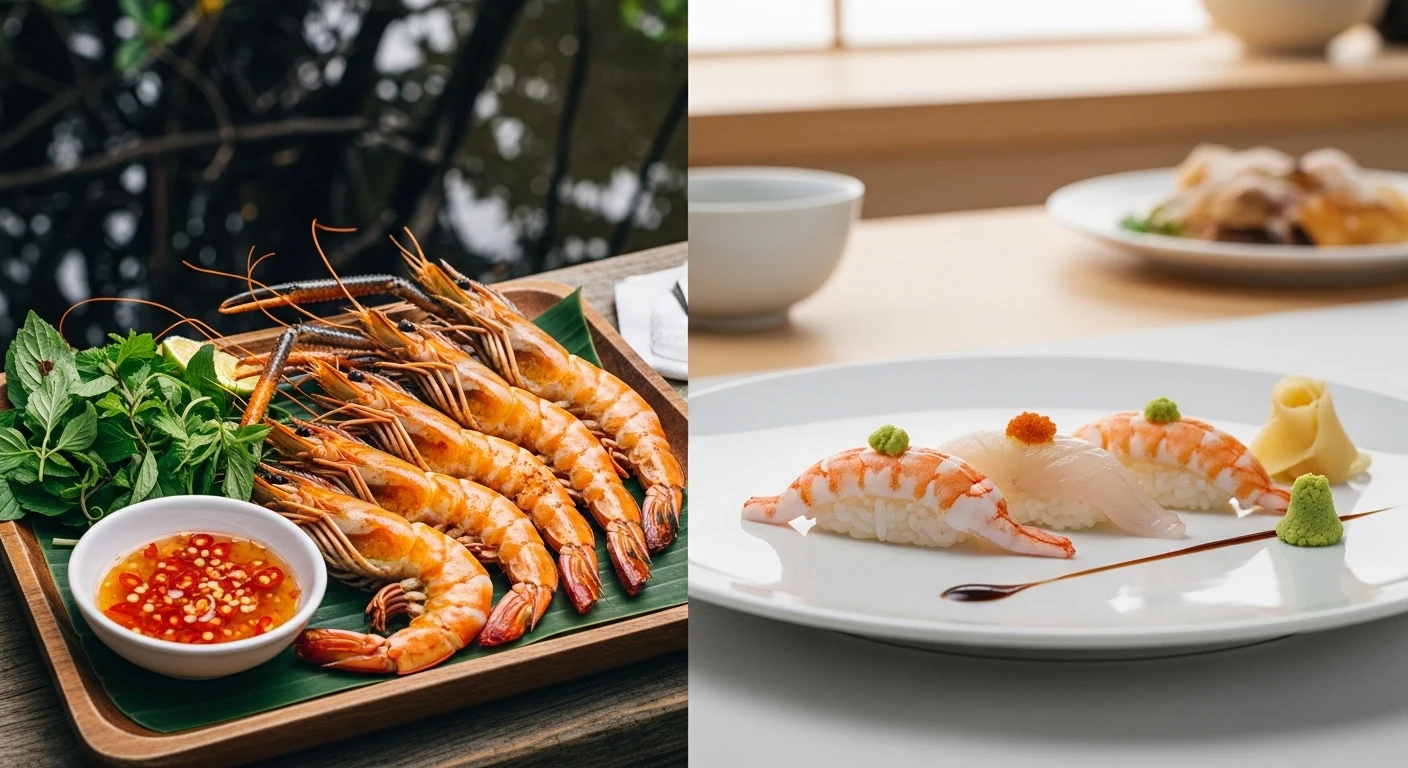
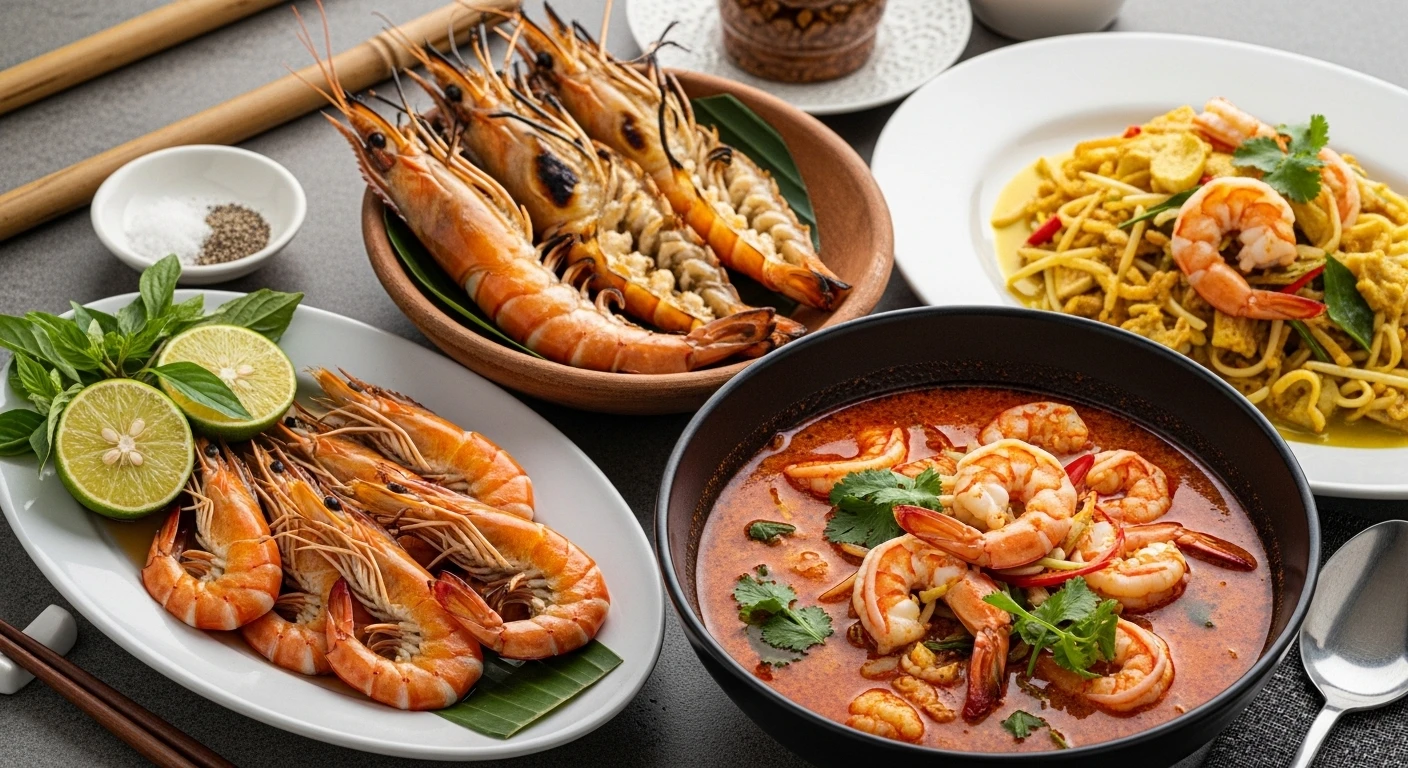
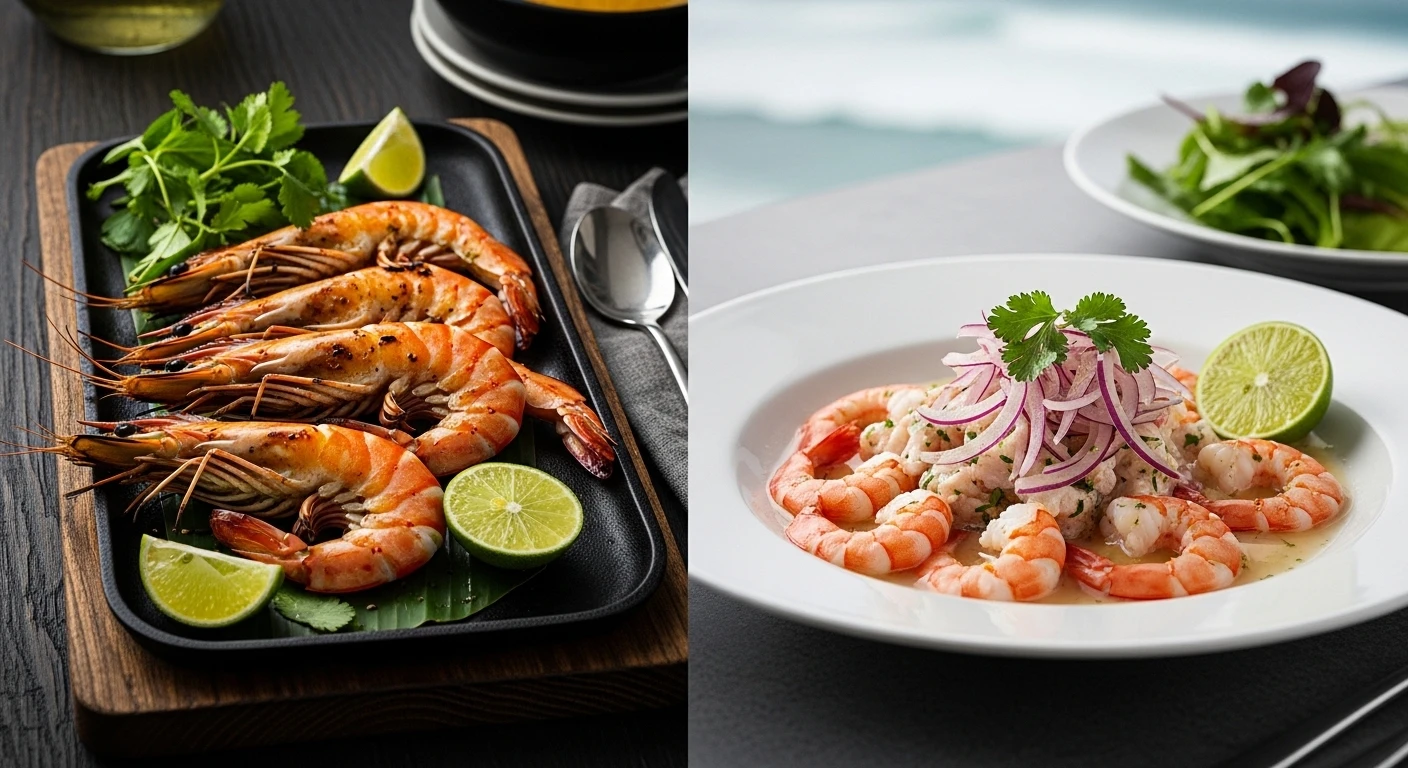
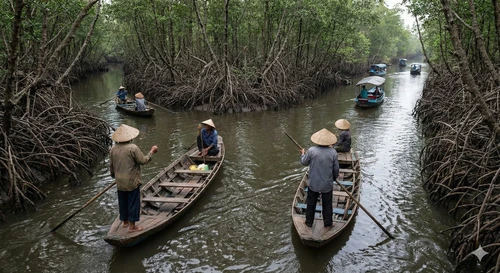
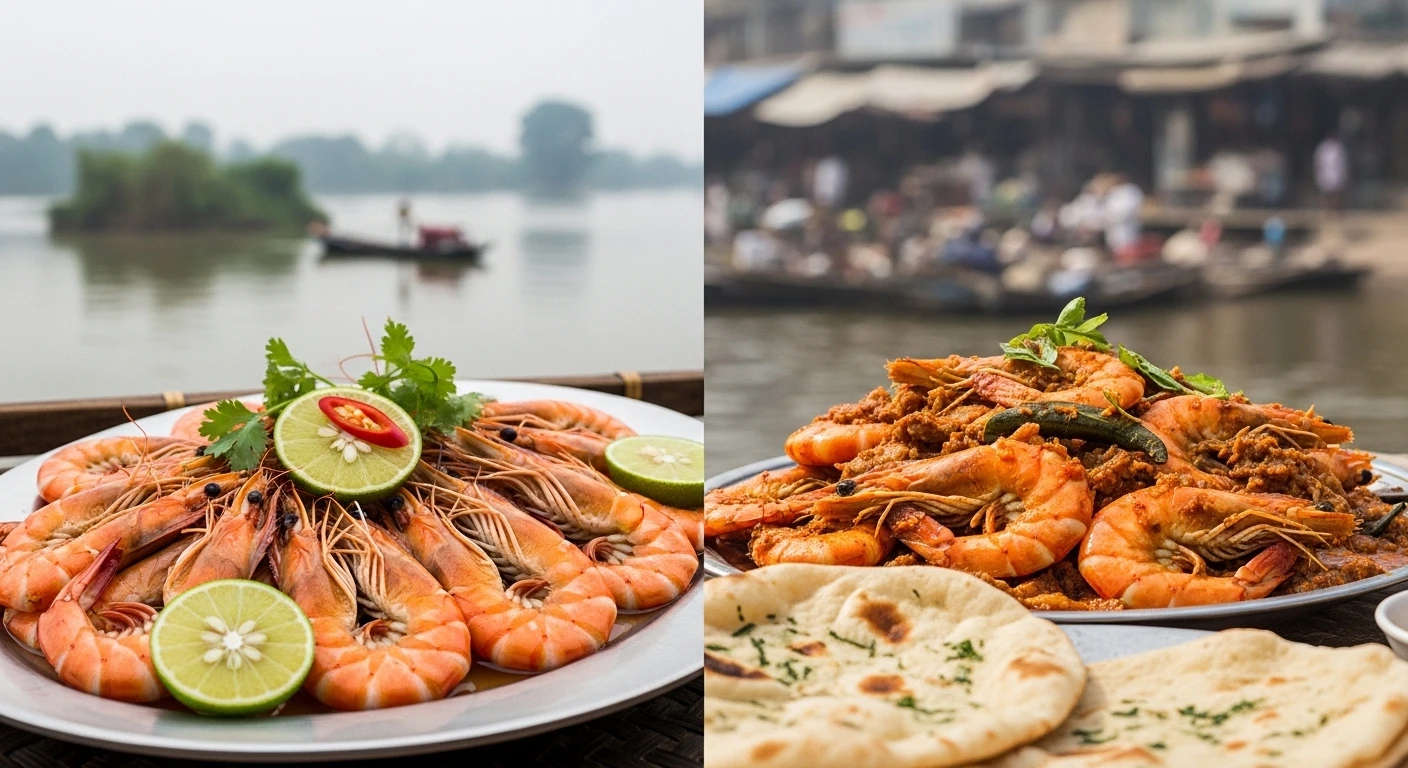
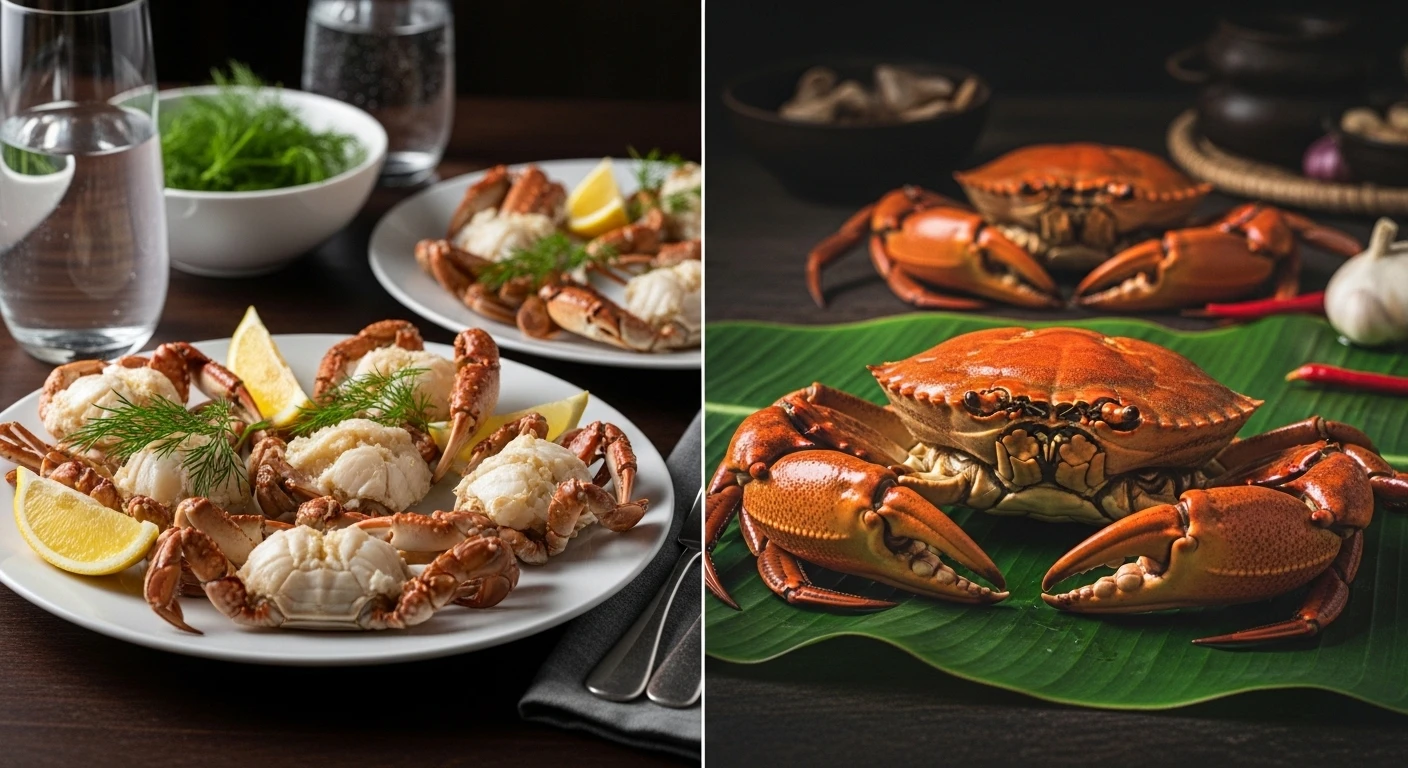
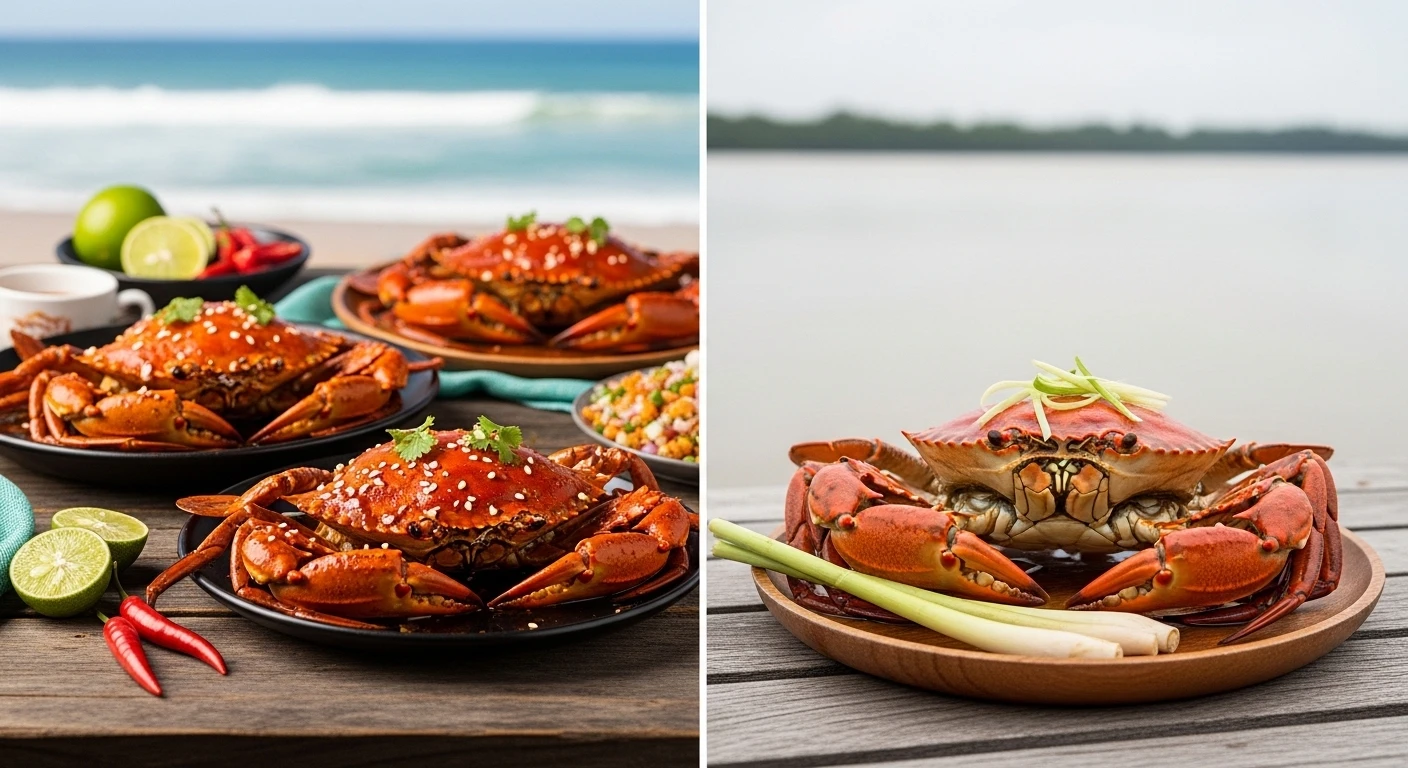
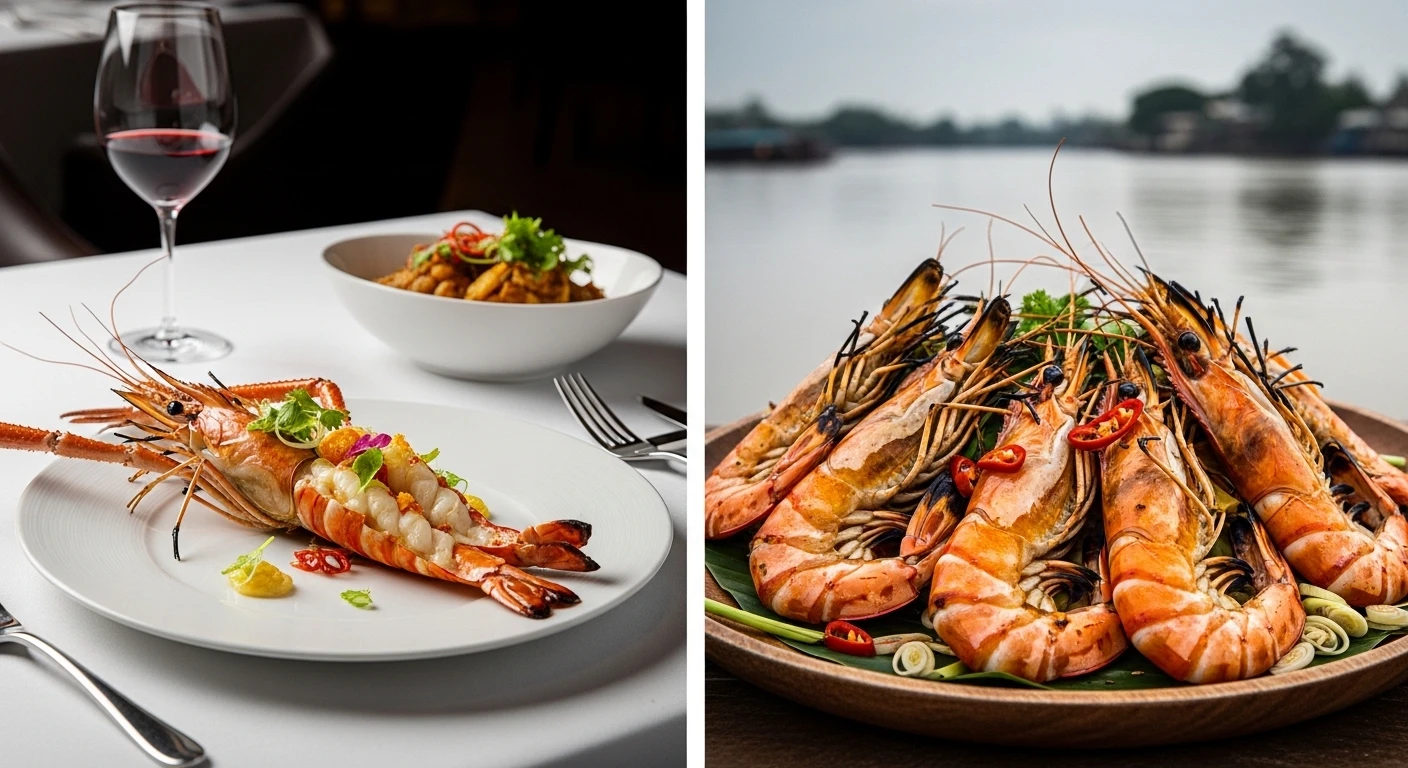
" The UAE: a tapestry of global culinary dreams, where luxury meets the sea. Vietnam: a land shaped by water, where the pulse of life is tied to the tides of its mighty delta. Both celebrate crab, yet their approach—from the ocean to the plate—tells vastly different stories. "
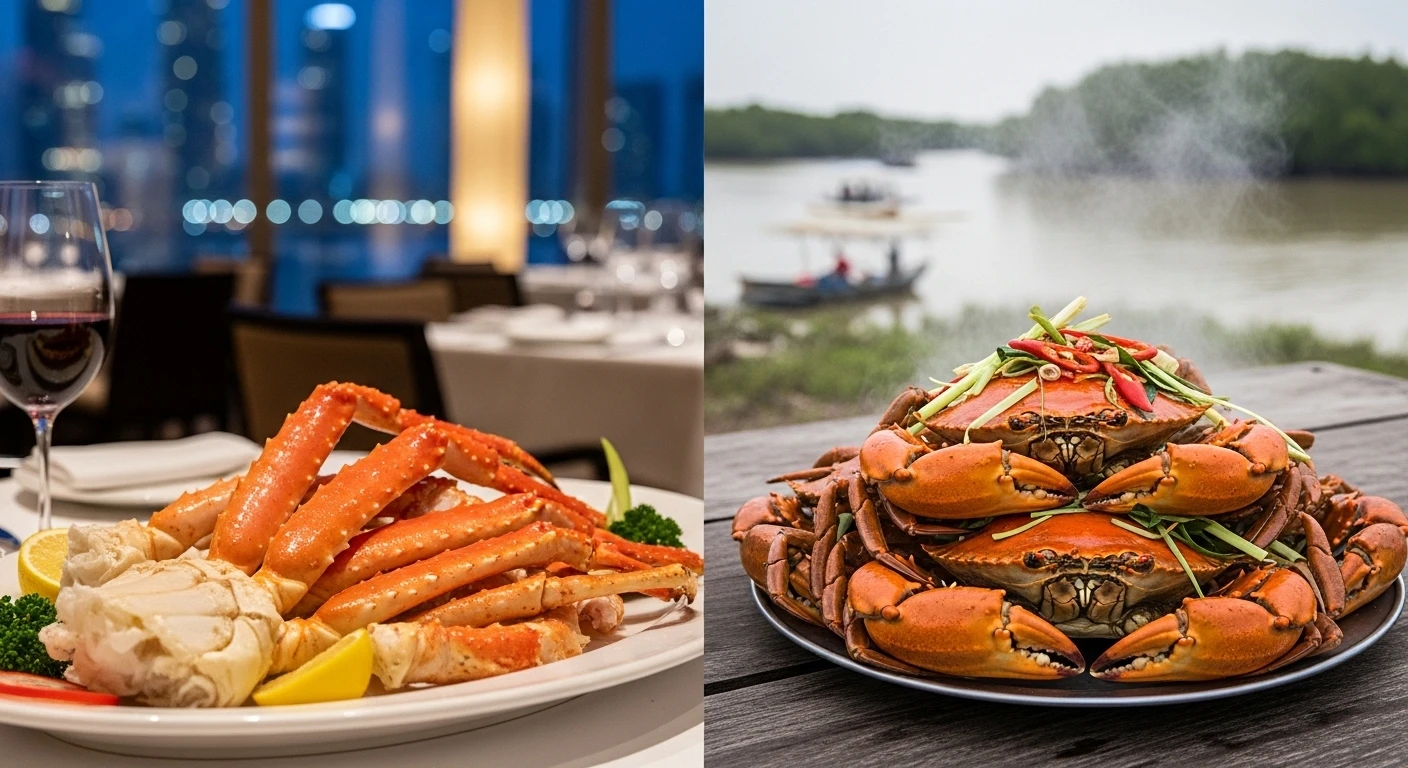
📸 Contrast in Culinary Worlds: A visual juxtaposition of seafood richness.
1 The Emirati Gaze: Luxury and the Global Table
The United Arab Emirates, particularly Dubai and Abu Dhabi, are titans of cosmopolitan dining. Here, seafood is not just sustenance; it’s an event. Expectations are sky-high, driven by a discerning international clientele and a landscape of world-class chefs.
In the UAE, "crab" often conjures images of opulence. Think Alaskan King Crab legs, glistening and colossal, served with drawn butter. Or delicate Dungeness crab, meticulously extracted and presented in fine dining settings. The emphasis is on premium varieties, often flown in from distant, pristine waters, showcasing their inherent quality through minimalist preparations that highlight butter, garlic, or delicate herb infusions. The experience is about indulgence, exclusivity, and a celebration of the finest seafood the world has to offer, often within glamorous, architecturally stunning venues.
Expectations in the UAE
Global Variety: Access to an array of the world's most sought-after crab species.
Refined Presentation: Meticulous plating, elegant restaurant settings, and impeccable service.
The Dubai/Abu Dhabi Crab Experience
Focus on Status: Often associated with high-end establishments and premium pricing.
Sophisticated Palates: Catering to a global audience with diverse culinary preferences.
2 The Mekong Delta's Heartbeat: Crab as Lifeblood
Venture south in Vietnam, and you enter the labyrinthine waterways of the Mekong Delta. This is a world where the rhythm of life is dictated by the ebb and flow of the river and the bounty it provides. Here, crab is not just a luxury; it is an integral part of the ecosystem, the local economy, and the daily diet. Ca Mau, the southernmost province, is particularly renowned for its rich mangrove forests and pristine coastal waters, which are the cradle for some of the most flavorful mud crabs on earth.
In Ca Mau, the focus is on the crab species native to these brackish waters – primarily the mud crab. This isn't about exotic imports; it's about the raw, unadulterated essence of a crab that has thrived in nutrient-rich environments. The taste is profoundly sweet, with a robust, briny depth that speaks of its origins. Whether it’s the dense, meaty claws of a male crab or the rich, sunset-hued roe of a female, Vietnamese crab culture celebrates the ingredient itself. The value lies not in rarity from afar, but in the freshness, the terroir, and the deep-seated tradition of utilizing every aspect of this crustacean.
Heritage Ingredient
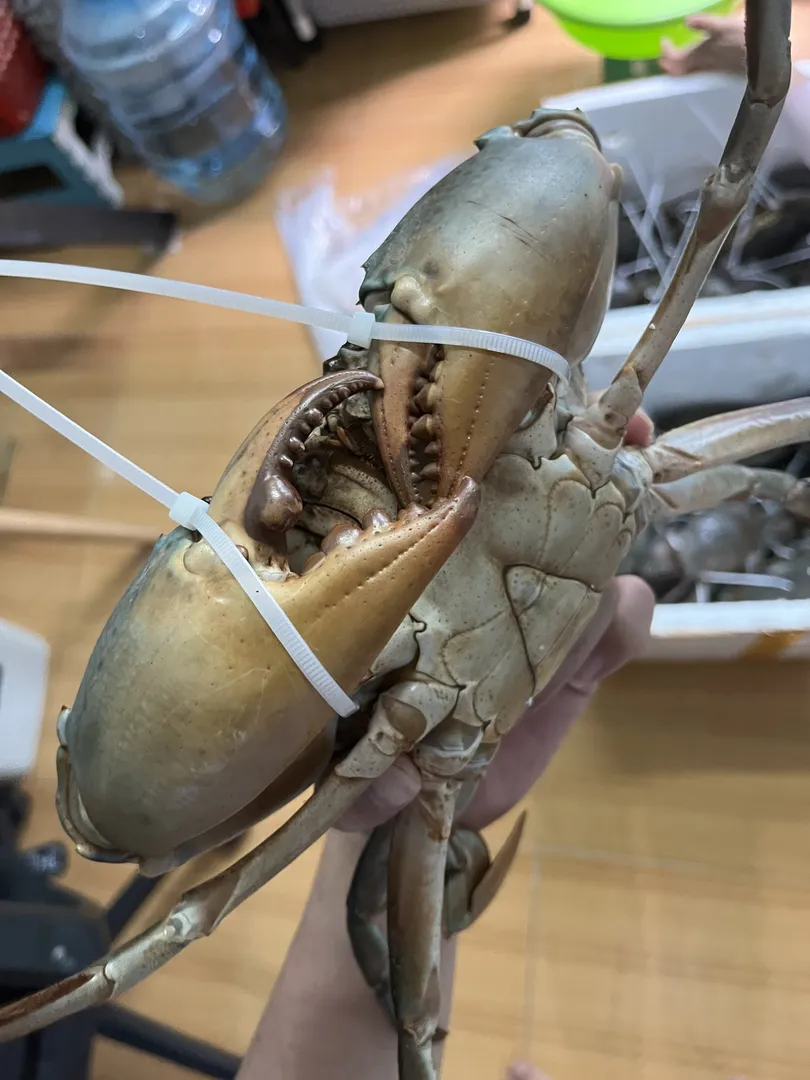
Ca Mau Jumbo Mud Crab
Ca Mau Jumbo Mud Crab
A large male mud crab prized for dense, sweet meat and thick claws, commonly used in steamed crab and grilled crab dishes across the Mekong Delta.
Where every ingredient captures the essence of the wind and tides, weaving a vibrant culinary tapestry of the Mekong region.
3 Flavor Profiles: A Taste of Two Worlds
The most striking difference lies in the flavor. UAE’s premium crab offerings often lean towards a clean, sweet taste, amplified by simple, luxurious accompaniments like butter and lemon. This approach respects the high-quality, often imported crab’s natural, subtle sweetness.
Vietnamese mud crab, particularly from Ca Mau, offers a more intense, complex sweetness. It’s a flavor deeply intertwined with the brackish waters and mangrove ecosystems where they grow. This sweetness is often complemented by bolder, more aromatic Vietnamese cooking styles. While simple steaming is prized for showing off true quality, dishes like grilled crab with salt and chili, or crab stir-fried with tamarind, are common. These preparations don't mask the crab's flavor but rather enhance it with layers of savory, spicy, and sour notes. The roe, when present, is a particular delight – creamy, rich, and a celebrated delicacy.
UAE Flavor
Subtle & Pure: Emphasizes the natural, delicate sweetness of the crab.
Luxurious Simplicity: Butter, garlic, lemon, herbs are common enhancers.
Mekong Delta Flavor
Intense & Briny: A deep, robust sweetness with distinct oceanic notes.
Aromatic & Bold: Often paired with chili, salt, pepper, garlic, tamarind, or grilled.
Heritage Ingredient
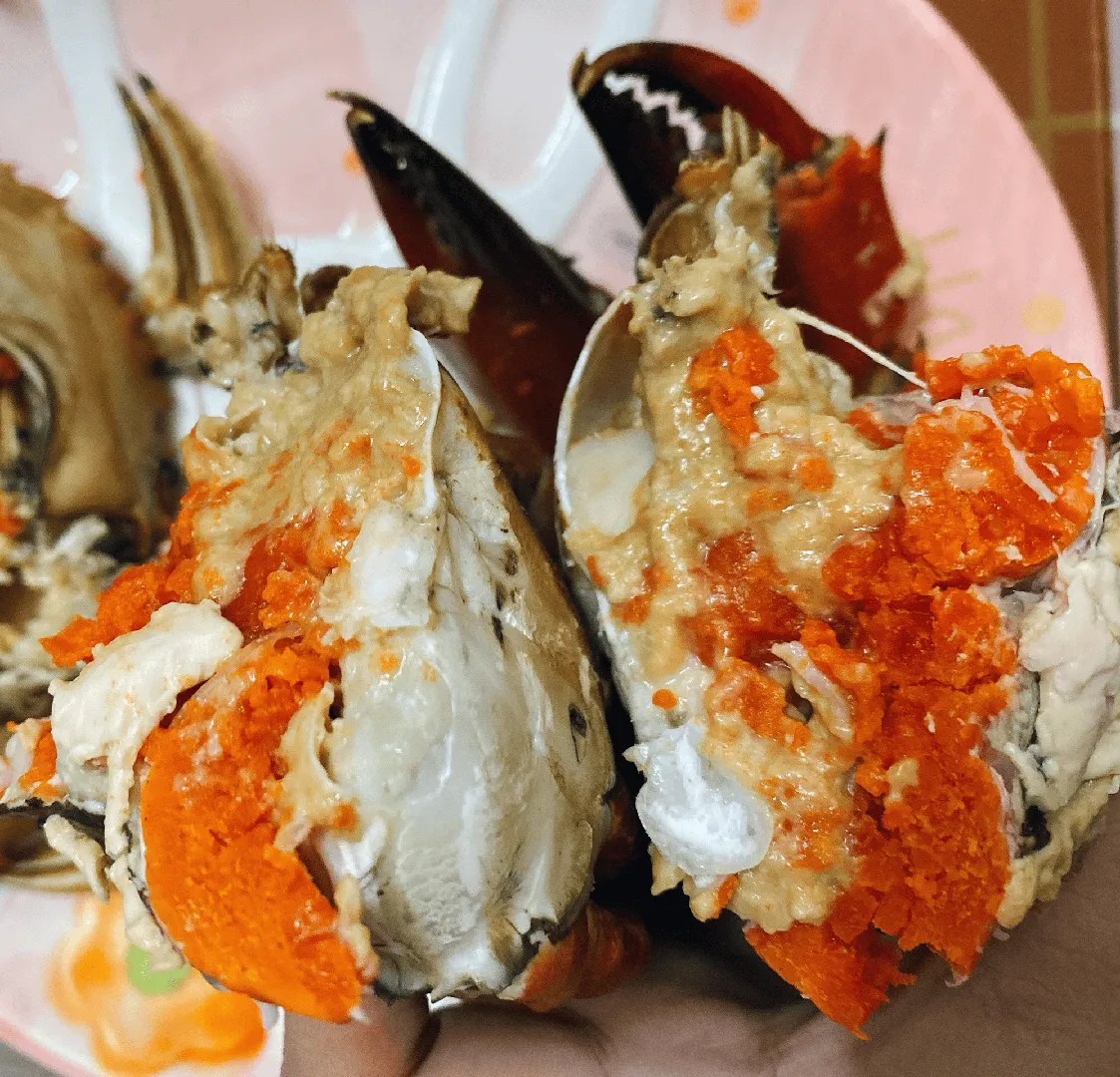
Ca Mau Roe Mud Crab
Ca Mau Roe Mud Crab
A female mud crab known for deep orange roe and a rich, creamy finish, often featured in celebratory Southern Vietnamese seafood meals.
Where every ingredient captures the essence of the wind and tides, weaving a vibrant culinary tapestry of the Mekong region.
4 Culinary Approaches: From Elegance to Emphasis
In the UAE, fine dining dictates a certain finesse. Crab might be featured in delicate crab bisque, refined crab salads, or as perfectly steamed whole crabs where presentation is paramount. The goal is to showcase the crab as a star ingredient, handled with precision and elevated by sophisticated techniques and pairings. Dishes are often designed to be lighter, allowing the natural flavors to shine without overwhelming them. The emphasis is on restraint and showcasing the inherent quality of top-tier seafood.
In the Mekong Delta, the approach is often more about celebrating the abundance and the inherent robustness of the local mud crab. While simple steaming is revered for exceptional specimens, many dishes involve more robust cooking. The iconic "Cua Rang Muoi" (crab fried with salt and chili) is a testament to this – a dish that amplifies the crab’s sweetness with a crispy, savory coating. Grilling over charcoal, often simply seasoned, brings out a smoky depth. The sheer variety of preparations reflects a culture that has lived with this seafood for centuries and knows how to draw out its full potential through various cooking methods, emphasizing flavor intensity and satisfying textures.
UAE Culinary Focus
Refinement & Minimalism: Allowing the crab's pure flavor to be the focus.
Technique-Driven: Precision in steaming, poaching, or serving raw.
Mekong Delta Culinary Focus
Flavor Amplification: Using bold flavors to complement and enhance the crab.
Hearty & Rustic: Grilling, stir-frying, and salt-baked preparations are common.
5 The 'Terroir' of Crab: Habitat and Its Impact
Just as wine carries the essence of its vineyard, crab carries the essence of its environment—its 'terroir'. In the UAE, the seafood often comes from cultivated farms or carefully managed fisheries in the Arabian Gulf, or is flown in from international waters. The resulting crab meat tends to be clean and sweet, reflecting the water quality and feed. The lack of extensive, natural mangrove ecosystems in the immediate vicinity means the characteristic briny depth is less pronounced.
The Mekong Delta, however, is a unique gastronomic landscape. Ca Mau's extensive mangrove forests create a brackish environment rich in organic matter, providing a natural food source for mud crabs. These crabs, often referred to as "mud crabs" for their habitat, grow in a complex ecosystem that imparts a distinctive mineral-rich, slightly salty, and profoundly sweet flavor to their flesh. This unique 'terroir' is what makes Ca Mau crab so sought after – it’s the taste of a specific, ecologically vital region. The texture is often firmer, denser, and more succulent than crabs from less complex environments.
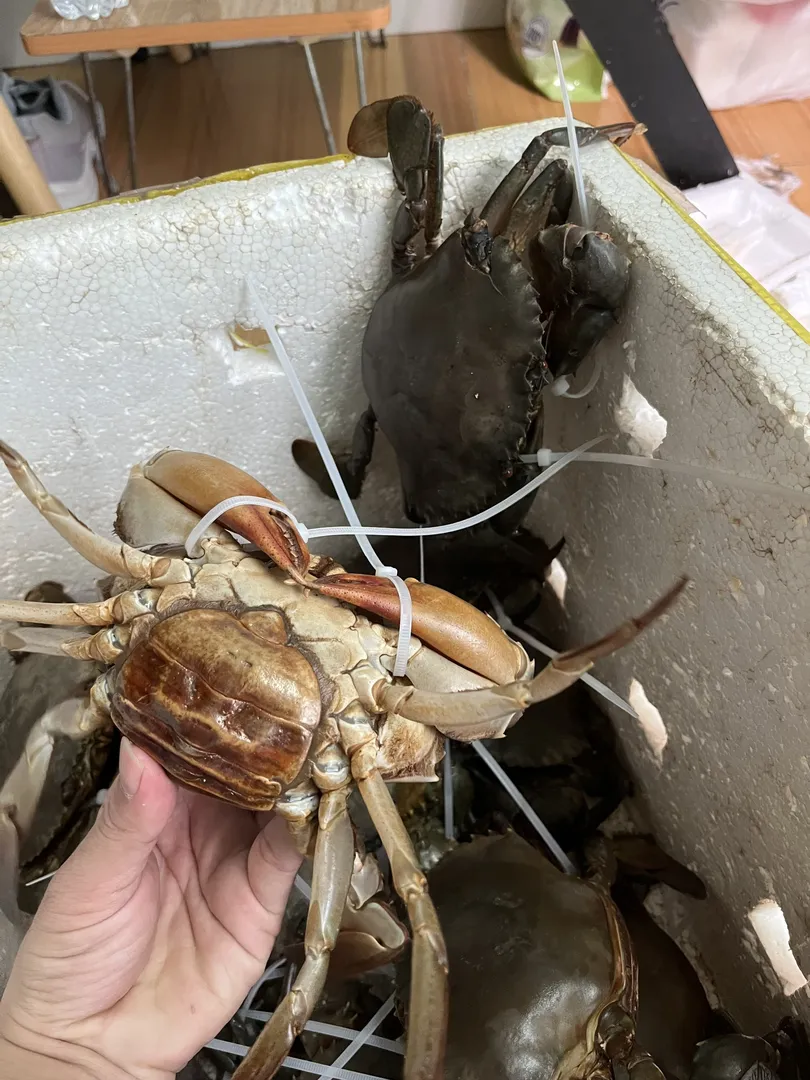
Heritage Ingredient
Young Roe Mud Crab (Virgin Crab)
Young Roe Mud Crab (Virgin Crab)
A young female mud crab identified before full spawning, offering a balance of sweet meat and light roe that sits between meat crab and roe crab styles.
Where every ingredient captures the essence of the wind and tides, weaving a vibrant culinary tapestry of the Mekong region.
6 Social and Cultural Significance
In the UAE, enjoying premium seafood, including crab, is often an occasion for celebration, business dinners, or showcasing hospitality to international guests. It’s about shared indulgence in a luxurious setting. The act of eating expensive crab can be a statement of success and appreciation for the finest things life has to offer.
In the Mekong Delta, crab is woven into the fabric of everyday life and community. While large crabs are certainly a treat for special occasions and festivals, smaller crabs and their meat are used in everyday dishes. Sharing a meal of crab, whether at a bustling riverside market or a family gathering, fosters connection. The act of cracking shells, dipping into sauces, and sharing the bounty is a communal experience. It represents the generosity of nature and the interconnectedness of the people with their environment. It's a more intimate, grounded celebration of a natural resource.
7 The Modern Convergence: What Can We Learn?
This comparison isn't about declaring a winner, but about appreciating distinct culinary philosophies. The UAE teaches us about the art of showcasing premium ingredients with elegant restraint, catering to a global palate with impeccable standards. It highlights how seafood can be a symbol of luxury and international sophistication.
Vietnam, and particularly the Mekong Delta, reminds us of the profound connection between food, land, and life. It champions the raw ingredient, the power of terroir, and the joy of sharing a meal that is both deeply nourishing and culturally significant. The Ca Mau mud crab stands as a testament to the richness of its specific environment, offering a flavor profile that is uniquely its own.
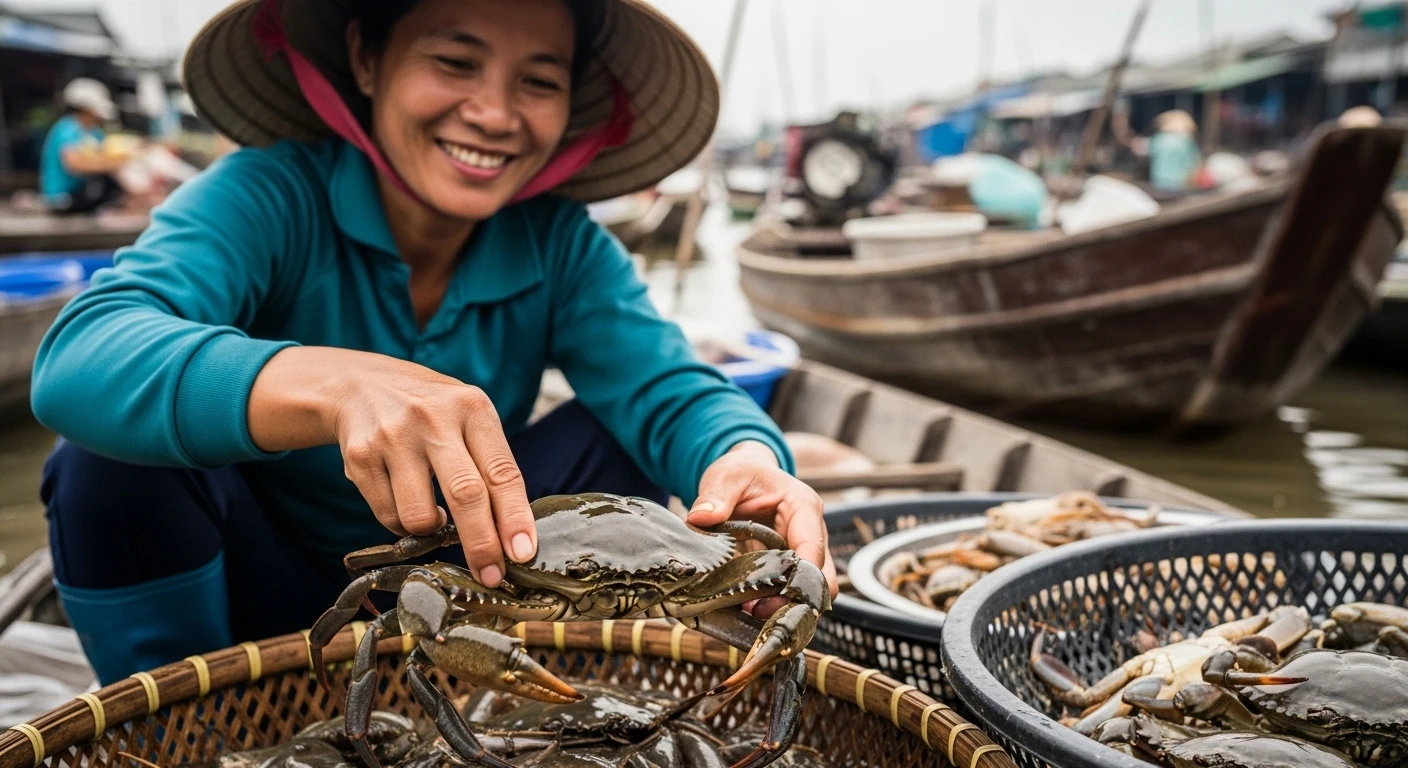
For the discerning traveler or food enthusiast, understanding these differences enriches the culinary journey. It’s an invitation to explore the diverse ways in which humanity interacts with the ocean’s bounty, from the bustling markets of the Mekong to the glittering dining rooms of the Emirates.
8 Your Next Crab Adventure
If the allure of intensely flavored, naturally sweet crab, steeped in rich culinary tradition, calls to you, then the Mekong Delta awaits. Imagine yourself by the water's edge, a plate of freshly steamed or grilled Ca Mau crab before you, the scent of the river in the air. This is where authenticity meets incredible flavor.
While the UAE offers a world of luxury seafood experiences, the unique terroir and deeply ingrained culture of crab consumption in the Mekong Delta provide an unparalleled journey for the senses. It’s a chance to connect with a food source that has shaped a region and to taste a flavor profile that is truly one-of-a-kind.
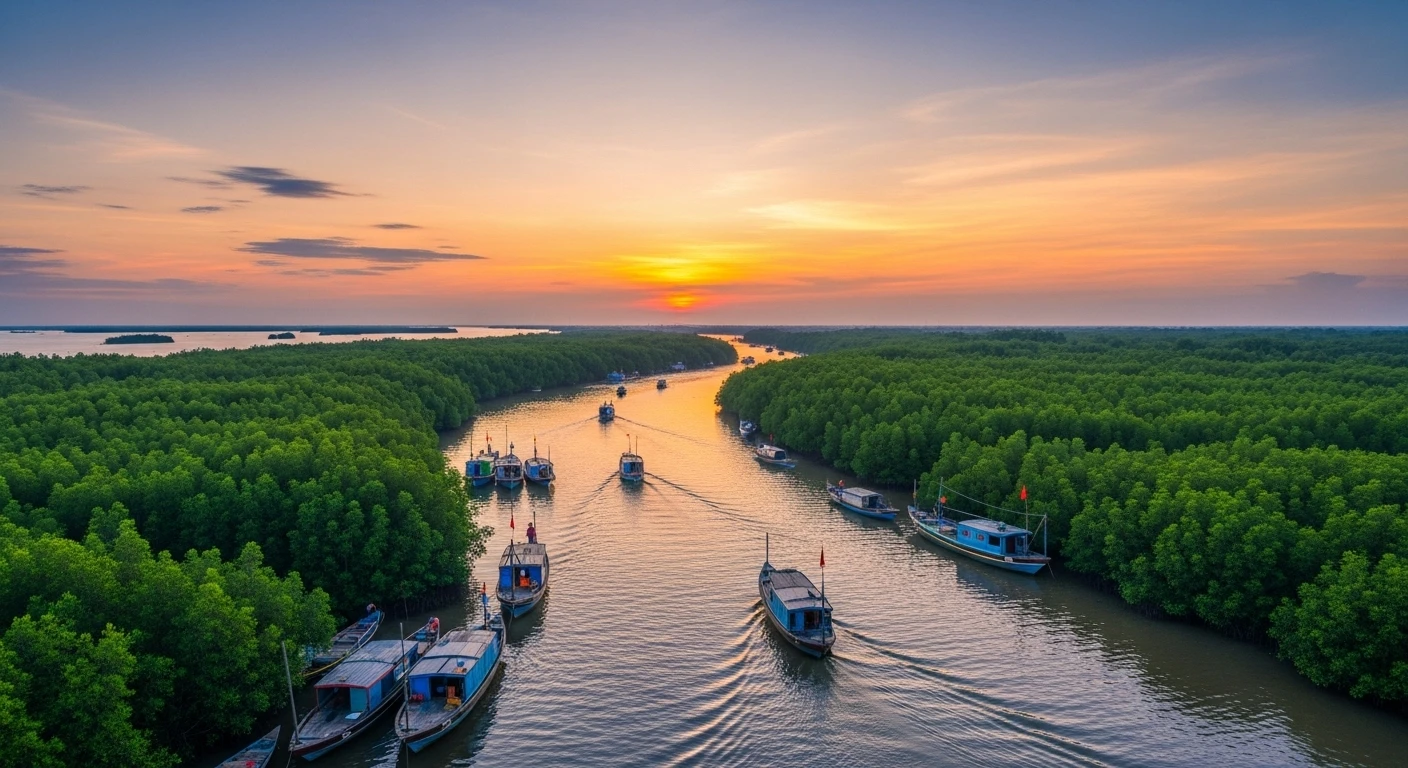
So, when you think of crab, consider the spectrum. From the polished elegance of Dubai's finest tables to the earthy, robust sweetness found along the vital waterways of Southern Vietnam, each offers a distinct and valuable experience. But for those seeking the soul of crab, untamed and bursting with flavor, the Mekong Delta beckons.