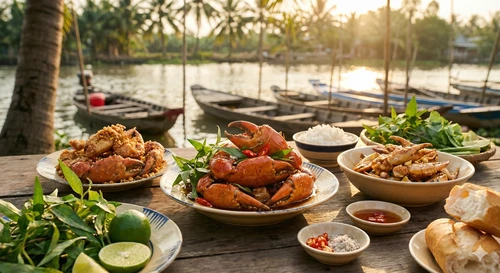
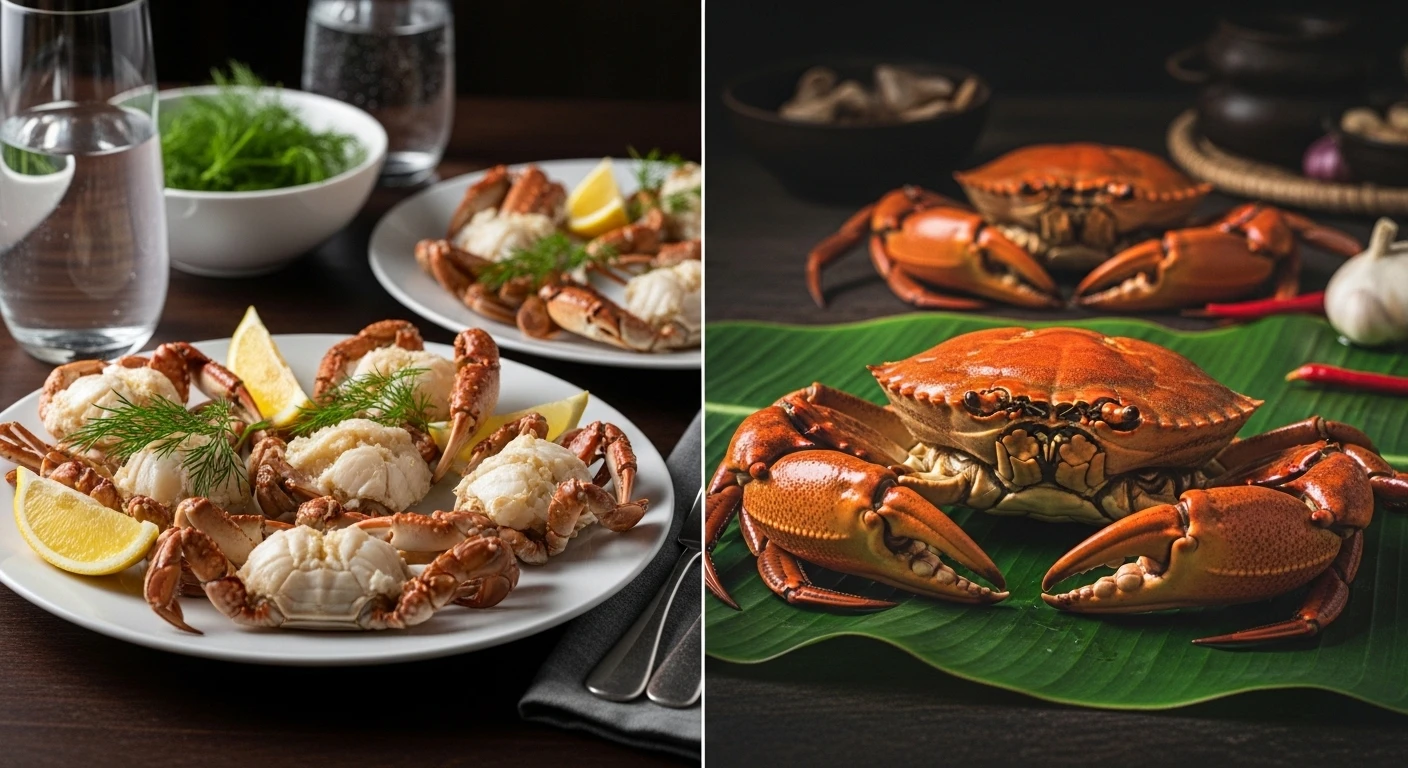
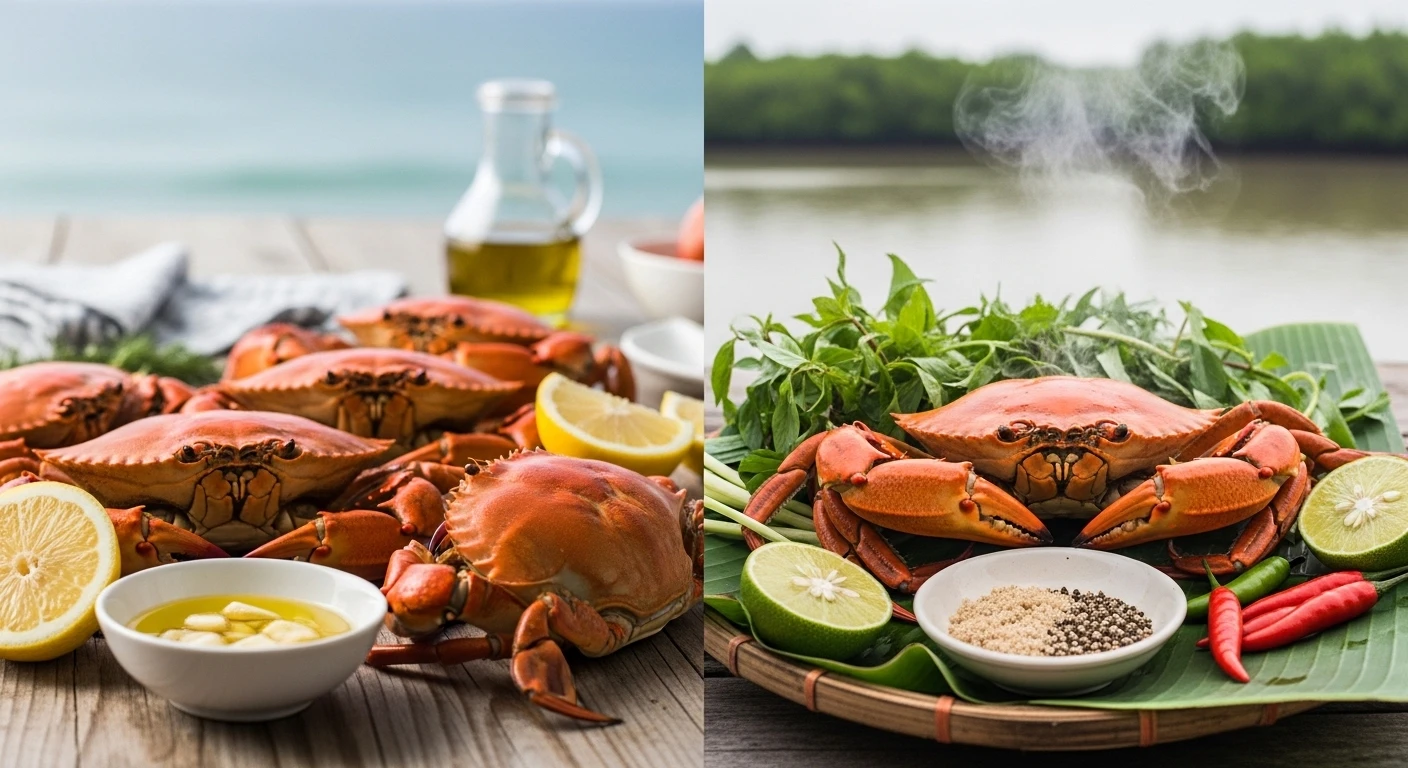
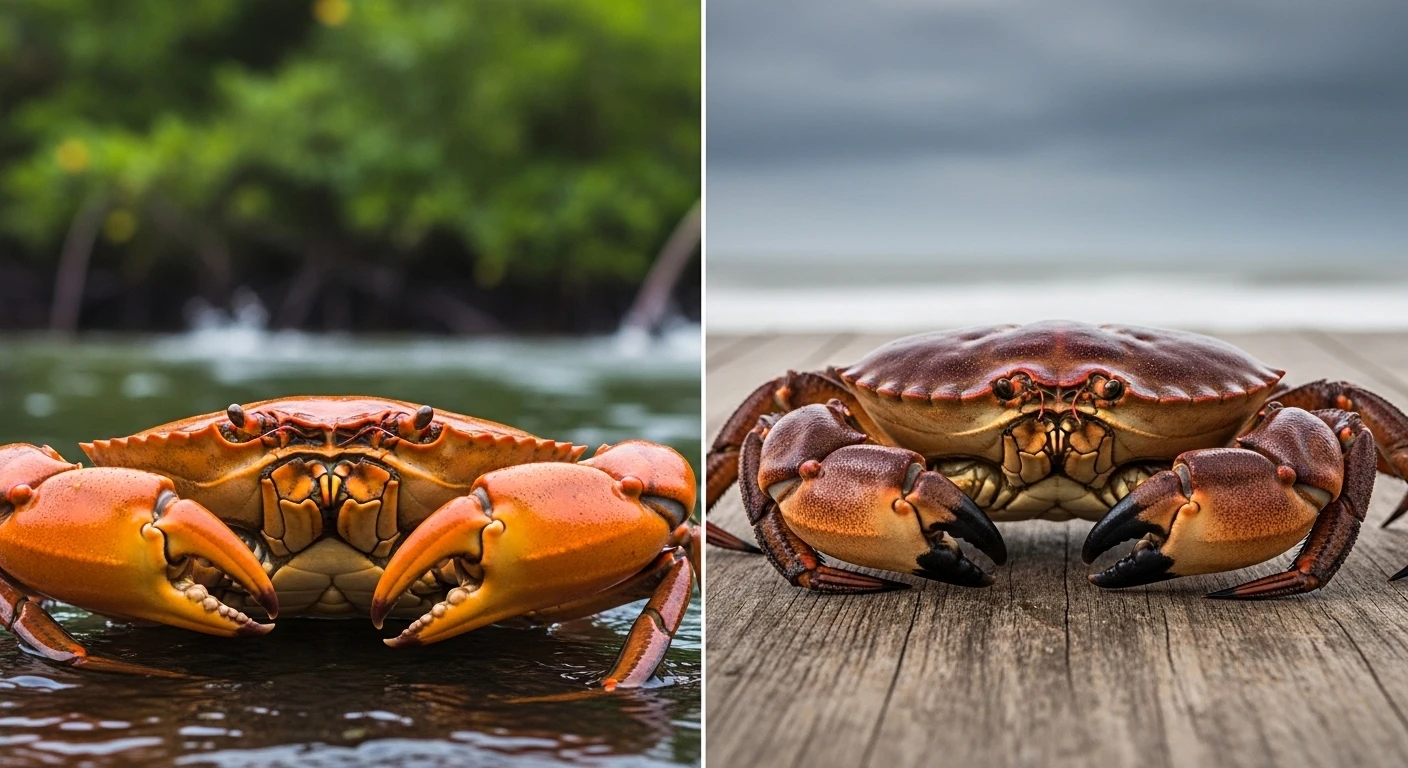
" There are places where time is still measured not by clocks, but by the relentless pull of the moon. The Mekong Delta is one such place, and nowhere is this more evident than in the pursuit of its most prized culinary gem: the mud crab. "
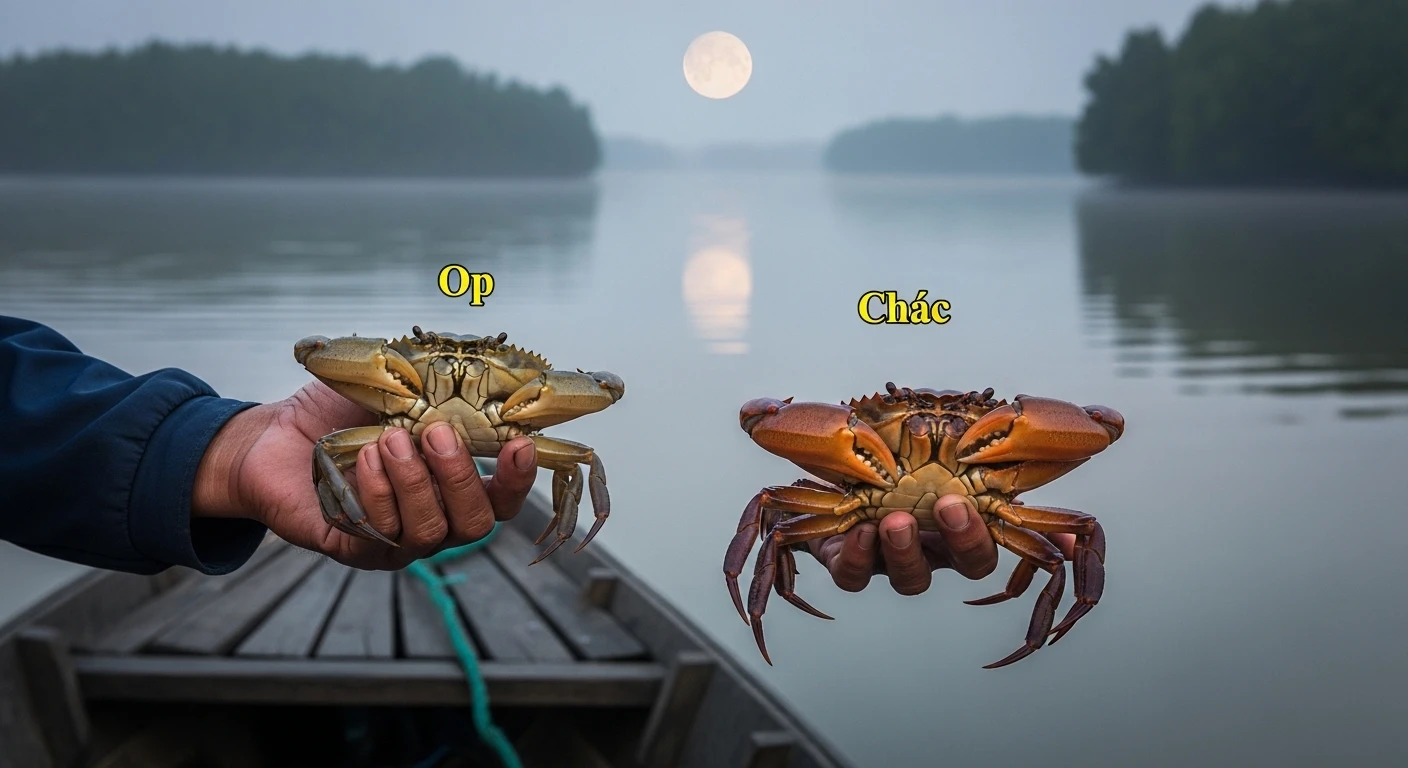
📸 The timeless dance: Man, moon, and the Mekong's bounty.
1 The Whispers of the Tides: Navigating the Mekong Delta's Rhythms
The Mekong Delta, a sprawling network of rivers, canals, and fertile lands, is a region defined by water. For centuries, its people have lived in harmony with its ebb and flow, their lives intrinsically linked to the Mekong River's pulse and, more profoundly, to the celestial waltz of the moon. This isn't just folklore; it's a practical science, a survival guide etched into the very fabric of daily life, especially when it comes to one of the delta's most coveted delicacies: the mud crab.
Here, the lunar calendar isn't just a quaint tradition; it's the ultimate timetable for fishermen, farmers, and even street food vendors. It dictates planting seasons, fishing cycles, and crucially, the quality of seafood. And for the discerning crab connoisseur, understanding the moon's influence on the humble mud crab is the key to unlocking an unparalleled culinary experience.
2 Op vs. Chac: Unmasking the Mekong's Culinary Secret
Walk into any bustling seafood market in the Delta, from Ca Mau to Can Tho, and you'll hear vendors and buyers debating about "Op" versus "Chac". These aren't just local dialects for 'crab'; they denote two distinct states of the mud crab, each with its own merits and, more importantly, its own optimal harvesting time dictated by the moon.
- Op Crab: This refers to a crab that is less meaty, often having just molted or preparing to molt. Its shell might be softer, and the meat inside can be watery or sparse. While still edible, it lacks the rich, firm texture that crab lovers crave. Think of it as a crab in its "teenage" phase – growing, but not yet fully developed.
- Chac Crab: This is the holy grail. "Chac" translates roughly to "firm" or "solid." A Chac crab is at its peak: full of dense, sweet, succulent meat, with a hard, vibrant shell. These crabs are bursting with flavor and offer the most satisfying eating experience. They are the mature, prime specimens.
The difference between an Op and a Chac crab is like night and day. One is a culinary disappointment, the other a triumph. And the moon, believe it or not, plays the orchestrator in this delicious drama.
3 The Lunar Pull: A Scientific & Spiritual Dance
The moon's gravitational pull is responsible for the Earth's tides. In the Mekong Delta, where freshwater meets saltwater, these tidal forces are immensely powerful, influencing everything from water salinity to nutrient distribution. But how does this affect a crab's meaty interior?
The Full Moon & New Moon
During the full moon and new moon phases, gravitational forces are strongest, creating "spring tides" with extreme highs and lows. This period often triggers crabs to molt their shells. As they shed their old exoskeleton to grow a new one, they become "Op" – less meaty and watery as their bodies are focused on regeneration. They also hide more to avoid predators.
The Quarter Moons
Conversely, during the quarter moon phases (first and third quarter), the sun and moon's gravitational pulls are at right angles, resulting in "neap tides" with less extreme tidal ranges. This is when crabs are typically at their meatiest and most active, having finished their molting cycle and accumulated energy and flesh. These are your "Chac" crabs!
Local fishermen, with generations of inherited wisdom, don't need scientific papers to tell them this. They observe, they feel the water, and they consult the moon. Their livelihoods depend on it.
4 A Delta Morning: Tracking the Prime Catch
Imagine waking before dawn in a small stilt house near the muddy estuaries of Ca Mau, the southernmost tip of Vietnam. The air is thick with humidity, and the faint glow of the moon pierces through the morning mist. A local fisherman, perhaps named Hai, is already on his narrow wooden boat, checking his crab traps. He doesn't look at a calendar app; he looks up at the sky.
On days following a full or new moon, Hai might pull up traps filled with Op crabs – their shells slightly pliable, their movements a little lethargic. He'll still sell them, perhaps at a lower price, knowing they're destined for dishes where the meat's texture is less critical, or simply for those who prefer the delicate flavor of a younger crab. But his heart truly sings when the moon is in its quarter phase.
That's when he expects the heavy, feisty Chac crabs, their claws clacking defiantly, their shells hard and unyielding. These are the crabs that command the best prices, the ones destined for the finest restaurants and the most celebratory family meals. The knowledge of the moon's cycle is not just science; it’s an ancestral connection to the delta's soul, passed down through generations.
The Taste of the Tides: What to Expect from Each Crab
To truly appreciate the delta's bounty, one must understand the subtle nuances in flavor and texture between Op and Chac.
The Op Crab Experience
- Texture: Softer, sometimes watery, less firm.
- Flavor: Milder, less intense crab sweetness.
- Best For: Crab noodle soups (like Bun Rieu Cua where the crab paste is paramount), crab fried rice where the meat is shredded, or dishes with strong sauces that don't rely on the crab's inherent texture.
- Cost: Generally more affordable.
The Chac Crab Revelation
- Texture: Firm, dense, succulent, with a satisfying bite.
- Flavor: Intensely sweet, rich, and truly "crabby."
- Best For: Steaming with beer and lemongrass (to savor its natural flavor), grilling, or any preparation where the crab meat is the star of the show.
- Cost: Commands a premium price, and worth every penny.
When in doubt, always ask for "cua chac" (firm crab) at the market or restaurant.
6 From Trap to Table: How Locals Choose and Cook
The art of choosing a good crab isn't just about the moon; it's about tactile knowledge. Locals, from the experienced cook to the savvy housewife, have a few tricks up their sleeves:
- The Pinch Test: Gently press the crab's belly or the underside of its claws. If it feels solid and firm, it's likely a Chac. If it gives easily or feels hollow, it's an Op.
- Weight: A good Chac crab will feel surprisingly heavy for its size. Op crabs, due to their lower meat content, will feel lighter.
- Visual Inspection: Look for crabs with intact, hard shells. Any signs of recent molting (a soft shell, missing limbs) might indicate an Op crab.
- Activity: A feisty, energetic crab is often a healthy, meaty crab.
Once chosen, the cooking method varies depending on the crab's quality. A Chac crab is best prepared simply: steamed with a few stalks of lemongrass and ginger, allowing its natural sweetness to shine. The delicate aroma of lemongrass infuses the meat, creating a truly unforgettable dish. Op crabs, while less prime for simple steaming, find their glory in rich curries, stir-fries, or as flavorful additions to soups and broths.
Beyond the Claw: The Wider Impact of the Lunar Calendar 🌕
The moon's influence in the Mekong Delta extends far beyond just crab quality. It's a fundamental aspect of life itself.
- Agricultural Cycles: Farmers rely on lunar phases to predict rainfall and tidal irrigation for their rice paddies and fruit orchards. Certain crops are planted or harvested during specific moon cycles for optimal yield.
- Fishing Schedules: Beyond crabs, the movement of other fish, shrimp, and shellfish is also governed by the tides, making the lunar calendar an indispensable tool for all delta fishermen.
- Festivals and Rituals: Many traditional festivals and religious ceremonies are timed according to the lunar calendar, reflecting its deep cultural and spiritual significance.
- Daily Life: Even seemingly mundane activities, like traveling by boat on a canal, might be timed to avoid strong currents during spring tides or to utilize higher water levels.
It's a beautiful reminder that in some corners of the world, humanity remains deeply intertwined with the natural world, living by its ancient, celestial clock.
8 Finding Your Perfect Crab: A Connoisseur's Guide
For the intrepid traveler seeking an authentic culinary adventure in the Mekong Delta, here’s how to ensure you're getting the best:
- Visit During Quarter Moons: Plan your trip around the first or third quarter moon for the highest chance of encountering prime Chac crabs.
- Go Local: Seek out smaller, local markets rather than tourist traps. Engage with vendors; they appreciate genuine interest in their craft.
- Ask for "Cua Chac": Use the term! It immediately signals to the vendor that you are a knowledgeable buyer.
- Observe and Learn: Watch how locals choose their crabs. Mimic their techniques – the pinch test, checking for weight.
- Embrace Simplicity: If you find a truly great Chac crab, have it steamed simply. This is where its quality shines brightest.
The Mekong Delta offers more than just stunning landscapes and bustling markets; it offers a profound lesson in living in harmony with nature. And in the pursuit of the perfect crab, you taste not just the delta's rich bounty, but its timeless wisdom, guided by the silent, powerful pull of the moon.
9 Embrace the Cycle: A Call to Deeper Understanding
In a world increasingly disconnected from natural rhythms, the Mekong Delta stands as a vibrant testament to an enduring connection. The humble mud crab, influenced by the moon, isn't just food; it's a symbol. It represents the intricate balance of ecosystems, the wisdom of generations, and the subtle power of the cosmos. So, next time you're fortunate enough to find yourself in this incredible region, don't just eat the crab. Understand its journey, appreciate its origins, and marvel at the unseen forces that brought it to your plate. It's a delicious lesson in nature, science, and culture, all rolled into one.