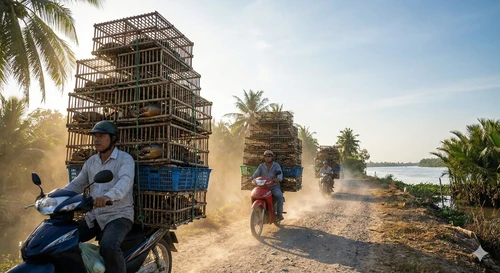
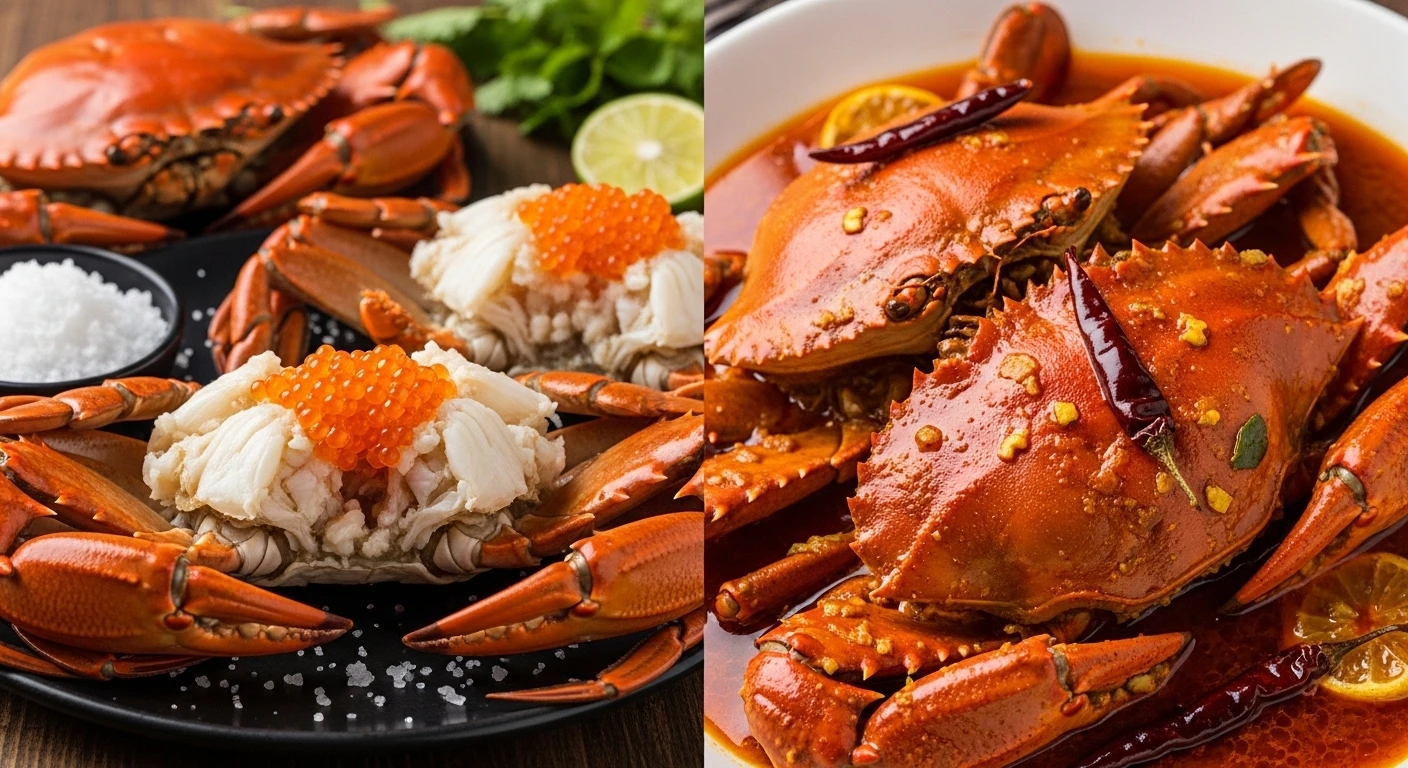
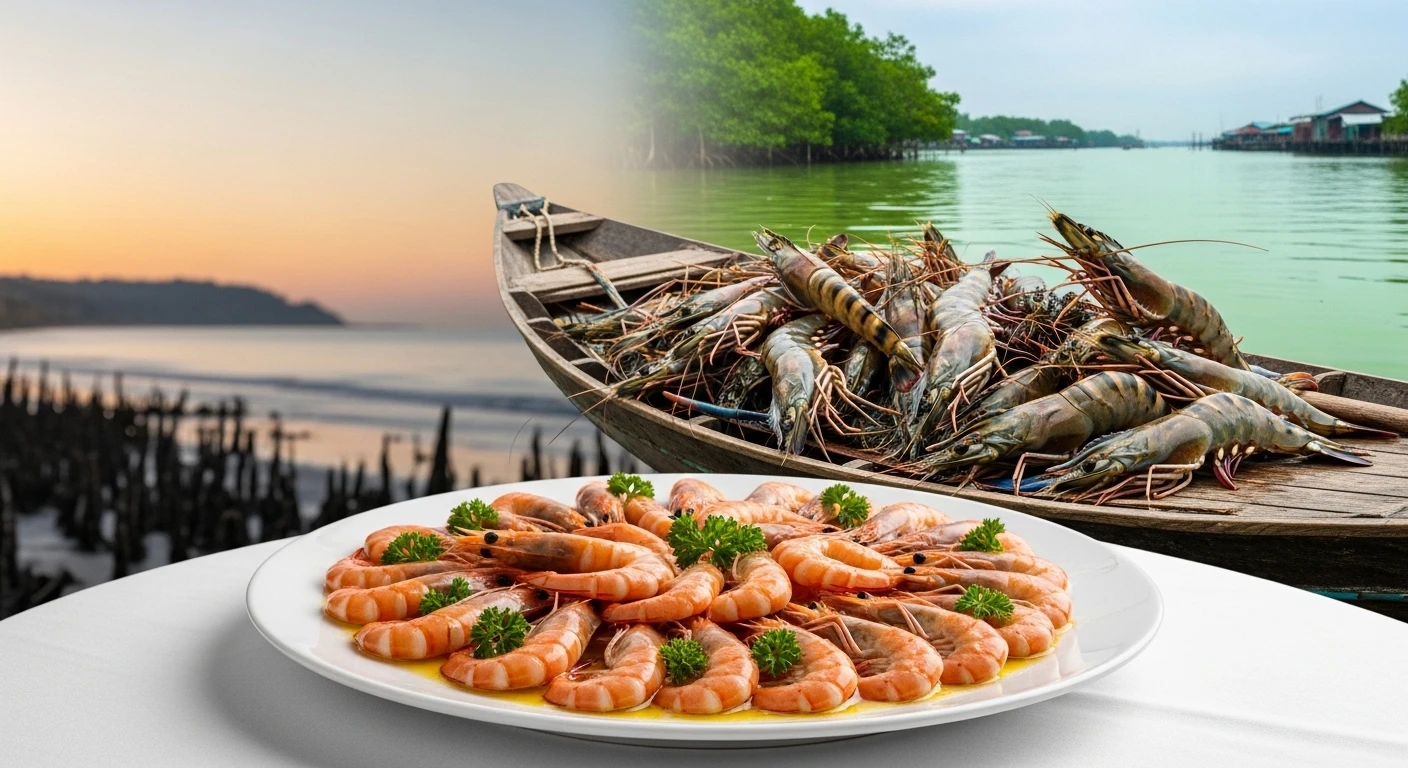
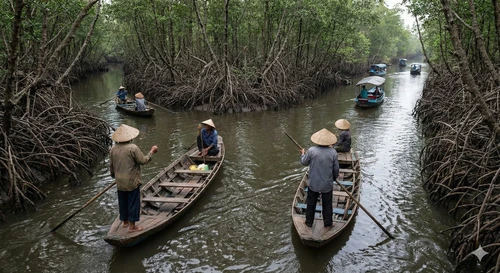
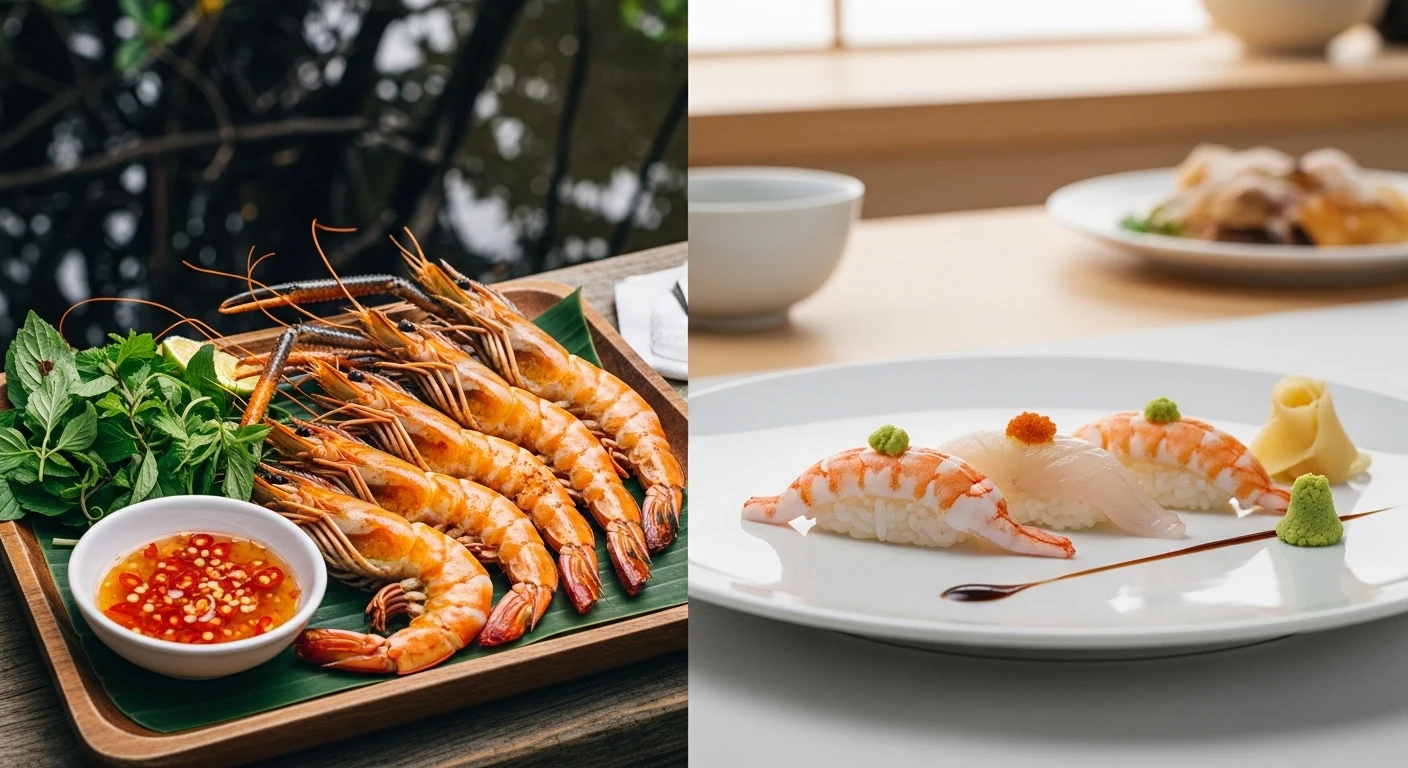
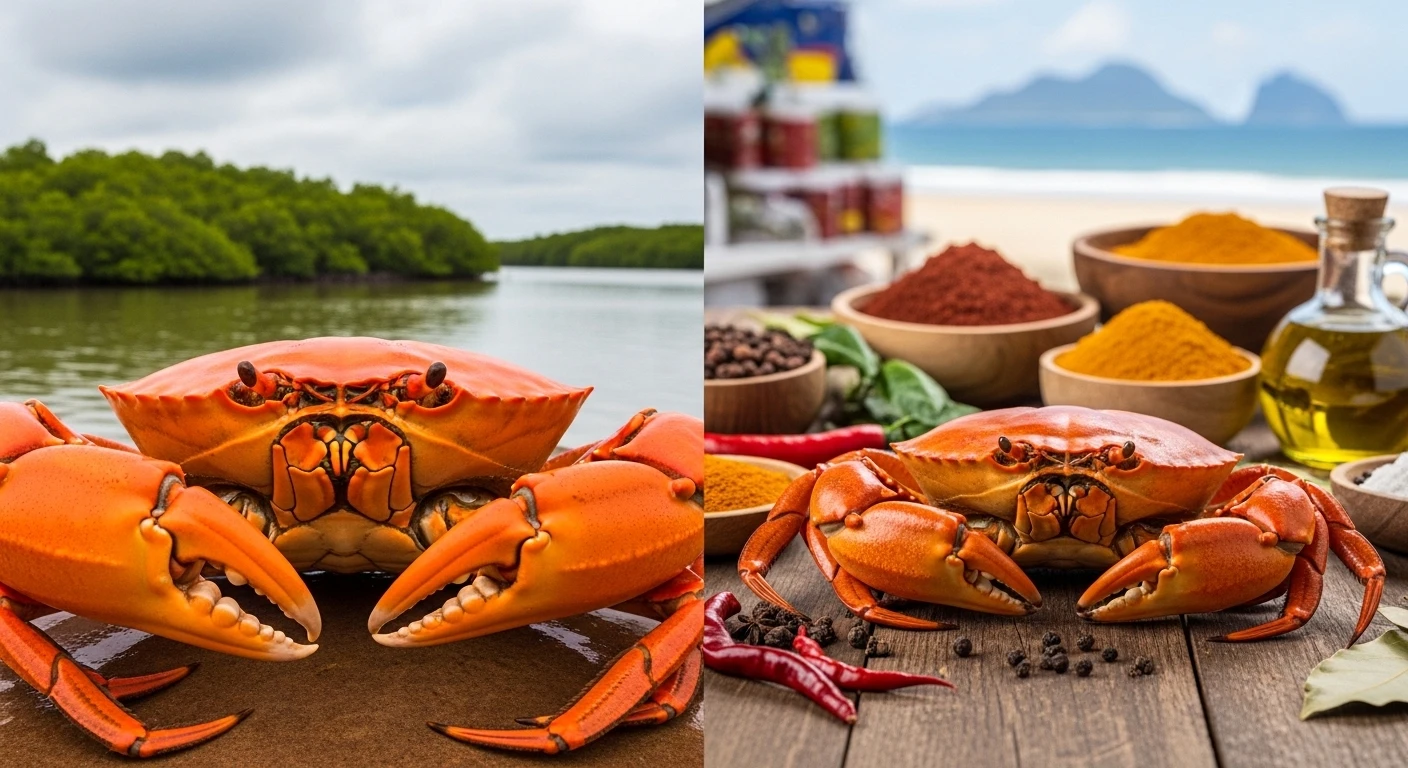
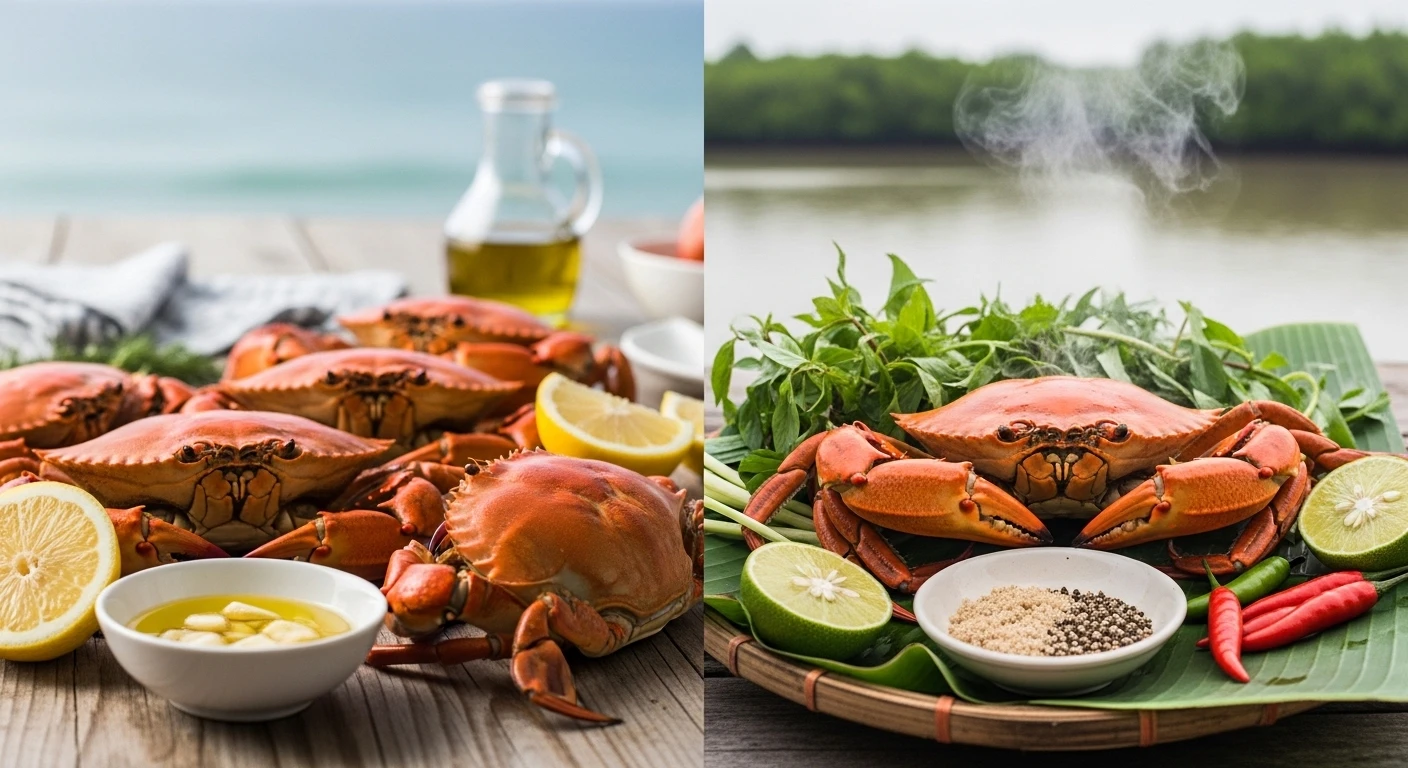
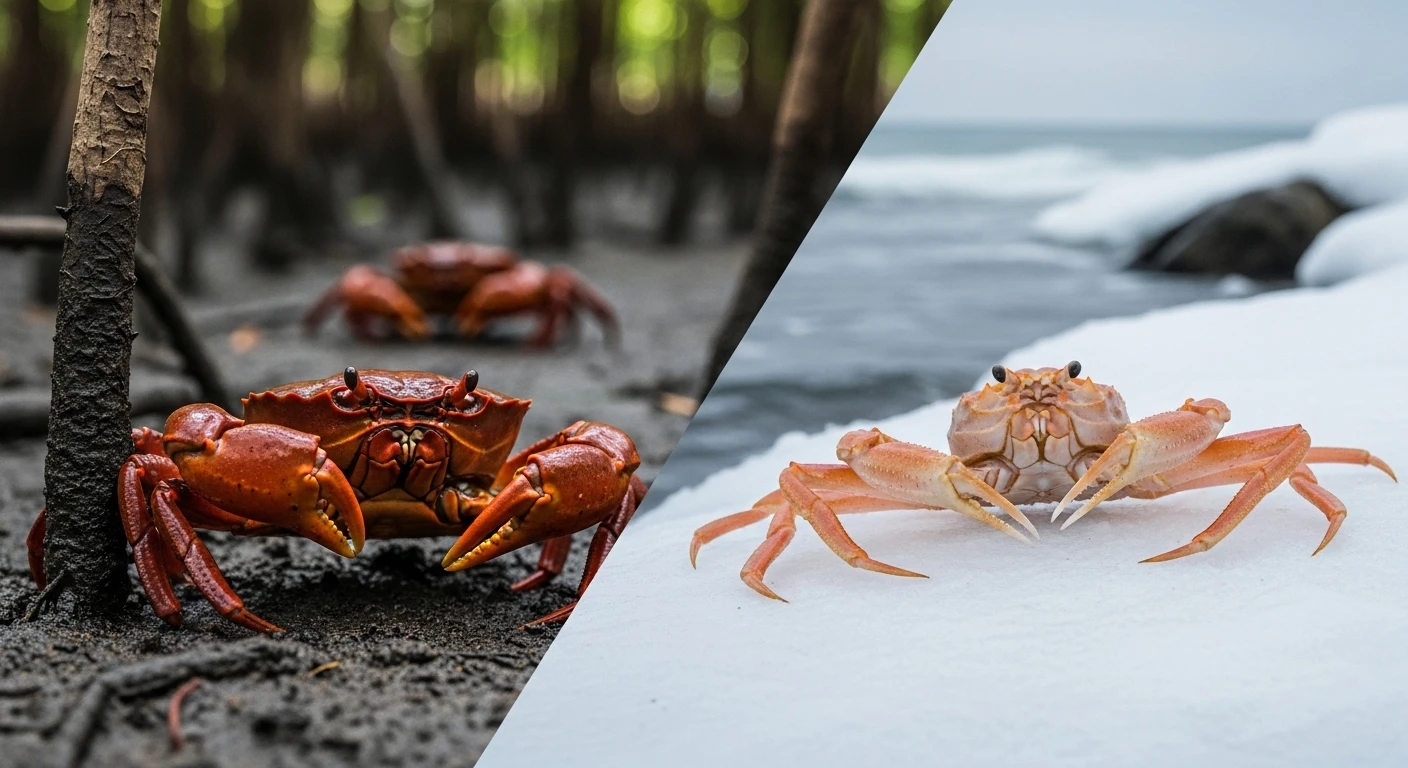
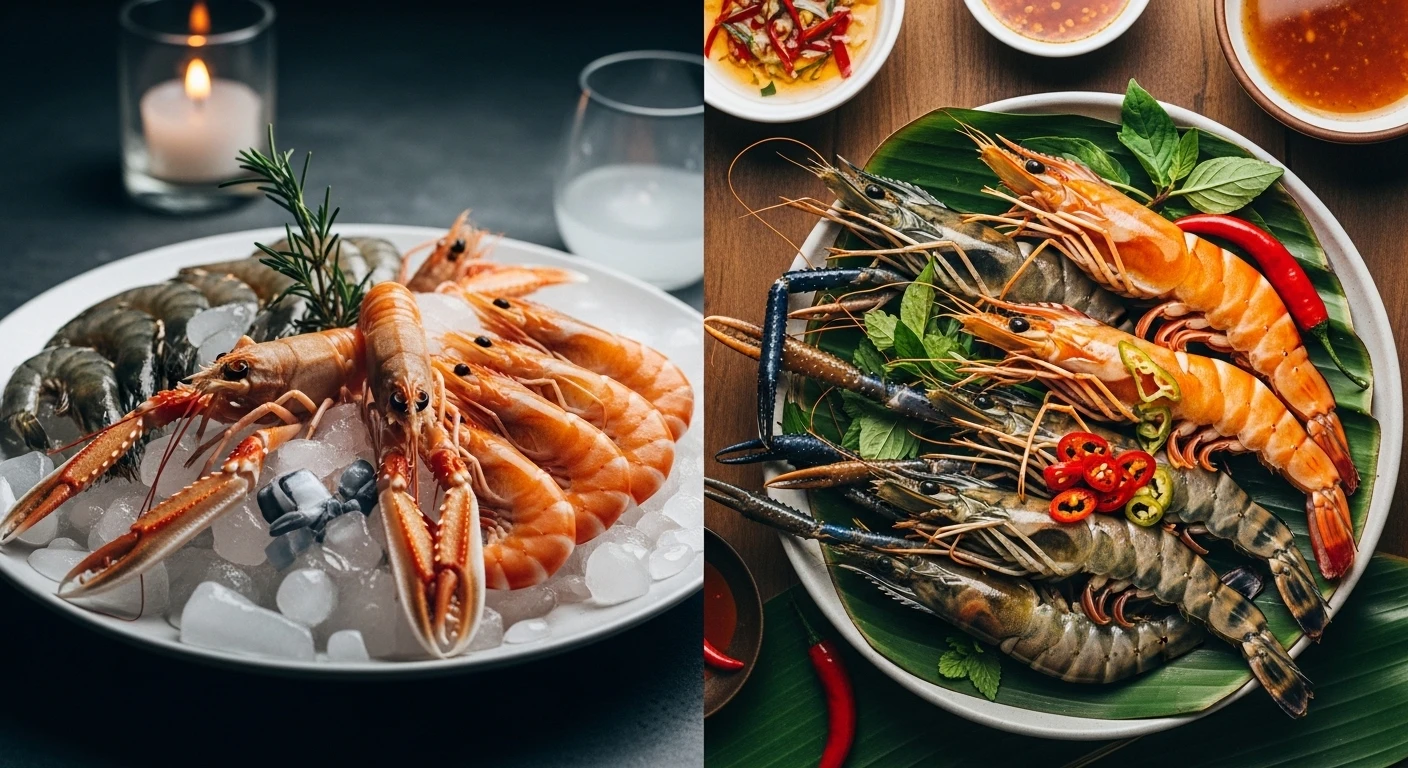
" The crab. A universal symbol of the sea's bounty. But how does the delicate sweetness of the Mekong Delta's mud crab fare against the audacious, chili-kissed embrace of Sri Lankan ocean crustacean? It's a tale of two worlds, and we're diving in headfirst. "
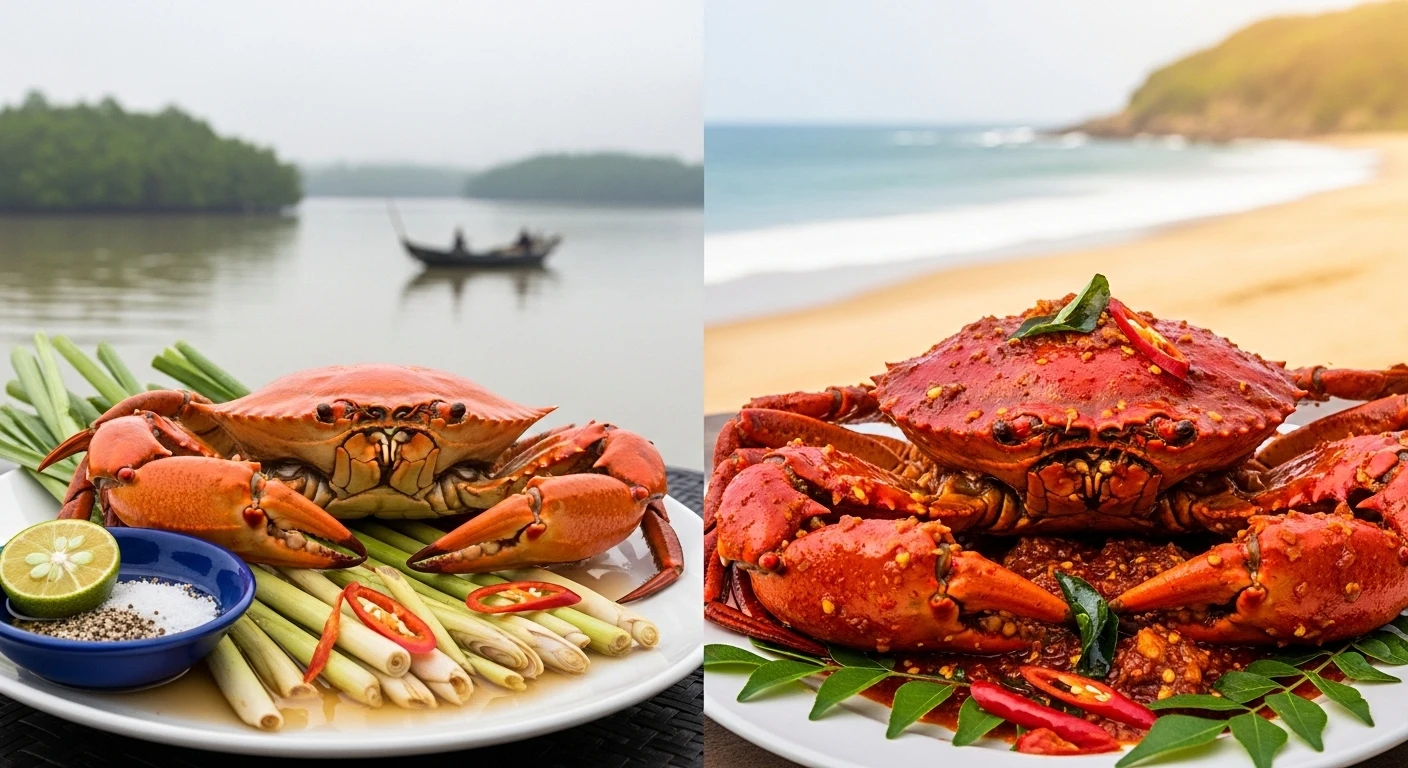
📸 A visual preamble to the feast: The nuanced elegance of Vietnam meets the vibrant spirit of Sri Lanka.
1 The Mekong's Embrace: Vietnam's Gentle Giant
Venture into the labyrinthine waterways of Southern Vietnam, and you'll find yourself in a realm where life moves at the rhythm of the tides. Here, in the brackish mangrove forests of the Mekong Delta, particularly in provinces like Ca Mau, the prized mud crab (Scylla serrata) reigns supreme.
Unlike the open, sometimes tempestuous ocean, the Mekong Delta offers a unique terroir. The slow-moving, nutrient-rich waters, infused with mangrove tannins, lend a distinct, almost subtle sweetness to the crab's flesh. This isn't the brute force of the sea; it's an cultivated, delicate flavor profile born from a unique ecosystem.
The Vietnamese approach to crab, especially here in the South, is often about showcasing its inherent quality. Think steaming, grilling, or a gentle stir-fry. The emphasis is on purity. The iconic Ca Mau Jumbo Mud Crab, with its dense, sweet meat and substantial claws, is often prepared simply by steaming with beer and lemongrass, or grilled over charcoal with a touch of salt and lime. The roe crab (cua gạch), particularly prized, offers a rich, unctuous texture and a deep orange hue – a luxury often reserved for special occasions and celebrations.
Heritage Ingredient
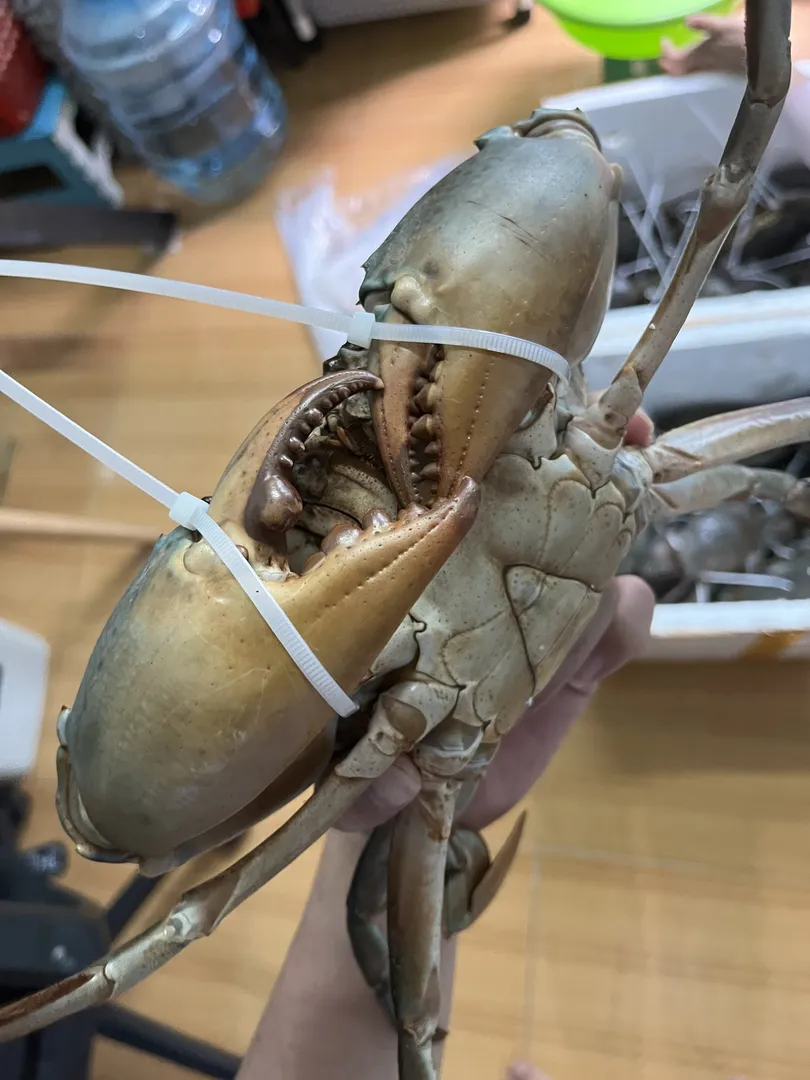
Ca Mau Jumbo Mud Crab
Ca Mau Jumbo Mud Crab
A large male mud crab prized for dense, sweet meat and thick claws, commonly used in steamed crab and grilled crab dishes across the Mekong Delta.
An icon of coastal culinary heritage, featuring firm, sweet meat that captures the raw power and freshness of Ca Mau's tides.
Heritage Ingredient
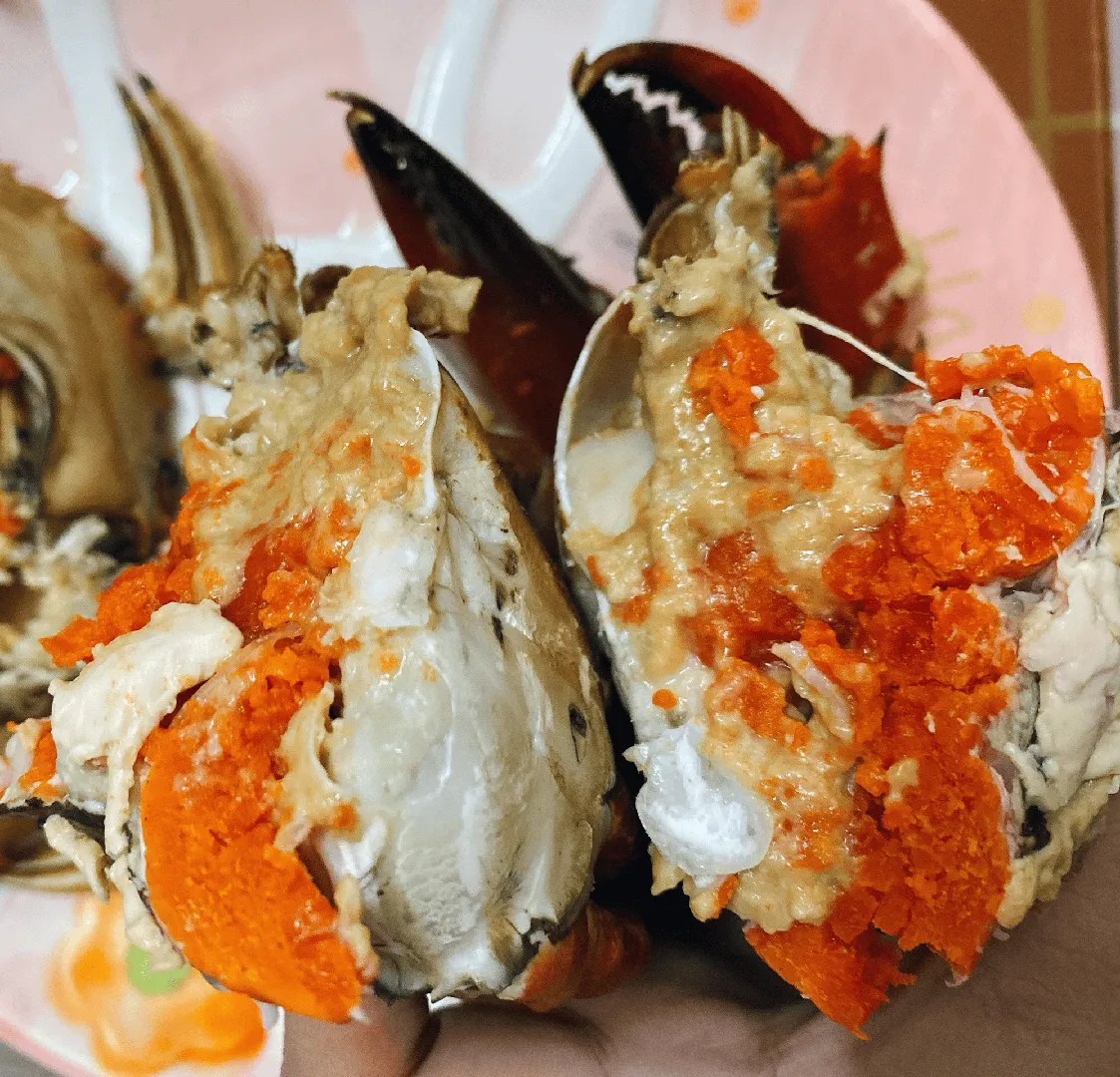
Ca Mau Roe Mud Crab
Ca Mau Roe Mud Crab
A female mud crab known for deep orange roe and a rich, creamy finish, often featured in celebratory Southern Vietnamese seafood meals.
A crimson treasure hidden within a shell, boasting rich, creamy roe that melts on your tongue like a golden sunset over the delta.
The dining experience is often communal, relaxed. Tables groan under the weight of fresh seafood, accompanied by ice-cold beer and lively conversation. There’s an intimacy to it, a sharing of the delta’s bounty that reflects the region’s deep-rooted hospitality. The sweetness of the crab meat is never masked by aggressive spices; it is amplified by simple, fragrant accompaniments.
Consider the 'soft-shell butter crab' – a rare treat from the molting phase. Here, the entire shell is edible, offering a creamy, custard-like interior that is utterly divine, a testament to the nuanced lifecycle of the Mekong's mud crab.
2 The Ocean's Fury: Sri Lanka's Bold Character
Now, cast your gaze towards the teardrop island nation of Sri Lanka, where the vast expanse of the Indian Ocean provides a dramatically different stage for its crab culture. Sri Lankan crab is synonymous with boldness, with a vibrant, assertive flavor profile that mirrors the island's energetic spirit and fiery culinary landscape.
The crabs here, often larger and more robust, are pulled from the deep blue, carrying the briny essence of the open sea. The dominant narrative in Sri Lankan crab cuisine is heat. Chilies, whether fresh, dried, or powdered, are not mere seasoning; they are protagonists. The iconic Sri Lankan 'Devilled Crab' or 'Spicy Crab' is a symphony of heat, garlic, ginger, and a medley of spices, often featuring a generous hand with local bird's eye chilies. It’s a dish that commands attention, one that lingers on the palate and leaves you reaching for a cooling beverage.
This isn't to say that subtlety is absent. Sri Lankan cuisine is rich and complex. However, when it comes to crab, the tradition leans towards robust, intensely flavored preparations. Dishes often incorporate tamarind for tang, curry leaves for aroma, and coconut milk to temper the heat and add richness. The preparation is as much about the sauce and the spice blend as it is about the crab itself. The crab is a vessel for an explosion of flavor.
The hospitality in Sri Lanka, much like in Vietnam, is legendary. Dining on crab here is often an event – a communal, often hands-on affair where sharing the experience is as vital as the meal itself. The messy, delightful act of cracking shells and savoring every morsel of spiced meat is a core part of the culture, a testament to the island's zest for life and its love for hearty, flavorful food.
3 The Core Contrast: Sweet Nectar vs. Fiery Embrace
The fundamental divergence between Vietnamese and Sri Lankan crab culture lies in their dominant flavor philosophies. Vietnam, particularly the Mekong Delta, champions the crab's natural sweetness. Cooking methods are designed to highlight this delicate, inherent flavor. Steaming, poaching, or light grilling are preferred, often paired with minimal aromatics like lemongrass, ginger, or a whisper of garlic.
The resulting experience is one of pure, unadulterated crab essence. The meat is tender, subtly sweet, with a clean finish. Sauces, when used, are often simple dipping concoctions – a vibrant lime, salt, and chili mix that *enhances* rather than masks. This approach is a direct reflection of the pristine environment from which the crab is harvested.
Sri Lanka, conversely, leans into the power of spice and bold aromatics. The crab is often seen as a foundation upon which complex flavor profiles are built. The chili-infused sauces are rich, often tangy and savory, transforming the crab into a component of a larger culinary narrative. The objective is to create a dish that is a thrilling adventure for the taste buds, where the heat and spice are as celebrated as the crab itself.
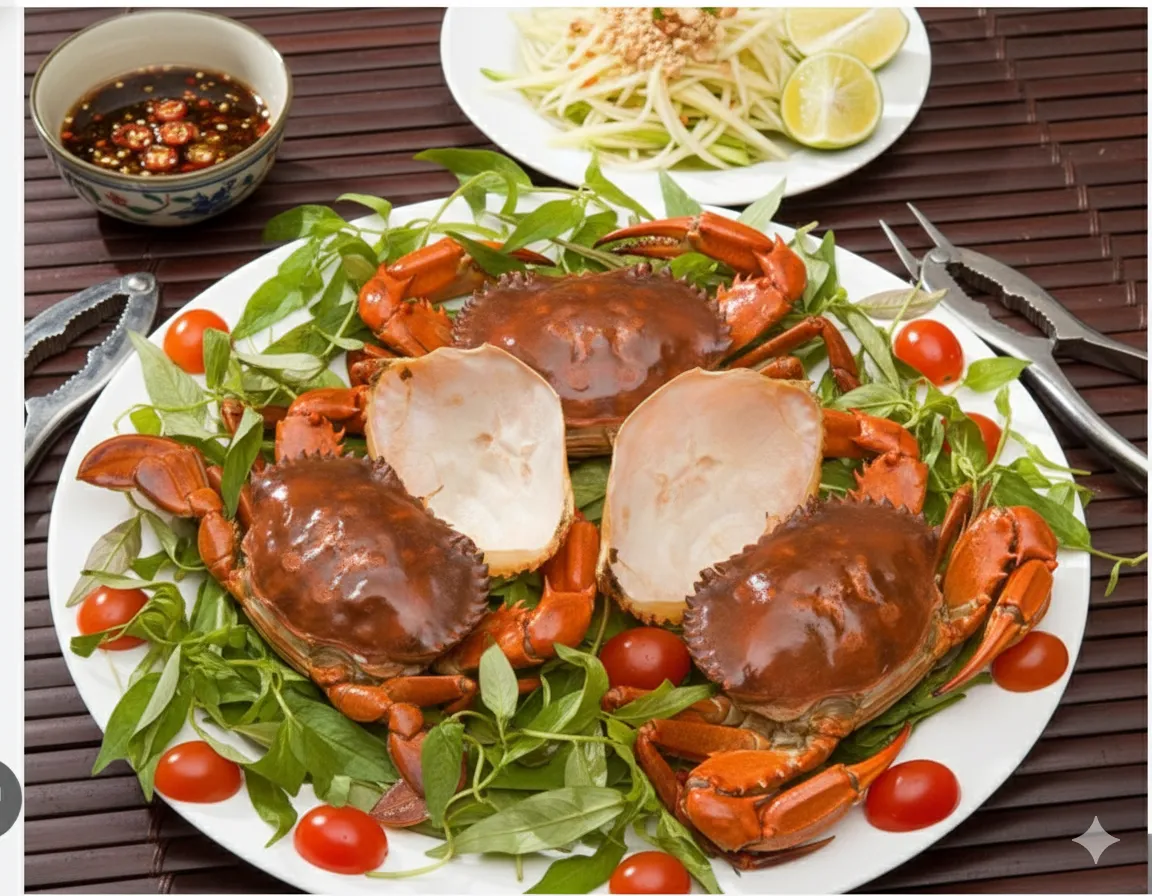
Heritage Ingredient
Soft-Shell Butter Crab (Molting Crab)
Soft-Shell Butter Crab (Molting Crab)
A rare molting mud crab from Ca Mau, valued for its edible soft inner shell and exceptionally creamy roe, making it the closest local equivalent to soft-shell crab concepts familiar abroad.
Nature's rare masterpiece—a delicate transition where a soft inner layer protects golden, custard-like roe in a fleeting moment of flavor.

Sri Lankan Spice Icon
A typical presentation of Sri Lankan spicy crab, highlighting the rich, chili-laden sauce.
This difference is more than just culinary preference; it’s a cultural expression. Vietnam’s delta-inspired cuisine often prioritizes balance and harmony, allowing individual ingredients to shine. Sri Lanka’s island cuisine, influenced by trade routes and diverse heritage, often embraces bold, layered flavors that tell a story of passion and intensity.
4 Terroir & Species: Mangrove Mud vs. Ocean Blue
The environment dictates the crab. In Vietnam's Mekong Delta, the ubiquitous mud crab (Scylla serrata) thrives in the complex ecosystem of mangrove forests and brackish estuaries. These crabs spend their lives navigating muddy bottoms and tangled root systems. This habitat contributes to their distinctive sweet, clean flavor and often results in denser meat, particularly in the well-developed claws.
The water salinity, food sources (like mollusks and smaller crustaceans found in the mud), and the very nature of mangrove-infused water all play a role. The texture can range from the yielding, almost buttery quality of the molting crab to the firm, meaty resistance of a mature male.
Sri Lankan crabs, on the other hand, are products of the open Indian Ocean. They are often larger, with thicker shells, adapted to the currents and depths of the sea. The varied marine diet in this vast ecosystem contributes to their robust flavor. While Scylla serrata is also found in Sri Lanka, the sheer diversity and power of the ocean environment shape their character differently. The meat might possess a more pronounced briny quality, a bolder seafood essence that stands up well to intense spice.
The "terroir" of the crab – its origin and environment – is crucial. It's why a Ca Mau crab tastes distinctly of the Mekong, and why an oceanic crab from Sri Lanka carries the unmistakable signature of the sea. Understanding this is key to appreciating the nuances of each culinary tradition.
5 Culinary Harmony: Simple Delicacy vs. Spice Symphony
The cooking methods employed reveal the soul of each cuisine. Vietnamese crab dishes often prioritize minimalism to let the crab's flavor sing. Steaming, especially with coconut water or beer and aromatics like lemongrass and ginger, is paramount. This method preserves moisture and allows the natural sweetness to be the star.
Grilling is another popular technique, often just with a sprinkle of salt and pepper, allowing the char to impart a subtle smokiness without overpowering the crab. Stir-fries are typically quick, using light sauces that coat rather than drown the delicate meat. The iconic dipping sauce – a blend of lime juice, sea salt, and fresh chilies – is a masterclass in balance, providing acidity and a hint of heat to cut through the richness.
Sri Lankan crab cuisine is characterized by its dramatic flair. The Spicy Crab (or Devilled Crab) is a prime example, where the crab is cooked in a rich, complex sauce packed with chilies, onions, garlic, ginger, tomatoes, and spices. Tamarind is frequently used for its sour tang, and coconut milk adds a creamy depth. Other popular preparations include crab curry, where the crab is simmered in a fragrant, spiced coconut milk broth, and grilled crab marinated in a potent spice paste.
While Vietnam's sauces are often simple accompaniments, Sri Lanka's sauces are integral to the dish, creating a powerful, often fiery, flavor experience. It's the difference between a delicate solo performance and a full orchestral piece.
6 Hospitality & Dining Culture: The Shared Heart
Despite their culinary differences, both Vietnam and Sri Lanka share a profound sense of hospitality, especially when it comes to seafood. In both cultures, enjoying crab is rarely a solitary act. It's a social ritual, a celebration of connection, and a testament to the generosity of spirit.
In the Mekong Delta, families and friends gather around low tables, piles of fresh crab, bowls of dipping sauce, and pitchers of cold beer. The atmosphere is relaxed, convivial, with hands stained and faces beaming. It’s about the pleasure of good company and the exquisite taste of the delta’s bounty, served with genuine warmth.
Similarly, in Sri Lanka, sharing a platter of spicy crab is an experience that binds people together. The communal effort of cracking shells, the shared gasp at the chili's heat, and the collective satisfaction create a memorable bond. The island's culture of hospitality ensures that visitors are welcomed not just as guests, but as extended family, sharing in the island’s vibrant culinary traditions.
Both nations understand that food is more than sustenance; it is a vehicle for storytelling, for connection, and for expressing love. Whether it's the gentle sweetness of a Mekong mud crab or the fiery embrace of an Indian Ocean crustacean, the shared spirit of community and celebration remains at the heart of their crab cultures.
Why Your Next Crab Adventure Should Be Vietnam
If you're a true crab connoisseur, the nuanced flavors and unique ecosystems of Vietnam, particularly the Mekong Delta, beckon.
Unparalleled Sweetness
Experience crab as nature intended – pure, sweet, and delicate.
Unique Terroir
Taste the distinct influence of the Mekong's mangrove estuaries.
Authentic Hospitality
Engage with warm, welcoming locals in vibrant delta markets and restaurants.
Conclusion: Two Islands, One Passion
The world of crab is as diverse as the oceans and rivers it inhabits. From the sweet, subtle elegance of the Mekong Delta's mud crabs to the fiery, bold declarations of Sri Lanka's ocean bounty, both offer extraordinary culinary journeys.
While Sri Lanka captivates with its chili-driven drama and robust flavors, Vietnam, with its emphasis on natural sweetness and the unique terroir of its waterways, provides a more delicate, nuanced experience. As travelers and food lovers, we are fortunate to have access to both. Each offers a unique lens through which to appreciate this magnificent crustacean, a conversation that continues across continents and coastlines, always inviting us to taste more, explore further, and connect deeper.