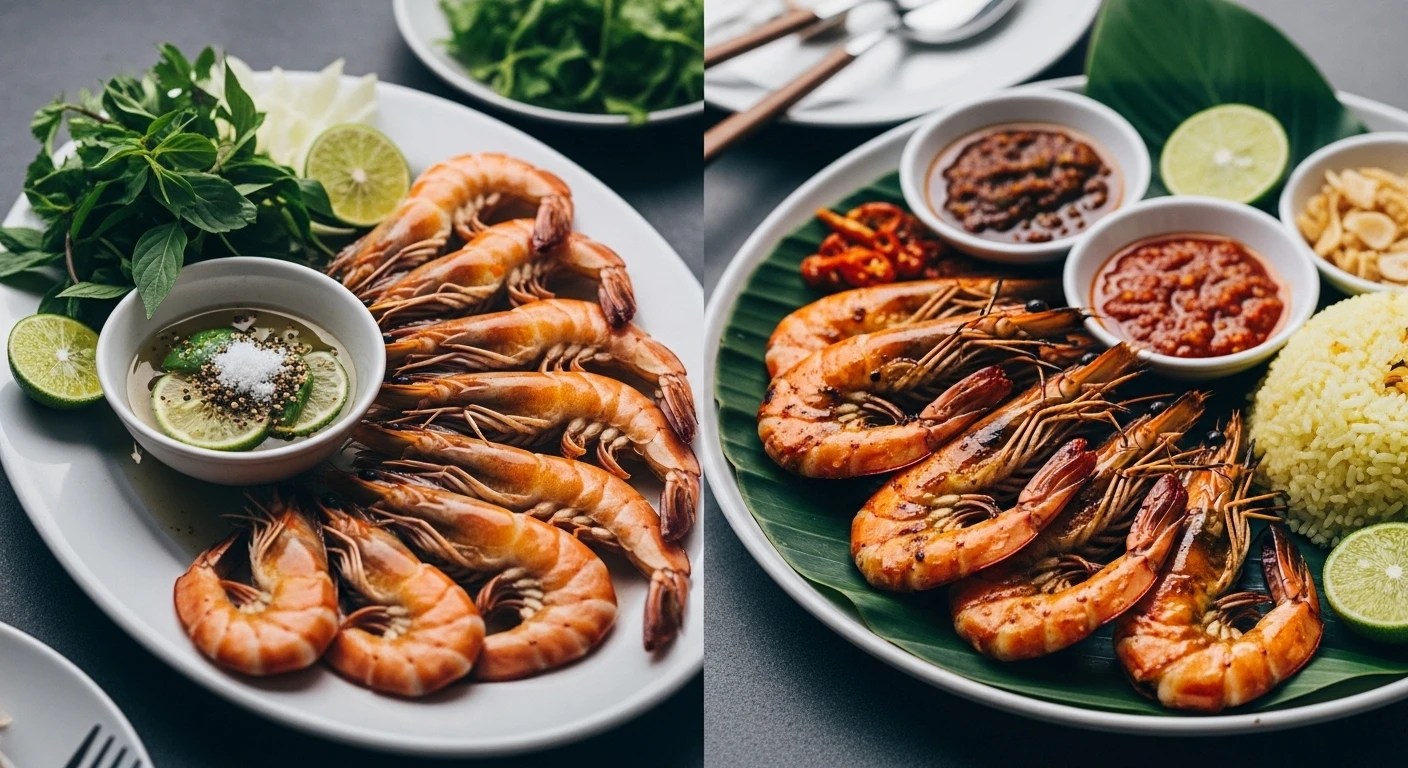
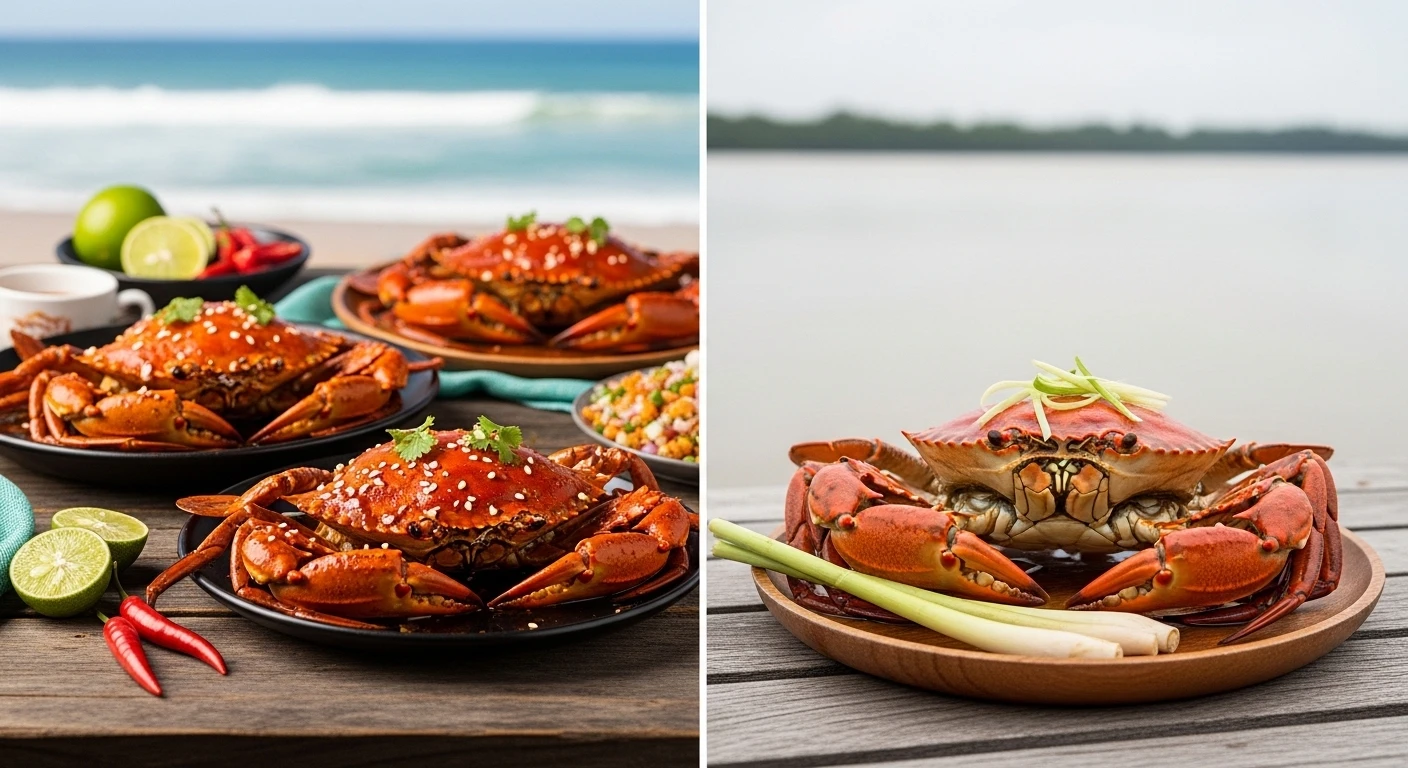
" From the brackish kiss of the Mekong to the fermented brine of the Korean coast, crab is a universal language of the sea. But how do these dialects differ? "
1 The Mud Crab Majesty of the Mekong
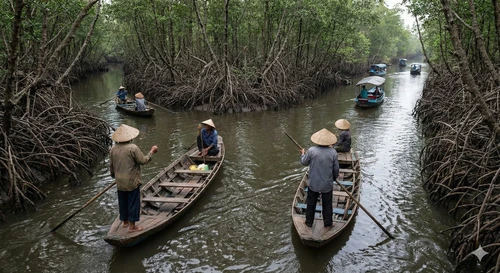
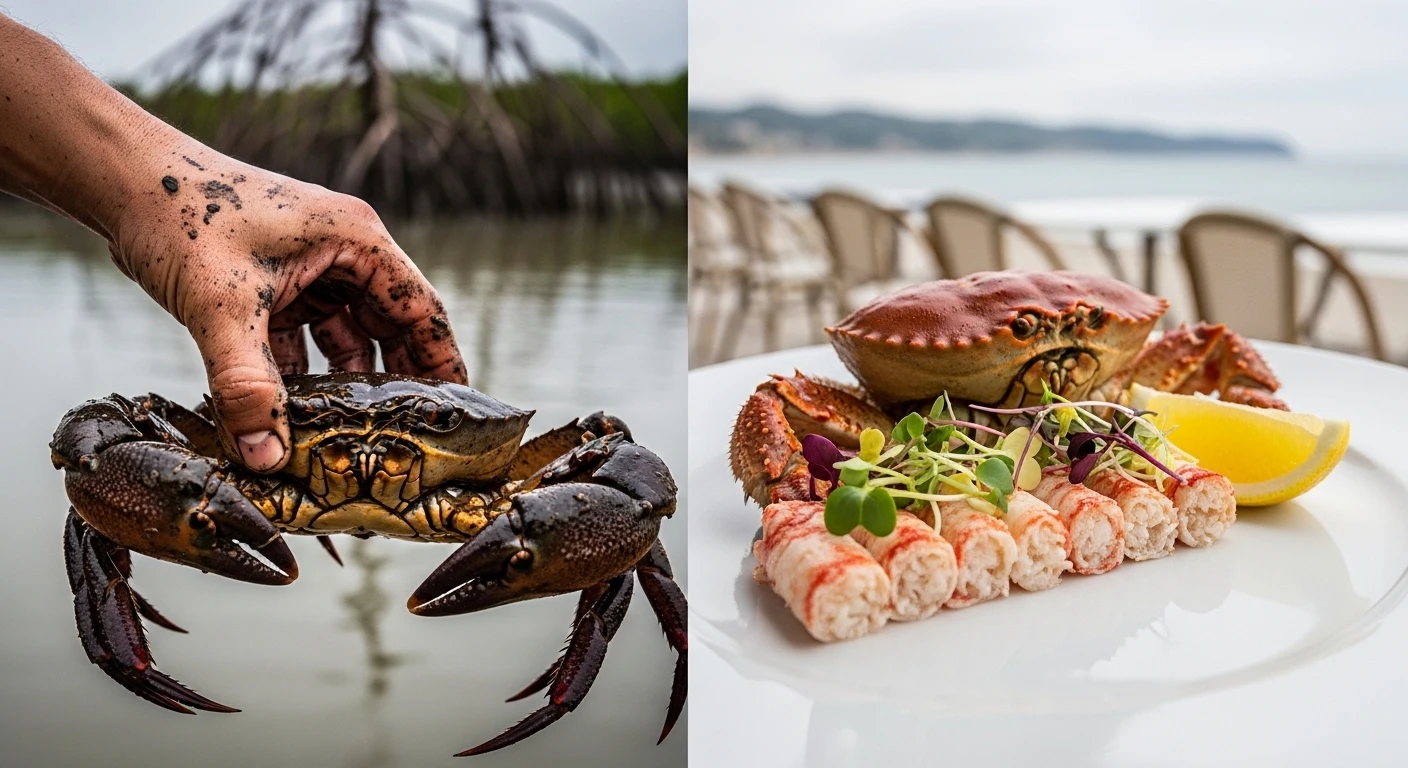
Venturing into Vietnam's Mekong Delta is to enter a labyrinth of waterways, a verdant tapestry woven with life. Here, beneath the shadow of mangrove forests and amidst the ebb and flow of tidal rivers, thrives one of the world's most prized crustaceans: the mud crab. Specifically, the crabs hailing from the province of Ca Mau, Vietnam's southwesternmost point, are legendary. These aren't your typical farmed crabs; they grow in the wild, feeding on the rich biodiversity of the estuarine environment, which imparts a subtle, sweet, almost briny flavor unlike any other.
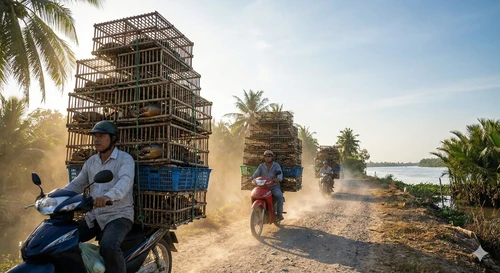
In Ca Mau, crab is not just food; it's a livelihood, a culture. Fishermen navigate the intricate canals in small boats, casting nets or traps. The crabs are typically brought to market alive, their shells a testament to their wild upbringing. The philosophy here is simple: let the crab speak for itself.
Ca Mau Crab Types
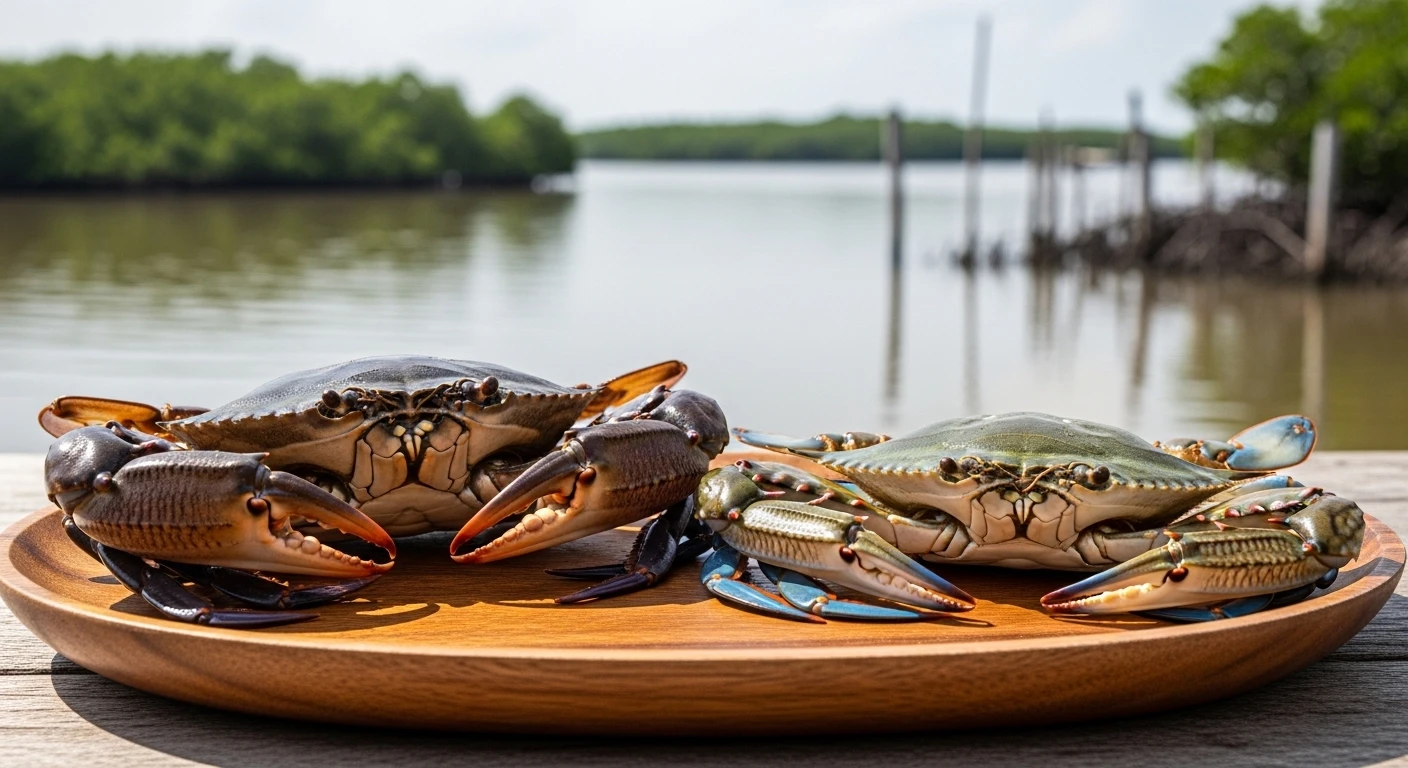
The male crabs, often referred to as "meat crabs" (cua thịt), are prized for their dense, sweet flesh, particularly in the large claws. The females, "roe crabs" (cua gạch), are a delicacy in their own right, carrying rich, deep-orange roe that has a creamy texture and a flavor akin to savory butter. The truly rare find is the "molting crab" (cua com), whose new shell is forming, offering a soft, edible carapace and an intensely rich, custard-like roe.
Mekong Cooking Philosophy
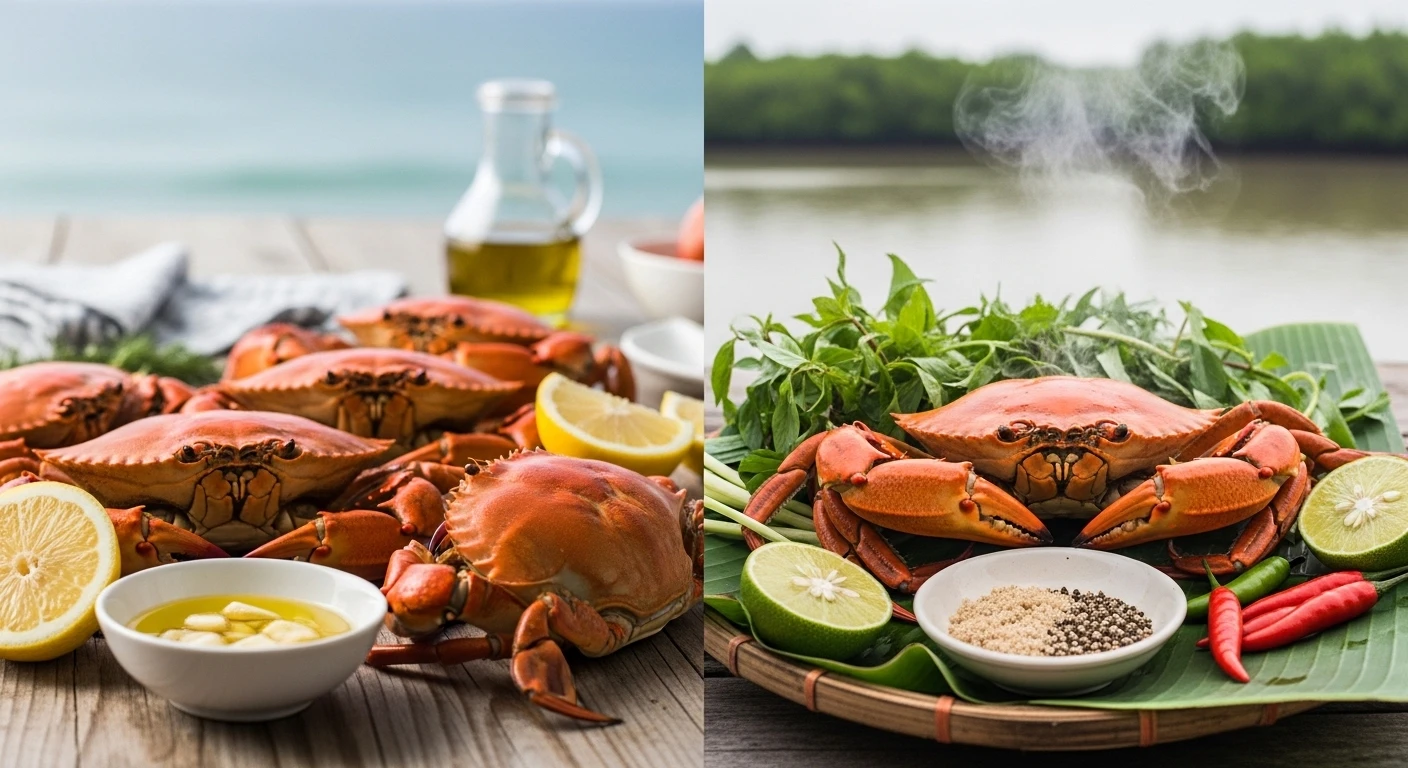
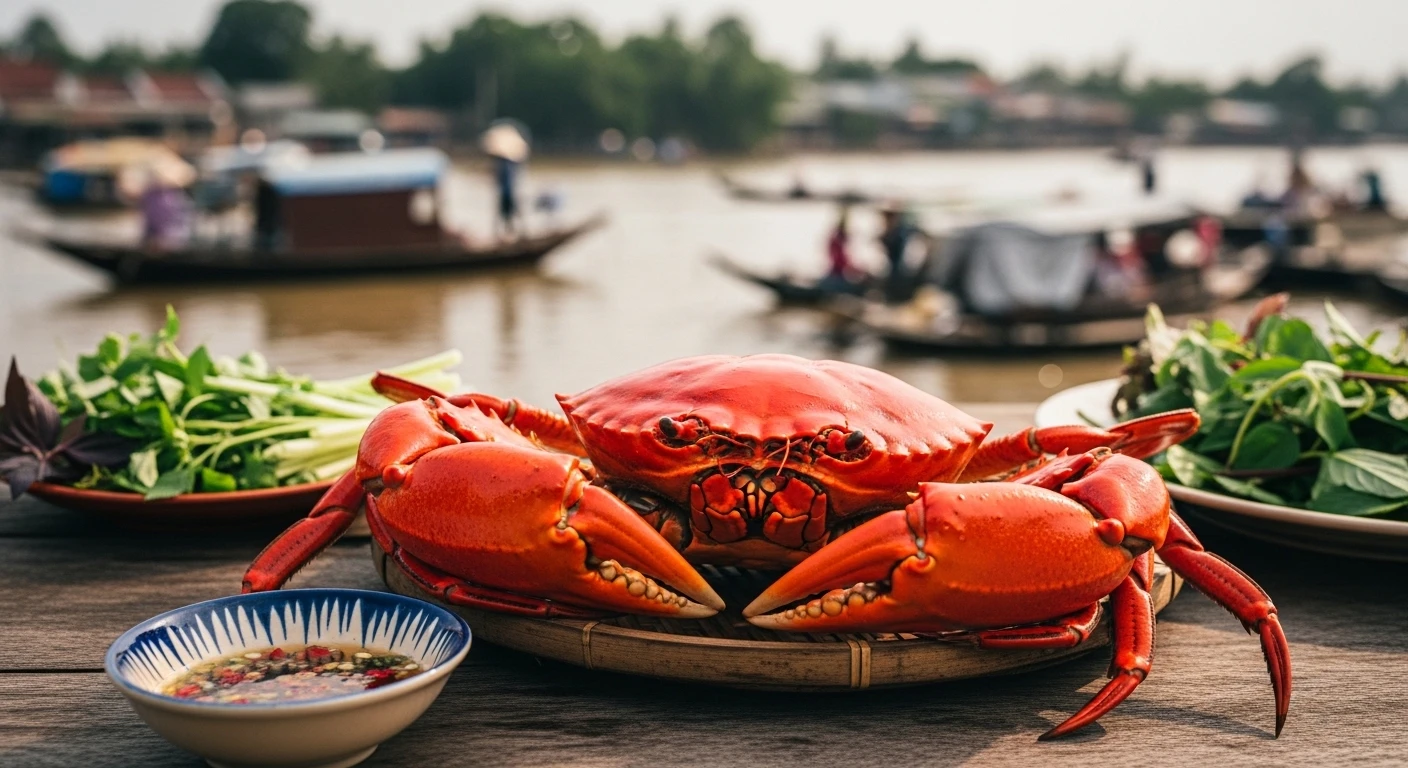
Preparation methods in the Mekong Delta lean towards simplicity, designed to highlight the crab's natural sweetness. Steaming, often with just lemongrass and beer, or a quick boil, is common. Grilled crab, brushed with a touch of scallion oil, is another favorite. The accompanying sauces are typically bright and acidic – a staple being a simple salt-pepper-lime dip, or a chili-lime concoction that cuts through the richness without overpowering the delicate seafood.
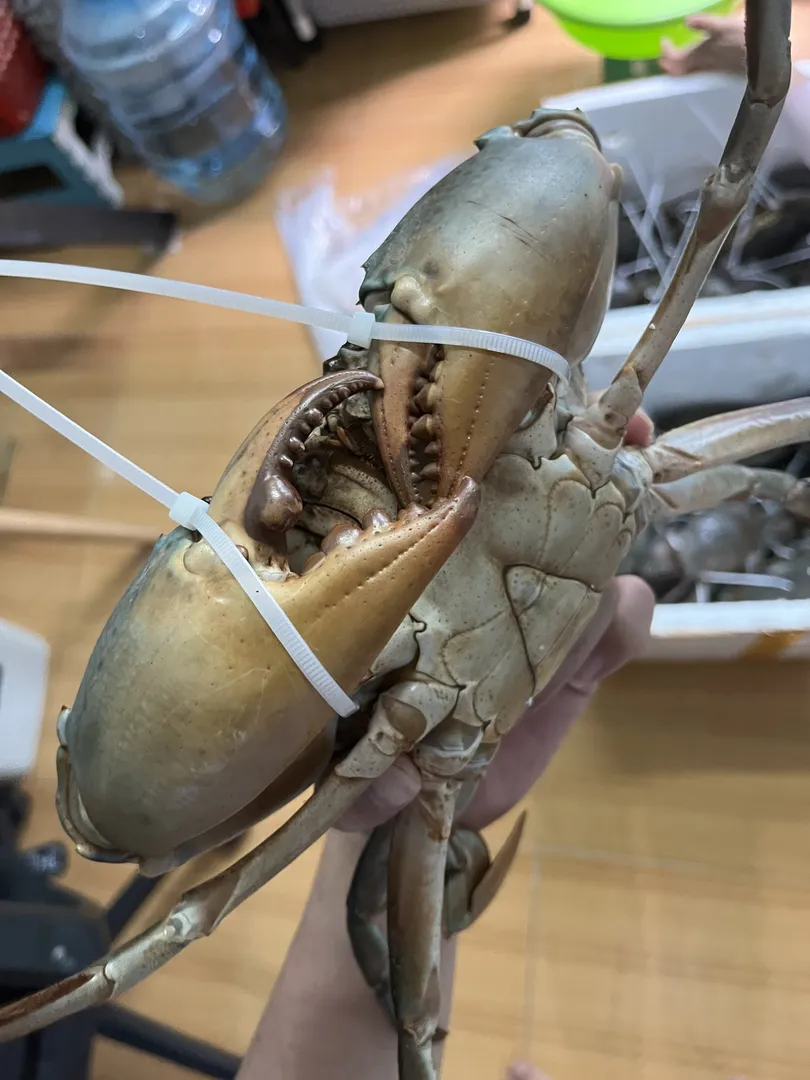
Heritage Ingredient
Ca Mau Jumbo Mud Crab
Ca Mau Jumbo Mud Crab
A large male mud crab prized for dense, sweet meat and thick claws, commonly used in steamed crab and grilled crab dishes across the Mekong Delta.
An icon of coastal culinary heritage, featuring firm, sweet meat that captures the raw power and freshness of Ca Mau's tides.
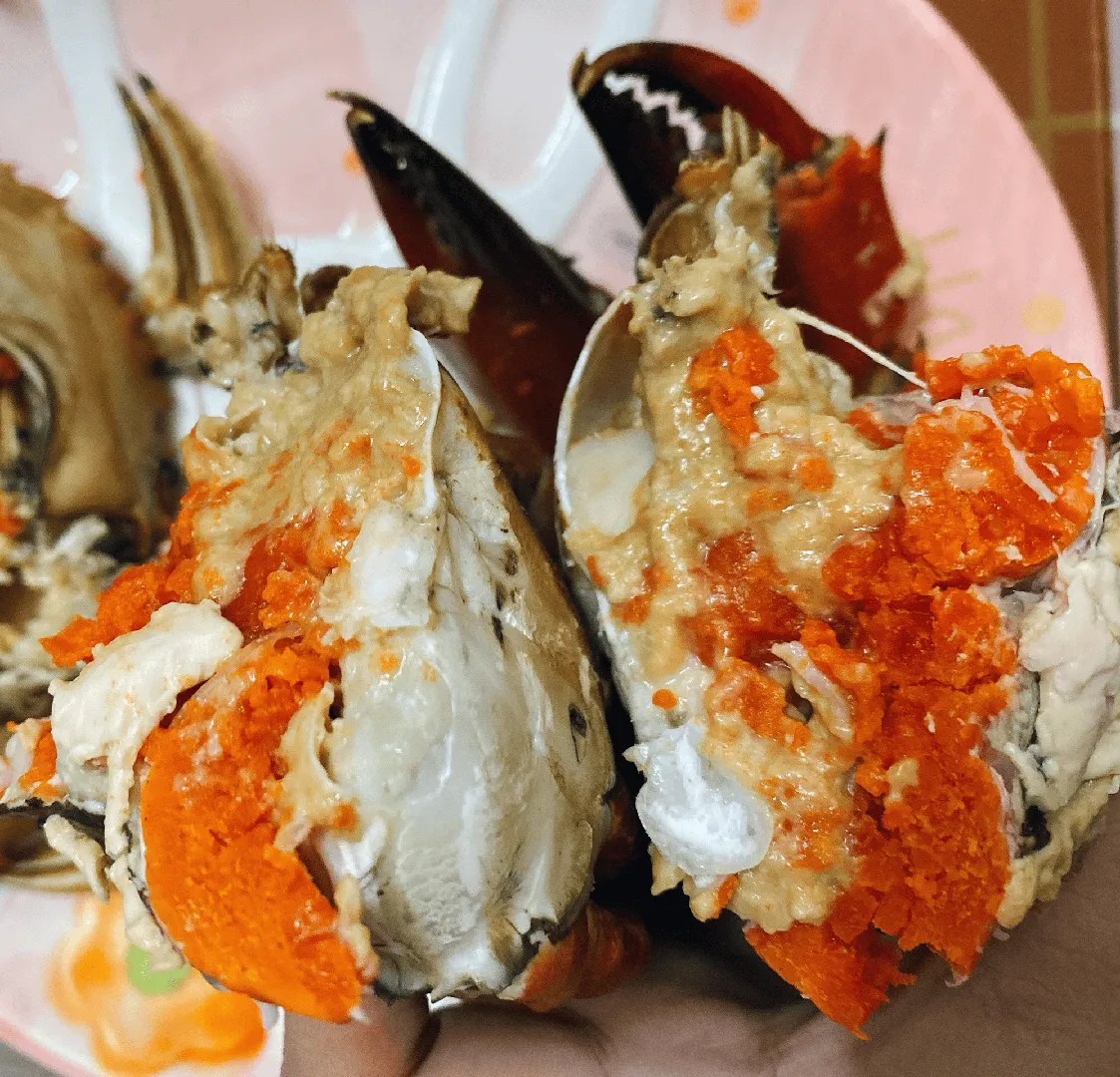
Heritage Ingredient
Ca Mau Roe Mud Crab
Ca Mau Roe Mud Crab
A female mud crab known for deep orange roe and a rich, creamy finish, often featured in celebratory Southern Vietnamese seafood meals.
A crimson treasure hidden within a shell, boasting rich, creamy roe that melts on your tongue like a golden sunset over the delta.
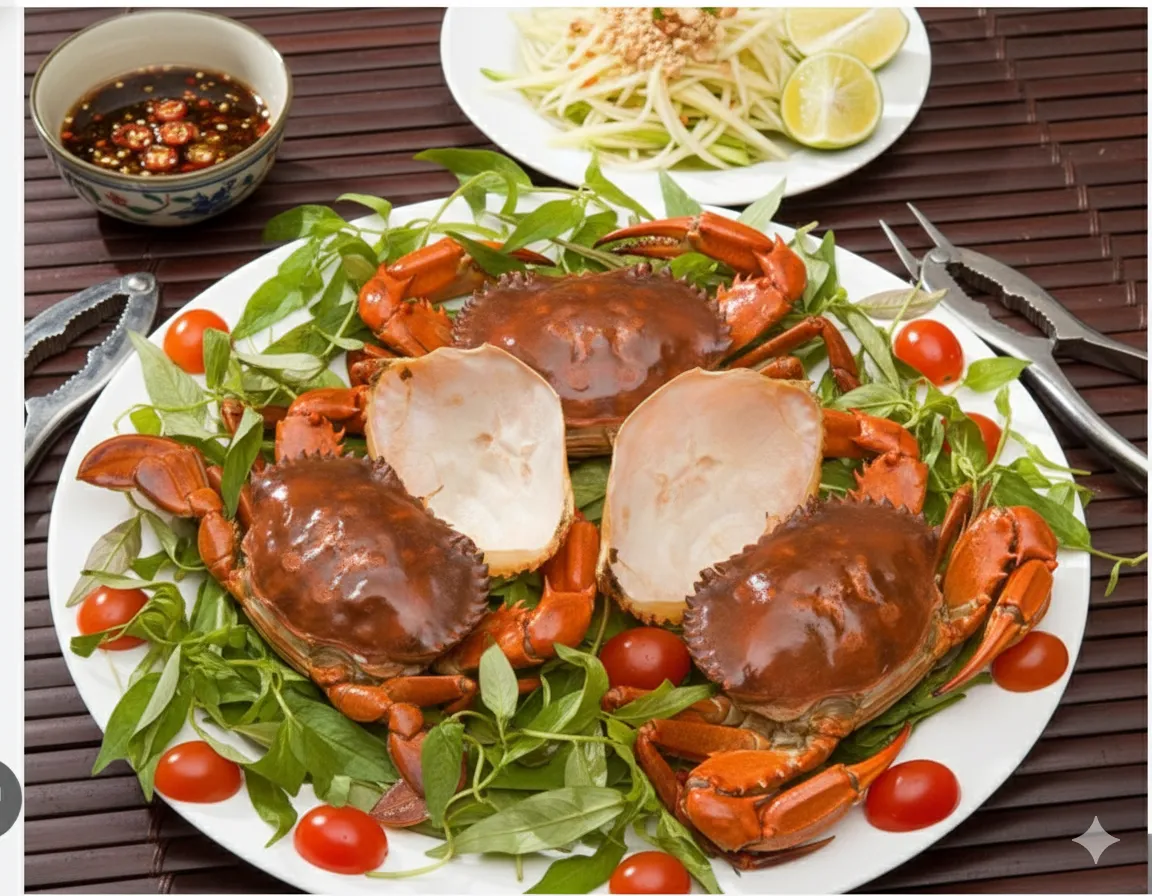
Heritage Ingredient
Soft-Shell Butter Crab (Molting Crab)
Soft-Shell Butter Crab (Molting Crab)
A rare molting mud crab from Ca Mau, valued for its edible soft inner shell and exceptionally creamy roe, making it the closest local equivalent to soft-shell crab concepts familiar abroad.
Nature's rare masterpiece—a delicate transition where a soft inner layer protects golden, custard-like roe in a fleeting moment of flavor.
2 The Soul of the Sea: South Korean Crab Culture
Across the Sea of Japan, in South Korea, crab culture is as rich and complex, though distinctly different. Korean cuisine often embraces bold, fermented, and intensely savory flavors, and its approach to crab is no exception. While fresh, simply prepared crab is enjoyed, it's the marinating and preservation techniques that truly set Korean crab apart, transforming it into a dish that is a meal in itself.
The most iconic example is Ganjang Gejang (간장게장), often called "raw crab marinated in soy sauce." This dish is a national treasure, a testament to Korean ingenuity in preserving and enhancing the delicate flavor of fresh crab. It’s not about overpowering the crab, but about creating a complex symphony of salty, sweet, and umami notes that cling to the succulent meat and rich roe.
Soy-Marinated Intensity
The magic of Ganjang Gejang lies in its marinade. A potent blend of soy sauce, garlic, ginger, chili peppers, and often pear or other fruits for sweetness, is carefully prepared and then used to cure fresh, high-quality crabs. The crab is served raw (but cured by the marinade), its delicate flesh absorbing the deep, savory flavors while retaining its sweetness. The accompanying roe and tomalley become incredibly rich and luscious.
Beyond Ganjang Gejang
Another beloved dish is Yangnyeom Gejang (양념게장), the spicy marinated crab. Here, the marinade is a vibrant gochujang-based sauce, fiery and tangy, offering a different kind of intensity. It's often less about preserving and more about infusing the crab with a bold, piquant flavor. Both dishes are typically served with rice, where the soy sauce or spicy marinade can be mixed in, creating a beloved rice-eating experience known as bap-do-duk (rice thief).
3 The Core Difference: Preservation vs. Freshness
The fundamental divergence in Vietnamese and Korean crab traditions lies in their primary approach: Vietnam champions absolute freshness, allowing the inherent, delicate sweetness of the crab to be the star. Korea, while valuing fresh crab for dishes like steamed crab (jjim), elevates marinated crab as a distinct category, focusing on the transformative power of fermentation and bold marinades to create new flavor profiles.
Vietnamese Focus
Freshness & Natural Sweetness: Steamed, boiled, grilled. Minimal intervention. Dipping sauces are bright, acidic.
Korean Focus
Flavor Infusion & Preservation: Marinated (soy or spicy). Cured. A dish that stands on its own.
The Terroir Element
Mekong Delta: Estuarine mud, mangrove diet, natural environment. Korea: Coastal, often deeper sea, regional marinades.
4 The Mekong Delta Lifestyle: More Than Just Crab
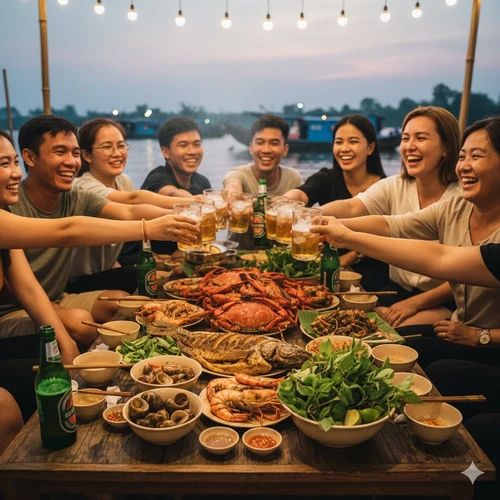
Life in the Mekong Delta moves to the rhythm of the tides. Seafood, with crab as a shining example, is deeply intertwined with the daily lives and celebrations of its people. From bustling floating markets in Can Tho where vendors hawk their catch from sampans, to humble family meals featuring a simple steamed crab, the crustacean is a constant. The act of eating crab is often communal, a hands-on experience that brings people together, cracking shells and sharing stories.
The sheer abundance and variety of seafood in the Delta means that crab shares the culinary stage with succulent freshwater prawns, plump oysters, and a myriad of fish. This ecological richness is what gives Mekong crab its unique character. The taste of Ca Mau mud crab, with its subtle sweetness and firm texture, is a direct reflection of the pristine, albeit unique, mangrove ecosystem it calls home. It's a flavor that evokes the very essence of Southern Vietnam.
Floating Markets & Everyday Feasts
Witnessing the scale of operations at markets like Cai Rang Floating Market is a sensory overload, a vibrant showcase of local produce. Here, you can find everything from freshly caught crabs to the exotic fruits that form the basis of Vietnamese desserts. The crab sold here is destined for kitchens across the delta, prepared with the same philosophy of respecting its natural flavor.
The Hands-On Ritual
Eating crab in Vietnam is an event. It's about the communal act of cracking shells, dipping succulent meat into spicy lime salt, and savoring every sweet morsel. This interactive dining style is a cornerstone of Vietnamese hospitality, making the meal an experience, not just sustenance.
5 Korean Dining Rituals: Order and Intensity
Korean dining is often characterized by its orderly presentation and a powerful gustatory impact. When it comes to crab, this translates into meticulously prepared marinated dishes. Ganjang Gejang and Yangnyeom Gejang are not typically presented as a whole, freshly steamed crab meant for casual cracking. Instead, they are often served as a refined side dish (banchan) or a main attraction in a more composed meal setting.
The emphasis is on the marinade's intricate flavor profile and how it complements the rice. The experience involves carefully extracting the crab meat and roe, mixing it with rice, and savoring the potent, complex taste. It’s a deliberate, flavorful journey that showcases a different facet of how a culture can interact with its prized seafood.
Banchan Culture
Marinated crab often plays a role as a premium banchan, contributing its unique flavor to a spread of various small dishes. This allows diners to experience its intensity in moderation, paired with other Korean staples.
The "Rice Thief" Experience
The legendary "rice thief" moniker speaks volumes. The rich, savory, or spicy marinade is so addictive that it compels diners to eat copious amounts of rice to balance its potent flavor. It highlights how Korean cuisine masterfully creates dishes that are intensely satisfying.
6 For the Curious Palate: Why Vietnam & the Mekong Delta Beckon
If the bold, fermented notes of Korean marinated crab have captured your heart, imagine the revelation of experiencing the unadulterated, sweet essence of a wild-caught Ca Mau mud crab, steamed to perfection. The Mekong Delta offers a journey not just for the taste buds, but for the soul. It's a chance to connect with nature in its most vibrant form, to understand a seafood culture deeply rooted in its environment, and to savor flavors that are both simple and profound.
Visiting the Mekong Delta is an immersion. It's about the fresh, salty air carrying the scent of the river, the sight of lush greenery, and the taste of seafood that’s as fresh as it gets. While Korean crab offers an exploration of flavor transformation, Vietnamese crab, especially from Ca Mau, presents a profound appreciation for the raw beauty of the ocean's bounty. For any true seafood aficionado, tasting this difference firsthand is an essential pilgrimage.
A Different Kind of Intensity
The intensity in the Mekong isn't in spice or fermentation, but in the purity of flavor. It’s the concentrated sweetness of a crab that has lived its life in a complex, natural ecosystem, untainted by artificial feeds or overcrowded ponds.
Beyond the Plate
A trip to the Mekong Delta is an adventure. Explore floating markets, learn about aquaculture, engage with local communities, and taste crab prepared in myriad ways, all against a backdrop of breathtaking natural beauty.
7 The Essence of Crab: A Culinary Dialogue
Both Vietnam and South Korea hold their crab traditions in high esteem, offering the world distinct yet equally compelling ways to enjoy this magnificent crustacean. Vietnam, particularly the Mekong Delta, invites us to a dialogue of freshness, purity, and the subtle, inherent sweetness of its wild mud crabs. It's an invitation to taste the very essence of the environment from which they come.
South Korea, on the other hand, engages in a dialogue of flavor transformation, using masterful marinades and fermentation to create dishes that are intensely savory, complex, and utterly unique. Ganjang Gejang and Yangnyeom Gejang are culinary artworks that speak of a deep understanding of balance, preservation, and the power of ingredients to create deeply satisfying meals.
Ultimately, whether you seek the unadulterated sweetness of the Mekong or the bold, nuanced flavors of Korean marinated crab, the journey into crab culture is one of discovery. Each offers a unique window into the culinary soul of a nation, celebrating the bounty of the sea in ways that are both deeply traditional and endlessly fascinating.
8 Practical Advice for the Visiting Foodie
Experiencing Vietnamese Crab
- Where to Find: Seek out seafood restaurants in coastal cities like Nha Trang, Phu Quoc, or the Mekong Delta cities such as Can Tho and Ca Mau. Local markets are also excellent for observing the catch.
- What to Order: Ask for "cua thịt" (meat crab) for dense flesh and "cua gạch" (roe crab) for rich roe. Simple preparations like "cua hấp" (steamed crab) or "cua nướng" (grilled crab) are highly recommended.
- Don't Miss: The salt-pepper-lime dip is essential for enhancing the natural sweetness.
Experiencing Korean Crab
- Where to Find: Dedicated crab restaurants (gejang restaurants) are common in major cities like Seoul and Busan. Seafood markets also offer fresh options.
- What to Order: Try both Ganjang Gejang (soy-marinated) and Yangnyeom Gejang (spicy marinated).
- The Full Meal: Remember that these are often served with rice and other banchan, creating a complete, flavorful dining experience.
Craving Vietnamese Flavors?
Beyond crab, Vietnam's culinary landscape is a treasure trove of vibrant tastes.
🇻🇳 Explore More Vietnamese Seafood