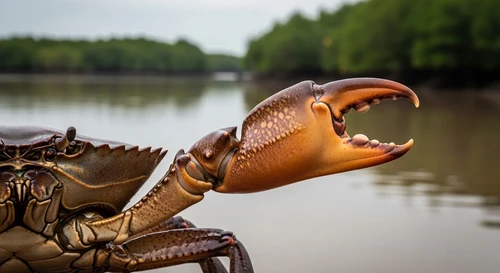
" I've traveled the globe, from bustling markets to serene river deltas, chasing flavors and stories that tether us to this earth. I’ve reveled in the pure, unadulterated sweetness of a freshly steamed mud crab, its crimson shell a promise of delight. But sometimes, you look up. And there, amidst the velvet black, the universe serves up a dish so utterly bizarre, so explosively beautiful, it demands the same fervent attention as a perfectly prepared meal. This is not a culinary journey, but a cosmic one – an exploration of one of the universe's most captivating "curiosities." "
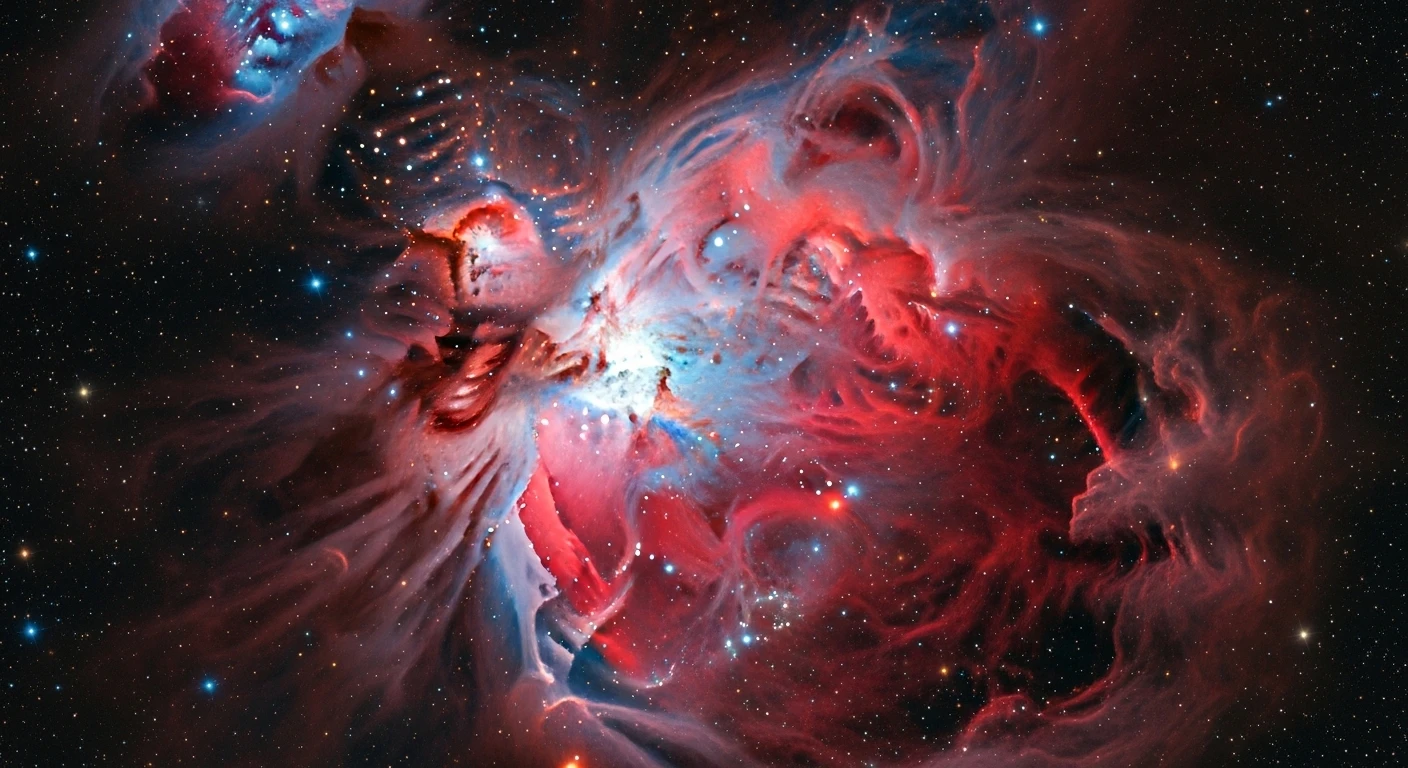
📸 A cosmic delicacy: The Crab Nebula, a feast for the eyes and the mind.
1 The Cosmic Gumbo: What Exactly is the Crab Nebula?
Forget the Mekong Delta's rich, earthy broths for a moment. Picture instead a swirling, incandescent cloud of gas and dust, some 6,500 light-years away in the constellation Taurus. This, my friends, is Messier 1, or more famously, the Crab Nebula. It’s not a quiet, serene corner of the universe; it's a cosmic maelstrom, a supernova remnant that continues to expand and dazzle, a testament to the universe's raw, unbridled power.
Imagine a celestial explosion so powerful it tore a star apart, scattering its guts across thousands of light-years. What we see today, through the lens of our most powerful telescopes, is the magnificent, chaotic aftermath – a complex tapestry of glowing filaments, swirling magnetic fields, and a heart that beats with unimaginable energy. It’s a dynamic, ever-changing entity, an ethereal dance of light and matter that constantly redefines itself against the backdrop of infinity.
2 A Stellar Genesis: The Violent Birth of a Celestial Crustacean
Every good story has an origin, and the Crab Nebula's is nothing short of legendary. It wasn't always a nebula. Back in the year 1054 AD, before anyone even dreamed of Michelin stars or air travel, a star in our Milky Way galaxy decided to go out with a bang – a truly cataclysmic supernova. For 23 days, it shone so brightly it was visible even in daylight, and for nearly two years, it lit up the night sky, a blazing beacon that outshone every other star.
Ancient Chinese and Arabic astronomers, with their naked eyes and meticulous observations, documented this "guest star" – a celestial event so profound it demanded attention and record. Their detailed chronicles, centuries later, became the crucial breadcrumbs leading modern astronomers to identify the Crab Nebula as the expanding remnant of that very supernova. It’s a delicious thought, isn’t it? That our ancestors, simply by looking up and recording what they saw, left us a historical and scientific map to one of the universe's most dramatic acts.
3 At the Heart of the Feast: The Pulsating Core
If the nebula is the cosmic dish, its core is the secret ingredient, the concentrated burst of flavor and energy that defines its existence. At the very center of the Crab Nebula lies a tiny, incredibly dense neutron star – a pulsar. This isn't just any star; it's the collapsed core of the progenitor star, spinning at an astonishing 30 times per second! Imagine the sheer power contained within a sphere only about 25 kilometers across, roughly the size of a city.
This pulsar acts like a cosmic lighthouse, emitting powerful beams of radiation that sweep past Earth, appearing to "pulse" at regular intervals. It’s the formidable engine driving the nebula's ethereal glow, generating an incredibly powerful magnetic field and accelerating particles to nearly the speed of light. This high-energy dynamo constantly reshapes the surrounding gases, a vibrant, pulsating testament to the incredible forces still at play in a post-supernova environment.
4 The Chef's Eye: Why Does it Look Like a Crab?
The name "Crab Nebula" might conjure images of delicious crustacean meat, but its origin is purely visual – and a delightful quirk of astronomical history. In 1844, the Irish astronomer William Parsons, 3rd Earl of Rosse, using his then-revolutionary 72-inch telescope (aptly named the "Leviathan of Parsonstown"), made a detailed sketch of the nebula. His drawing, with its intricate, claw-like filaments, reminded him of a crab. The name, evocative and unforgettable, simply stuck.
Modern telescopes and cutting-edge photography reveal an even more spectacular and intricate view: a tangled web of gaseous filaments, glowing with the remnants of the star's outer layers, expanding outwards at immense speeds. The kaleidoscopic colors—from vibrant reds, fiery oranges, to deep blues and purples—are a testament to the different elements and energy levels within the gas. It's a feast for the eyes, a visual masterpiece that constantly shifts and evolves with every new, breathtaking image captured by powerful instruments like the Hubble Space Telescope.
5 Unearthing Cosmic Ingredients: How Astronomers Study This Delicacy
Just as a seasoned chef inspects ingredients with a discerning eye and a sophisticated palate, astronomers use a battery of advanced instruments to understand the Crab Nebula. It's not enough to simply gaze at its beauty; we must dissect, analyze, and interpret the faint whispers of light it sends across unimaginable distances. Each tool offers a unique perspective, revealing different "flavors" of cosmic information:
Visible Light (Hubble Space Telescope)
This reveals the breathtaking, intricate filamentary structure – the glowing remnants of the star's outer layers, appearing like delicate threads in a cosmic tapestry. It's how we primarily perceive its "crab-like" shape.
X-Rays (Chandra X-ray Observatory)
X-rays expose the violent central region, where the pulsar's incredibly powerful magnetic fields accelerate electrons to extreme energies, creating high-energy jets and winds that illuminate the nebula's core.
Radio Waves (Very Large Array - VLA)
Radio waves penetrate the obscuring dust and gas, showing us the broader distribution of charged particles and the nebula's overall expansion. This helps track its growth over time.
Gamma Rays (Fermi Gamma-ray Space Telescope)
Detecting the highest energy emissions, gamma rays tell us about the most extreme and violent processes happening around the pulsar, unveiling the nebula’s powerful particle acceleration capabilities.
Each wavelength acts like a different spice or a distinct cooking method, bringing out a unique flavor in the cosmic stew, allowing scientists to piece together a comprehensive and multi-faceted understanding of this dynamic celestial object.
6 A Universe of Flavor: What the Crab Nebula Teaches Us
The Crab Nebula isn't just a pretty picture; it's a cosmic classroom, a Rosetta Stone for understanding stellar evolution and extreme physics. For astronomers, it's a veritable treasure trove of data, a "standard candle" of sorts, helping us calibrate distances in the vast universe. Its importance can't be overstated:
- Supernova Physics: As one of the most studied supernova remnants, it allows scientists to investigate in detail the dramatic processes of stellar death and the subsequent formation and dispersal of heavy elements across the galaxy.
- Pulsar Dynamics: The Crab Pulsar is perhaps the most famous and well-observed pulsar, providing unparalleled insights into neutron star physics, ultra-strong magnetic fields, and how these objects accelerate particles to relativistic speeds.
- Cosmic Accelerators: The nebula itself acts as a natural particle accelerator, giving us crucial clues about how enigmatic cosmic rays – high-energy particles that constantly bombard Earth – are generated.
- Observational History: The unique historical records of its progenitor supernova allow for incredibly precise dating and calculations of its expansion rate, making it an invaluable benchmark for astronomical models.
It's a reminder that even in the most destructive and violent events, there is immense knowledge to be gained, a kind of cosmic culinary wisdom about the universe's grand design, constantly unfolding before our patient gaze.
Beyond the Mekong Mud: Finding Wonder in the Stellar Kitchen 🌌
I spend my life exploring cultures through their food, the immediate, tactile pleasure of a perfectly balanced dish, the stories whispered between bites. But looking at the Crab Nebula, I realize the universe offers its own kind of sublime wonder, a spectacle that transcends earthly ingredients and provincial boundaries. It’s an intellectual feast, a challenge to our perception of reality, and an invitation to expand our horizons far beyond the familiar.
It's a testament to the power of observation, to the insatiable human curiosity that drives us to peel back layers, whether of an onion, a foreign culture, or a dying star. From the mud flats where Mekong crabs burrow and thrive, to the cosmic dust where a massive star once blazed and exploded, there's a continuity of wonder, a universal hunger for discovery. Perhaps the greatest flavor of all is the taste of the unknown, perpetually waiting to be savored by those bold enough to look up.
8 Navigating the Cosmic Current: Essential "Viewing" Tips
You don't need a multi-million dollar telescope or a degree in astrophysics to appreciate the Crab Nebula, though those certainly help! For the armchair explorer, or even the budding stargazer, here's how to dive deeper into this celestial curiosity and make your own connection:
- Amateur Stargazers: With a good pair of binoculars or a small to medium-sized telescope (8-inch aperture or larger), the Crab Nebula can be glimpsed as a faint, fuzzy patch in the constellation Taurus, ideally on a dark, moonless night away from city lights. It’s a rewarding challenge for new astronomers.
- Online Observatories & Archives: Websites for the Hubble Space Telescope, NASA, ESA, and other space agencies offer stunning, high-resolution images, multi-wavelength composites, and even virtual tours. It's like having a private window to the cosmos, accessible from your couch.
- Documentaries & Books: Immerse yourself in the captivating stories of cosmic discovery and stellar evolution. From the accessible narratives of Carl Sagan and Neil deGrasse Tyson to more in-depth scientific texts, there's a wealth of engaging content that brings these wonders vividly to life.
- Local Astronomy Clubs: Find your local astronomy club! They often host public viewing parties, have access to powerful telescopes, and boast knowledgeable members who can guide you through the night sky, pointing out celestial treasures like the Crab Nebula.
So, next time you're enjoying a meal, or simply taking a moment of pause, take a moment to look up. You might just find another "crab" waiting to be discovered, a testament to the universe's infinite culinary and cosmic wonders, proving that curiosity, much like good food, is a universal language.
Common Questions from Curious Earthlings
🔭 Can I see the Crab Nebula with my own eyes?
💥 Is the Crab Nebula still expanding?
🌟 What kind of star exploded to create it?
Hungry for More Cosmic Stories?
If the Crab Nebula ignited your curiosity, perhaps it's time to explore other stellar wonders and universal mysteries.
🔭 Explore the Pillars of Creation