" Imagine trying to breathe underwater. Now imagine a creature, built for the deep, walking on dry land, seemingly defying the very laws of its biology. This isn't magic; it's the raw, ingenious spirit of survival etched into every joint and gill of the crab. "
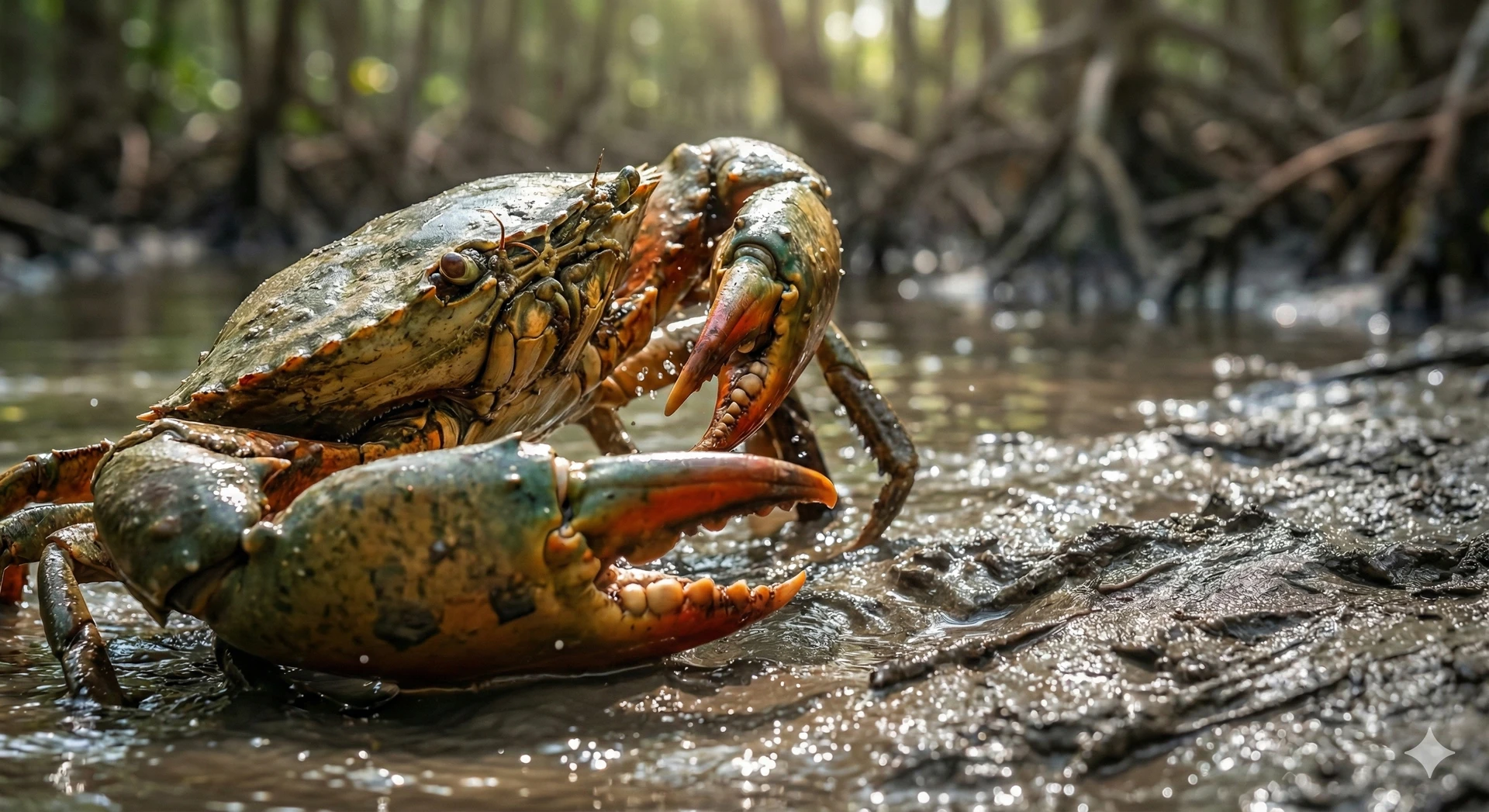
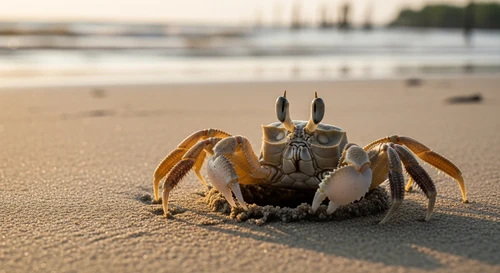
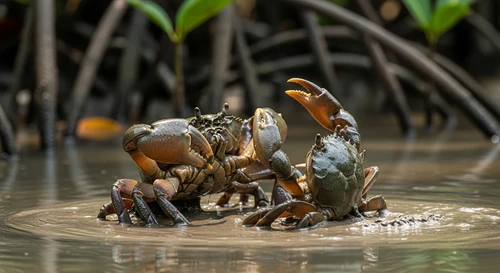
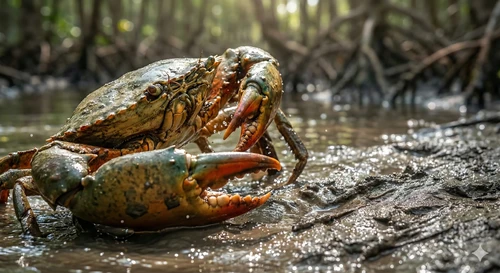
📸 The timeless struggle: A crab emerging from its watery world, adapted to thrive.
1 The Delta's Architects of Survival
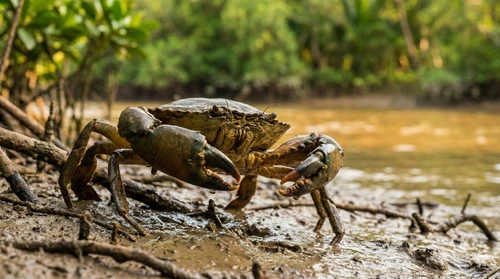
The Mekong Delta is a place of profound duality. Where fresh water from the river meets the salty embrace of the sea. Where the land, rich and fertile, is constantly sculpted by the rhythm of tides and the monsoon's breath. It is a world of constant flux, and in its muddy heart, a testament to resilience scuttles sideways: the crab.
Here, these crustaceans aren't just a delicacy; they are an integral part of the ecosystem, as vital to the mangrove forests as the sediment itself. And nowhere is their sheer will to survive more evident than in their uncanny ability to seemingly defy the most fundamental rule of aquatic life: breathing in air. They walk among us, or rather, among the muddy banks, a marvel of natural engineering that often goes unnoticed, even as we savor their sweet flesh.
2 Out of Water, Into the Air: A Brief Encounter
For most aquatic creatures, removal from water is a death sentence. Their gills, exquisitely designed to extract dissolved oxygen from water, simply collapse in the open air, their delicate membranes drying out and losing functionality within moments. Yet, spend any time in the intertidal zones of the Mekong – or indeed, any coast worldwide – and you’ll see crabs going about their business on dry land with an almost casual confidence.
They dig, they forage, they fight, they mate, all while seemingly holding their breath. But they aren't holding their breath. They are breathing. Just not in the way we typically understand it for a creature of the sea. It's a subtle, intricate dance of biological adaptation, a testament to millions of years of evolutionary refinement that allows them to conquer both the liquid and gaseous realms.
3 Gills, Gills, Glorious Gills (But Not for Air)
At the heart of a crab's respiratory system are its gills. These feathery, highly vascularized structures are located in chambers on either side of the crab's carapace. In water, the mechanism is brilliantly simple: water flows over the gills, and oxygen diffuses across their thin membranes into the crab's bloodstream, while carbon dioxide diffuses out.
However, when a crab emerges from water, its gills face a formidable challenge. The delicate lamellae (the plate-like structures of the gills) are designed to be buoyant and spread out in water. In air, they clump together, reducing the surface area available for gas exchange. More critically, they begin to dry out almost immediately. A dry gill is a useless gill. So, the secret isn't about changing the gills, but about protecting them.
4 The Internal Humidifier: Keeping Gills Moist
This is where the crab's true genius for terrestrial survival comes into play. Instead of abandoning its gills, it modifies its immediate environment. Crabs possess specialized structures that allow them to carry a small, portable oxygen bar right inside their bodies. Here's how they do it:
- Branchial Chambers: The gills are housed within sealed cavities called branchial chambers. These chambers are not fully sealed but have small openings. When a crab leaves the water, it traps a supply of water within these chambers.
- Water Retention: This trapped water acts as a mini-aquarium for the gills, keeping them moist and preventing collapse. The crab can even use its mouthparts and specialized appendages (like the "gill bailer" or scaphognathite) to pump water over the gills, maintaining a constant flow and refreshing the oxygen supply within the trapped water.
- Recycling Air: Interestingly, some terrestrial crabs can circulate air through these moist chambers, essentially creating a primitive lung. Oxygen from the air dissolves into the water film on the gills, and then into the blood. They can even re-circulate the water, topping it up when they encounter a puddle or damp substrate.
This ingenious system ensures that even on land, their gills remain in a water-like environment, allowing them to continue extracting oxygen from the surrounding air which dissolves into the retained water. It's a testament to evolutionary efficiency: why grow entirely new organs when you can simply adapt the existing ones?
5 Beyond the Gills: Auxiliary Oxygen Systems
While gill maintenance is crucial, some crab species, particularly those that spend extended periods on land, have evolved even more sophisticated adaptations. These can include:
- Vascularized Linings: The inner lining of the branchial chambers can become highly vascularized (rich in blood vessels). This allows for direct gas exchange between the air in the chamber and the blood, bypassing the gills to some extent. These act like rudimentary lungs, significantly increasing oxygen uptake efficiency on land.
- Cutaneous Respiration: Some semi-terrestrial crabs can absorb a small amount of oxygen directly through their moist skin, especially in areas with thinner exoskeletons. This isn't their primary method but provides supplementary oxygen when needed.
- Behavioral Adaptations: Beyond internal biology, behavior plays a huge role. Crabs will often seek out damp environments, burrow into moist sand or mud, or simply return to water periodically to re-wet their gills and top up their internal water supply. The Mekong Delta, with its constant interplay of land and water, provides ample opportunity for such behaviors.
These layered adaptations illustrate a spectrum of terrestrialization among crabs, from those barely able to survive out of water to highly specialized land crabs that only return to the sea to breed.
6 The Muddy Battlefield: A Crab's Home Advantage
In the Mekong Delta, life is a constant negotiation with the elements. The intertidal zones, where mangroves root deeply and mudflats stretch for miles, are a prime example. This dynamic environment is precisely where the crab's amphibious breathing adaptations shine brightest. When the tide recedes, vast swathes of land are exposed, rich with buried treasures for a foraging crab.
The ability to spend hours, even days, out of the water allows them to exploit food sources inaccessible to purely aquatic predators. They can also escape from aquatic threats, find mates, and establish burrows that offer protection from both predators and the harsh sun. The damp, often oxygen-poor mud actually aids in maintaining their gill moisture and provides a refuge where oxygen can be extracted from trapped water pockets.
7 From Scientific Wonder to Culinary Delight
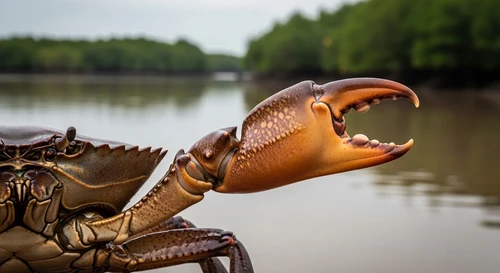
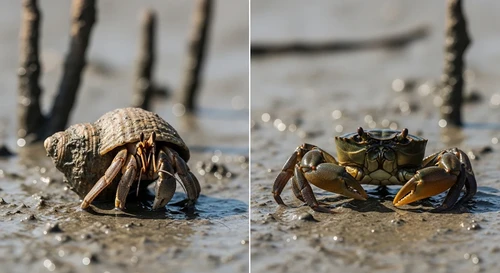
Beyond the intricate biology, there's the undeniable sensory experience of the crab in the Mekong. To know how these creatures survive is to deepen one's appreciation for the succulent meat that comes from their resilient bodies. Whether it’s the robust Mud Crab, known for its powerful claws and sweet, firm meat, or the smaller, nimble Fiddler Crabs that carpet the shorelines, each tells a story of adaptation.
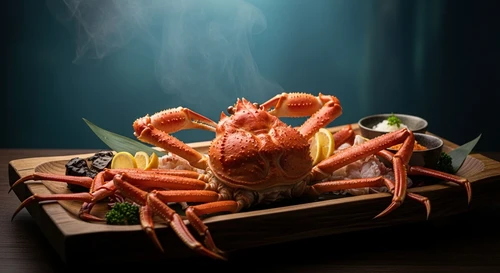
When you taste a freshly steamed crab, its vibrant orange shell signaling the purity within, remember the journey it took. Remember the tides, the mud, the ingenious biological mechanisms that allowed it to thrive in a world of dualities. It's a connection to the raw, untamed spirit of the Delta, an edible metaphor for resilience and the quiet triumph of evolution.
A Deeper Appreciation for the Delta's Defenders
The next time you see a crab scuttling across a sandy beach or disappearing into a muddy burrow, take a moment to marvel. These aren't just simple crustaceans; they are living testaments to the power of evolution, masters of their environment, and vital threads in the rich tapestry of life in places like the Mekong Delta. Their ability to breathe out of water isn't just a biological footnote; it's a profound statement on adaptability and survival.
Some land crabs can even climb trees, like the Coconut Crab, a true giant of the crustacean world, far removed from water!
Common Questions About Crab Respiration
🌊 Do all crabs breathe out of water?
⏳ How long can a crab survive out of water?
🌬️ Can they actually extract oxygen directly from the air?
Unravel More Mysteries
The Mekong Delta is a treasure trove of ecological wonders and fascinating life forms. Dive deeper into its secrets.
🔎 Explore All Curiosities