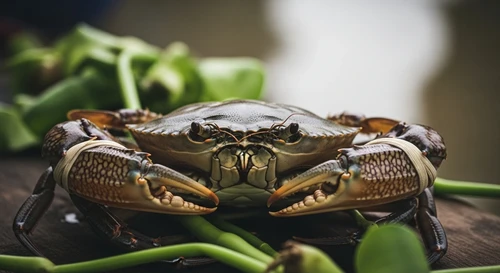
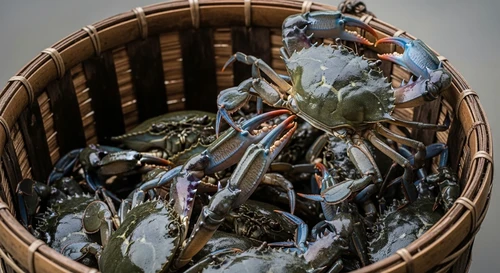
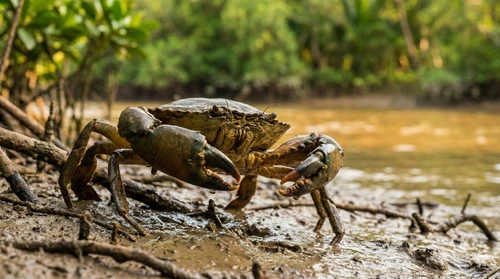
" There's a primal wisdom in the Mekong Delta. A rhythm dictated by tides, rains, and the silent, arduous process of transformation. For the common mud crab, growth means a dangerous, vulnerable act: shedding its very armor. "
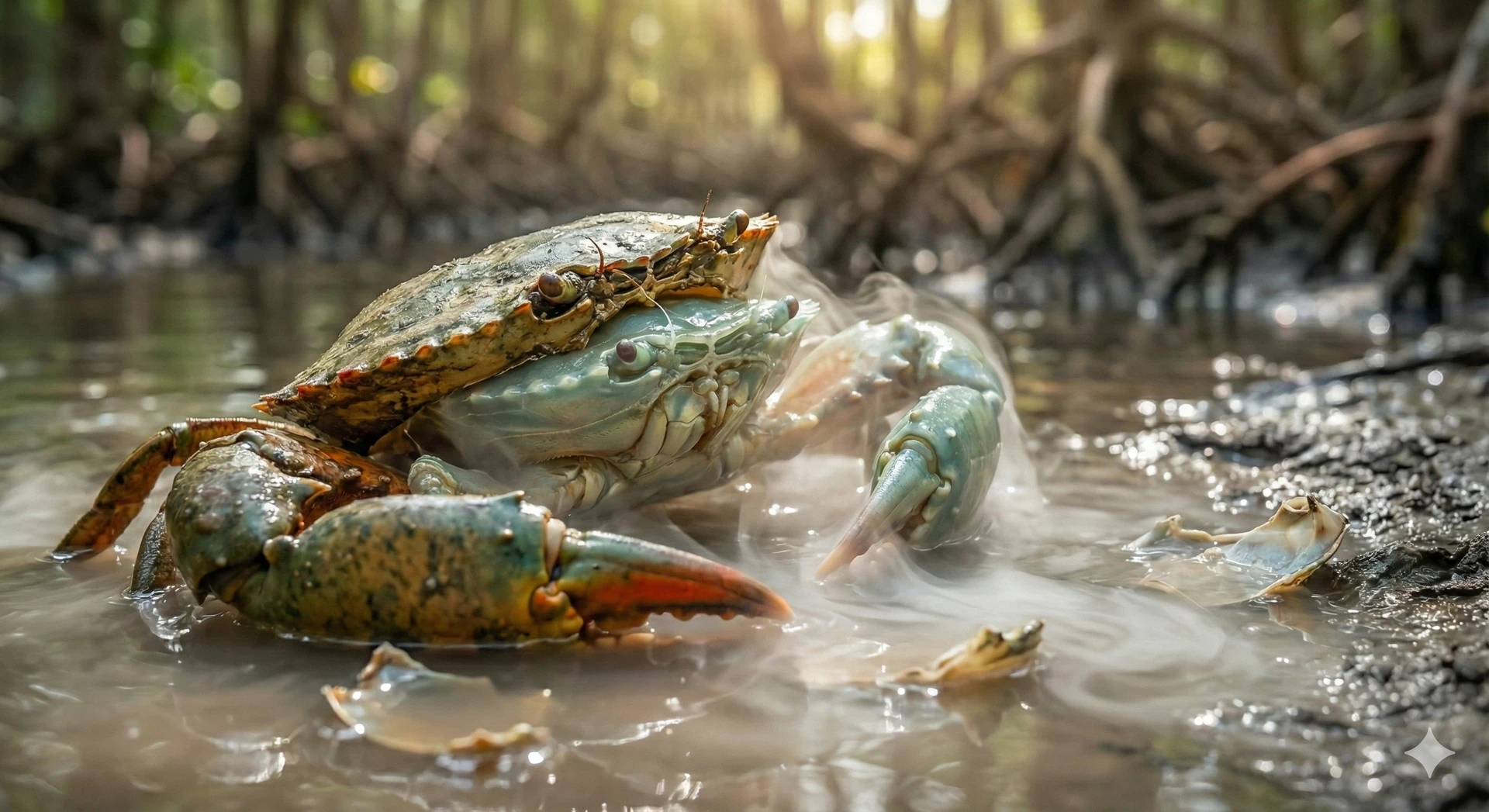
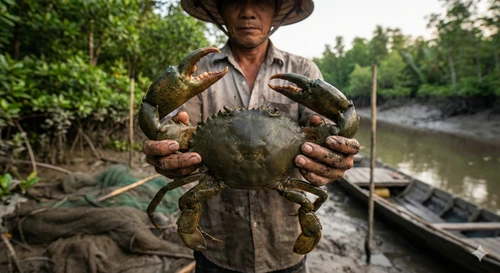
📸 A mud crab, caught mid-molt, revealing its soft, new form. A moment of extreme vulnerability and profound growth.
1 The Mekong's Primal Dance: A Cycle of Renewal
In the labyrinthine waterways and emerald mangroves of the Mekong Delta, life operates on an ancient clock. The tides ebb and flow, the seasons shift, and beneath the murky surface, creatures engage in an endless ballet of survival. One of the most fascinating, and arguably most important, performances in this deltaic theater is the molting process of its crabs. It’s not just a biological imperative; it’s a cornerstone of the local economy, a culinary delicacy, and a potent metaphor for transformation.
To understand the delta is to understand its crabs. To understand its crabs is to grasp the sheer audacity of their growth, the vulnerable act of shedding their very identity to become something larger, softer, and temporarily, incredibly fragile. This isn't just a curiosity; it's a window into the raw, beautiful mechanics of nature.
2 The Great Escape: What is Ecdysis?
Crabs, like all crustaceans, wear their skeletons on the outside. This tough exoskeleton, while providing protection, doesn't grow. To get bigger, they must literally break free from their old selves. This process is called ecdysis, or more commonly, molting. It's a spectacular, albeit exhausting, feat of biology.
Imagine trying to pull yourself out of a suit of armor that's too small, from the inside. That’s essentially what a crab does. Days, even weeks, before the actual molt, the crab begins absorbing calcium from its old shell, storing it in its tissues. It then secretes a new, soft, flexible exoskeleton beneath the old one. When the time is right, a crack forms, usually along the back of the carapace, and the crab painstakingly wriggles free. It pulls out its legs, its claws, its eyes—every single appendage—from the old shell, leaving behind a perfect, ghostly replica.
A Moment of Extreme Vulnerability
Immediately after molting, the crab is incredibly soft and defenseless, resembling a gelatinous blob. It swells with water to rapidly expand its new shell, which then hardens over hours or days. This is when they are most susceptible to predators – and, crucially for us, most delicious.
3 Soft Gold: Why "Molters" are Prized
If you've ever had a soft-shell crab, you understand the allure. No cracking, no fiddly tools, just pure, succulent crab meat, shell and all. In the Mekong Delta, these "molters" are considered a gourmet treasure, a fleeting delicacy that captures the essence of the river. Their meat is intensely sweet, their texture buttery, and their flavor profile uniquely delicate.
Unlike hard-shell crabs, which require effort and skill to extract their prize, a soft-shell crab offers immediate gratification. It’s a full crab experience, edible from claw to carapace. This makes it a star ingredient in local kitchens, fetching higher prices and fueling a specialized aquaculture industry.
4 A Delicate Balance: The Delta's Crab Farmers
The journey of a soft-shell crab from river to plate is a testament to the delta's ingenuity. Farmers don't just wait for crabs to molt; they actively manage the process. Across provinces like Cà Mau and Bến Tre, you'll find specialized farms where crabs are kept in individual compartments or small nets, carefully monitored.
These farmers become intimate observers of the crab's cycle. They look for subtle signs: a slight widening of the carapace, a darkening along the edges, or the appearance of a thin "ghost line" beneath the old shell. When a crab shows these tell-tale signs, it's moved to a separate holding tank. The timing is crucial; harvest too early, and the shell is still hard; too late, and the new shell will have hardened. It’s a high-stakes waiting game, often done under the watchful eye of the moon and stars, where a single missed crab means a lost delicacy.
It’s a physically demanding and meticulous job, reflecting the delta's deep connection to its natural resources and the profound respect for the creatures that sustain its people.
From Shedding to Sautéing: A Culinary Journey
The beauty of soft-shell crab lies in its versatility and ease of preparation. The entire crab is edible, requiring minimal intervention to bring out its delicate flavor.
Crispy Fried Soft-Shell Crab
This is arguably the most popular preparation. Lightly dredge the cleaned soft-shell crab in seasoned flour or a delicate batter (often rice flour for extra crispness). Deep-fry until golden and impossibly crispy. The result is a textural marvel: a crunchy exterior giving way to sweet, tender meat.
Serve with a squeeze of fresh lime, a sprinkle of black pepper, and a dipping sauce like muối ớt xanh (green chili salt) for a tangy, spicy kick.
Steamed with Ginger and Scallion
For those who prefer a lighter, purer taste, soft-shell crabs can be gently steamed with aromatic ginger slices and fresh scallions. The steaming process enhances their natural sweetness without overpowering it. This method lets the crab's intrinsic flavor shine through, unmasked.
A dash of good quality fish sauce or a simple lime-salt-pepper dip is all that’s needed.
6 The Whispers of the River: Sustainability and the Future
The fascination with soft-shell crabs is not without its environmental considerations. As demand grows globally, so does the pressure on the delicate ecosystems of the Mekong Delta. Sustainable aquaculture practices, careful management of water quality, and responsible harvesting are paramount.
Many local farmers are keenly aware of this balance, recognizing that their livelihood depends on the health of the river. Integrated farming models, where crabs are raised alongside shrimp or even within mangrove forests, help maintain ecological balance while providing economic stability. It’s a constant dialogue between human needs and nature's capacity, a whisper that echoes the delta's deep wisdom.
7 Beyond the Shell: Broader Lessons from Nature
Observing the molting crab offers more than just culinary delight; it provides a powerful metaphor. Growth is rarely comfortable. It demands vulnerability, the courage to shed old structures, and a period of immense fragility before a stronger, larger self emerges.
In a world obsessed with permanence, the crab reminds us that transformation is essential, that breaking out of what once protected us is sometimes the only way forward. The Mekong Delta, with its relentless cycles of life and renewal, serves as a poignant backdrop for this universal lesson. It teaches us to respect the process, to appreciate the delicate moments, and to savor the delicious, hard-won fruits of change.
8 Experiencing the Molting Miracle: Tips for Travelers
If you're planning a trip to the Mekong Delta, seeking out soft-shell crab is an absolute must.
- Best Time: While available year-round due to controlled farming, the peak natural molting season can vary. Your best bet is to inquire with local guides or restaurants upon arrival.
- Where to Find: Visit coastal towns or provinces renowned for aquaculture like Cà Mau or Bến Tre. Local markets and specialized seafood restaurants will be your best sources. Look for smaller, family-run establishments for the most authentic experience.
- Beyond the Plate: Ask your guide about visiting a crab farm. Witnessing the careful process of raising and managing these crustaceans can add a profound layer of appreciation to your meal.
- Don't Be Afraid to Ask: Local vendors are often proud of their produce. Don't hesitate to ask questions about where the crabs come from and how they are handled.
Embrace the journey, the discovery, and the taste of this unique delta treasure. It’s more than just a meal; it’s a bite of the Mekong's very soul.
Dive Deeper into the Delta
The Mekong Delta is a treasure trove of natural wonders and culinary secrets. Explore more hidden gems.
🌴 Explore the Delta