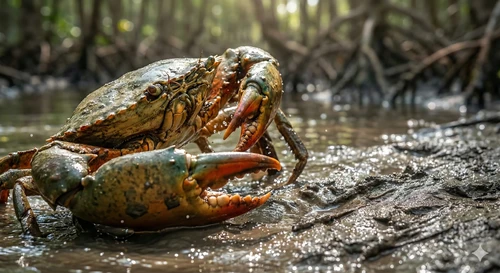
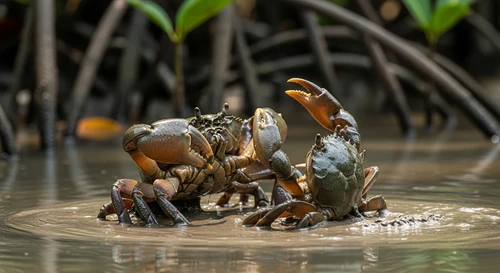
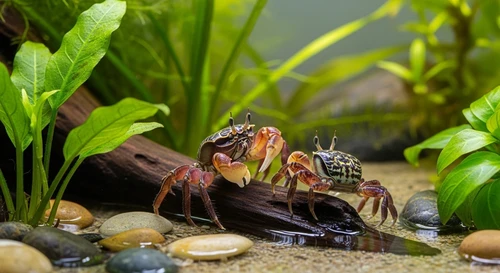
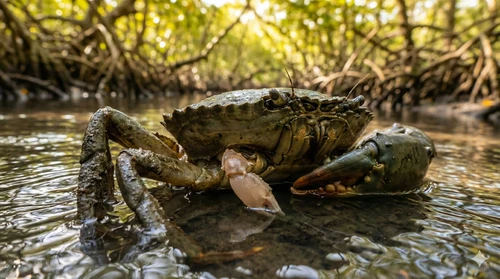
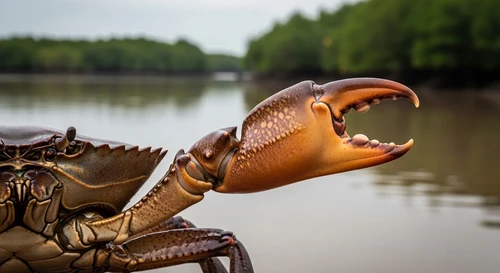
" The Mekong Delta is a place of breathtaking beauty, where life teems in vibrant abundance. But like any wild frontier, it holds its share of brutal truths. One such truth scuttles just beneath the surface, a dark secret whispered amongst the mangroves: Crabs eat each other. "
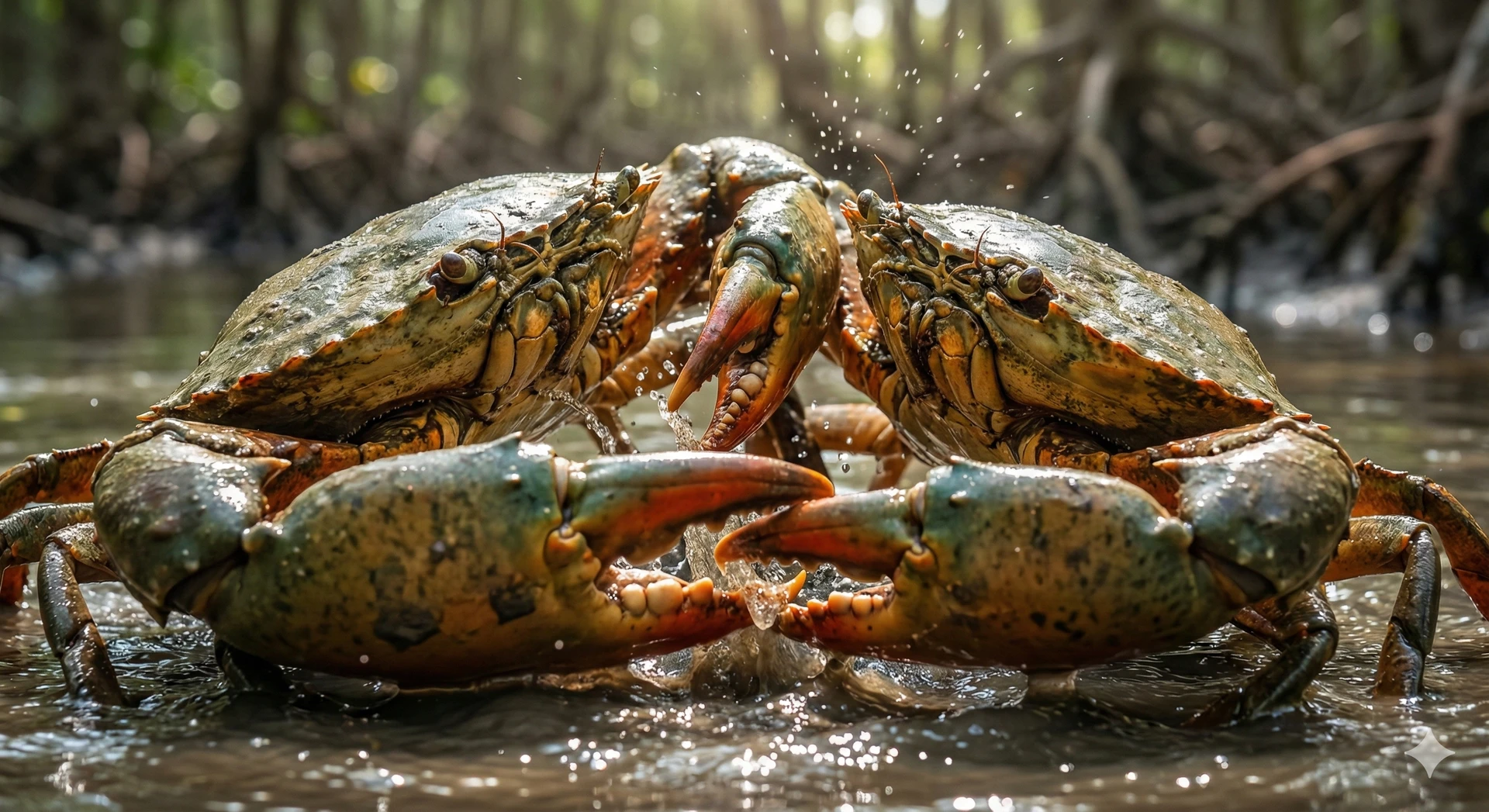
📸 The stark reality: Survival of the fittest plays out in the Delta's muddy banks.
1 The Unseen Struggle: Why Crabs Turn on Their Own
The image of a crab might conjure thoughts of delicious feasts, fresh seafood markets, or serene coastal living. But delve deeper into their natural habitat, particularly the nutrient-rich, bustling ecosystems of the Mekong Delta, and you uncover a more complex, often savage, reality. Yes, crabs are indeed cannibalistic. This isn't just an anomaly; it's a widespread behavior driven by a cocktail of primal instincts and environmental pressures. From the smallest larvae navigating the currents to the largest mud crabs patrolling the estuaries and mangrove forests, intra-species predation is a dark, yet critical, facet of their existence.
It's a stark reminder that nature, especially in a high-density, resource-competitive environment like the Delta, operates without sentiment. Every scuttling leg, every snapping claw, is part of a brutal calculus of survival, where another crab's misfortune can be a life-sustaining meal. This behavior, while unsettling to human observers, is deeply ingrained in the evolutionary success of many crab species.
2 A Hunger Beyond Comprehension: Triggers of Intra-species Predation
What pushes a crab to prey on its own kind? It's not malice, but a complex interplay of environmental factors and biological imperatives. Here in the Mekong Delta, where resources can be incredibly abundant yet also highly localized, and populations dense, these triggers are amplified, turning neighbor against neighbor:
- Resource Scarcity: The most obvious and potent driver. When primary food sources like detritus, smaller invertebrates, or algae become scarce, a fellow crab, particularly a weaker, smaller, or injured one, becomes an immediate and viable, energy-rich meal. This is especially prevalent in crowded areas or during seasonal fluctuations that impact food availability.
- Territorial Disputes: Crabs, especially larger males of species like the Mud Crab, are fiercely territorial. They defend their burrows, feeding grounds, and mating areas with aggressive displays. Intruders into these zones can quickly become targets of aggression, which, in extreme cases, escalates to deadly predation as the dominant crab eliminates a competitor.
- Population Density: High population densities, common in productive deltaic ecosystems, increase the frequency of encounters and the intensity of competition for space and food. This leads to higher rates of cannibalism as a brutal, yet effective, form of natural population control, ensuring that only the most adaptable survive.
- Stress and Environmental Conditions: Environmental stressors such as poor water quality, fluctuating salinity levels, extreme temperatures, or insufficient oxygen can heighten aggression and push crabs towards cannibalistic behaviors. A stressed crab is a more aggressive crab, less tolerant of its neighbors.
These aren't just isolated incidents observed in labs; they are systemic components of the crab's survival strategy, a dark ecological dance playing out daily across the mudflats and mangrove roots of the Delta.
3 The Molting Vulnerability: Soft Shells, Sharp Instincts
Perhaps the most poignant and frequent example of crab cannibalism occurs during their molting phase. Crabs, encased in their rigid exoskeletons, must shed their shells to grow. This vital process, known as ecdysis, leaves them temporarily soft, vulnerable, and utterly defenseless – a "soft-shell crab." This is a delicacy for humans, but a death sentence for many crabs in the wild.
For a brief window, usually hours to a few days, a crab that was once a formidable opponent becomes a gelatinous, easy target. Other crabs, driven by instinct and opportunity, don't miss this chance. A molting crab is a slow, nutrient-rich meal, requiring minimal effort to subdue. It's a critical period where the laws of the jungle are starkly evident: grow or be eaten. This vulnerability is a major factor contributing to mortality rates, especially among juvenile crabs in high-density areas, adding another layer of grim efficiency to the Delta's ecosystem and fueling the cycle of predation.
4 Maternal Instincts, Dark Realities: When Parents Eat Their Young
It sounds like a horror story plucked from the deepest corners of the animal kingdom, but even the youngest and most vulnerable crabs are not entirely safe from their elders, or in some desperate scenarios, even their own species. Larval and juvenile crabs face immense predation pressure from a myriad of marine creatures, and a significant portion of that comes from adult crabs, including those of their own species.
In some species, under extreme stress, poor nutritional conditions, or in highly confined environments, adult crabs (including female crabs post-hatching) have been observed consuming their own larvae or newly hatched young. This isn't a widespread phenomenon across all crab species, nor is it done out of malevolence, but rather it's a desperate act of self-preservation to recoup vital energy, or to ensure the survival of stronger, more viable offspring in a resource-limited environment. The sheer number of larvae produced by a single female crab (sometimes millions) means that individual survival rates are naturally low. Cannibalism, in this context, becomes another brutal culling mechanism, ensuring that only the fittest and most evasive juveniles make it to adulthood. It’s a harsh truth of the wild, underscoring the relentless competition for life from the very beginning.
5 The Human Factor: Aquaculture and the Battle Against Cannibalism
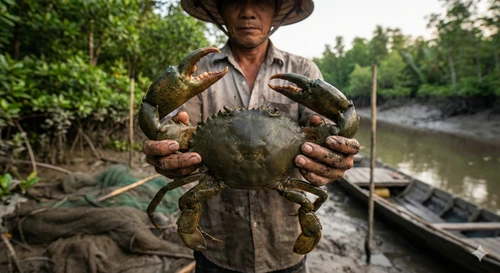
For the people of the Mekong Delta, who rely heavily on aquaculture for their livelihoods, crab cannibalism isn't just a natural curiosity; it's an economic challenge that directly impacts their bottom line. Mud crab farming, a crucial industry in provinces like Ca Mau, faces significant losses due to this inherent behavior. Farmers invest substantial time and resources into cultivating crabs, only to see their valuable stock diminish as larger, stronger individuals prey on the weaker ones, especially during vulnerable periods like molting or when food resources are insufficient.
To mitigate these losses and protect their investments, local farmers employ various ingenious strategies:
- Separate Compartments: Many advanced farms utilize individual pens, cages, or even divided ponds for larger, more aggressive crabs to prevent direct interaction and reduce predation.
- Consistent and Sufficient Feeding: Ensuring a stable, high-quality, and abundant food supply is paramount. Well-fed crabs are less likely to resort to cannibalism out of hunger.
- Shelter & Hiding Places: Providing ample natural or artificial shelter (like old tires, PVC pipes, bricks, or bundles of branches) offers vulnerable crabs refuge, especially post-molting, allowing them to harden their new shells in safety.
- Stocking Density Management: Carefully controlling the number of crabs per pond or enclosure to reduce competition and stress, which are known triggers for aggression.
- Species/Strain Selection: In some cases, farmers may experiment with less aggressive crab species or specific strains that exhibit lower rates of cannibalism.
It's a constant battle of wits and labor, a silent war waged in the muddy ponds, highlighting the delicate balance between natural instinct and human ingenuity in the Delta's crucial food chain.
6 Beyond the Shell: The Broader Ecological Canvas
While seemingly brutal, cannibalism in crabs, like many other forms of intra-species predation in nature, serves a vital ecological function. It’s a harsh but effective form of natural selection, contributing significantly to the overall health and resilience of the crab population and the wider ecosystem. By eliminating weaker, slower, or less adapted individuals, it ensures that only the strongest, most genetically robust traits are passed on, fostering a more resilient population capable of surviving the Delta's ever-changing and often challenging conditions.
Furthermore, it acts as a significant regulatory mechanism, preventing overpopulation within a specific niche and thus reducing intense competition for other limited resources such as burrows, mates, and non-crab food sources. This, in turn, benefits other species within the ecosystem by maintaining balance. It's a grim efficiency, yes, but one that highlights the intricate web of life and death, maintaining equilibrium. In a way, it's a testament to the brutal elegance of nature's design, where even the darkest behaviors serve a greater, often unseen, purpose in the grand tapestry of life.
Observing the Delta's Dark Dance: A Journalist's Reflection
My travels through the Mekong Delta often bring me to serene landscapes and heartwarming encounters with local communities, where the gentle rhythm of life unfolds around the river. Yet, it's these deeper, unvarnished glimpses into nature's raw truths that truly define the wild spirit of this region. Watching a crab scuttle across a muddy bank, knowing the hidden, constant battle it fights – both with the relentless environment and its own kin – adds a profound layer of respect, and perhaps a touch of primal unease, to every observation.
The beauty of the Delta isn't just in its picturesque floating markets or lush rice paddies; it's also in its untamed, cyclical existence, where life and death are intimately intertwined, shaping every creature. The tale of crab cannibalism is not merely a scientific fact; it's a powerful narrative woven into the very fabric of this incredible, relentless ecosystem, a story as ancient as the tides themselves.
8 The Raw Truth of the Delta: A Final Word
So, do crabs eat each other? Unquestionably, yes. This behavior, shocking as it might seem to our human sensibilities, is a powerful testament to the harsh realities of survival in the wild. It’s not a story of malice but of instinct, of adaptation, and of the relentless drive to persist against all odds in a world where every morsel of energy counts.
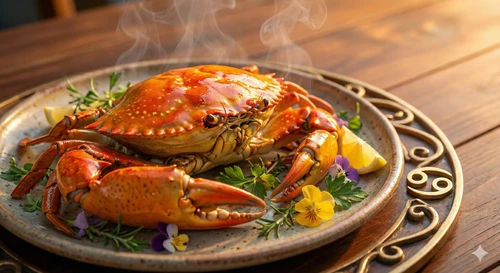
The next time you gaze upon the serene waters of the Mekong Delta, or perhaps even enjoy a succulent crab dish from its bountiful waters, take a moment to reflect on the incredible journey and the fierce, often brutal, struggle for existence that lies beneath its delicious shell. The Delta continues to reveal its secrets, both beautiful and brutal, reminding us that even in the most idyllic settings, the wild heart of nature beats strong and unapologetic.