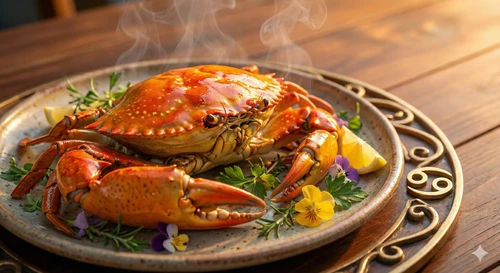
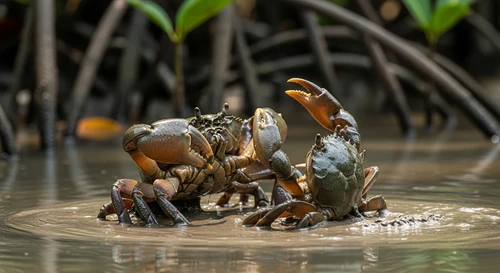
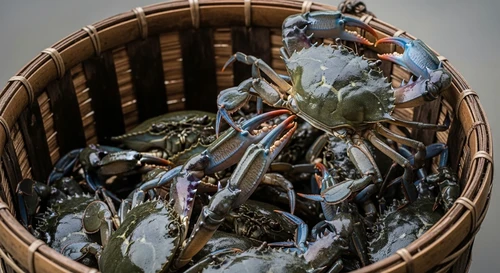
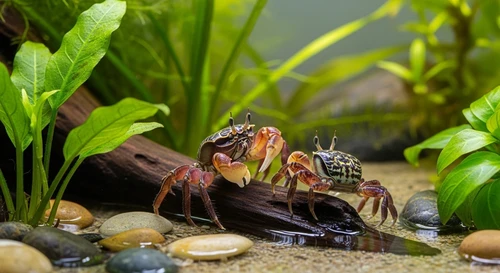
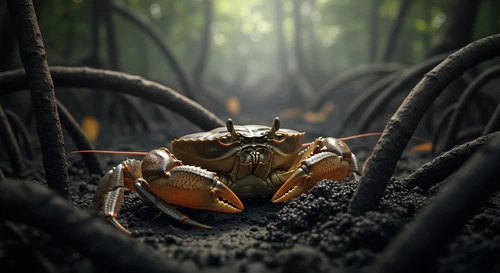
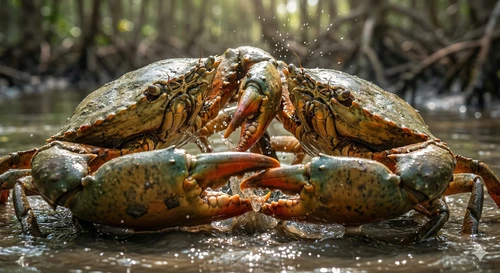
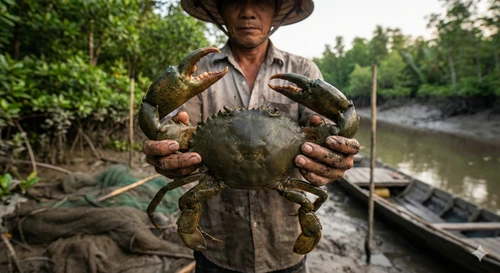
" There are whispers on the wind, blurs on the sand, and fleeting shadows that vanish before your eyes. These aren't phantoms; they are the ghost crabs, the Mekong Delta's fastest, most elusive residents. "
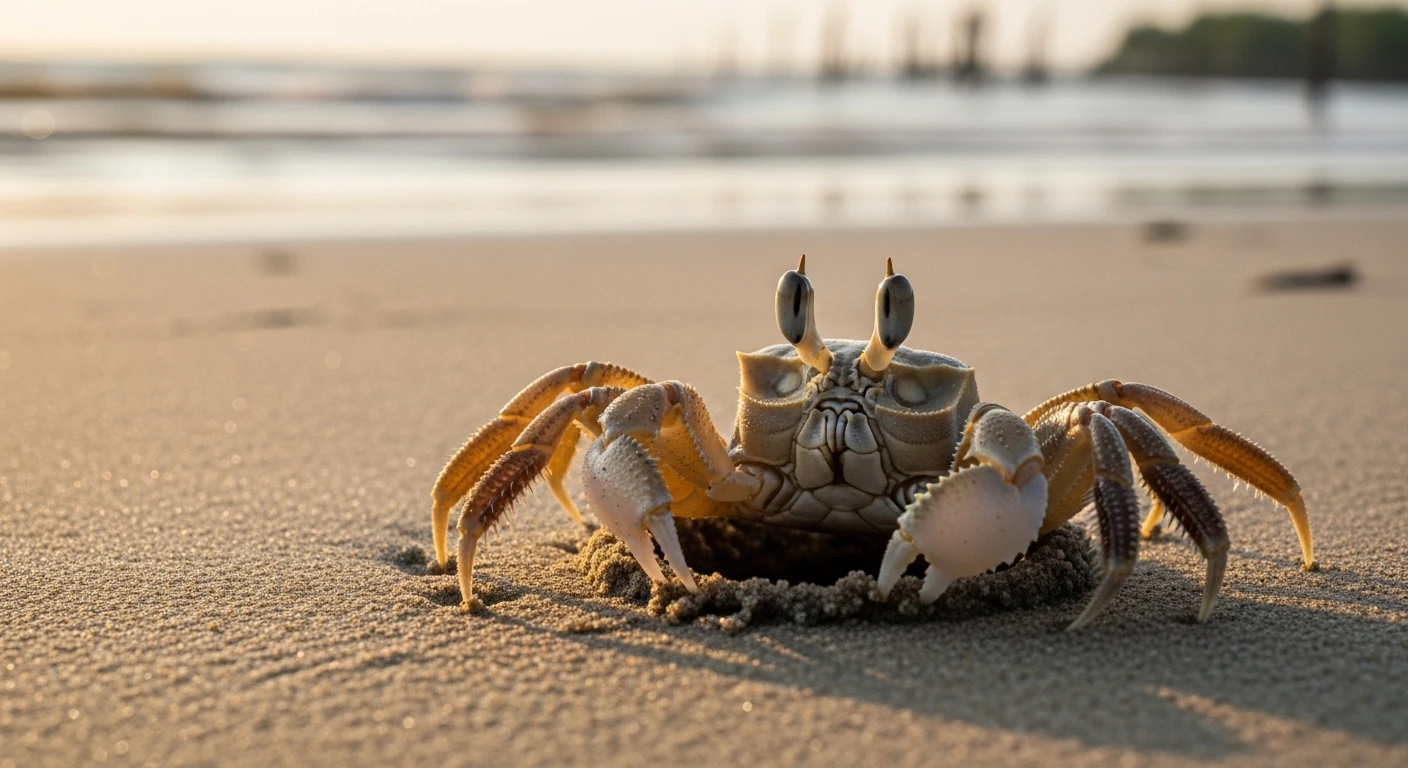
📸 A glimpse of the invisible: Capturing the ghost crab in its natural habitat.
1 The Invisible Runners of the Delta Shores
Imagine a landscape where the river meets the sea, where emerald mangroves give way to vast, sandy expanses. This is the wild frontier of the Mekong Delta, a place of profound natural beauty and hidden wonders. Among its most fascinating inhabitants are the ghost crabs – a species so aptly named, they seem to materialize and vanish like spirits on the wind.
For those of us who chase stories and flavors across Vietnam, the Mekong Delta is a canvas of vibrant life. But sometimes, the most compelling narratives aren’t about the bustling markets or the aromatic kitchens, but about the raw, untamed nature that thrives just beyond our sight. The ghost crab is one such story, a testament to speed, camouflage, and the sheer tenacity of life on the edge.
2 A Dancer in the Moonlight: Anatomy of Speed
Don't let their small to medium size fool you; ghost crabs are true athletes of the intertidal zone. Their scientific name, Ocypode, literally means "swift foot," and they live up to it. These crustaceans are engineered for speed, capable of reaching speeds of up to 10 miles per hour (about 16 km/h) across the sand – astonishing for an invertebrate!
- Body Plan: A relatively square, flattened carapace (shell) helps them move efficiently and burrow quickly.
- Legs for Days: Eight long, slender legs, each tipped with a dactyl (claw-like segment), provide maximum traction on loose sand. Their gait is a blur, a side-shuffle that seems impossible to maintain.
- Telescopic Eyes: Their prominent, stalked eyes provide a near 360-degree view, essential for spotting both prey and predators in their wide-open habitat. They can even swivel them for an extra advantage.
- Camouflage Mastery: Their pale, sandy coloration is their greatest defense, allowing them to blend seamlessly with the beach, disappearing from view the moment they stop moving.
It's a marvel of natural selection, turning a simple beach-dweller into a fleeting enigma.
3 Life on the Edge: Habitat & Behavior
The ghost crab's world is the sandy beach, particularly the high intertidal zone above the tide line, and sometimes even into the dunes. They are master excavators, digging deep, helical burrows that can extend several feet into the sand. These burrows serve multiple purposes: a refuge from predators, a cool, moist retreat from the tropical sun, and a safe haven to escape the crashing waves during high tide.
Primarily nocturnal, these crabs emerge from their sandy fortresses as dusk falls, transforming the quiet beaches into bustling hunting grounds. If you're lucky enough to be on a quiet Delta beach around sunset, you might just catch a glimpse of their collective emergence – a silent, scuttling invasion.
They are largely solitary creatures, though their burrows can be found in close proximity, creating a "crab city" beneath the sand. When disturbed, they freeze instantly, relying on their camouflage. If that fails, they bolt for the nearest burrow or the surf, disappearing with incredible swiftness.
4 The Delta's Clean-Up Crew: Diet & Ecological Role
Ghost crabs are omnivorous scavengers and opportunistic predators, playing a crucial role in the coastal ecosystem. Think of them as the beach's diligent clean-up crew.
- Diet: Their diet is varied, including detritus, carrion (dead fish or other organisms washed ashore), and small invertebrates like clams, insects, and even other smaller crabs. They use their strong pincers to tear apart food.
- Prey: While they are predators, they also fall prey to shorebirds, raccoons, and larger crabs. Their speed and camouflage are their primary defenses.
- Nutrient Cycling: By consuming decaying organic matter, they help recycle nutrients back into the ecosystem, preventing the build-up of waste and contributing to the health of the beach environment.
- Beach Health: Their constant burrowing helps aerate the sand, impacting the microbial communities and sediment stability.
Without these unsung heroes, the pristine beaches of the Mekong Delta would look very different indeed.
5 More Than Just Sand: Why the Mekong Delta is Their Kingdom
The Mekong Delta, with its immense network of rivers emptying into the East Sea, creates a unique environment perfect for ghost crabs. The sediment carried by the Mekong forms vast, often undisturbed sandy and muddy beaches, particularly in provinces like Ca Mau, Bac Lieu, and Soc Trang. These long stretches of coastline provide ample habitat for burrowing and foraging.
The Delta's tropical climate ensures consistent warmth, allowing for year-round activity. Furthermore, the rich biodiversity of the region provides a steady food supply, from marine detritus to small creatures washed ashore or living within the sand. It’s a delicate balance, a symphony of interconnected life forms, where the ghost crab plays a vital, albeit often unseen, solo.
6 Witnessing the Whisper: How to Spot a Ghost Crab
To truly appreciate these creatures, you need patience and a keen eye. It's an experience that connects you to the raw, untamed heart of the Delta.
- Timing is Everything: The best time to spot ghost crabs is at dusk or dawn, or on moonlit nights. They are less active during the heat of the day.
- Choose Your Battlefield: Look for quiet, relatively undisturbed sandy beaches. The further from human activity, the better your chances.
- Patience, Grasshopper: Find a good spot, sit quietly, and let your eyes adjust. Look for subtle movements, especially near the high tide mark.
- Scan for Burrows: Their tell-tale burrows are perfect, round holes in the sand, often with excavated sand piled around the entrance. Watch these entrances closely.
- Respect Their Space: Do not chase them or try to catch them. Observe from a distance. Their speed is incredible, and your disturbance stresses them.
- Look for Trails: On soft, wet sand, you might see their distinctive "footprint" trails – tiny indentations from their legs and a faint drag mark from their body.
Seeing a ghost crab dart across the sand, only to disappear as if by magic, is a truly captivating moment, a brief encounter with pure, unadulterated wilderness.
7 Cultural Reflections: From Fear to Fascination
While not a common delicacy like the mud crab of the Delta, ghost crabs hold a certain mythical quality in local folklore. Their sudden appearance and disappearance can evoke a sense of the supernatural, or simply represent the untamed, mysterious forces of nature. They are often seen as a symbol of the wild, a reminder that much of the Delta remains beyond human control.
For the communities living along these coasts, the ghost crab is a familiar sight, albeit a fleeting one. Children might chase them playfully, only to be outsmarted by their speed. Fishermen and farmers understand their role in the coastal ecosystem, appreciating their contribution to the delicate balance of their environment, even if they aren't destined for the dinner plate. They are part of the scenery, part of the rhythm of life where the land and sea converge.
The Whisper of the Wild: Why These Crabs Matter
The ghost crab, often overlooked in favor of flashier creatures or culinary delights, serves as a poignant emblem of the Mekong Delta's wild heart.
Ecological Indicator
Their presence indicates a healthy, undisturbed beach ecosystem, free from excessive pollution or human encroachment.
Biodiversity Showcase
They remind us of the incredible diversity of life found within the Delta, from the largest fish to the smallest, fastest crab.
A Symbol of Wildness
In a region increasingly shaped by human activity, the ghost crab symbolizes the enduring, untamed spirit of the Delta – a whisper of wildness that continues to thrive.
Embrace the Elusive
From the bustling markets to the tranquil canals, the Mekong Delta offers a feast for the senses. But take a moment to venture to its sandy fringes, to stand silently as dusk descends. There, amidst the gentle lapping of waves, you might just catch a fleeting glimpse of the invisible runners. They are a powerful reminder that sometimes, the most extraordinary wonders are the ones that demand patience, respect, and a willingness to simply observe the wild, untamed world around us. So, next time you're in the Delta, keep your eyes peeled – the ghosts might just be waiting.
Explore More Delta Wonders
The Mekong Delta is a treasure trove of nature. Dive deeper into its unique ecosystems and incredible wildlife.
🌿 Discover Mangrove Forests