" There are places where the line between survival and romance blurs, where the earth gives way to water, and life itself is an intricate, age-old performance. The Mekong Delta is one such stage. "
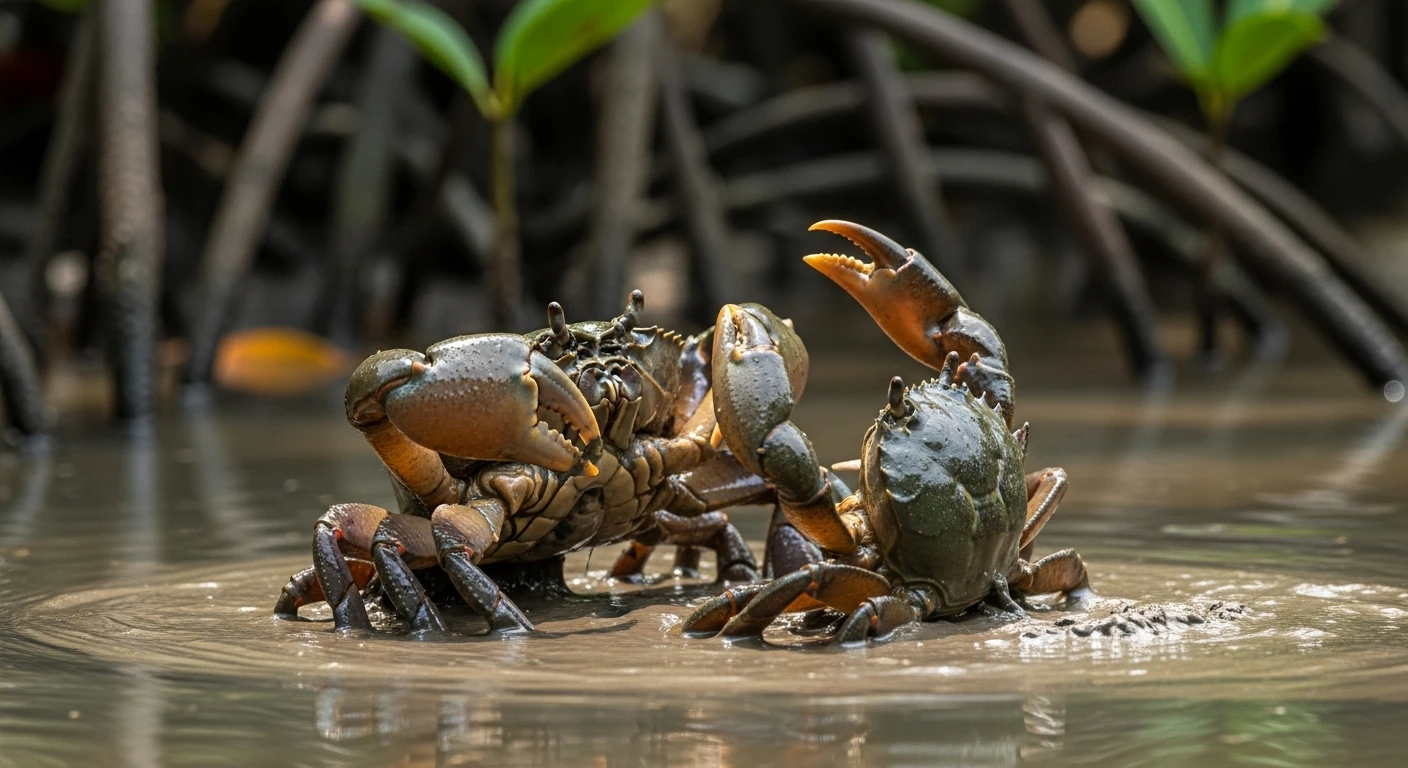
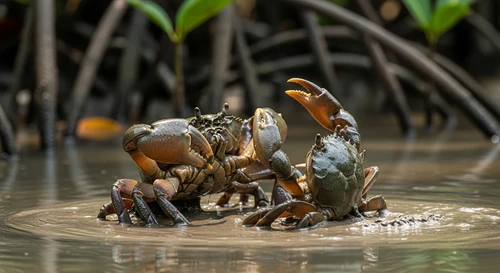
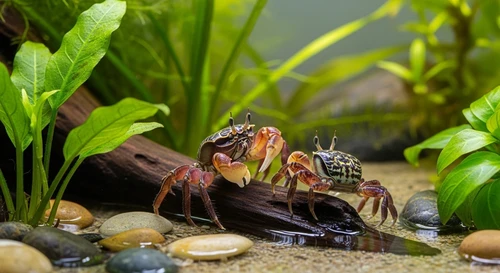
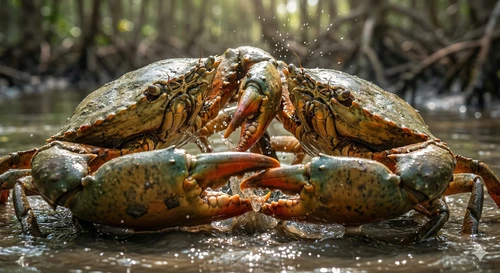
📸 A primal ballet: Two Mekong mud crabs in their intricate courtship ritual.
1 The Delta's Pulse: A World of Water and Mud
The Mekong Delta, a vast, alluvial plain where the mighty Mekong River finally surrenders to the South China Sea, is a landscape unlike any other. It’s a place defined by water—by meandering canals, intricate estuaries, and sprawling mangrove forests that cling tenaciously to the shifting tides. This is a region of rich biodiversity, a vibrant tapestry of life thriving in what might appear to be inhospitable conditions. The delta’s muddy embrace provides the perfect nursery and hunting ground for countless species, none more iconic than its crabs.
For centuries, the rhythm of life here has been dictated by the ebb and flow of tides, the seasonal rains, and the fertile silt carried downstream. From the bustling floating markets of Can Tho to the dense, primeval forests of U Minh Thuong, every corner of the Delta pulses with an untamed energy. It's a world where humans and nature coexist in a delicate, often symbiotic, dance. But look closer, beneath the surface of the murky waters, and you'll discover a different, more primal romance unfolding.
2 The Silent Guardians: Mud Crabs of the Mekong
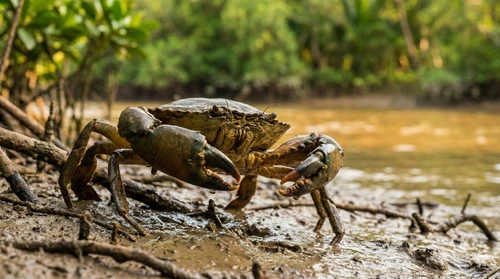
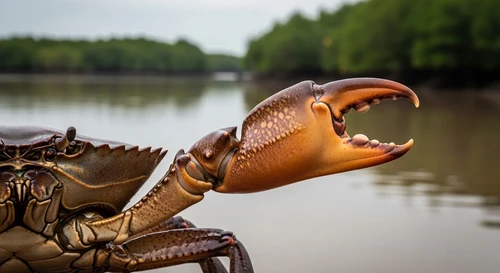
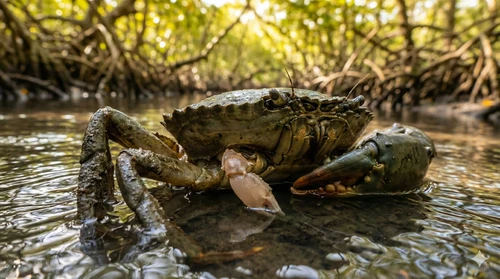
Meet the stars of our story: the mud crabs, primarily species of the Scylla genus, sometimes referred to as mangrove crabs. These aren't your delicate Dungeness or dainty blue crabs. These are robust, formidable creatures with powerful claws and carapaces that range from dark green to mottled brown, perfectly camouflaged against their muddy backdrop. They are the silent, scuttling guardians of the mangroves, indispensable to the ecosystem's health, constantly burrowing, foraging, and aerating the sediment.
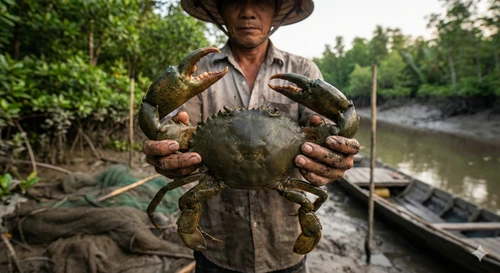
Mud crabs are highly adaptable, equally at home submerged in brackish water or scurrying across exposed mudflats at low tide. Their burrows, often deep and intricate, provide shelter from predators and the scorching sun. They are scavengers and predators, feasting on smaller invertebrates, mollusks, and detritus, thereby playing a critical role in nutrient cycling within the mangrove forests. For the local people, these crabs are not just ecological linchpins; they are a vital food source, a delicacy prized for their sweet, succulent meat.
3 The Call of the Tides: When Love is in the Air (or Water)
Unlike the predictable ebb and flow of human life, the crab's world is governed by lunar cycles and the subtle shifts in salinity and temperature. Mating season for mud crabs isn't a single event but a recurring, often intense, period influenced by these natural cues. It's during these times that the usually solitary creatures begin to venture beyond their burrows with a singular purpose: procreation.
The males, often larger and more aggressive, become acutely aware of the pheromones released by receptive females. These chemical signals, dissolved in the water, act as an irresistible siren call, drawing potential mates from their hidden corners. It’s a silent, olfactory conversation that precedes the more visible, dramatic displays of courtship. The entire delta becomes a vast singles' bar, albeit one with significantly more mud and mangrove roots.
4 The Courtship Ritual: A Dance of Claws and Carapaces
Here's where the "dance" truly begins. A male crab, having detected a receptive female, approaches cautiously. What follows is a series of intricate maneuvers that can appear both aggressive and tender. He will often use his large, powerful claws to gently, or sometimes not so gently, tap, stroke, or even hold the female. This isn't just a display of strength; it's a communication, a test of willingness.
The male might lift and spread his claws, a visual display of his prowess and size, hoping to impress his potential partner. If the female is receptive, she might respond with her own subtle movements, perhaps allowing him to embrace her. The dance can be protracted, involving chases, evasions, and periods of stillness where the two crabs seem to be assessing each other. It’s a fascinating blend of instinct and interaction, a silent negotiation played out in the shallows.
Often, the male will gently flip the female onto her back, cradling her with his appendages. This isn't an act of dominance in the human sense, but a necessary prelude to mating, which often occurs during the female's soft-shell stage, immediately after molting. This protective embrace ensures her safety during her most vulnerable period and positions her for copulation.
5 The Embrace Beneath the Waves: Copulation and Legacy
Once the courtship is successful, the actual mating can occur, particularly if the female has recently molted and her shell is still soft. The male transfers his sperm, ensuring fertilization. Following this, the female crab will often carry the fertilized eggs beneath her abdomen, a cluster often referred to as a "sponge" or "berry." This period is critical; she will meticulously care for these eggs, fanning them to ensure oxygenation and protecting them from predators.
The number of eggs can be staggering, sometimes hundreds of thousands, a testament to nature's strategy for survival. After several weeks, the eggs hatch into tiny larvae, which are then released into the open water, drifting with the currents. Only a tiny fraction will survive to adulthood, enduring metamorphosis through several planktonic stages before settling back into the delta's muddy embrace as juvenile crabs, ready to continue the cycle. This entire process, from the first pheromone whisper to the release of new life, is a profound testament to resilience and the relentless drive for continuity.
6 A Delicate Balance: Crabs, Humans, and the Mangroves
The mud crabs' existence is deeply intertwined with the human communities of the Mekong Delta. They are a staple of the local diet, appearing in everything from simple grilled crab to complex noodle soups. But beyond the culinary appeal, they represent a fragile natural resource. Over-harvesting, habitat destruction due to aquaculture ponds, and climate change all pose significant threats to their populations.
Recognizing this, many local initiatives and conservation efforts focus on sustainable fishing practices and mangrove reforestation. Fishermen often return ovigerous (egg-carrying) females to the water, understanding that the future of their livelihoods depends on the health of the crab population. It’s a pragmatic yet deeply respectful approach to nature, a tacit acknowledgment that the well-being of the delta and its people is inextricably linked to the well-being of its smallest inhabitants.
7 Whispers from the Water: Local Lore and Observation
Spend enough time with the grizzled fishermen and women who navigate the delta's arteries, and you'll hear tales passed down through generations. They speak of the "crab moon," a specific lunar phase believed to trigger intensified mating. They notice the subtle shifts in crab behavior, reading the waters like an open book. For them, the mating dance isn't just a biological imperative; it's a barometer of the delta's health, a sign that the natural world continues its ancient cycles.
Their knowledge, steeped in direct observation, predates scientific research. They understand that a robust mating season means a better harvest in the future, fostering a deep respect for the creatures they depend on. This intimate connection between people and the delta's wildlife is a cornerstone of life here, a living, breathing testament to indigenous ecological wisdom.
8 An Unseen Symphony: Reflections on Delta Romance
As the sun dips below the horizon, painting the delta sky in hues of fiery orange and deep violet, the unseen ballet continues. The mating dance of the mud crabs is just one of countless intricate performances unfolding in this incredible ecosystem. It's a reminder that even in the most challenging environments, life finds a way to perpetuate itself, driven by forces as old as time.
To witness, even in spirit, this delicate yet ferocious act of procreation is to glimpse the raw, unvarnished beauty of nature. It’s a testament to the resilience of the Mekong Delta, a place where survival is a daily art, and love, in its most primal form, is a continuous, muddy masterpiece. So next time you find yourself dreaming of faraway lands, remember the Mekong, where even the humble crab has a profound story of romance to tell.