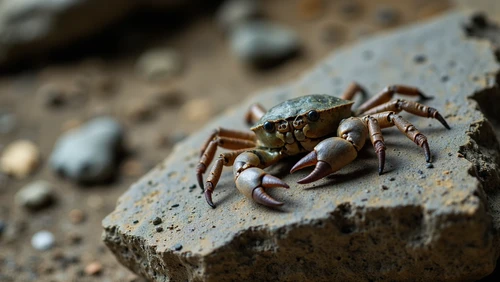
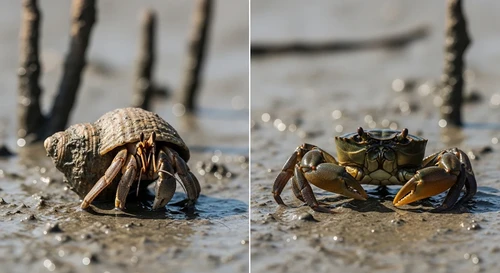
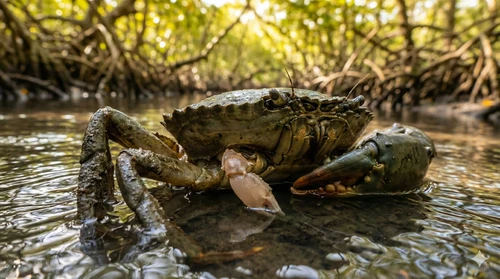
" There are crabs, and then there are crabs. One stalks the abyssal plains like an alien tripod from a forgotten world. The other burrows deep into the Mekong's rich, life-giving mud. Both, however, hold a revered place at the table. "
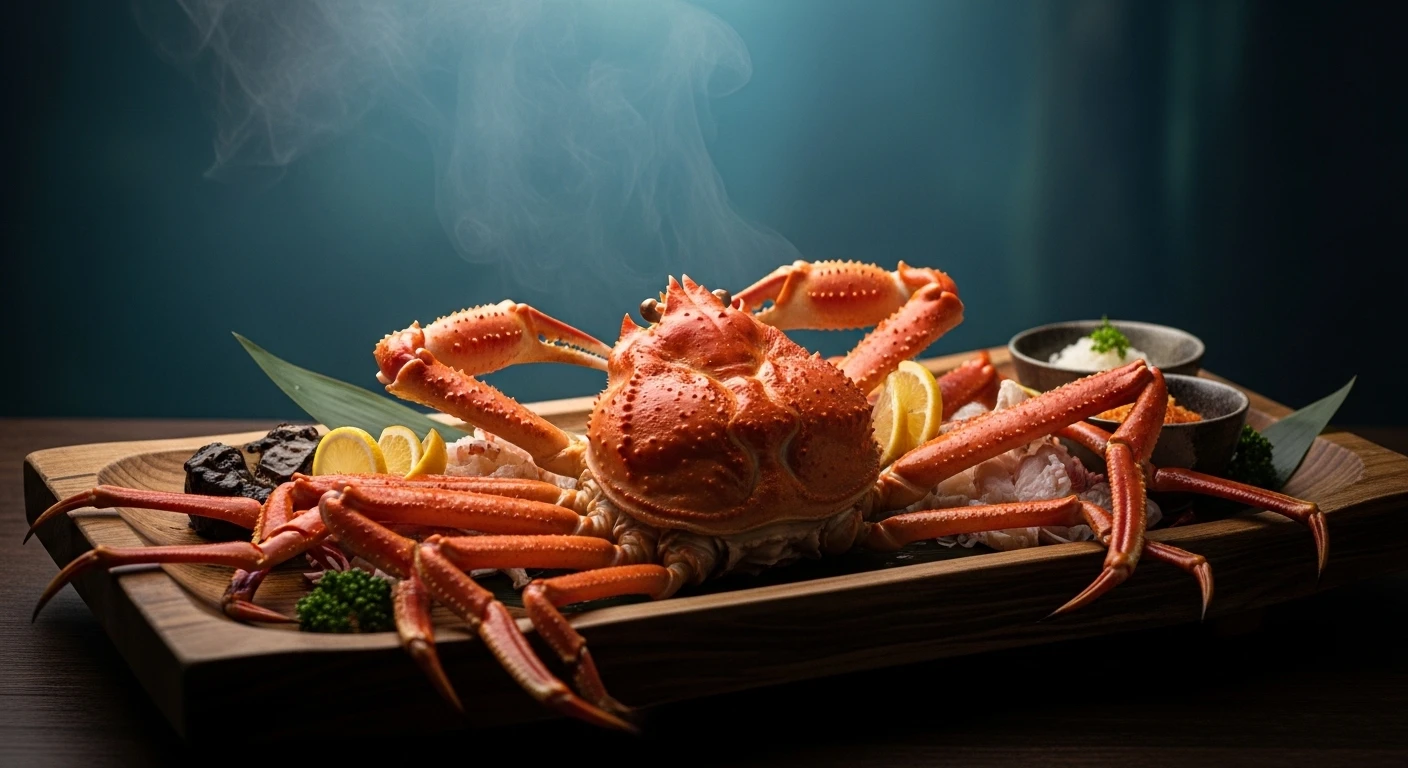
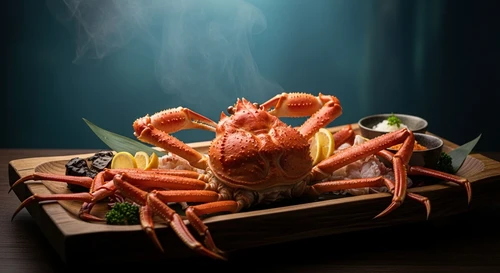
📸 The undisputed monarch of the deep: A Japanese Spider Crab in all its glorious, long-legged splendor.
1 The Ocean's Grand Architect: Unveiling the Japanese Spider Crab
Imagine a creature plucked straight from a science fiction epic, an arthropod that defies the very notion of what a crab should be. The Japanese Spider Crab (Macrocheira kaempferi) is exactly that. Dwelling in the frigid, crushing depths of the Pacific Ocean off the coasts of Japan, particularly in areas like Suruga Bay, these colossal crustaceans are a spectacle of nature.
With a leg span that can reach up to an astonishing 3.7 meters (over 12 feet) from claw to claw, they hold the undisputed record for the longest leg span of any arthropod on Earth. Their bodies, a somewhat compact orange carapaces dotted with white, are small in comparison to their sprawling limbs. These legs, spindly yet incredibly strong, allow them to navigate the deep-sea floor, scuttling amongst hydrothermal vents and rocky outcrops, foraging for carrion and shellfish.
To encounter one in its natural habitat is to witness a living fossil, a testament to the perseverance of life in the most extreme environments. They are silent hunters, slow-moving giants of the abyss, their very existence a whisper of the ancient world that lies hidden beneath the waves.
2 From the Abyssal Depths to the Plate: A Culinary Enigma
For something so intimidating in appearance, the Japanese Spider Crab offers a surprisingly delicate and sought-after culinary experience. Unlike the robust, dense meat of many shallow-water crabs, the spider crab’s flesh is renowned for its tender, almost sweet taste, often compared to lobster or snow crab, but with a unique, subtle oceanic brininess.
The sheer size of its legs means an abundance of succulent meat, making it a prized catch for gourmands. Typically, these crabs are prepared simply: steamed or boiled to preserve their natural flavors. Imagine a massive platter, laden with segments of its impossibly long legs, the shell cracked open to reveal pristine white meat, waiting to be dipped in a light ponzu sauce or just a squeeze of lemon. It’s an almost ritualistic meal, a celebration of the rare and extraordinary.
The presentation itself is an event. At Tsukiji Market (or now, Toyosu) in Japan, seeing a whole spider crab laid out is like encountering a mythical beast. Its sheer scale transforms dinner into a dining adventure, a story you’ll recount for years.
3 Kings of the Mangroves: Our Beloved Mekong Mud Crab
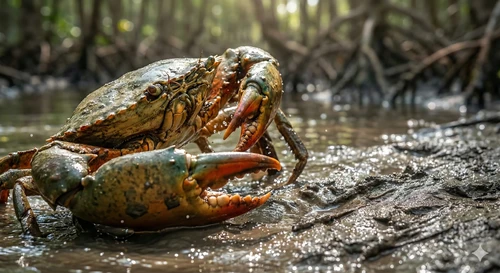
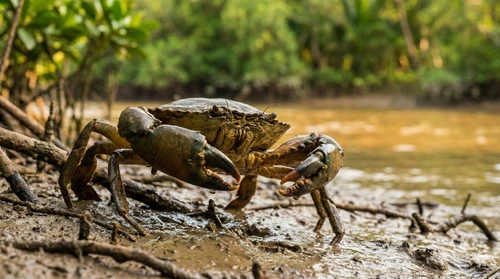
Now, let’s travel from the silent deep to the bustling, life-filled arteries of the Mekong Delta. Here, amidst the tangled roots of mangroves and the silty banks of estuaries, reigns another crab king: the humble yet immensely flavorful Mekong Mud Crab (often Scylla serrata or similar species). These aren’t creatures of mythic proportions, but their impact on local cuisine and culture is just as profound, if not more so.
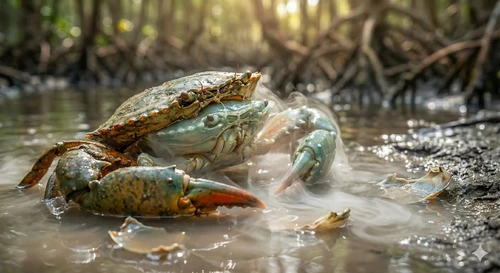
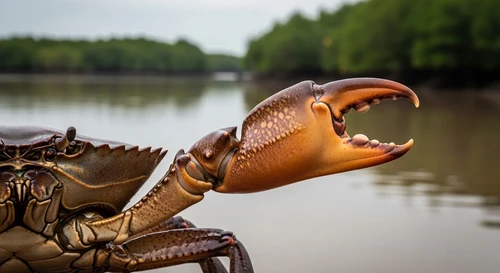
Known for their powerful claws and chunky bodies, Mud Crabs are celebrated for their rich, sweet, and robust meat, often with a hint of briny earthiness that speaks directly of their muddy, estuarine home. Their shells are typically a dark, mottled green or brown, a perfect camouflage in the muddy waters where they thrive. In the Delta, these crabs are not just food; they are a vital part of the ecosystem and a cornerstone of the local economy and diet.
Unlike the spider crab’s delicate dance, the Mud Crab offers a satisfying, meaty bite. There’s no subtlety here; just pure, unadulterated crab flavor that stands up to bold spices and rich sauces. They are the backbone of countless beloved dishes, from simple steaming to elaborate stir-fries, and represent the very soul of Mekong Delta seafood.
4 A Tale of Two Crabs: Giants vs. Brawlers
The contrast between these two magnificent crustaceans couldn't be starker, yet both offer an unforgettable culinary journey. It’s a comparison of extremes: the deep, cold abyss versus the warm, brackish shallows; delicate elegance versus powerful succulence.
Japanese Spider Crab: The Marathon Runner
- Habitat: Deep-sea floors (200-600 meters), cold waters.
- Appearance: Enormous leg span, relatively small orange body, spindly limbs.
- Meat Profile: Extremely tender, sweet, delicate, often described as similar to lobster or snow crab.
- Best Preparation: Steamed or boiled, served simply to highlight natural flavor.
- Availability: Seasonal, niche, often high-end.
Mekong Mud Crab: The Powerlifter
- Habitat: Estuaries, mangrove forests, muddy intertidal zones, warm waters.
- Appearance: Robust body, powerful claws, dark green/brown shell, chunky.
- Meat Profile: Firm, rich, savory, distinctly sweet with a robust "crabby" flavor.
- Best Preparation: Steamed, grilled, stir-fried with tamarind, garlic, or chili.
- Availability: Common, staple in local markets and restaurants.
While the spider crab might win in a leg-length contest, the mud crab certainly holds its own in a flavor fight. The former offers a refined, almost ethereal experience; the latter delivers a grounded, intensely satisfying feast.
5 Harvesting Giants: The Sustainable Dance of the Deep
Bringing the Japanese Spider Crab from its deep-sea home to the market is a specialized and careful operation. They are typically caught using deep-sea tangle nets or traps. Due to their extreme habitat, the fishing season is limited, usually from November to March, to coincide with their migration to shallower waters for breeding.
Sustainability is a significant concern. Japanese fishermen, deeply aware of the fragility of marine ecosystems, adhere to strict regulations to prevent overfishing. This includes limits on catch sizes, protecting breeding females, and avoiding certain areas. The goal is always to balance the culinary demand for this unique delicacy with the long-term health of the species and its deep-sea environment. It’s a testament to responsible fishing practices that these ancient creatures continue to grace our tables, albeit sparingly.
6 The Delta's Bounty: A Fisherman's Morning Ritual
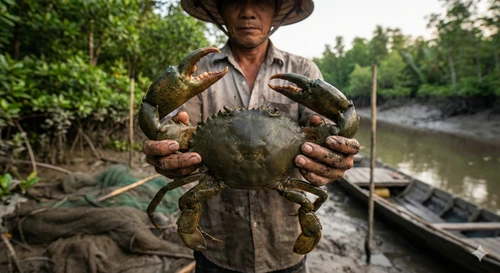
In stark contrast to the deep-sea expeditions, catching Mud Crabs in the Mekong Delta is a much more intimate, hands-on affair, deeply woven into the fabric of daily life. As the first light paints the sky over the water coconut groves of Ca Mau or Nam Can, local fishermen and women are already navigating their small wooden boats through the muddy channels.
They use simple, yet effective, methods: traditional traps baited with fish, or even by hand, expertly navigating the burrow systems the crabs dig into the riverbanks. The air is thick with the smell of damp earth, salt, and morning mist. The thrill comes from pulling up a trap heavy with a feisty, snapping Mud Crab, its powerful claws a testament to its resilience.
This isn't just fishing; it's a way of life, passed down through generations. The freshest Mud Crabs are brought directly to local markets, their energetic movements a guarantee of their quality. It's a raw, visceral connection to the land and water, a culinary tradition built on the daily bounty of the Delta. This accessibility and robust flavor are what make the Mud Crab a democratic delicacy, enjoyed by all.
7 The Purest Pleasure: Savoring Each Claw
How does one best honor these magnificent creatures at the table? For the Japanese Spider Crab, the philosophy is one of minimal intervention. The goal is to let its natural, subtle sweetness shine. Steaming or gentle boiling is paramount. Serve it warm, perhaps with just a whisper of sea salt, a delicate soy sauce, or a light ponzu. The reward is in the clean taste, the silken texture, and the sheer volume of precious meat from those astonishing legs.

📸 A Mekong Mud Crab, stir-fried in a rich, tangy tamarind sauce, a true flavor bomb!
For our Mekong Mud Crabs, the approach can be a little more boisterous. While simple steaming with lemongrass and beer is a sublime experience that highlights its inherent sweetness, the mud crab truly excels when it becomes the star of a more complex dish. Think of the legendary Cua Rang Me (Tamarind Crab), where the crab is stir-fried in a sticky, sweet-sour, garlicky sauce that clings to every crevice. Or perhaps grilled over charcoal, imbued with a smoky char, served with a fiery lime-chili dipping sauce.
The mud crab’s robust flavor profile means it can handle a symphony of spices and aromatics, making it incredibly versatile in the Delta's vibrant culinary landscape. Each approach, though vastly different, aims for the same result: to extract the maximum pleasure from these incredible gifts of the water.
8 Beyond the Shell: Why These Crabs Matter
In the end, whether you’re marveling at the colossal reach of a Japanese Spider Crab or cracking open the thick shell of a Mekong Mud Crab, you’re connecting with something primal. These creatures, so different in their habitats and culinary presentations, both represent the incredible biodiversity of our planet and the rich tapestry of human food culture.
They remind us that food is more than just sustenance; it’s a story. A story of ancient oceans, thriving deltas, dedicated fishermen, and generations of culinary wisdom. It’s about respect for the ingredient, understanding its origins, and finding joy in its unique flavors.
So, the next time you encounter a crab on your plate, pause. Consider its journey. Appreciate its unique qualities. For in every claw and every morsel, there’s a world of wonder waiting to be explored.
Craving Mekong Flavors?
If the robust flavors of the Mud Crab have captured your imagination, explore more seafood wonders from the heart of the Delta.
🦐 Discover Delta Delights