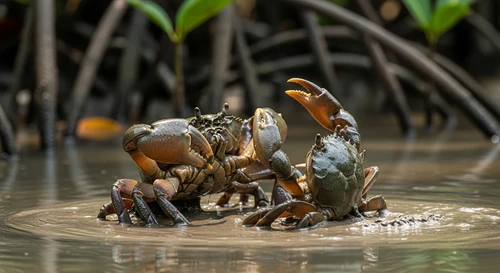
" In the low-slung, watery world of the Mekong Delta, where mud is currency and mangroves are cathedrals, the crab is king. And this king, my friends, walks with a peculiar swagger. It's a sideways shuffle that's equal parts comical and captivating, a dance performed on nature's most unforgiving stage. "
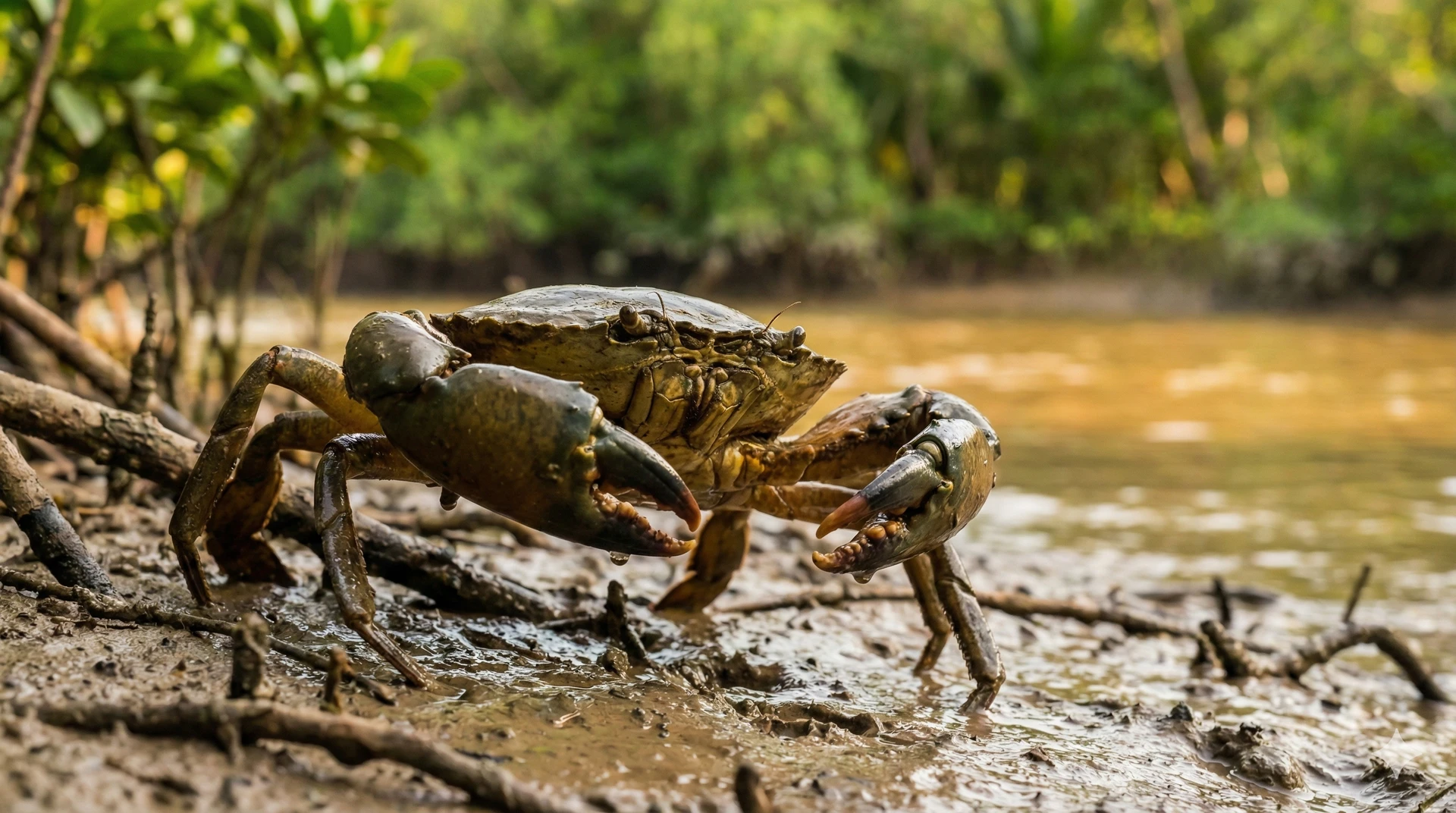
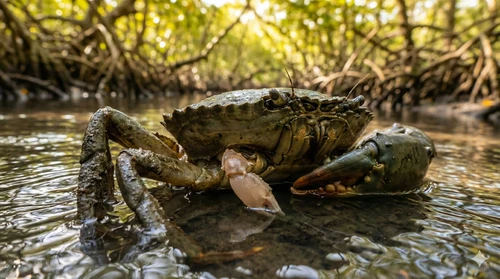
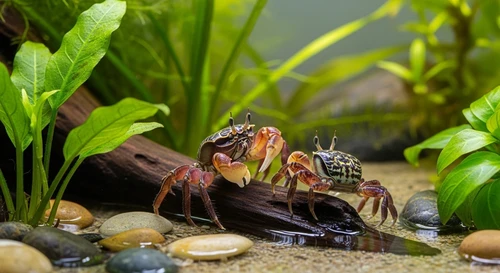
📸 The quintessential crab: A master of the lateral stride, perfectly adapted to its vibrant Mekong habitat.
1 The Sideways Shuffle: A Delta Signature
Anyone who has spent even a fleeting moment along the serpentine waterways of the Mekong Delta knows the crab. They’re everywhere: scuttling across muddy banks, peeking from beneath gnarled mangrove roots, or perhaps, destined for your dinner plate, expertly prepared by a local cook. From the moment you step foot in the delta, whether it’s the bustling markets of Can Tho or the serene canals deeper south, the crab’s presence is undeniable. Their sideways motion is not just a quirky visual; it's a profound statement about adaptation, a daily ballet – a sideways, scuttling dance that defines their very existence.
It's a movement so iconic, so universally recognized, that "walking like a crab" has become a common idiom. But beyond the chuckle it might elicit, this peculiar gait is not a whimsical choice, nor a sign of clumsiness. It is, in fact, an ingenious evolutionary adaptation, honed over millennia, that allows these fascinating crustaceans to thrive in some of the planet's most challenging environments – from scorching tidal flats to the intricate, submerged world of estuary roots.
As a journalist with a deep love for the Delta, I've spent countless hours watching these creatures. Their sideways motion isn't a disability; it's a superpower. It allows them to navigate a world that would be utterly impenetrable for most other land-dwelling animals. Let's peel back the shell and dive into the biological marvel that is the crab's distinctive, and highly effective, walk.
2 An Evolutionary Masterpiece, Not a Quirk
To truly understand the sideways walk, we need to momentarily suspend our own bipedal, forward-moving biases. Crabs are built from a fundamentally different blueprint. Their bodies, shielded by a robust exoskeleton, are typically wider than they are long. This flattened, often disc-like or oval shape is an architectural marvel in itself, perfectly suited for fitting into the tightest crevices, burrowing rapidly into sand, or disappearing beneath concealing rocks – all crucial strategies for evading a vast array of predators, from keen-eyed birds swooping from above to hungry fish lurking below, and, of course, the ever-present human.
The primary, undeniable reason for their lateral locomotion lies intrinsically within their leg structure. Each of a crab's ten articulated legs (including the two formidable claws that serve as both tools and weapons) is designed with multiple joints. However, the specific way these joints articulate and pivot makes it significantly easier and more efficient to push off sideways than to propel themselves directly forward or backward. Imagine trying to run a straight sprint with skis on your feet and your knees locked – it's theoretically possible, but grotesquely inefficient and slow. For a crab, walking sideways isn't just a preference; it's the path of least resistance, a biomechanical shortcut that simultaneously offers unparalleled stability and agility, granting them numerous advantages in their often-treacherous world.
3 The Mechanics of the Scuttle: It's All in the Joints
Let's delve a little deeper into the engineering, but don't worry, we'll keep it as palatable as a freshly steamed crab. Envision a crab’s legs. Unlike our own, which pivot primarily on a forward-backward axis from the hip, a crab’s major leg joints are almost exclusively oriented laterally. The intricate musculature and the very pivot points of their limbs are finely tuned and optimized for a powerful side-to-side thrust, rather than the forward push we might expect.
When a crab sets off, the legs on one side of its body engage in a concerted pushing motion, while the corresponding legs on the opposite side simultaneously execute a pulling action. This sophisticated, coordinated interplay of pushing and pulling, coupled with the inherent lateral orientation of their leg joints, culminates in that characteristic sideways movement. It’s a ballet of synchronized power, resulting in a remarkably stable and incredibly efficient way for them to traverse their dynamic environment.
Furthermore, their legs are often splayed out wide from the main body, creating a broad, stable base of support. This wide stance, combined with the innate ability to move with astonishing speed in a lateral direction, allows them to maintain perfect balance on even the most uneven, unpredictable terrain. Picture the slick, treacherous mud of a riverbank at low tide or the constantly shifting sands of a sun-drenched beach; the crab handles it all with unwavering poise. It’s a beautifully simple, yet profoundly effective, solution to the relentless challenges posed by their ever-changing habitat.
4 Why Not Forward? The Advantages of Lateral Living
The sideways walk isn't merely a matter of biomechanical efficiency; it confers a constellation of significant evolutionary advantages that have allowed crabs to dominate countless niches across the globe, especially in places like the Mekong Delta:
- Speed and Unpredictability: Crabs are shockingly fast when the situation demands it. Their lateral movement allows for rapid, unpredictable bursts of speed, making them exceptionally difficult targets for predators or enabling them to pounce unexpectedly on unsuspecting prey. Imagine trying to chase a crab in a straight line – it will simply dart sideways with bewildering speed, disappearing into the nearest shelter before you can even register its move.
- Masterful Burrowing: Many crab species are exceptional burrowers. Their wide, flat bodies and incredibly strong legs are perfectly designed for digging into soft sand or viscous mud, allowing them to rapidly create secure hideaways from both predators and the elements. Moving sideways makes it far easier to displace sediment, effectively carving out a protective tunnel with minimal effort.
- Stealth and Defensive Posturing: A sideways scuttle can make a crab appear smaller or less predictable to a hunting predator. When an immediate threat is perceived, they can instantly flatten themselves against a surface or tuck into a narrow crevice. Their formidable claws, often held out defensively, are also optimally positioned to ward off attacks when the crab is moving laterally, presenting a bristling, armored front.
- Seamless Navigation in Complex Environments: The Mekong Delta, as we know, is a natural labyrinth of intertwining roots, jagged rocks, and tight, waterlogged corners. A crab's sideways movement grants it unparalleled dexterity, allowing it to slip through narrow gaps and navigate these incredibly complex environments with effortless grace, minimizing potential obstacles and maximizing its access to resources and safety.
It’s a comprehensive, elegantly integrated survival strategy, where every aspect of their anatomy and behavior synergistically contributes to their enduring success.
5 Life on the Mudflats: Sideways is Superior in the Delta
The Mekong Delta, with its vast estuaries, dynamic tidal zones, and impenetrable mangrove forests, truly is a crab paradise. Here, the unique and often harsh environmental conditions serve to further underscore the sheer brilliance and practical necessity of the sideways walk:
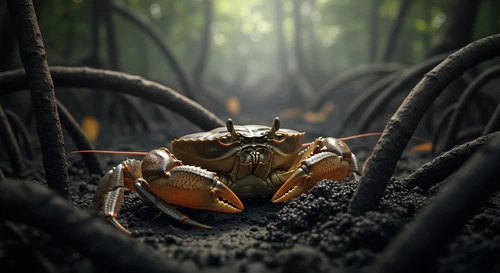
- The Mangrove Maze: The dense, complex, and seemingly chaotic network of intertwining roots that characterize mangrove trees creates a unique, three-dimensional obstacle course. Walking sideways is the ultimate key to navigation in this natural labyrinth, allowing crabs to weave through the thickets with remarkable agility, finding both abundant food sources and essential shelter from the elements and predators.
- Soft, Shifting Sediments: The Delta's expansive mudflats are often notoriously soft, viscous, and unstable. A crab's wide stance and powerful lateral propulsion are perfectly engineered to distribute its weight effectively, preventing it from sinking too deeply into the mire and enabling surprisingly quick escapes across the most challenging, treacherous terrain.
- Dynamic Tidal Zones: Crabs in the Delta frequently inhabit intertidal zones, areas that are regularly exposed to the sun and air at low tide and then completely submerged by water at high tide. The ability to quickly dart into burrows or scurry under protective cover is not merely an advantage; it is an absolute essential for survival against the dramatic fluctuations in water levels, temperature, and the constant threat of opportunistic predators.
It's a perfect example of form meeting function on a grand scale, where the crab's intricate biology has evolved in perfect, symbiotic harmony with its environment, resulting in a creature supremely adapted to its watery, muddy, and incredibly vibrant domain.
6 Not All Crabs Are Created Equal: A Spectrum of Strides
While the sideways walk is undeniably a defining characteristic of most true crabs, it's a testament to nature's boundless creativity that few rules are absolute. Some specialized species, such as the famously swift ghost crabs (genus Ocypode) that haunt sandy beaches worldwide, possess the extraordinary ability to move with incredible speed in almost any direction – even forwards! Their leg joints, unlike their purely lateral-moving cousins, have evolved to permit a far broader range of motion, transforming them into lightning-quick predators and scavengers, capable of vanishing in a blink.
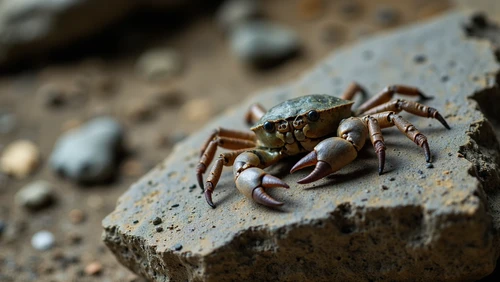
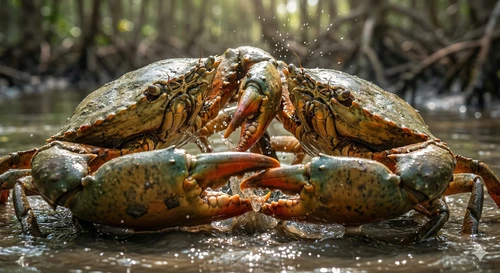
Even among the strictly sideways walkers of the Mekong Delta, there exist subtle variations in speed, power, and perceived grace. The robust, powerful mud crabs, with their formidable shells and massive claws, might appear somewhat cumbersome, but their lateral dash is astonishingly effective for their size and weight. Smaller, more delicate species might move with a more deliberate, almost tentative side-step, carefully picking their way through debris. Each species, fine-tuned to its specific ecological niche, is nonetheless bound by the fundamental elegance and efficiency of its unique locomotion, a testament to the diverse solutions evolution conjures.
7 From Mud to Market: The Crab's Enduring Connection to Mekong Life
Beyond the scientific marvel of its locomotion, the crab's sideways walk is intrinsically and beautifully linked to the very human experience in the Mekong Delta. Generations of fishermen navigate these intricate waterways, their weathered hands expertly setting traps and nets for these prized crustaceans. Their daily lives, their livelihoods, and their families' prosperity are dictated by the relentless ebb and flow of the tides and the bountiful abundance of this sideways-moving harvest.
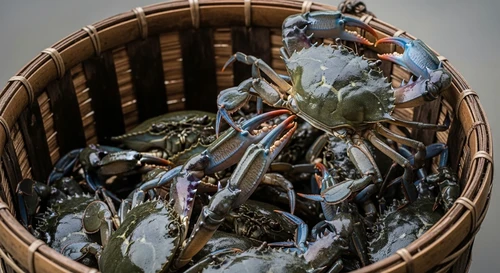
In bustling, sensory-rich markets like those in Ca Mau – arguably the undisputed crab capital of Vietnam – you'll witness crabs of every conceivable size and hue. Their legs twitch and scuttle, eager to perform their signature shuffle even when temporarily bound, awaiting their fate. They represent not just a succulent culinary delight, a staple that graces tables from simple street food stalls to elaborate feasts, but also a vital part of the local economy, a cornerstone of sustainable fishing practices, and an indelible mark on the region's cultural identity. To the people of the Delta, the crab isn't just an animal; it's a potent symbol of resilience, of natural abundance, and of the tireless, unwavering rhythm of life lived intimately with the water.
Observing their movement, whether in their wild habitat or in the vibrant chaos of a market, isn't just a lesson in biology; it's a profound window into the soul of this incredible region. It's a place where every creature, no matter how small or how peculiar its gait, plays an irreplaceable role in the magnificent, intricate tapestry of life.
Expert's Eye: Spotting Crab Life in the Delta 🦀
If you find yourself journeying through the captivating landscapes of the Mekong Delta, here’s how you can best observe these fascinating, sideways-walking creatures in their awe-inspiring natural habitat:
- Visit Mangrove Forests: Prime locations include vast protected areas like the Mui Ca Mau National Park or the Vam Sat Eco-Tourism site. Dedicate time to look closely at the intricate network of roots and the muddy ground, particularly during the ebb of low tide.
- Time with the Tides: Crabs are typically most active, visible, and engaging when the tide is out, as they venture onto the exposed mudflats to forage for food. Consult local tide charts for the best viewing opportunities.
- Patience and Quietude: Crabs are inherently skittish creatures. Any sudden movements or loud noises will almost certainly send them scurrying back into the safety of their burrows. Find a serene spot, remain still, and observe from a respectful distance.
- Seek Out Burrows: Many species are master architects, digging intricate burrows in the mud. You’ll often spot a crab just outside its meticulously constructed "front door," ever ready to retreat at a moment's notice.
- Consider Night Safaris: While daytime offers much to see, some fascinating crab species are predominantly nocturnal. A guided night tour, perhaps by traditional sampan, can reveal a whole different, mysterious side of their world, often under the glow of a lantern.
Remember to respect their vital habitat and observe from a distance. These aren't just curiosities; they are integral, living components of the Delta's delicate and vibrant ecosystem, and observing them responsibly enhances the experience for all.
The Enduring Mystery of the Sideways Scuttle
The next time you encounter a crab performing its signature sideways shuffle, whether it’s darting across a sun-drenched beach, weaving through the mangrove roots of the Mekong Delta, or perhaps, gracefully presented on your dinner plate (having once moved with such purpose), take a deliberate moment to appreciate the sheer genius of nature. It’s far more than just a funny walk; it’s a finely-tuned evolutionary ballet, a profound testament to relentless survival, and an integral, vibrant part of the untamed spirit of the Mekong Delta. It’s a compelling reminder that sometimes, the most effective path isn't the straightest one, but the one less traveled—sideways, of course.