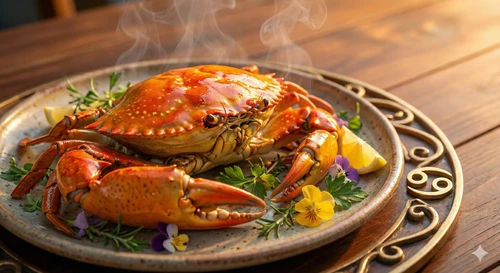
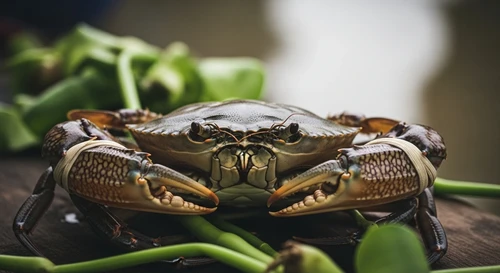
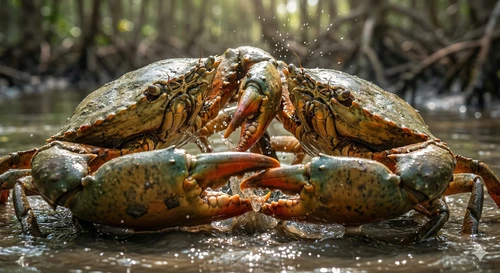
" There are moments in life, usually around a plate of fresh seafood in the Mekong Delta, when the world surprises you. For me, it was dissecting a perfectly steamed crab, and seeing a hue I never expected: a stunning, otherworldly blue. "
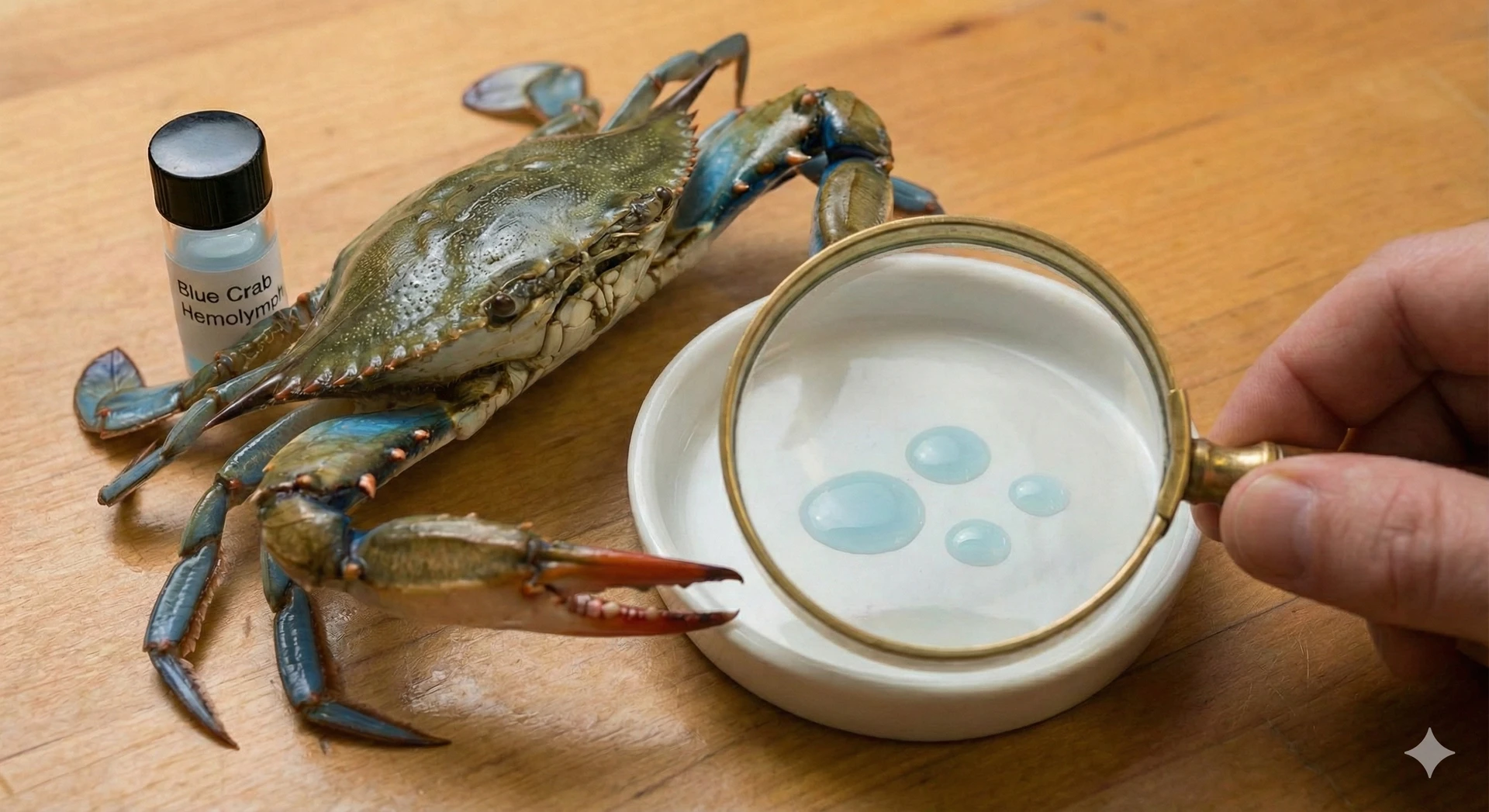
📸 The unexpected truth: A mesmerizing azure amidst the shell and meat.
1 The Azure Mystery: A Delta Encounter
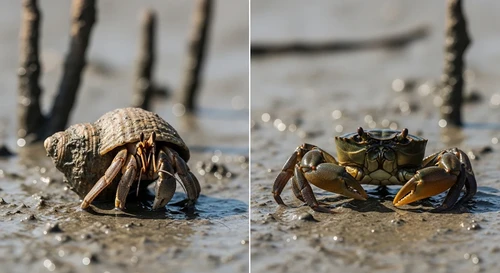
The Mekong Delta, a labyrinth of rivers, rice paddies, and mangrove forests, is a place where life teems. It’s a land of incredible biodiversity, and nowhere is that more evident than in its seafood. From the bustling markets of Can Tho to the remote fishing villages of Ca Mau, crabs are a culinary cornerstone. They’re steamed with beer, stir-fried with tamarind, or simply boiled and served with a zesty lime-salt-chili dipping sauce. I've eaten countless crabs here, picking through the sweet, delicate meat, cracking claws to get every last morsel. It's an intimate, hands-on experience, a primal connection to the source of your meal.
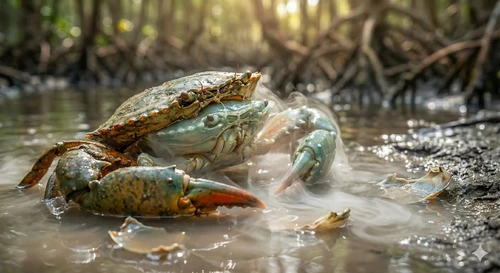
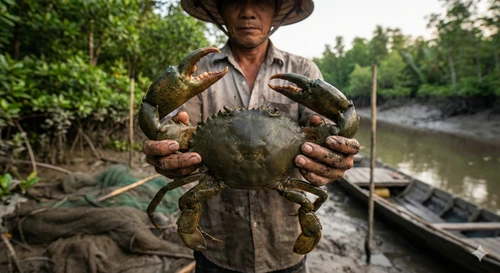
But one particular encounter shifted my perspective from purely culinary to deeply scientific. While preparing a particularly feisty mud crab, a drop of its internal fluid, usually unseen or simply dismissed, caught my eye. It wasn't the translucent liquid I'd expected, nor was it the deep red common to most creatures. It was a striking, ethereal blue. Like a piece of the sky had fallen into the pot. My initial thought was: What fresh hell is this? My second: This is absolutely fascinating.
2 Beyond Red: The True Colors of Life
For most of us, blood is red. It’s a fundamental biological truth we learn early in life, ingrained in our understanding of physiology. The vibrant crimson of our own blood, and that of most mammals, birds, and reptiles, comes from hemoglobin—an iron-rich protein that binds to oxygen. It’s a powerful, efficient system, painting our vital fluids a familiar shade of scarlet.
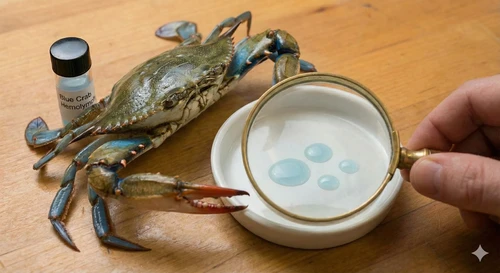
However, the animal kingdom is a vast tapestry of evolutionary innovation, and not all creatures conform to our iron-clad assumptions. Crabs, along with their crustacean cousins, arachnids (spiders, scorpions), and mollusks (squid, octopus, snails), march to a different beat. Or rather, they pump a different color. Their blood isn't red, but often a clear or pale yellow-green when deoxygenated, transforming into a beautiful, vibrant blue upon exposure to air. This dramatic change is a direct result of their unique oxygen-carrying molecule, a substance known as hemocyanin.
3 Hemocyanin's Secret: Copper, Not Iron
The magic behind the blue lies in a single, crucial element: copper. While hemoglobin uses iron atoms to bind oxygen, hemocyanin employs copper. Think of it like this:
- Hemoglobin (Red Blood): Contains iron. When iron binds with oxygen, it creates a chemical reaction that reflects red light, giving blood its characteristic ruby hue.
- Hemocyanin (Blue Blood): Contains copper. When copper ions bind with oxygen, they absorb most wavelengths of light but reflect blue light, resulting in that stunning azure color.
In its deoxygenated state, hemocyanin is typically colorless or a very pale yellowish-grey. But the moment it comes into contact with oxygen—say, when you crack open a crab and expose its internal fluids to the air—the copper atoms oxidize, and the blood rapidly turns that unmistakable blue. It’s a fascinating, visible demonstration of biological chemistry at work, a small, vibrant lesson in the diversity of life on our planet.
4 A Breath of Fresh Air (or Water): How it Works
Hemocyanin, like hemoglobin, is responsible for transporting oxygen throughout the creature's body. These copper-containing proteins circulate freely in the hemolymph (the equivalent of blood in many invertebrates), rather than being contained within dedicated cells like our red blood cells. This means that oxygen is directly absorbed into the hemolymph and distributed to tissues and organs.
The efficiency of hemocyanin compared to hemoglobin is a subject of ongoing scientific study. While hemoglobin is highly efficient at transporting oxygen in terrestrial environments, hemocyanin might offer certain advantages in colder, deep-sea, or low-oxygen environments. For instance, some research suggests that hemocyanin is particularly effective at carrying oxygen at very low temperatures and high pressures, making it well-suited for many marine species.
For the crabs of the Mekong Delta, navigating brackish waters and sometimes fluctuating oxygen levels, hemocyanin is a robust solution. It's a testament to millions of years of evolution, optimizing these creatures for their specific habitats and ecological niches.
5 Who Else Bleeds Blue? A Cast of Characters
Crabs are far from alone in their azure circulatory system. The copper-based blood system is common across several major invertebrate groups. Next time you encounter these creatures, remember their unique biological makeup:
- Other Crustaceans: Lobsters, shrimp, crayfish, and barnacles all share this blue-blooded trait. So, if you've ever cleaned a fresh shrimp, you might have caught a glimpse of this phenomenon.
- Mollusks: Squids, octopuses, snails, and slugs use hemocyanin. The blood of an octopus, for example, is famously blue and highly efficient for its active, high-metabolism lifestyle in aquatic environments.
- Arachnids: Spiders and scorpions also have hemocyanin. This is particularly interesting as they are terrestrial creatures, demonstrating the versatility of the copper-based system.
This biological commonality highlights an ancient evolutionary divergence. Long ago, life branched into different paths, with some lineages adopting iron for oxygen transport and others, perhaps in response to environmental pressures or available resources, utilizing copper. Both systems, in their own ways, are marvels of biochemical engineering.
6 The Mekong's Bounty: Crabs as a Culinary Treasure
While the scientific revelation of blue blood is captivating, it only adds another layer of appreciation to the culinary experience of eating crab in the Mekong Delta. The mud crabs (Scylla serrata), found abundantly in the brackish waters where rivers meet the sea, are particularly prized. Their meat is sweet, succulent, and firm, making them a staple in local cuisine.
The process of catching these crabs is an art form in itself. Local fishermen often use simple traps, setting them among the mangrove roots and checking them daily. The freshest crabs are whisked away to market, often still bound with string to keep their powerful claws at bay. From there, they find their way to family tables and bustling restaurants, becoming the star of dishes like:
- Cua Hấp Bia: Steamed with beer and lemongrass, allowing the crab's natural sweetness to shine.
- Cua Rang Me: Stir-fried with a tangy tamarind sauce, a flavor explosion.
- Bún Riêu Cua: A delicate crab noodle soup, often with a rich, savory broth.
7 Sustainable Seas & Curious Minds: Conservation in the Delta
Understanding the unique biology of creatures like the blue-blooded crab also underscores the importance of environmental conservation. The Mekong Delta is a fragile ecosystem, facing challenges from climate change, upstream damming, and pollution. The health of its crabs, and indeed all its aquatic life, is intrinsically linked to the health of the river itself.
Local communities, whose livelihoods depend on these resources, are often at the forefront of sustainable practices. From managing mangrove forests that serve as crucial crab nurseries to adopting responsible fishing techniques, their efforts are vital. As travelers and food enthusiasts, our appreciation for these unique creatures should extend beyond the plate, inspiring a curiosity about their world and a commitment to preserving the environments that allow such wonders to thrive.
8 So, You've Seen Blue Blood. Now What?
The next time you find yourself with a fresh crab, whether in the vibrant markets of the Mekong or closer to home, take a moment to look beyond the succulent meat. Should you glimpse that fleeting azure, remember the intricate dance of copper and oxygen, the evolutionary journey that led to this unique adaptation. It's a reminder that even in the most familiar dishes, there are profound scientific stories waiting to be discovered.
The Mekong Delta taught me that food is never just food. It's culture, history, community, and, as it turns out, a living, breathing biology lesson. This delta, with its relentless flow of life, continues to reveal its secrets, one blue-blooded crab at a time. So go forth, eat well, and stay curious.
Hungry for More Curiosities?
The natural world is full of wonders. Explore more fascinating facts about food and biology.
🌿 Discover Strange Mekong Fruits