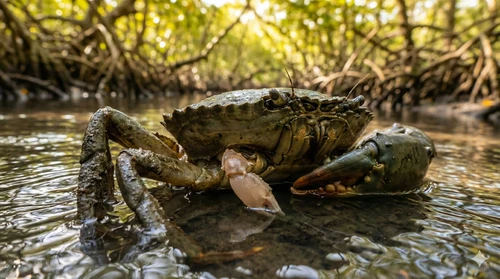
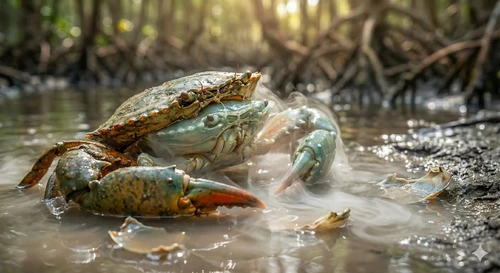
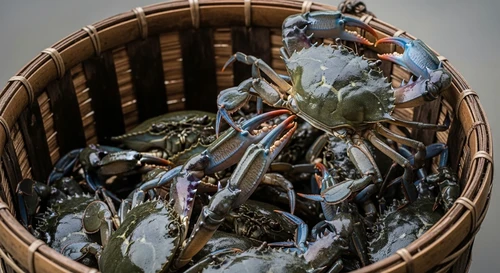
" The Mekong Delta, a land of liquid silver and fertile mud, yields some of the planet's most exquisite seafood. And none more captivating, or perhaps, more ethically challenging, than the crab. We celebrate its sweetness, its succulence, but do we truly understand the cost? "
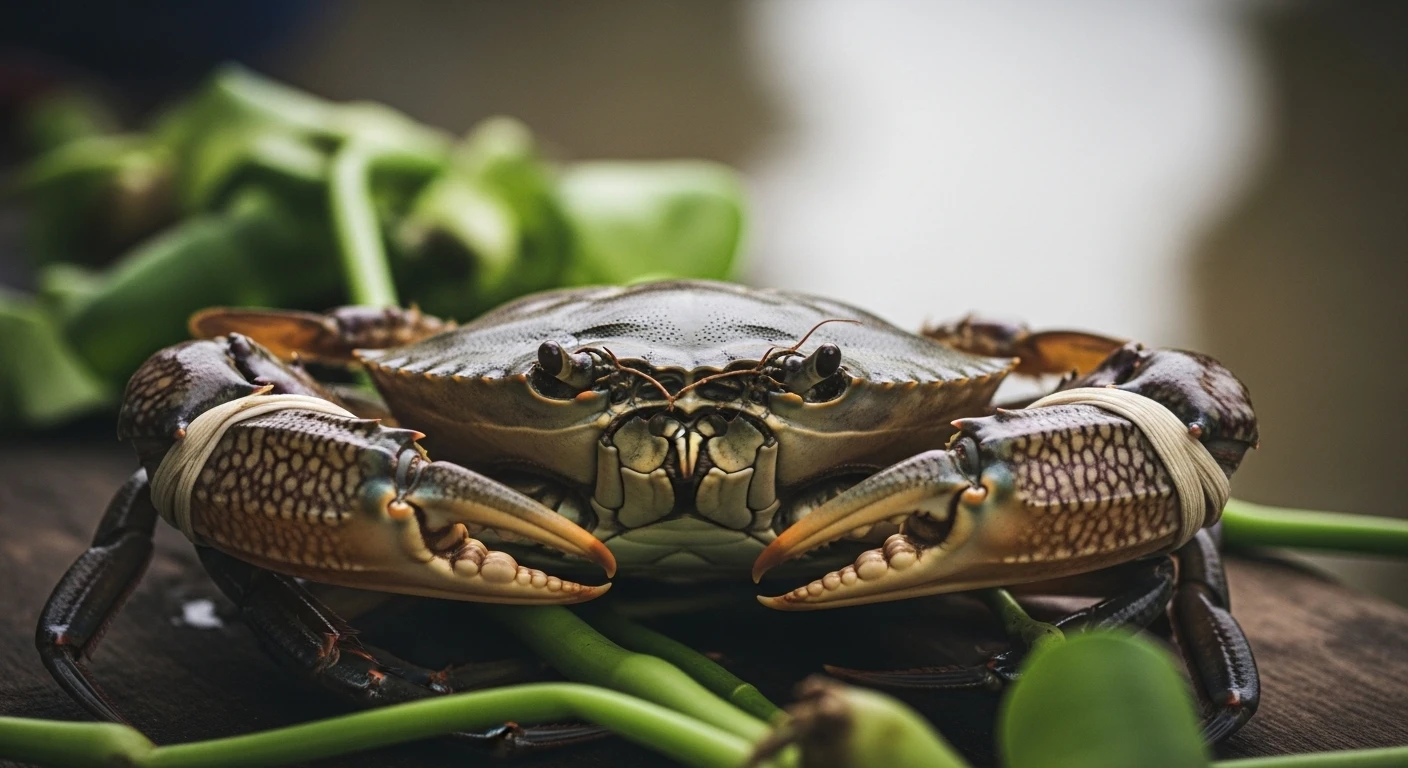
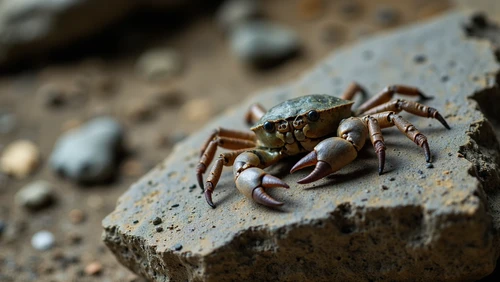
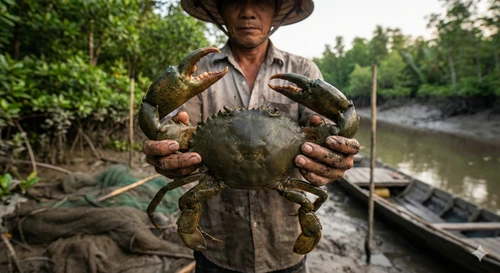
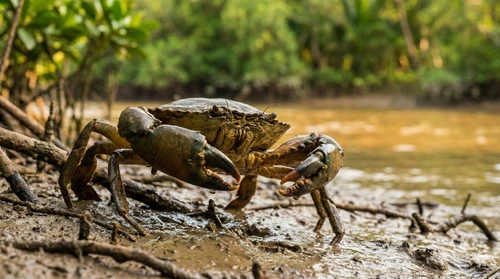
📸 A mud crab, vital and alive, its future a culinary question mark.
1 The Delta's Pulse: A Culinary Obsession
Travel through the watery labyrinth of the Mekong Delta, and you'll quickly discover a profound connection between the people and their seafood. From the intricate river systems of Ca Mau to the bustling markets of Can Tho, crabs are not just food; they are an integral part of the economy, culture, and daily sustenance. They are caught in traps, farmed in brackish ponds, and sold squirming, their claws bound, a testament to their freshness and vitality.
For generations, the delta's inhabitants have revered these creatures for their sweet, tender meat and rich roe. Dishes like steamed crab with beer and lemongrass, grilled crab with salt and chili, or a hearty crab vermicelli soup (Bún Riêu Cua) are staples, celebrated for their depth of flavor and culinary tradition. But as we, a global Western audience, become increasingly aware of the ethical implications of our food choices, a silent, yet powerful, question begins to surface around our dining tables: Do these magnificent crustaceans experience pain?
2 The Crustacean Conundrum: A Moral Compass for Our Palates
It's a question that many of us instinctively push aside, perhaps because the answer could make our beloved seafood dishes a little less enjoyable. But in an era of conscious consumption, ignorance is no longer bliss. The debate around whether crabs, lobsters, and other invertebrates can feel pain is not new, but it has gained significant traction in recent years, prompting changes in legislation and culinary practices across the globe.
Unlike mammals, crabs don't have a centralized nervous system with a complex brain in the same way we do. This anatomical difference has historically led many to assume they couldn't process pain. Yet, modern science is increasingly challenging this comfortable assumption, revealing a far more nuanced picture of invertebrate sentience.
3 Beyond Instinct: Nociception, Learning, and Avoidance
The scientific inquiry into crustacean pain is complex. Researchers often distinguish between "nociception" (the detection of harmful stimuli by the nervous system) and "pain" (the subjective, emotional experience of that harm). While it's difficult to definitively prove a subjective experience in another species, especially one so evolutionarily distant, studies have provided compelling evidence that crabs exhibit behaviors consistent with experiencing pain.
- Nociceptors: Crabs possess nociceptors, specialized sensory neurons that detect noxious stimuli (like extreme heat, cold, or chemical irritants).
- Avoidance Behavior: When exposed to painful stimuli, crabs show active avoidance behavior. For example, studies have shown crabs will actively try to escape an unpleasant environment, even abandoning a desirable shelter if it becomes electrified or otherwise noxious.
- Protective Behaviors: They will groom an injured area, rub it, or hold it carefully, much like an animal experiencing discomfort.
- Long-term Changes: Some research suggests that crabs can retain memory of painful experiences and alter their future behavior, indicating a more complex processing than a simple reflex.
In 2021, a landmark review commissioned by the UK government concluded that there is "strong scientific evidence" that decapod crustaceans (which include crabs, lobsters, and crayfish) are sentient. This led to their inclusion under animal welfare laws, a significant step in acknowledging their capacity to feel.
4 The Ethics of the Boiling Pot
The traditional method of cooking crabs and lobsters involves plunging them alive into boiling water. This method, while ensuring freshness, is now seen by many as ethically problematic, given the scientific evidence. The violent thrashing often observed is not just a reflex; it's increasingly interpreted as a clear sign of distress and an attempt to escape extreme pain.
For a chef or a home cook, this presents a dilemma. How do we continue to enjoy these delicious creatures while minimizing their suffering? The answer lies in adopting more humane dispatch methods that prioritize a quick and painless end.
5 The Delta's Pragmatism: Honoring the Catch
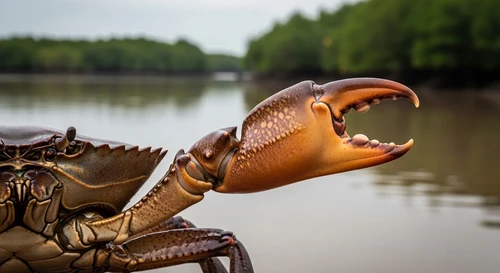
While scientific debates might feel distant to a Mekong fisherman, there's often an inherent pragmatism and respect in traditional practices that can align with modern ethical concerns. Local vendors in the delta understand that a stressed crab is not a good crab. When crabs are handled roughly, they tend to "drop" their claws (autotomy), a stress response that reduces their market value.
Although the primary motivation might be economic, the methods used to keep crabs calm and minimize their struggle – like keeping them in cool, damp conditions or binding their claws carefully – inadvertently contribute to reducing stress. For dispatch, some traditional methods, though not always universally applied, lean towards speed, such as piercing the nerve clusters or chilling the crabs into a state of torpor before cooking.
6 A Conscientious Kitchen: Best Practices for Crabs
For those of us who appreciate the unparalleled flavor of fresh crab, there are responsible ways to approach preparation. Humane dispatch methods don't just ease our conscience; they can also lead to a better culinary outcome, as a less stressed animal tends to have firmer, sweeter meat.
Here are widely accepted methods to minimize suffering before cooking:
- Chilling/Icing: Placing the live crab in an ice slurry (or the freezer) for 15-30 minutes will induce a state of torpor, essentially putting them "to sleep" and rendering them insensible before cooking. This is a common and relatively simple method for home cooks.
- Spiking/Brain Destruction: For those comfortable with it, a quick, precise piercing of the crab's nerve centers (often located behind the eyes for most crabs) can cause immediate death. This requires some knowledge of crab anatomy but is considered one of the most humane methods.
- Electrical Stunning: Commercial operations may use electrical stunning, which renders the crab unconscious before processing. This is not practical for home use but is gaining traction in the industry.
The key is to ensure the crab is unconscious or dead before it encounters heat. Once dispatched humanely, the crab can then be cooked using your preferred method – steaming, boiling, grilling, or stir-frying – with a clearer conscience.
7 Savoring with Awareness: The Purest Expression
The best way to enjoy Mekong Delta crab, in my opinion, remains the simplest: steamed. Whether with coconut water for a delicate sweetness or with beer and lemongrass for aromatic depth, the method allows the crab's natural flavors to shine. But knowing what we now know, this preparation takes on a new layer of meaning.
When you're preparing steamed crab, it's not just about selecting the freshest, fattest specimen from the market. It's about:
- Sourcing Responsibly: Whenever possible, inquire about how crabs are caught and handled. Support vendors who prioritize freshness and care.
- Humane Preparation: Commit to dispatching the crab humanely before steaming. The small effort makes a significant ethical difference.
- Mindful Enjoyment: As you crack open the shell and savor the sweet meat, take a moment to acknowledge the life given. It's a small act of gratitude that deepens the culinary experience.
The Mekong Delta, with its abundance and raw beauty, teaches us that life and death are intertwined, especially when it comes to food. Our role, as appreciative eaters, is to navigate this relationship with respect and awareness.
8 Towards a More Conscious Table
The question "Do crabs feel pain?" is not easily answered with a simple "yes" or "no" from a purely human perspective. But the weight of scientific evidence increasingly suggests that we should err on the side of caution. Assuming sentience and acting accordingly is not just about animal welfare; it's about our own evolving understanding of the natural world and our place within it.
As we explore the vibrant foodscapes of places like the Mekong Delta, we carry with us not just an appetite for adventure, but also a growing sense of responsibility. Embracing these ethical considerations doesn't diminish the joy of eating; it enriches it, adding a layer of mindfulness to every delicious bite. The Mekong's crabs are a gift, and like all gifts, they deserve our deepest respect.
Explore More Conscious Eating
Curious about other ethical food dilemmas or sustainable seafood practices in Southeast Asia?
🌿 Read Our Sustainability Guides