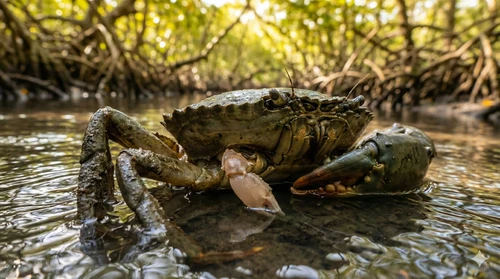
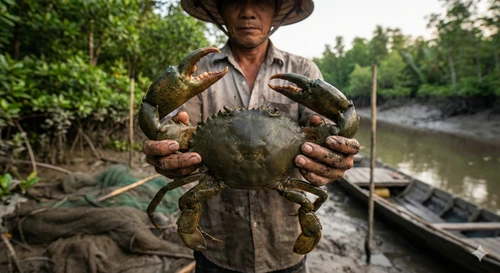
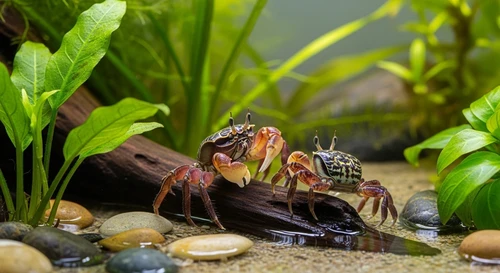
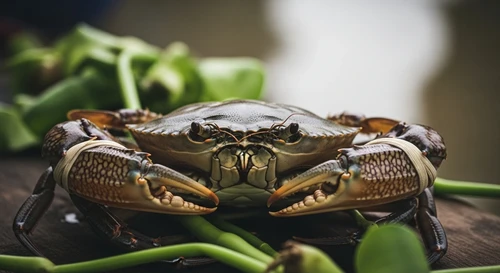
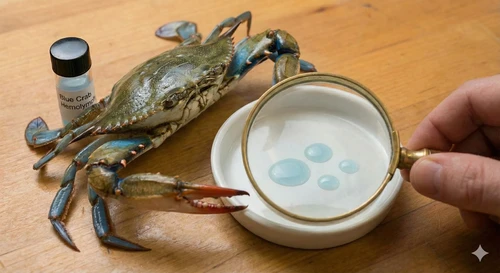
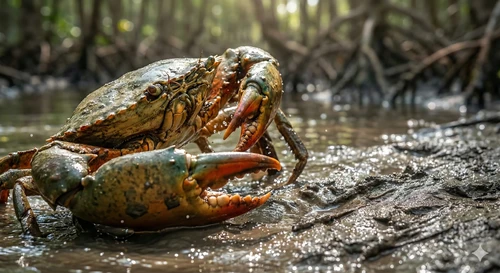
" Life in the Mekong Delta is a brutal ballet of survival and adaptation. From the tireless farmers to the resilient fishers, every creature here tells a story of overcoming. But few tales are as astonishing as that of the humble crab. "
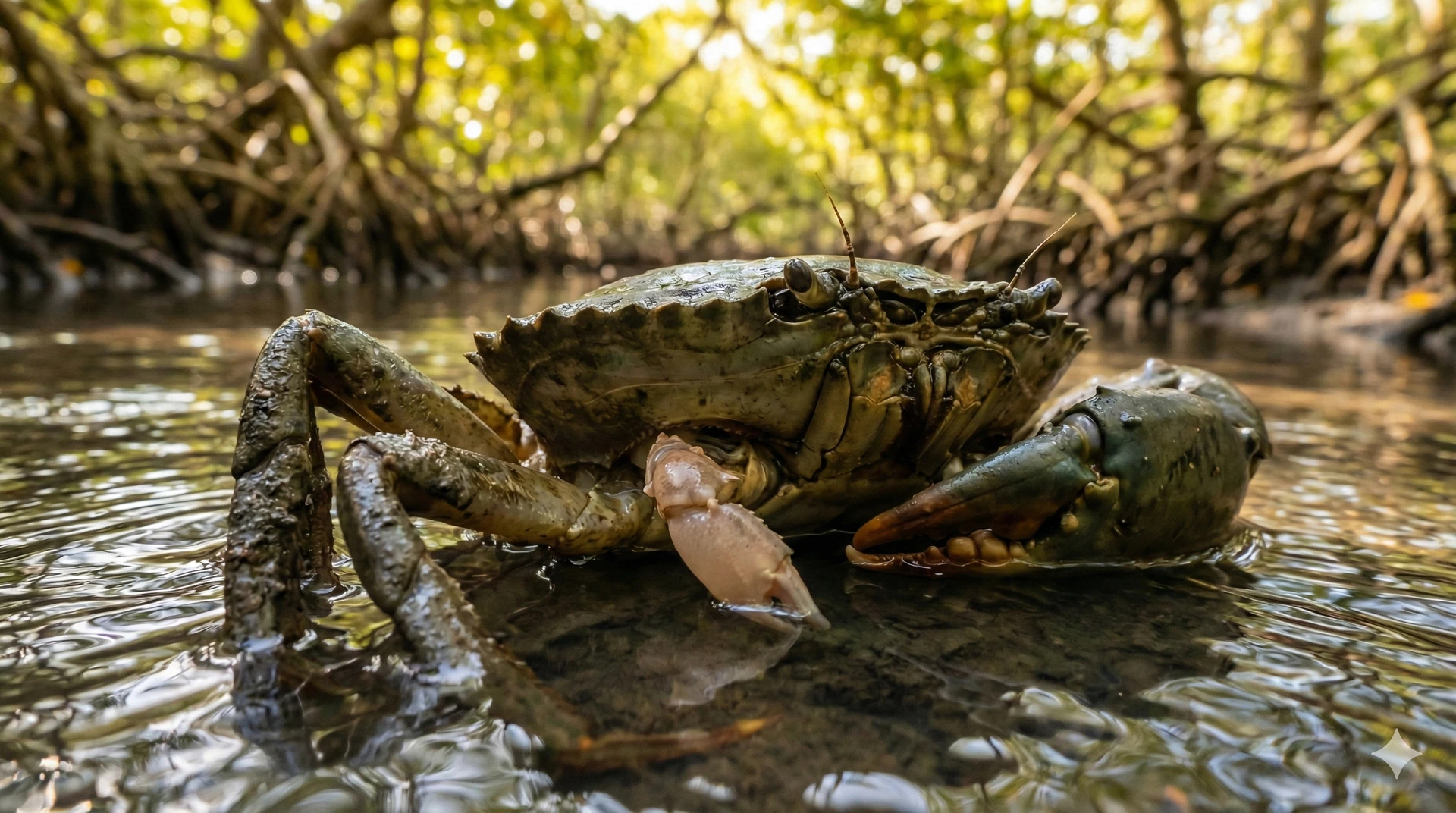
📸 A testament to nature's resilience: The crab's enduring capacity for renewal in the Mekong Delta.
1 The Delta's Unseen Heroes: Life in the Mud
Picture this: the vast, intricate network of rivers and canals that define the Mekong Delta. It’s a place of incredible bounty, but also relentless challenge. Here, amidst the mangroves, the silty riverbanks, and the sun-baked mudflats, lives a creature that embodies the spirit of this land more than any other: the crab. From the powerful mud crabs, prized by local cooks for their sweet, succulent meat, to the nimble fiddler crabs scuttling across the shore, they are ubiquitous. They are food, they are ecosystem engineers, and they are, as we’re about to discover, biological marvels.
Every day is a struggle for survival in this dynamic environment. Predation from birds, fish, and even hungry humans; territorial disputes with other crabs; the ever-present risk of injury from their own aggressive encounters or the shifting landscape. In such a volatile world, nature has equipped these crustaceans with an extraordinary superpower, one that allows them to literally grow back what they've lost, a skill vital for their enduring presence in this vibrant, demanding ecosystem.
2 Anatomy of Survival: Why a Leg is Everything
For us, losing a finger might be a terrible inconvenience, a source of lifelong frustration. For a crab, losing a leg can be a death sentence, fundamentally compromising its ability to thrive. Their legs aren't just for walking; they're multi-purpose tools essential for nearly every aspect of their complex existence in the Delta.
- Locomotion: The most obvious, yet critical function. Legs are vital for escaping predators, navigating treacherous mudflats, and finding new foraging grounds.
- Feeding: Many crabs utilize their smaller legs (maxillipeds) and powerful claws to manipulate food, sift through sand for organic matter, or even filter-feed in the water column.
- Defense: Claws are formidable weapons against rivals and threats, used for aggressive displays and physical combat. Losing one can severely impair their ability to fight, protect their territory, or defend against an attack.
- Mating: Males often employ specific legs or claws in elaborate courtship rituals, signalling strength and suitability to potential mates.
- Burrowing: Essential for constructing burrows that serve as shelter from predators, the harsh sun, and the changing tides, particularly in the exposed intertidal zones.
Given such high stakes, the ability to recover from injury isn't just a neat trick; it's a fundamental requirement for the crab's continued survival and success within the competitive and dangerous world of the Mekong Delta.
3 The Art of Escape: Autotomy Explained
Imagine having the power to voluntarily detach a body part to save your own life. Sounds like something out of a sci-fi flick or a superhero comic, right? Crabs do it every day, with a cool detachment that belies the drama of the act. This incredible ability is called autotomy, and it’s their ultimate "get out of jail free" card in the face of imminent danger. When a predator grabs a leg, or a limb is badly damaged in a territorial dispute, the crab doesn't just lose it; it consciously *chooses* to shed it.
The leg doesn't just snap off haphazardly or by brute force. Crabs possess a specialized breaking point at the base of each leg, typically between the coxa and basis segments. This point is a natural fracture plane, designed for a clean, swift detachment. Here's a quick look at the mechanics:
- Pre-determined Fracture Planes: Each leg is engineered with a specific, weakened 'self-amputation' joint, ensuring a precise break.
- Muscle Contraction: Strong, specialized muscles within the limb's base contract powerfully at this joint, severing the limb with incredible speed.
- Diaphragm Closure: Crucially, a diaphragm-like membrane or sphincter muscle immediately seals the wound. This rapid closure is vital, preventing significant blood loss, warding off infection, and setting the stage for subsequent regeneration.
This isn't a minor decision for the crab; it's a calculated sacrifice. Losing a limb is energetically costly, temporarily impairs mobility, and puts the crab at a disadvantage. But the alternative – becoming a predator's meal, or succumbing to a debilitating injury – is far worse. It's a testament to evolutionary efficiency.
4 From Stump to Strength: The First Steps of Renewal
Once a leg is autotomized, the real magic, the biological alchemy, begins. Unlike mammals, which can effectively seal wounds but predominantly form scar tissue, crabs initiate a complex and deeply ingrained biological process to regrow the entire limb. It's not instantaneous, but it's an astonishingly efficient biological repair system.
The healing process commences almost immediately with the swift sealing of the wound, which we discussed with autotomy. Beneath this protective membrane, specialized cells begin to aggregate and proliferate. This cellular mass forms what scientists call a blastema—a small bud of undifferentiated cells at the site of the lost limb. Think of it as a pristine blueprint for a new limb, containing all the genetic instructions, patiently waiting to be unfolded and constructed.
This tiny bud is a delicate yet remarkably potent entity. It holds the entire genetic instruction set for a brand new appendage, a miniature version of what was lost. It’s a quiet testament to the evolutionary prowess of these creatures, silently rebuilding themselves from the ground up, or rather, from the stump out, hidden beneath the crab's existing shell, preparing for its grand reveal.
5 The Molting Cycle: Nature's Master Builder
Here’s the crucial caveat, the biological timing mechanism: crabs can't just spontaneously sprout a new leg whenever they feel like it. Regeneration is intrinsically linked to their molting cycle. Crabs, like all crustaceans, possess an exoskeleton – a rigid outer shell that, unlike our skin, does not grow incrementally. To get bigger, they must shed this old shell, a process scientifically known as ecdysis or, more commonly, molting.
The blastema, that tiny limb bud we discussed, grows and develops beneath the old, existing exoskeleton. When the crab finally undergoes its molt, it casts off its old, restrictive shell, and with it, the fully formed (albeit smaller and paler) blastema is released, now an external, functional limb. The crab emerges from its old shell with a brand new, albeit still soft and vulnerable, leg. Over the next few days, as the crab absorbs water and expands, this new shell hardens, and the regenerated limb begins to function and mature.
A Smaller Beginning
The first regenerated limb is often noticeably smaller, and sometimes slightly misshapen, compared to its original counterpart. It's fully functional but less robust. However, with each subsequent molt, the regenerated leg will grow larger and stronger, closer to its original size and physical prowess, until it's virtually indistinguishable from the other limbs.
This dependency on the molting process means that regeneration is a journey that unfolds over time, a series of strategic renewals rather than a single, immediate fix. It’s a remarkable example of how a creature adapts its fundamental biological processes to ensure long-term survival and overcome severe physical setbacks in the wild.
6 The Costs of Resilience: Energy and Vulnerability
While incredible, the ability to regenerate a limb is far from a free ride. It demands a significant biological investment. Growing entirely new tissue, nerves, and forming a fresh exoskeleton takes a prodigious amount of energy, diverting crucial resources away from other vital functions such as somatic growth, reproduction, or strengthening the immune response. A crab that has recently regenerated a limb might, as a consequence, grow slower, produce fewer eggs, or be more susceptible to disease and environmental stressors.
Furthermore, the molting process itself, essential for regeneration, is a time of extreme vulnerability for the crab. During and immediately after molting, the crab's new shell is soft, pliable, and utterly defenseless, leaving it exposed and an easy target for predators. This is why crabs instinctively seek out secluded, protected spots – under rocks, within burrows, or deep in the mud – during this critical period. For a crab that's also trying to regenerate a limb, this window of vulnerability is even more pronounced, a high-stakes gamble where life hangs in the balance, yet one that evolution has refined to perfection.
In the harsh, unforgiving environment of the Mekong Delta, where every calorie counts and every shadow might hide a threat, the decision to autotomize and then embark on the arduous journey of regeneration is a testament to the crab's deep-seated will to live, to endure, and to thrive, despite the inherent risks.
A Delta-Inspired Lesson: Resilience Beyond Biology 🌊
The Mekong Delta, with its relentless tides, cyclical floods, and ever-changing landscapes, is a place where resilience isn't just a trait; it's the very fabric of existence, a deep-seated way of life. The crabs here are not alone in their remarkable capacity for renewal.
The People of the Delta
Just like the crabs that inhabit their waters, the people who call the Delta home have learned to adapt and rebuild with an astonishing fortitude. From fishing villages occasionally battered by fierce storms to rice paddies impacted by changing river levels and salinity intrusion, there's a constant, almost rhythmic, cycle of loss and renewal, of bending without breaking. They rebuild their homes, ingeniously adapt their farming techniques to new conditions, and face each new challenge with an unyielding spirit that mirrors the tenacity of the natural world around them.
The Ecosystem's Pulse
The entire vibrant ecosystem of the Delta functions on this very principle of regeneration and adaptation. Mangroves, vital for coastal protection and biodiversity, slowly but surely creep back after erosion or unsustainable logging. Fish populations, even when depleted by intensive fishing, can rebound with careful management and sustainable practices. It's a powerful testament to the natural world's inherent drive towards equilibrium and healing, an ability to restore itself, if only given the chance and a bit of space.
The humble crab, in its quiet, determined process of regrowing a lost limb, becomes a profound metaphor for the Delta itself: a place of constant flux, where life finds a way, adapts, and renews, time and again, against all odds.
8 More Than a Meal: Appreciating Nature's Ingenuity
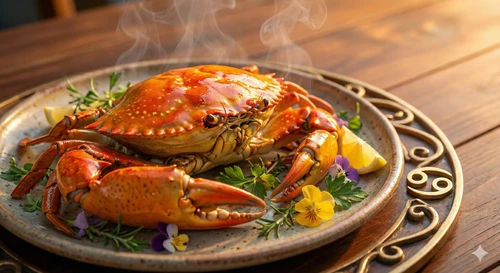
For many, crabs in the Mekong Delta are seen primarily through the lens of cuisine – a succulent ingredient for a stir-fry, a rich broth, or a fiery curry. And rightly so; the flavors are incredible, deeply embedded in the culinary soul of the region. But perhaps, when we next crack open a sweet, meaty claw, or observe these fascinating creatures scuttling along a riverbank, we can pause for a moment to consider the incredible journey that creature has undertaken.
We often marvel at the grand, dramatic displays of nature – volcanic eruptions, majestic migrations of whales or birds. Yet, in the quiet, persistent regeneration of a crab's leg, there lies a profound wisdom and a deep, biological artistry. It’s a micro-drama of survival, a biological blueprint for coping with adversity, playing out silently and unfailingly in the murky waters and muddy banks of the Mekong Delta. It reminds us that even the smallest, most unassuming creatures can hold the most astonishing secrets of life, resilience, and renewal. So, the next time you encounter a crab, remember: you’re not just looking at a crustacean; you’re witnessing a miracle of natural engineering, a testament to the enduring power of renewal and the sheer tenacity of life itself.
Intrigued by Nature's Wonders?
The Mekong Delta holds countless secrets. Discover more fascinating facts about its unique wildlife and ecosystems.
🌿 Explore More Delta Secrets