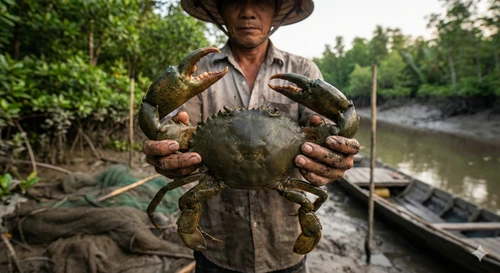
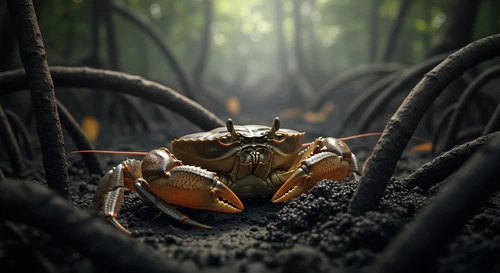
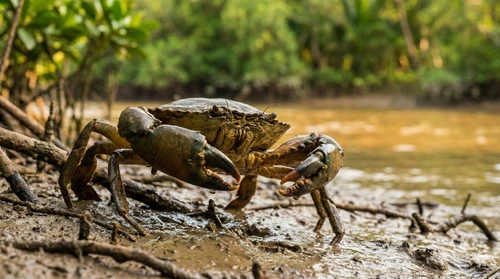
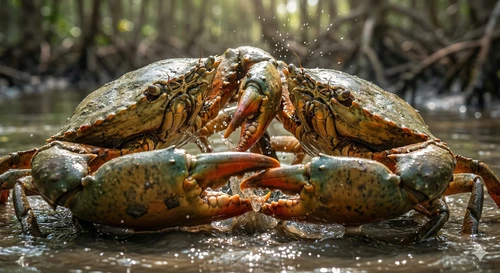
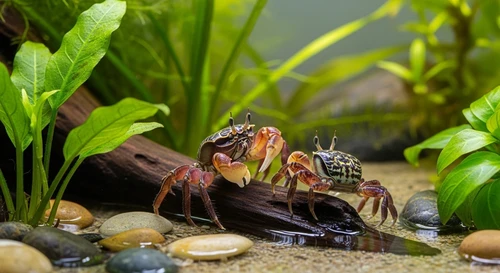
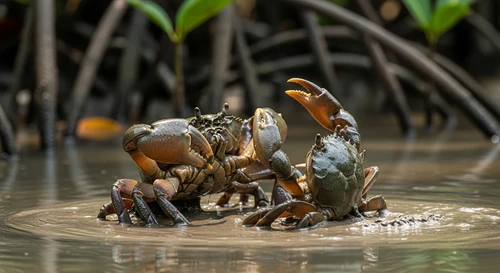
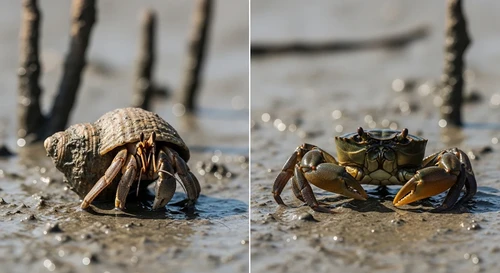
" In the labyrinthine waterways of the Mekong Delta, where life ebbs and flows with the tides, one creature stands as a testament to raw, unadulterated power. It's not the crocodile, nor the python, but the unassuming crab, armed with a weapon capable of utter devastation. "
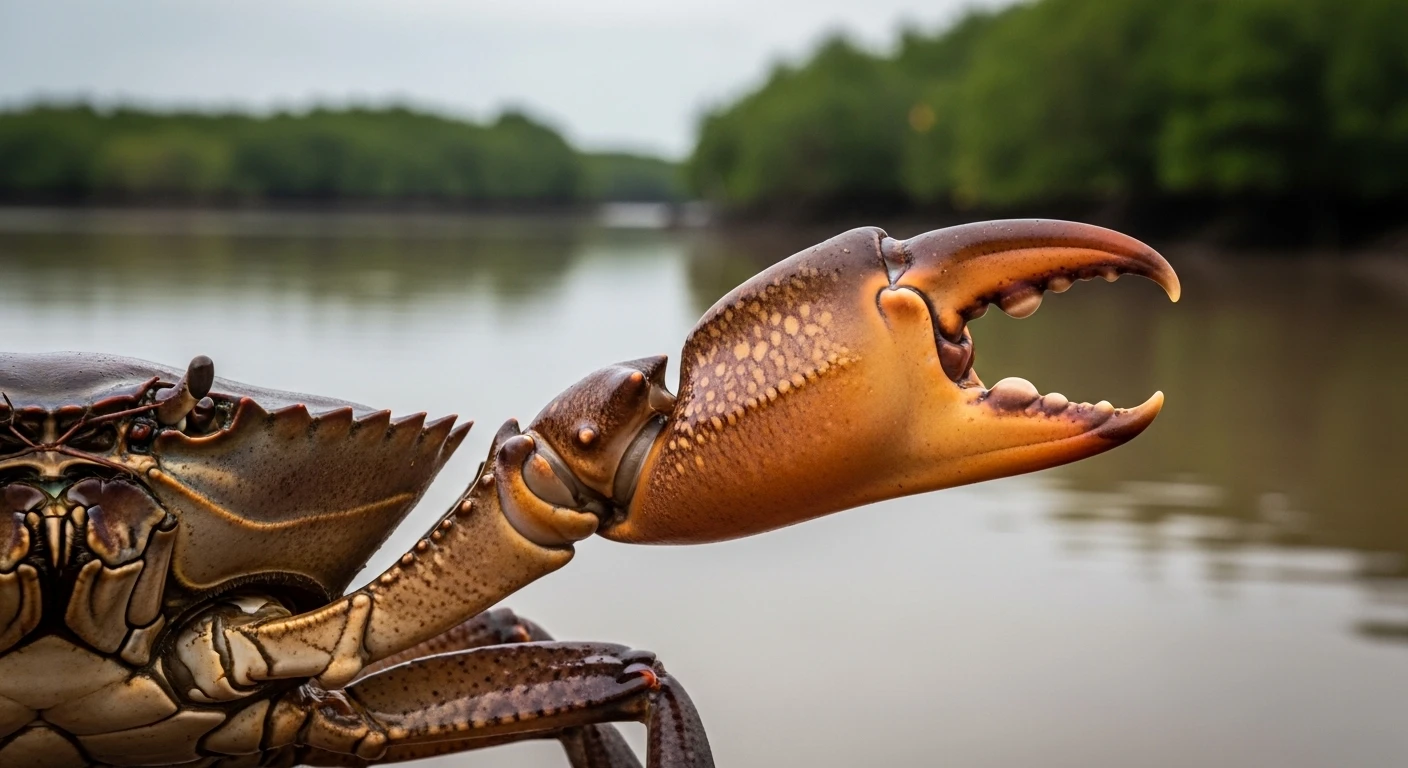
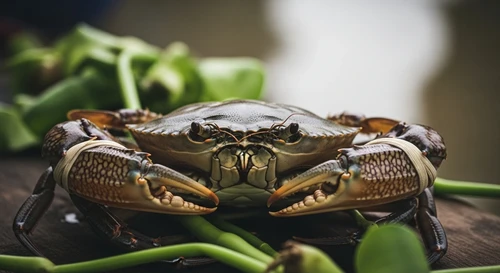
📸 The architect of pressure: A fine specimen of the Mekong's most formidable claw.
1 The Unseen Force: How Much Pressure?
We've all heard the stories, seen the videos of crabs cracking shells with alarming ease. But just how much pressure can a crab claw exert? While exact figures can vary wildly depending on species, size, and even mood, scientific studies and estimations paint a picture of incredible power.
For a substantial mud crab, like those found in the brackish waters of Ca Mau, the pinching force can reach upwards of 1,000 to 2,000 pounds per square inch (PSI). Some sources even suggest certain species could potentially exceed this, reaching pressures comparable to hydraulic presses.
To put that into perspective:
- A typical human bite force is around 150-200 PSI.
- A Rottweiler's bite force is around 325 PSI.
- A strong grip from a human hand might generate a few hundred PSI in a concentrated point.
These numbers are staggering. It's the evolutionary equivalent of a built-in, high-pressure hydraulic tool, honed over millions of years for survival. This isn't just for show; it's a vital aspect of their existence in the dynamic Mekong ecosystem.
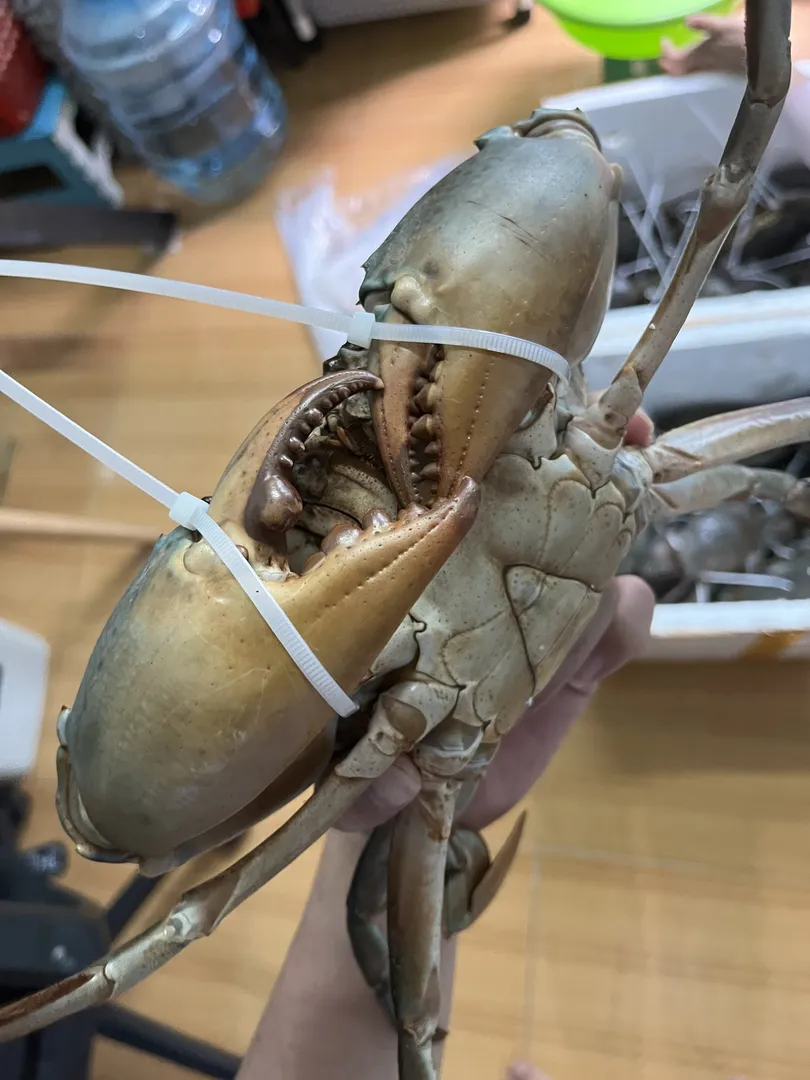
Heritage Ingredient
Ca Mau Jumbo Mud Crab
Ca Mau Jumbo Mud Crab
A large male mud crab prized for dense, sweet meat and thick claws, commonly used in steamed crab and grilled crab dishes across the Mekong Delta.
An icon of coastal culinary heritage, featuring firm, sweet meat that captures the raw power and freshness of Ca Mau's tides.
2 Mekong Crabs: Masters of Pressure in a Watery Realm
The Mekong Delta, with its vast network of rivers, canals, and coastal mangroves, is a paradise for crustaceans. Here, the mud crab (genus Scylla) reigns supreme, and its powerful claws are not merely for defense, but are integral to its very livelihood.
These crabs, often harvested from the provinces of Ca Mau, are perfectly adapted to their environment. Their crushing claws are used for:
- Foraging: Breaking open the shells of smaller mollusks, snails, and even other crabs.
- Defense: A formidable deterrent against predators like fish, larger birds, and even otters.
- Burrowing: While not their primary function, the claws can assist in excavating burrows in the soft mud of the delta's banks.
- Dominance: In territorial disputes or during mating rituals, the strength of the claws plays a crucial role in establishing hierarchy.
The abundance of nutritious prey within the Mekong's rich waters contributes to the crab's robust build, ensuring their claws are always ready for action. The sheer biomass available fuels their growth, leading to specimens that are not only delicious but also possess truly impressive crushing power.
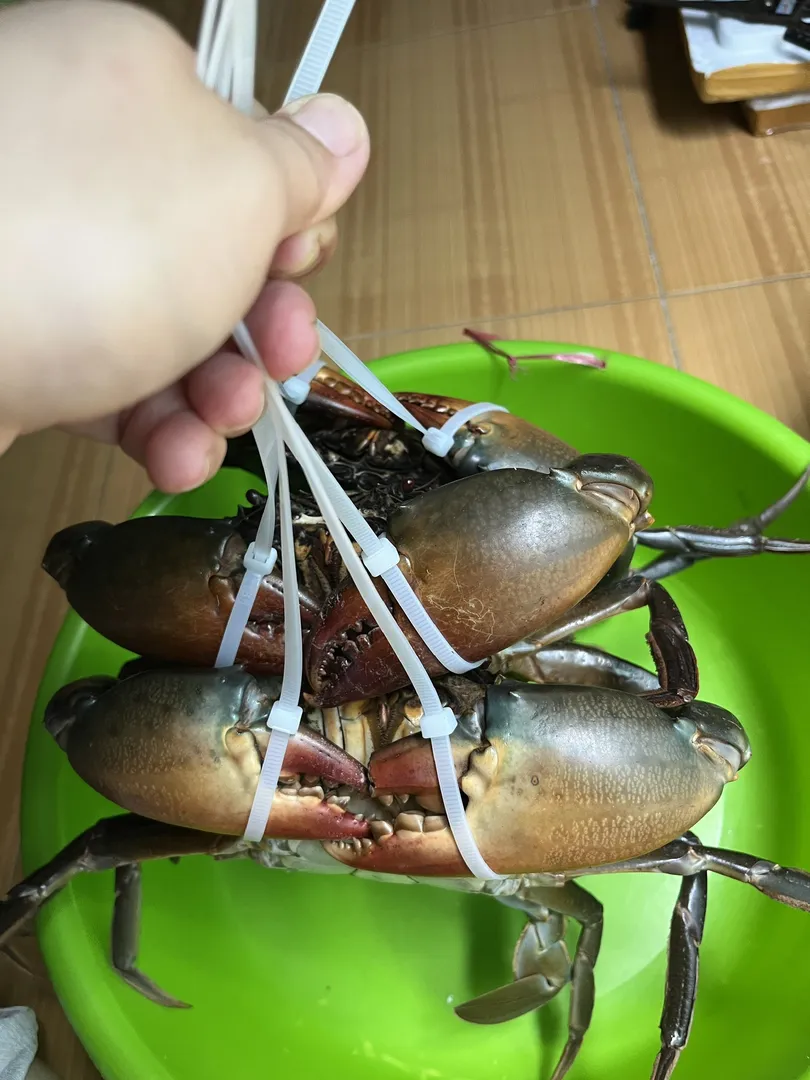
Heritage Ingredient
Giant Ca Mau Mud Crab
Giant Ca Mau Mud Crab
A larger export-grade mud crab with dramatic claws and thick meat, often used to illustrate oversized crab categories in Vietnamese seafood markets.
A titan of the ocean, offering colossal claws filled with muscular, succulent meat that elevates every feast into a royal experience.
Heritage Ingredient
Ca Mau Jumbo Mud Crab
Ca Mau Jumbo Mud Crab
A large male mud crab prized for dense, sweet meat and thick claws, commonly used in steamed crab and grilled crab dishes across the Mekong Delta.
An icon of coastal culinary heritage, featuring firm, sweet meat that captures the raw power and freshness of Ca Mau's tides.
3 Anatomy of Power: Engineering a Crab Claw
How does nature engineer such a powerful tool? It’s a combination of biomechanics, material science, and evolutionary design.
The Lever System
A crab’s claw operates on a sophisticated lever system. The muscles that power the claw are incredibly dense and powerful. The structure of the claw itself, with its sturdy exoskeleton, allows for immense force to be concentrated at the tips.
The Shell Material
The exoskeleton, primarily composed of chitin and hardened with minerals like calcium carbonate, provides both rigidity and resilience. This material is remarkably strong and lightweight, ideal for a tool that needs to be both durable and mobile.
The Point of Contact
The shape of the claw tip is designed for maximum force application. Whether it's a sharp point for piercing or a broad, crushing surface, it's optimized for its specific predatory or defensive task.
4 It's Not Just About Brute Force
While raw pressure is a key factor, the effectiveness of a crab's claw is also about precision and application. Skilled fishermen in the Mekong Delta know this instinctively.
They observe the subtle behaviors of crabs to understand their temperament and power. A crab that raises its claws high and presents its broadside is signaling readiness for a fight, its muscles tensed, its powerful grip primed. This is the moment when handling requires utmost caution.
The ability to apply this force selectively—whether to tenderize prey or defend territory—is a testament to the crab's intricate biological engineering.
A Different Kind of Claw: The Mekong Giant Freshwater Prawn
While mud crabs boast crushing claws, the Mekong Delta is also home to other impressive crustaceans with unique adaptations. The Mekong Giant Freshwater Prawn, for instance, is famed for its long, often vibrant blue, claws.
A Tool for Display and Defense
Unlike the crab's crushing grip, the prawn's long claws are primarily used for defense, startling predators, and competing for mates. They possess a formidable reach.
Culinary Delicacy
Grilled or in hotpots, these prawns are a celebrated dish, their rich head fat adding a unique sweetness.
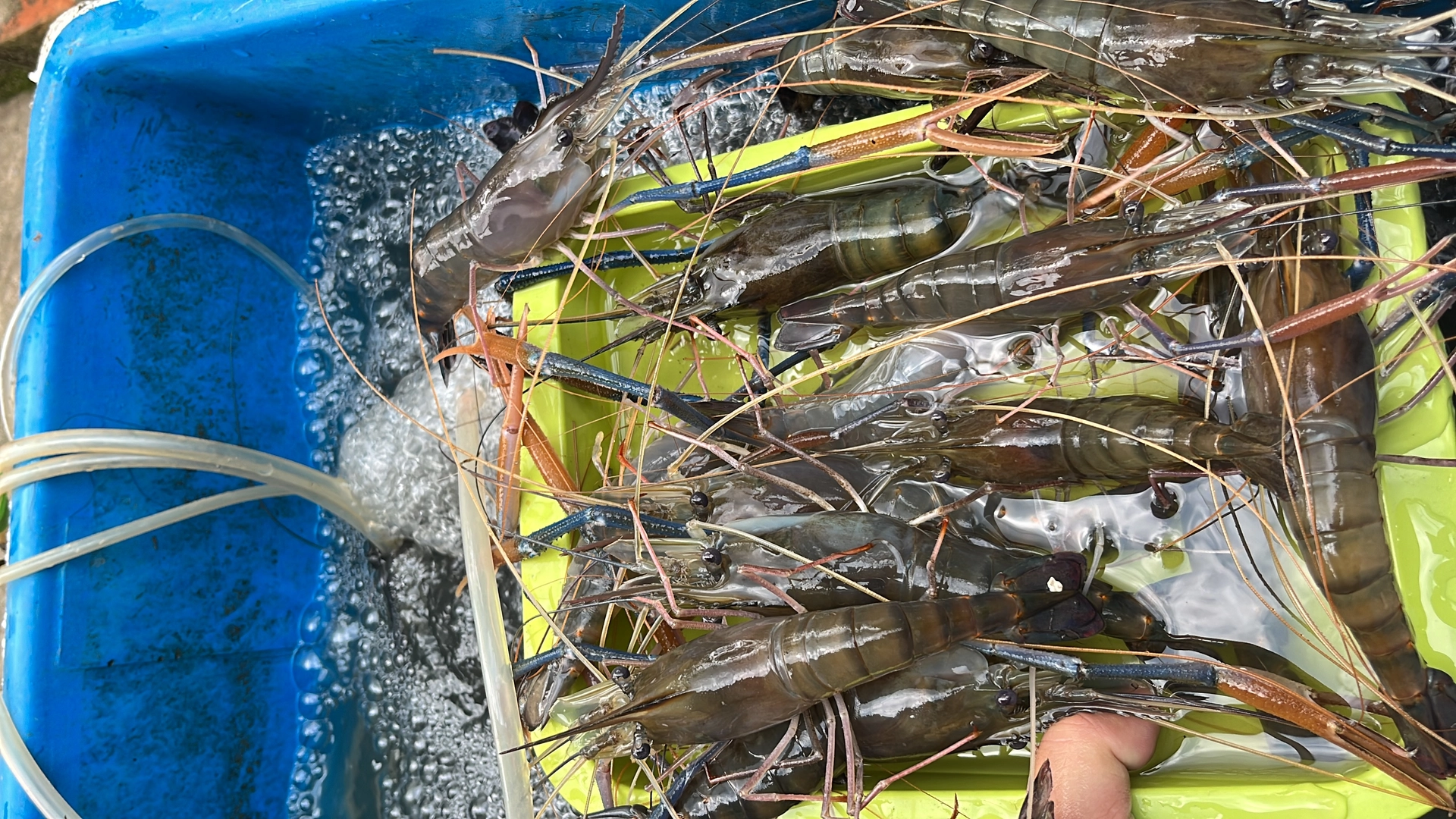
Heritage Ingredient
Mekong Giant Freshwater Prawn
Mekong Giant Freshwater Prawn
A river prawn with long blue claws and rich head fat, common in grilled prawn dishes and hotpot traditions across the Mekong basin.
Majestic blue-clawed warriors of the Mekong, famous for their rich, fatty heads and a savory depth that captures the essence of the delta's rivers.
5 Handling with Respect: A Fisherman's Wisdom
In the bustling seafood markets and tranquil fishing villages of the Mekong, handling live crabs is a daily ritual. Safety and respect for the animal are paramount, not just for practicality but out of ingrained cultural reverence.
Grip Firmly, but Wisely
The safest way to hold a crab is from the rear, grasping its shell behind the walking legs. This keeps your fingers well clear of the formidable claws.
The Tie-Up
Many professional fishermen will tie the claws of large, potent crabs with string or rubber bands. This is a safety precaution to prevent accidental injury during transport and handling.
Mind the Pinchers
When preparing crabs for cooking, it's always wise to remove the claws or secure them. This is not only for safety but also helps in even cooking.
6 A Symbol of Mekong Resilience
In the cultural tapestry of the Mekong Delta, the crab is more than just a meal or a creature of impressive power. It embodies resilience. It thrives in challenging, brackish waters, utilizes its strength to survive, and is a vital part of the region's food security and economy.
From the small, independent fisherfolk casting nets in the canals to the large-scale aquaculture operations in Ca Mau, the crab sustains livelihoods. Its powerful claw is a daily reminder of nature's engineering marvel and the enduring spirit of life in this fertile delta.
Understanding the sheer force packed into that shell gives us a deeper appreciation for this creature and its place in the vibrant, wild, and delicious world of Mekong cuisine.
The Unyielding Grip
The next time you encounter a crab, whether on your plate or scuttling in the wild, remember the incredible power contained within its claws. It’s a force honed by evolution, perfected by nature, and a fundamental part of the ecosystem, especially in the life-giving waters of the Mekong Delta.