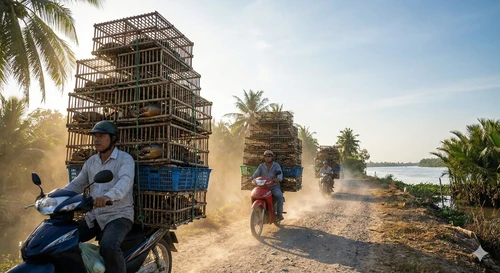
" For many Australians, summer barbecues and prawn platters are practically synonymous with sunshine and good times. But venture across the equator to Vietnam, and you'll find a shrimp culture as rich, complex, and vital as the mighty Mekong itself. It’s a world where the humble shrimp isn't just food; it's livelihood, tradition, and a profound connection to the water. "
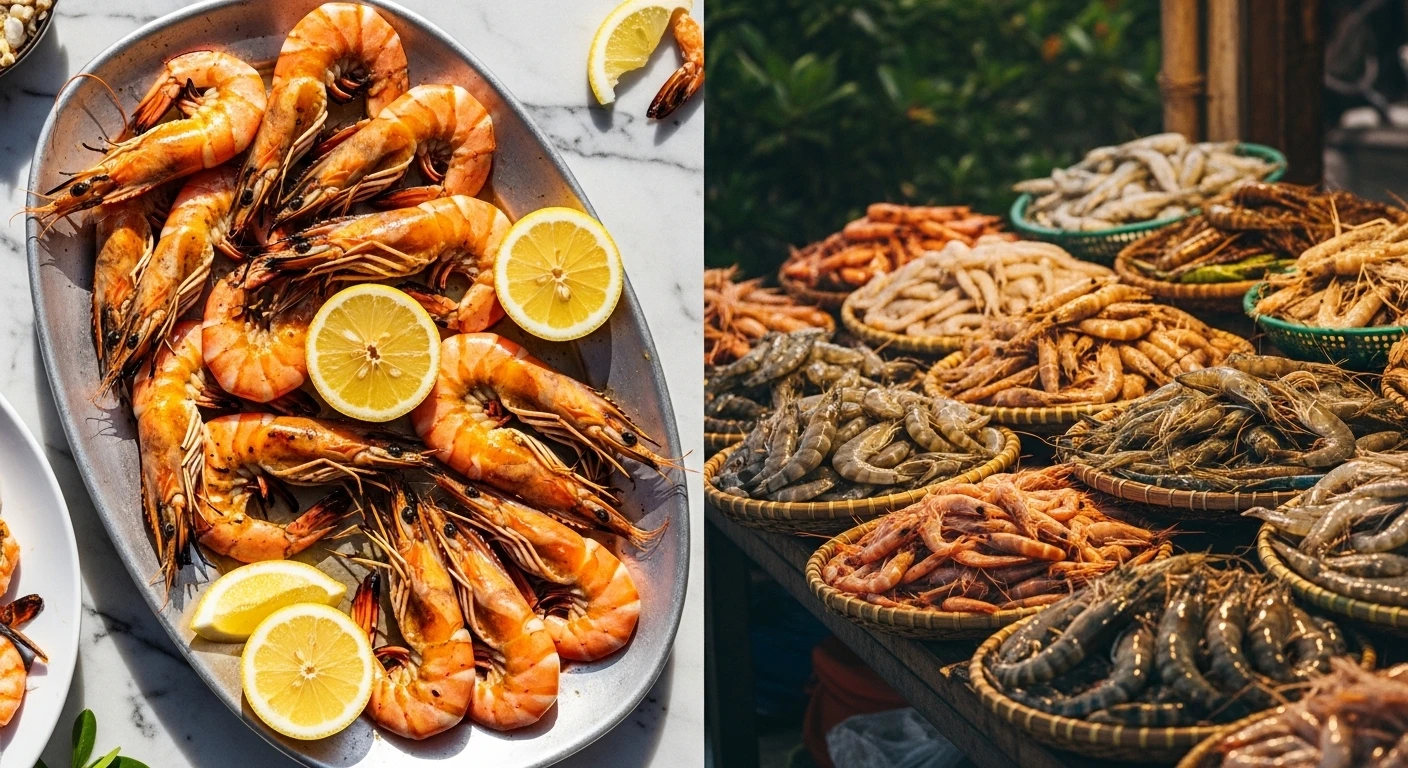
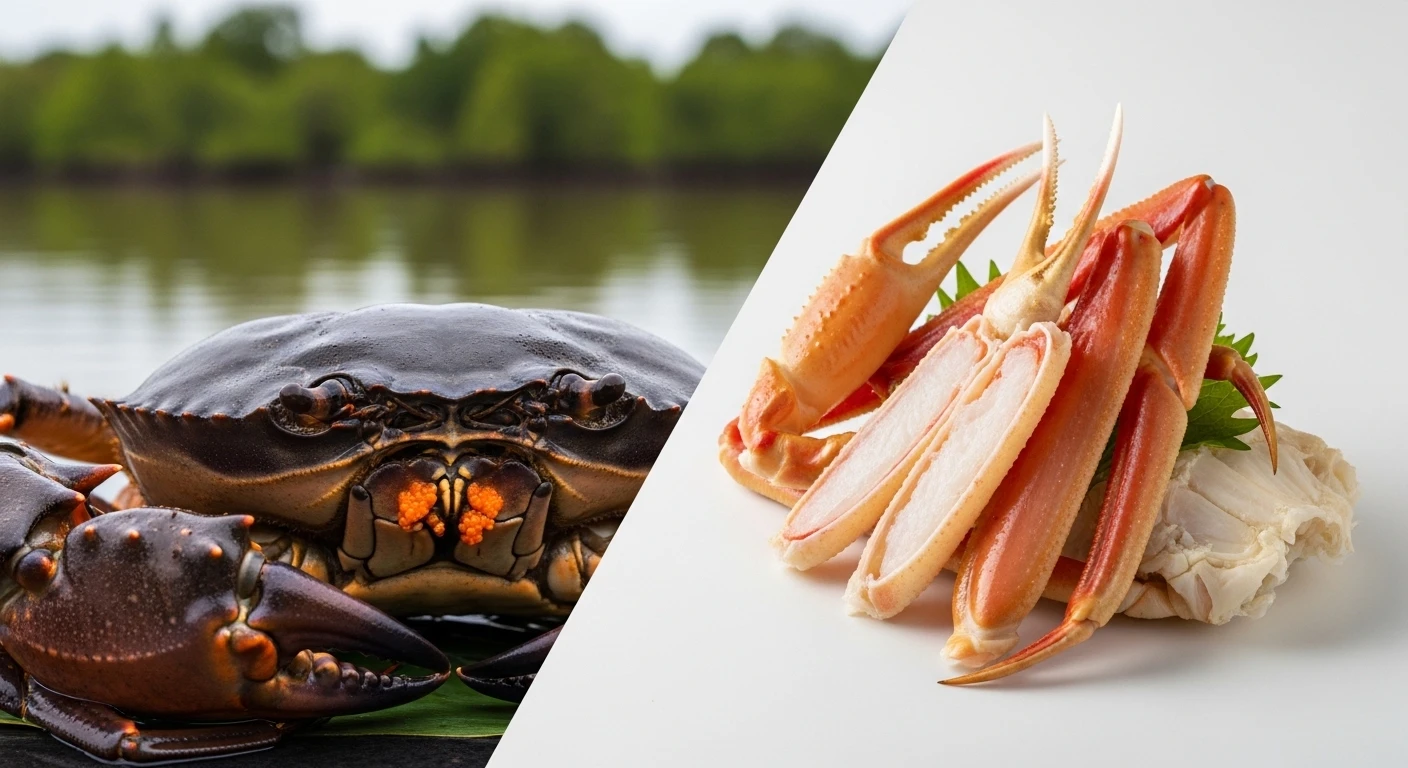
📸 A Tale of Two Seas: The vibrant spectrum of shrimp and prawns from Vietnam's estuaries and Australia's coastal waters.
1 The Australian Prawn: Sunshine, Barbecues, and the Tastes of Summer
For anyone who’s spent a summer Down Under, the image is indelible: a sizzling barbecue, a frosty beer, and a mountain of glistening prawns. Australian prawn culture is intrinsically linked to leisure, celebration, and the bounty of its vast coastline. From the iconic King Prawns of Queensland to the sweet, delicate Banana Prawns, the focus is often on size, sweetness, and that satisfyingly firm texture that’s perfect for grilling, chilling, or a classic prawn cocktail.
Australian prawn farming and wild-catch fisheries are highly regulated, emphasizing sustainability and quality. This ensures that when you're tucking into a prawn on Bondi Beach or at a Melbourne family gathering, you're tasting a product of rigorous standards and a deep appreciation for marine resources. The holiday season, particularly Christmas, sees an explosion in prawn consumption, cementing its place as a national seafood icon.
But what makes an Australian prawn so special? It’s often their natural sweetness, a result of clean waters and carefully managed ecosystems. Think of the Tiger Prawns from the Northern Prawn Fishery – larger, with a distinct flavour and firm bite, often prized for their impressive presentation on a platter. Then there are the smaller, more delicate species, perfect for showcasing their inherent sweetness with minimal adornment. It’s a culture that celebrates the prawn in its natural glory, often served simply to let its inherent deliciousness shine.
2 Enter the Mekong Delta: Where Shrimp is Lifeblood
Travel south in Vietnam, and the landscape transforms. The mighty Mekong River fans out into a labyrinth of waterways, fertile deltas, and sprawling mangrove forests. This is the heartland of Vietnamese shrimp culture, a realm where generations have lived and worked in harmony with the rhythm of the tides. Shrimp and prawns aren't just a luxury; they are a fundamental part of the local economy, diet, and daily life.
The sheer diversity of shrimp found here is staggering. Unlike the more uniform palate of Australian prawns often seen in supermarkets, the Mekong offers a spectrum: the celebrated Ca Mau black tiger shrimp, with its robust flavour and firm texture; the giant freshwater prawns, their long blue claws a testament to their majestic size and rich head fat; and the ubiquitous whiteleg shrimp, a versatile staple in countless Vietnamese kitchens. Each has its own story, its own habitat, and its own place on the dinner table.
This isn't a culture of prawn platters for festive holidays alone. Here, shrimp are woven into the fabric of everyday meals – stir-fried with morning glory, simmered in flavourful broths, grilled over charcoal with fragrant herbs, or transformed into addictive dried shrimp for flavouring soups and salads. The connection is visceral, born from a deep understanding of aquaculture and the delicate balance of the estuarine environment.
3 Ca Mau Black Tiger: The Mangrove's Crown Jewel
When talking about Vietnamese shrimp, you cannot escape the legend of the Ca Mau black tiger shrimp. Hailing from the southernmost province of Vietnam, this particular species thrives in the brackish waters and intricate mangrove ecosystems. This unique terroir – a blend of freshwater and saltwater, rich organic matter, and a protected environment – is what gives Ca Mau black tiger shrimp their distinctive character.
Unlike shrimp farmed in intensive ponds, Ca Mau black tigers are often raised in semi-intensive or extensive systems integrated with mangrove forests. This method not only preserves the vital mangrove ecosystem, which acts as a natural nursery and buffer zone, but also imbues the shrimp with a cleaner, sweeter, and more nuanced flavour profile. Their flesh is notably firm and slightly chewy, offering a satisfying bite that seasoned seafood lovers seek.
This isn't just about flavour; it's about responsible aquaculture. The cultivation practices in Ca Mau are a testament to how human livelihood can coexist with environmental preservation. When you taste a Ca Mau black tiger shrimp, you're tasting the very essence of the mangrove, the purity of the water, and a tradition of sustainable harvesting that has been honed over decades.
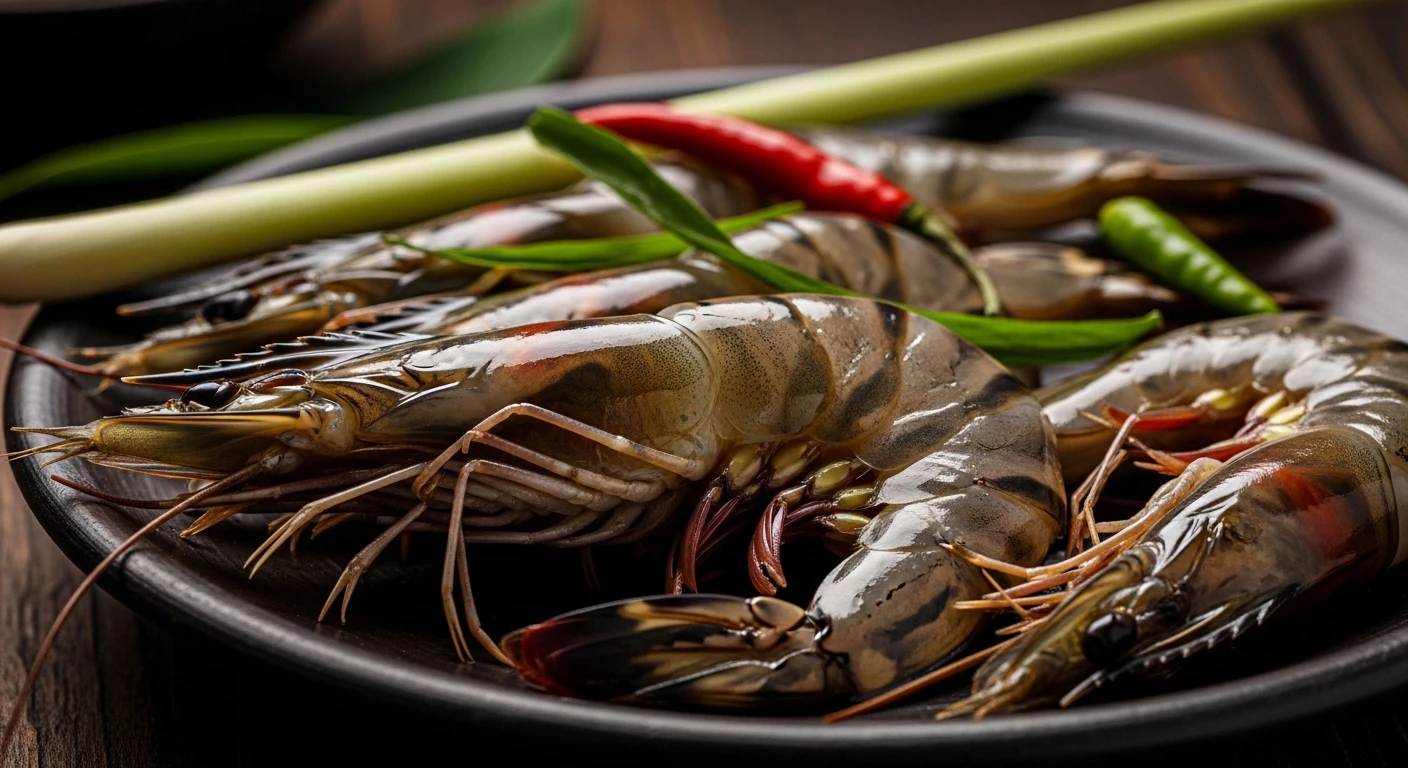
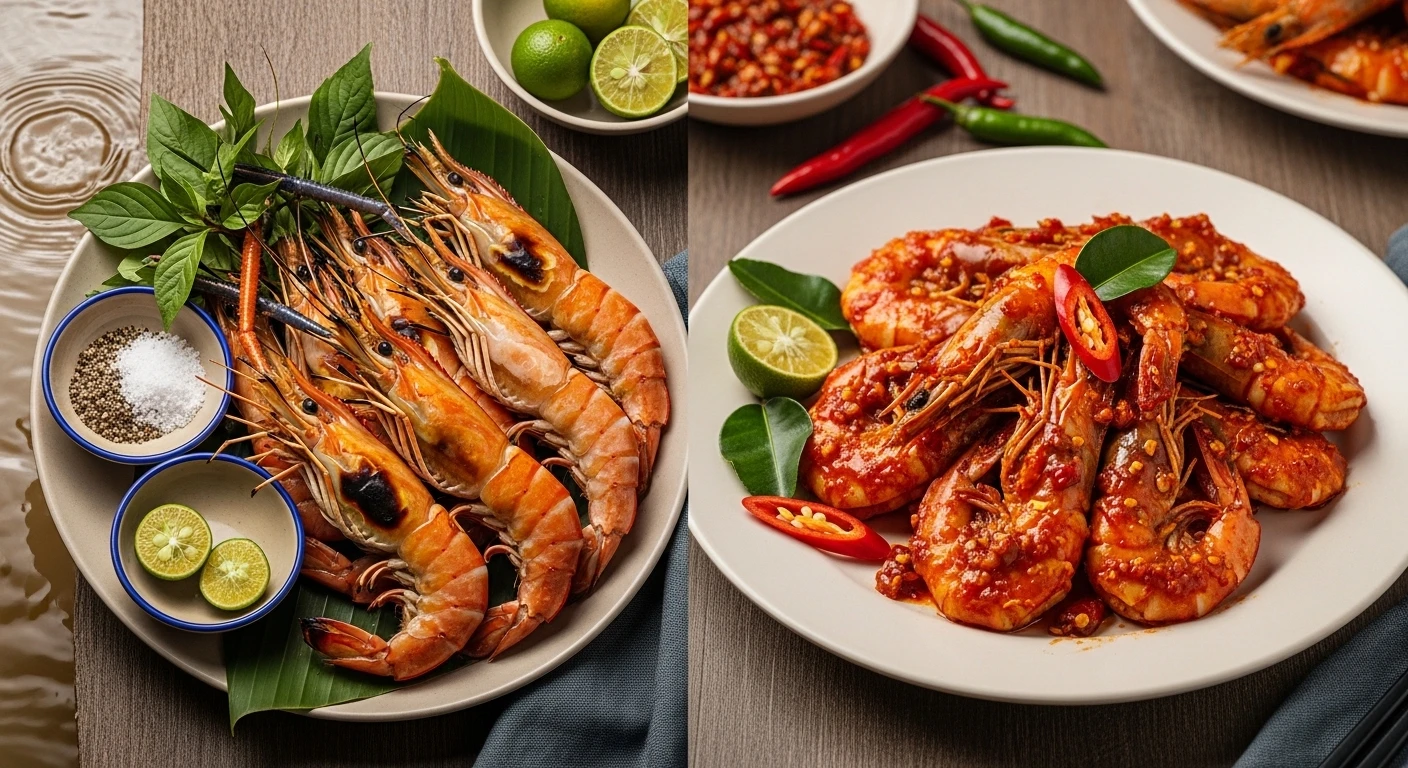
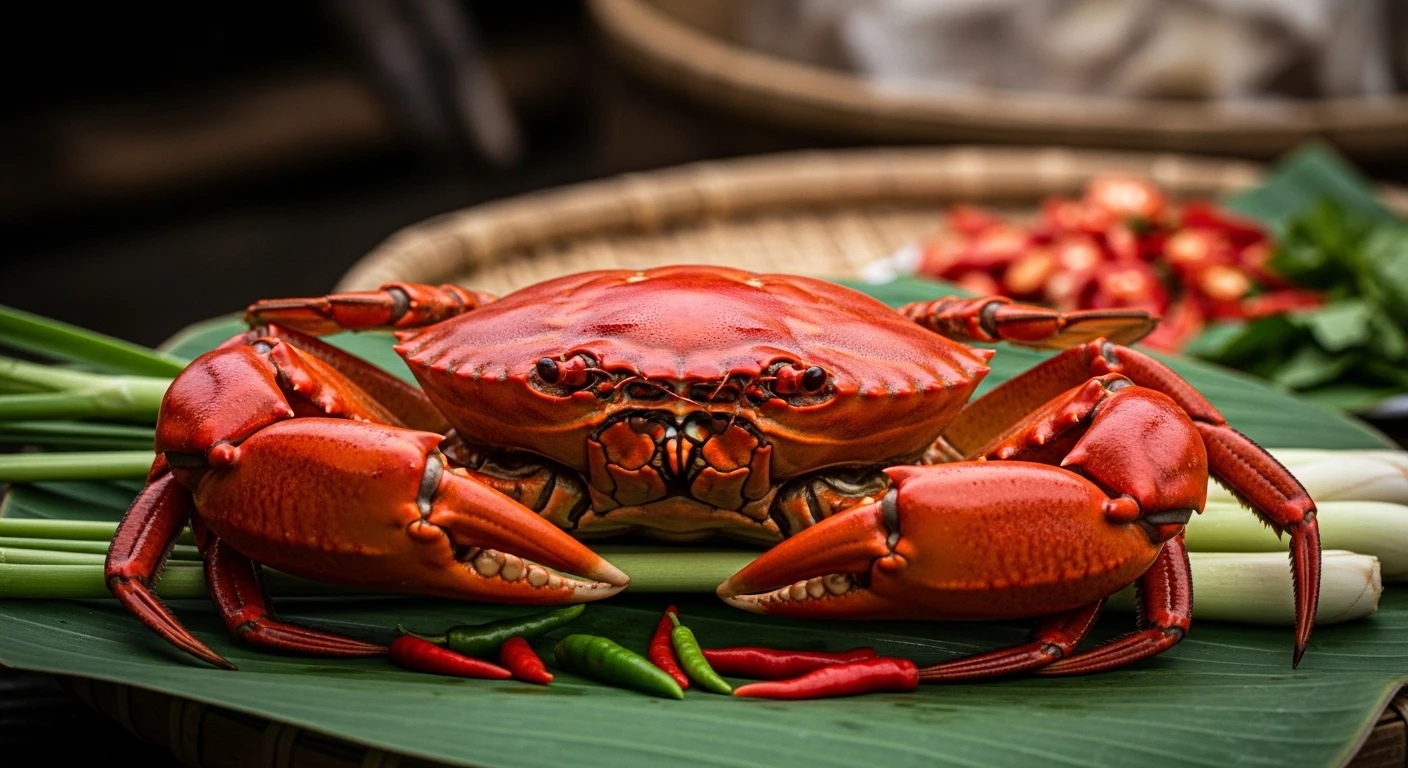
A taste of the mangroves: Ca Mau black tiger shrimp, prized for their firm texture and distinct sweetness.
4 Giants of the Water: Mekong Prawns vs. Australian Kings
The comparison wouldn't be complete without acknowledging the giants. Australia's King Prawns are renowned for their size, often forming the centrepiece of seafood platters. They deliver a substantial, sweet, and succulent bite, embodying that quintessential Australian prawn experience. They are a symbol of abundance and coastal celebration.
In the Mekong, the Mekong Giant Freshwater Prawn takes centre stage. These are not your average shrimp. With their striking blue legs and impressive size, they are a prized catch in the riverine communities. Their appeal lies not just in the size of the tail meat, but in the rich, creamy head fat – a delicacy savoured by many. Grilled whole over hot coals, with a sprinkle of salt and lime, the Mekong giant prawn offers a flavour profile that is intensely savoury and undeniably luxurious.
While both are large, the experience differs. The Australian King Prawn often shines when grilled or served chilled, its sweetness a direct reflection of its oceanic habitat. The Mekong Giant Freshwater Prawn, on the other hand, offers a richer, more complex flavour, with the head fat adding an element of decadence that's deeply satisfying, especially when paired with traditional dipping sauces that balance its inherent richness.
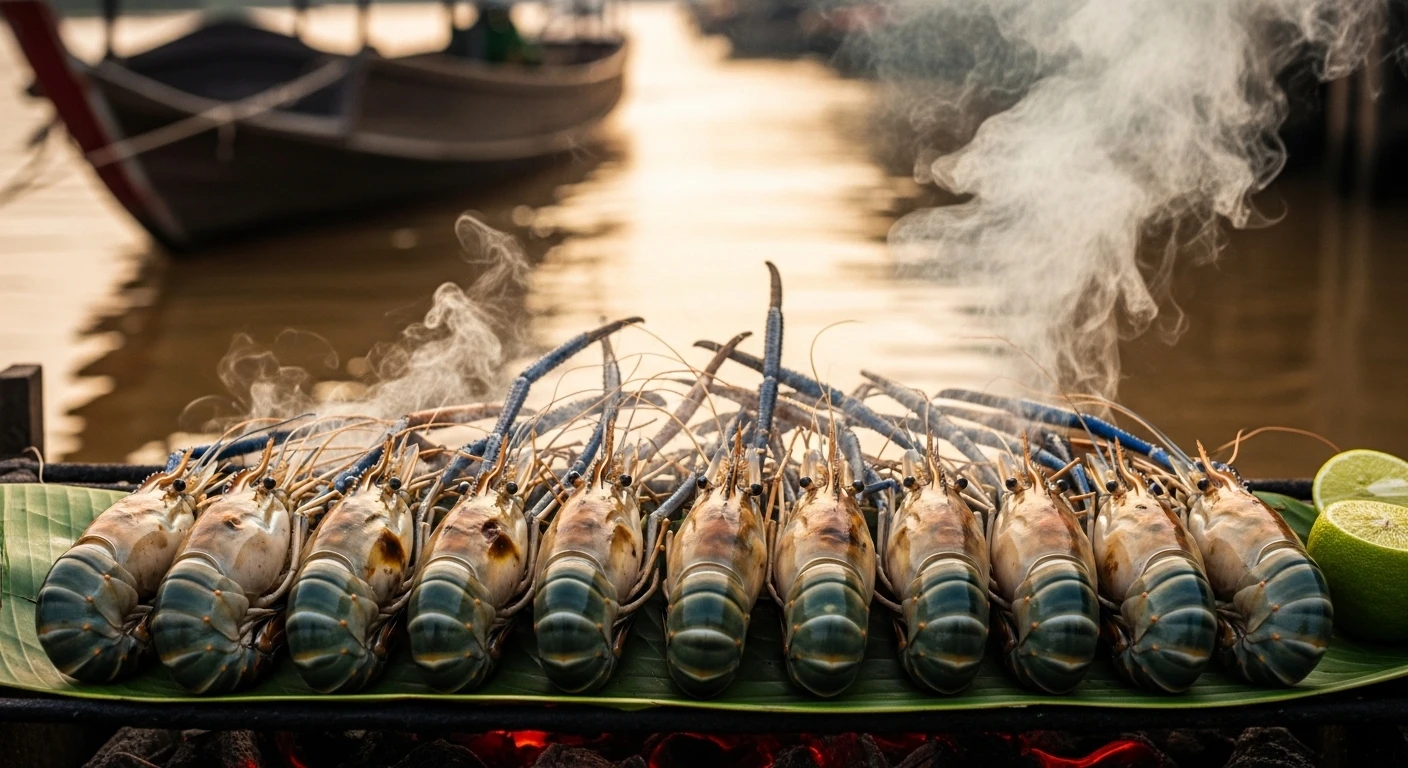
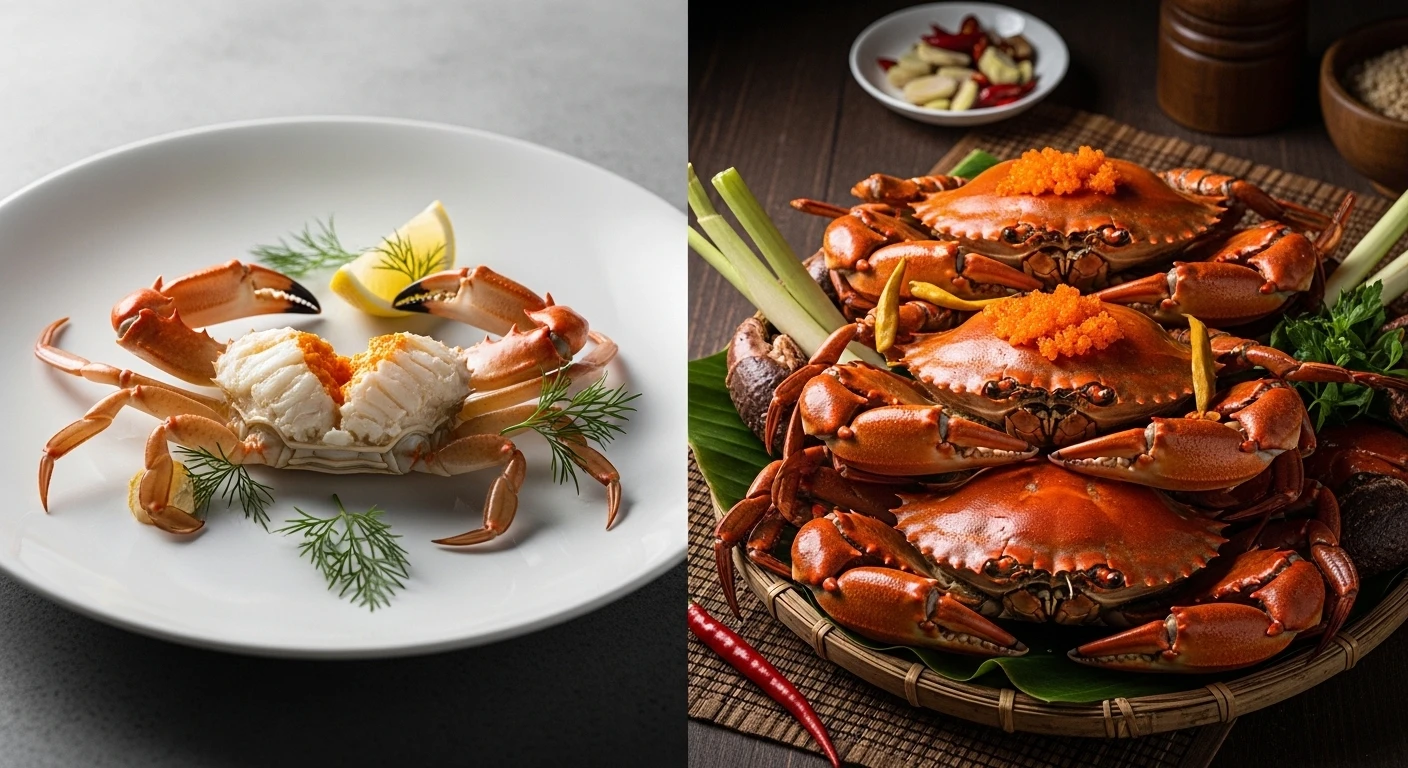
The star of the Mekong: Grilled giant freshwater prawns, celebrated for their size and rich head fat.
5 Whiteleg Shrimp: The Versatile Workhorse
While Australia has its impressive King and Tiger Prawns, the backbone of Vietnamese home cooking and much of its global export often comes in the form of the Whiteleg Shrimp (often referred to locally as 'Tom The'). This species, while perhaps less "prestigious" in sheer size compared to its Australian counterparts or some Mekong giants, is a champion of versatility and accessibility.
In Vietnamese kitchens, whiteleg shrimp are the everyday heroes. They lend their subtle sweetness and tender texture to everything from fragrant noodle soups (like the ubiquitous Bún Riêu or Hủ Tiếu) and lively stir-fries to delicate steamed dishes and flavourful spring rolls. Their mild taste makes them an ideal canvas for the complex array of Vietnamese spices and herbs, allowing them to absorb and enhance other flavours beautifully.
For the home cook or the budget-conscious traveller, whiteleg shrimp represent excellent value and a gateway into Vietnamese seafood cuisine. They might not dominate the barbecue platters in the same way as Australian prawns, but their constant presence in daily meals underscores a different, yet equally important, facet of shrimp culture – one built on accessibility, culinary adaptability, and deep-rooted culinary traditions.
6 Beyond Size: Flavour, Texture, and the Soul of the Water
When comparing, it's easy to get fixated on size, but the true difference lies in the subtle interplay of flavour, texture, and 'terroir' – the unique environmental fingerprint left on the seafood. Australian prawns, often from open marine environments, tend to have a cleaner, brighter sweetness. Their texture is typically firm and satisfying, ideal for minimal cooking that preserves that characteristic pop.
Vietnamese shrimp, particularly those from the Mekong's estuarine and mangrove systems, often possess a more complex, earthy sweetness. The Ca Mau black tiger, for instance, carries a whisper of the mangroves, a slightly richer, more mineral-driven flavour. The giant freshwater prawn's head fat offers a decadent, almost buttery richness that’s rarely found in marine prawns. Texture-wise, Vietnamese shrimp can range from the satisfyingly firm black tigers to the wonderfully tender whiteleg shrimp, each suited to different culinary applications.
This difference is a direct reflection of their habitats. Australian prawns benefit from vast, clean marine ecosystems. Vietnamese shrimp draw their character from the dynamic, nutrient-rich interplay of river water, sea salt, and the unique microbial life of mangrove forests and freshwater rivers. It's a distinction that speaks to the soul of the water they come from.
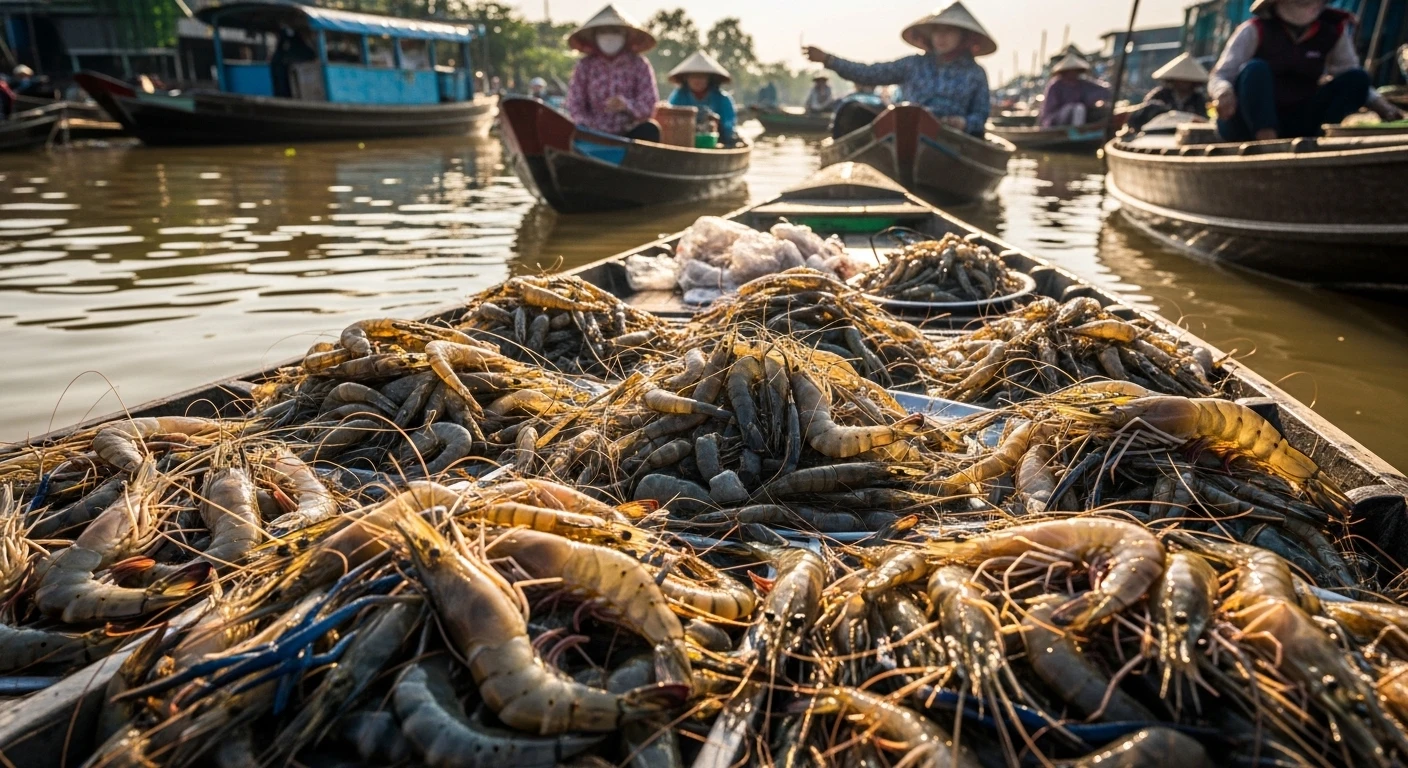
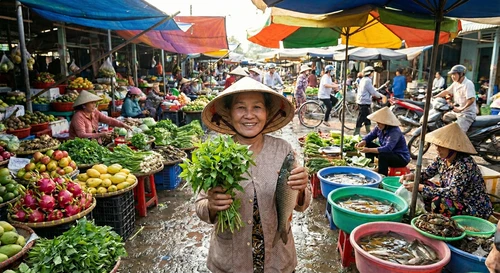
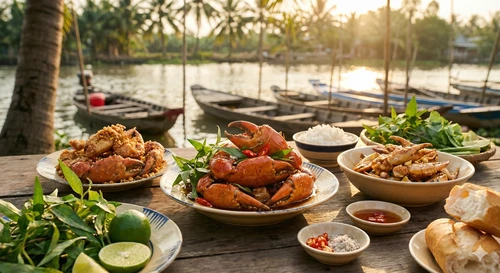
A vibrant tapestry of flavors: Exploring the diverse shrimp offerings at a Mekong Delta market.
7 From Barbecues to Riverbank Feasts: Culinary Traditions
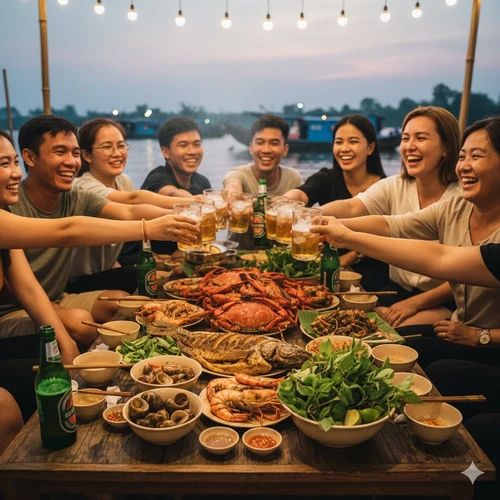
In Australia, prawns are the lifeblood of summer gatherings. The barbecue is king, where prawns are grilled whole, skewered, or tossed into salads. It’s about communal dining, a relaxed atmosphere, and the joy of sharing a seasonal treat. The ritual is simple: cook, peel, dip, and enjoy.
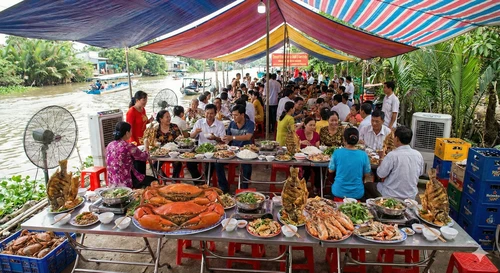
In the Mekong Delta, shrimp culture is woven into a more diverse culinary tapestry. While grilling is popular, the spectrum of preparation is vast. Imagine sitting by a riverbank, sharing a communal pot of steamed shrimp with lemongrass and chili, or savouring a complex noodle soup where shrimp are a key flavour component. Vietnamese hospitality often means sharing these dishes generously, with an array of dipping sauces and fresh herbs that encourage interaction and engagement with the food.
The experience extends beyond just eating. In Ca Mau and other southern provinces, participating in a local meal often means understanding the journey of the shrimp from pond to plate. It's about appreciating the labour, the environment, and the cultural significance. For a traveller, diving into a Mekong Delta meal isn't just about sustenance; it's an immersive cultural encounter, a chance to connect with the people and their profound relationship with the water.
8 Why Visit Vietnam for Your Next Shrimp Adventure?
If you're a seafood enthusiast, especially a lover of prawns and shrimp, the Mekong Delta offers an unparalleled journey. It's a chance to move beyond the familiar and explore a world where shrimp culture is not just about consumption, but about heritage, sustainability, and the very essence of life in a water-rich landscape.
Imagine: waking up to the gentle sounds of a river market, learning about mangrove shrimp farming firsthand, tasting the freshest Ca Mau black tiger shrimp plucked straight from the water, or indulging in a rich Mekong giant prawn grilled over an open fire. This is an opportunity to engage with a culinary tradition that is both deeply authentic and incredibly diverse.
While Australia's prawns are undeniably delicious and a celebrated part of its identity, Vietnam's Mekong Delta presents a different, yet equally compelling, narrative. It’s a story of resilience, adaptation, and a symbiotic relationship with the aquatic world. For the adventurous palate and the curious traveller, the call of the delta's shrimp is one that resonates with authenticity, flavour, and a profound connection to place.
The Verdict: Two Worlds, One Love for Shrimp
Ultimately, both Australia and Vietnam offer world-class shrimp experiences, each with its own unique charm and flavour. Australia's prawns evoke sun-drenched coastlines and celebratory feasts, a testament to its pristine marine environment. Vietnam's Mekong Delta, however, offers a deeper, more integrated dive into shrimp culture – one that encompasses livelihoods, ancient traditions, diverse ecosystems, and a culinary versatility that is as boundless as the river itself.
For the discerning traveller and food lover, the adventure doesn't end with appreciating the familiar. It begins when you explore the nuances, the different terroirs, and the distinct cultural stories that make each region's seafood so special. The Mekong Delta's shrimp await, ready to reveal their secrets and offer a taste of a world where these crustaceans are not just food, but the very lifeblood of a vibrant landscape.