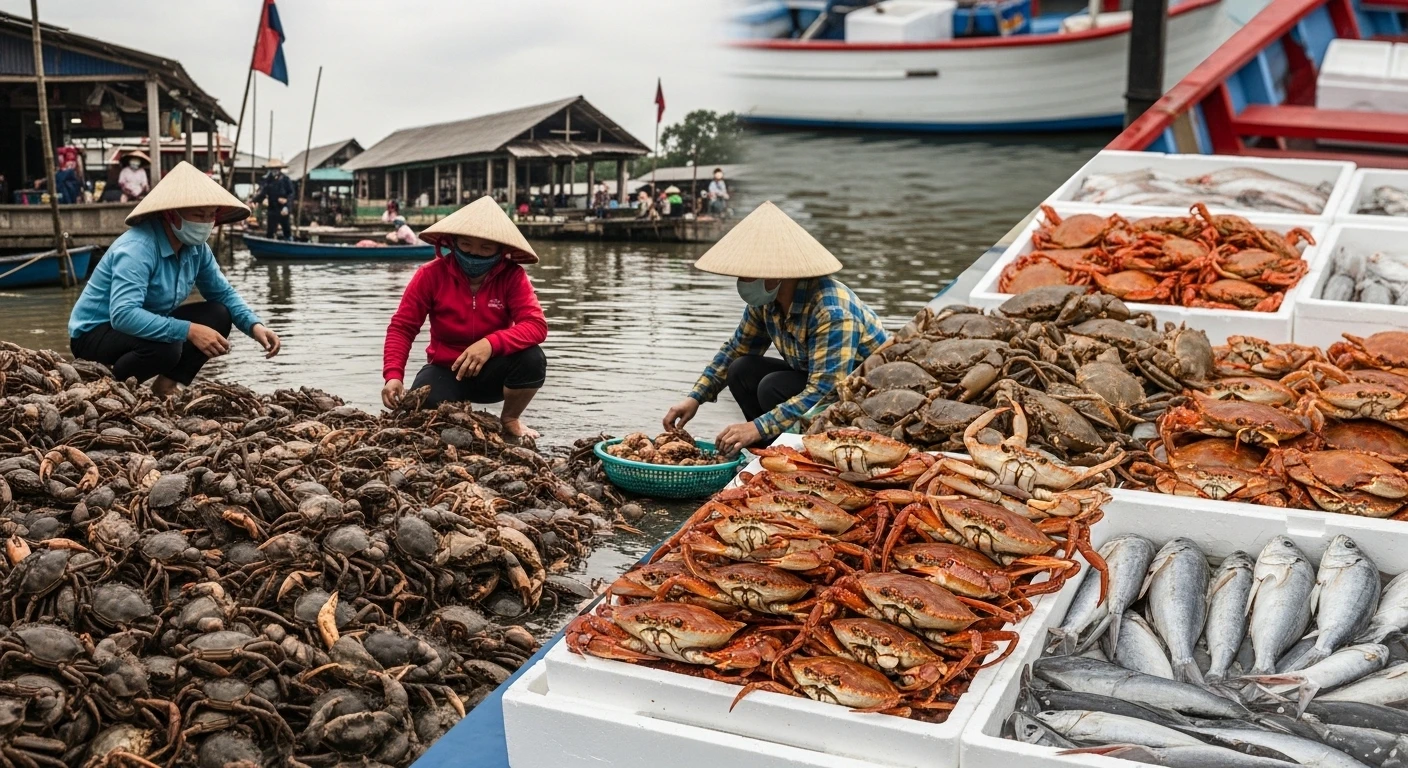
The World of Crab: Two Extremes
" The ocean's bounty is vast and varied, and few creatures exemplify this diversity as profoundly as the crab. From the icy, pristine waters of the Norwegian coast to the warm, brackish embrace of Vietnam's Mekong Delta, the humble crab offers a universe of flavor and culinary tradition. "
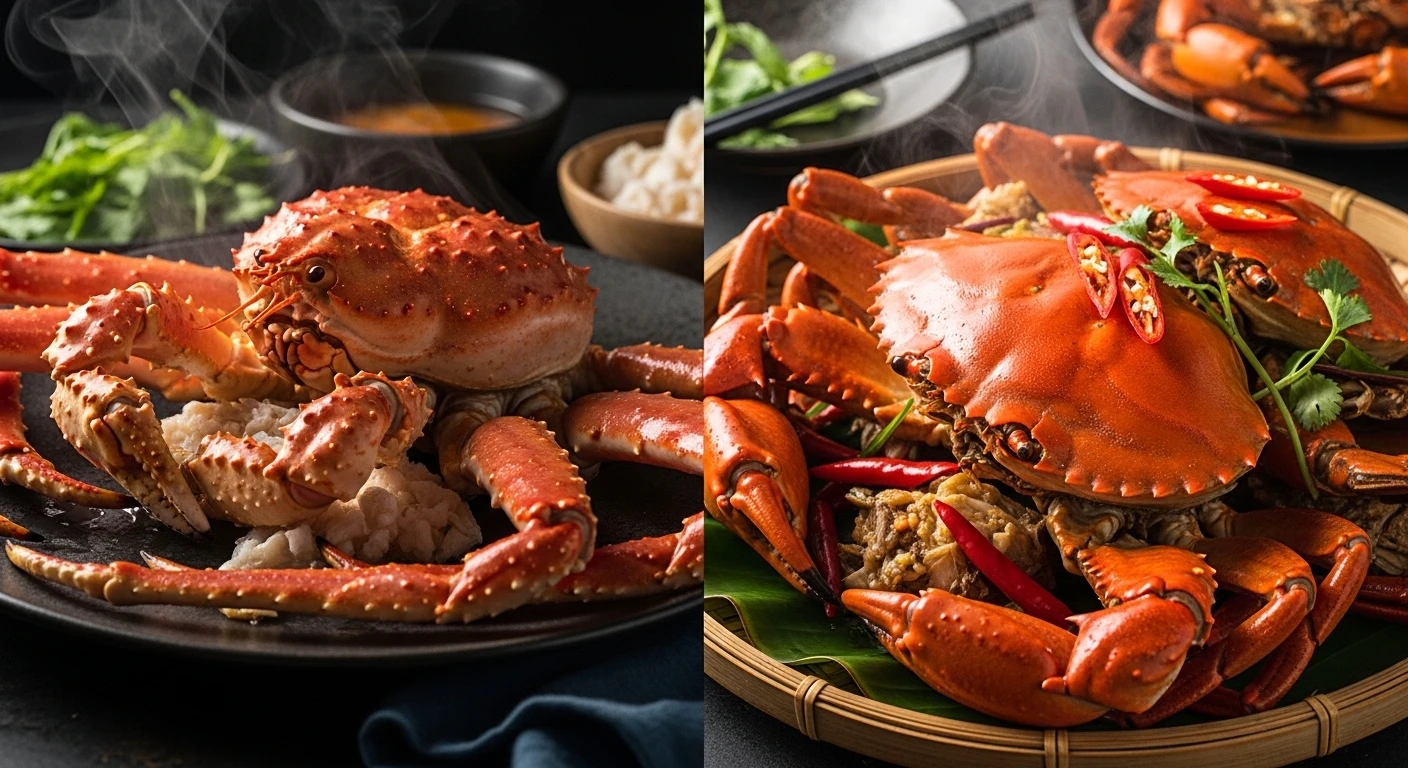
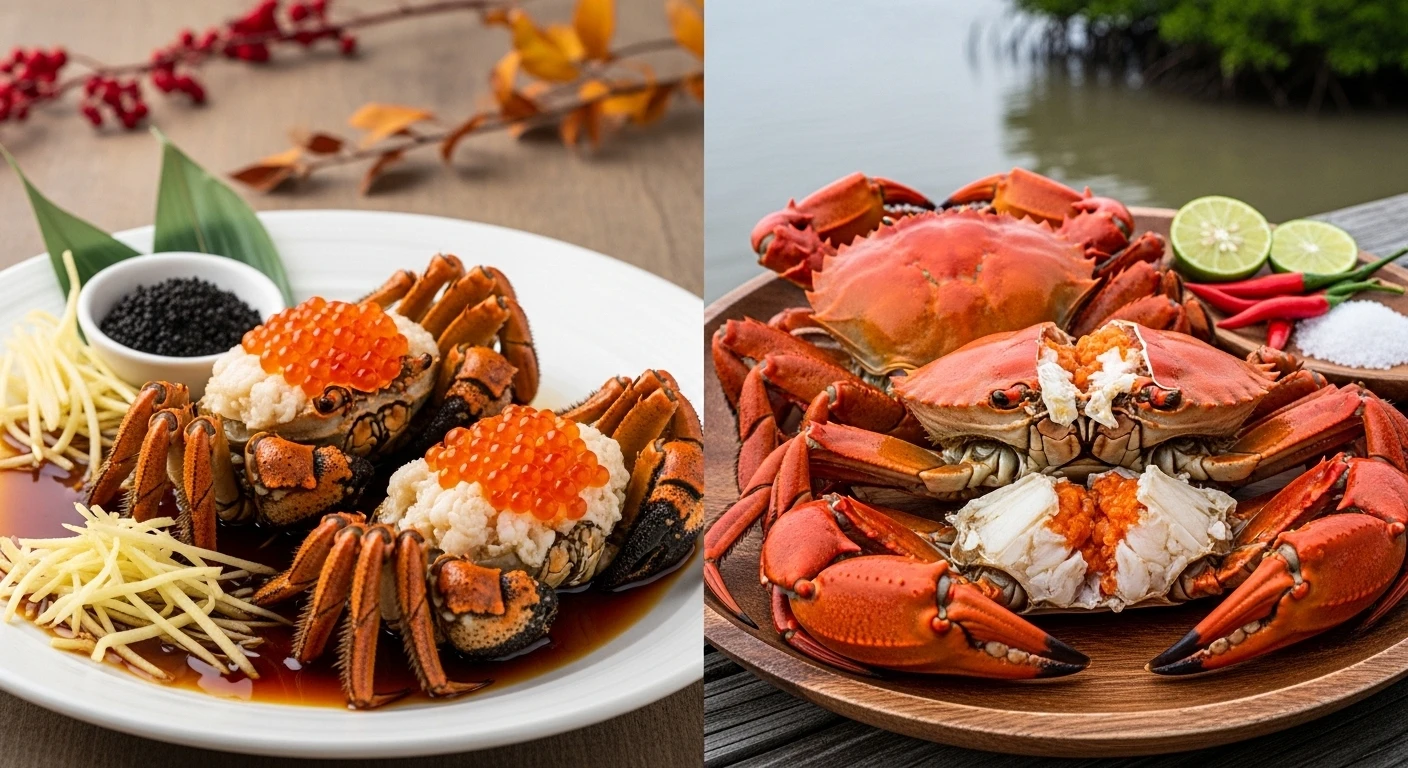
📸 Comparing two distinct crab worlds.
1 Norway: The Arctic Benchmark
Norway's coastline is a testament to nature's purity. For centuries, its people have harvested the ocean's gifts from waters so cold and clean they seem almost untouched by the modern world. Here, crab is not just food; it's a symbol of resilience, a taste of the raw, untamed North.
Think of the Norwegian King Crab (Paralithodes camtschaticus). These giants, often weighing many kilograms, are the undisputed rulers of their domain. Their meat is famously firm, dense, and subtly sweet, with a clean, oceanic brine that speaks of their frigid habitat. Unlike the often complex preparations of warmer climes, Norwegian crab is frequently celebrated in its simplest forms: steamed, boiled, or lightly grilled, often served with just a dollop of mayonnaise or a squeeze of lemon.
This approach highlights a deep respect for the ingredient itself. The cold water slows the crab's metabolism, leading to denser muscle tissue and a less "fishy" aroma. The meticulous sustainability practices and the sheer quality of these cold-water crustaceans set an incredibly high bar. It’s about appreciating the pristine, the pure, and the powerful. It’s a flavor profile that’s as invigorating as a bracing Arctic wind.
2 Mekong Delta: Tropical Intensity and Savory Depth
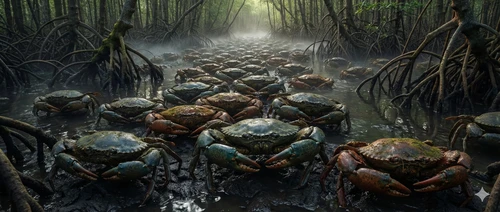
Now, cast your gaze south, to the vast, life-giving network of rivers and canals that is Vietnam's Mekong Delta. This is a landscape of lush greenery, winding waterways, and a vibrant culture intrinsically linked to the water. Here, the crab is a different beast altogether – the hardy, prolific mud crab (Scylla serrata) that thrives in the brackish waters where freshwater rivers meet the salty sea.
These crabs, often from the Ca Mau province, the southernmost tip of Vietnam, are not necessarily about sheer size, but about an intense, concentrated flavor. Their habitat—a mix of mangrove forests, tidal flats, and estuary waters—imparts a unique, savory depth. The meat is tender, often sweeter than its Norwegian counterpart, with a creamy richness, especially in the roe of female crabs.
In Ca Mau, the mud crab is more than just sustenance; it’s a cornerstone of local cuisine and livelihood. Fishermen navigate the labyrinthine waterways, often relying on traditional knowledge passed down through generations to catch these prized crustaceans. The culture around crab here is one of community, of bustling riverside markets where the day's catch is traded, and of shared meals that celebrate the ocean's generosity.
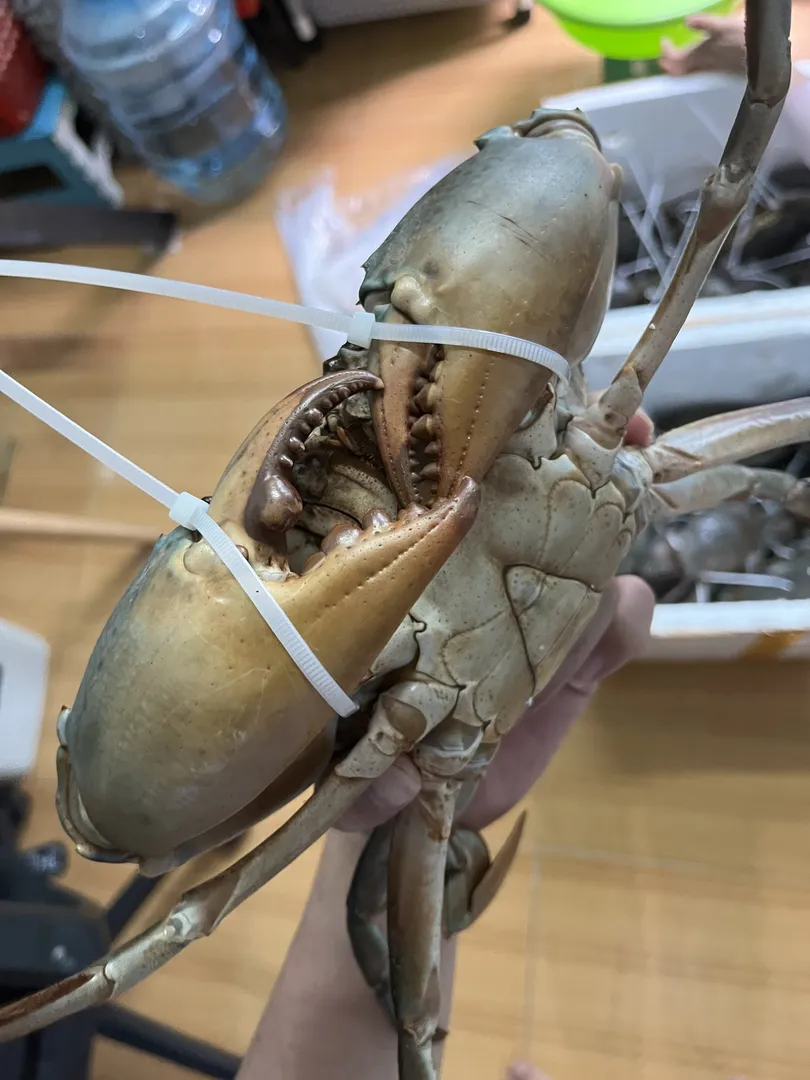
Heritage Ingredient
Ca Mau Jumbo Mud Crab
Ca Mau Jumbo Mud Crab
A large male mud crab prized for dense, sweet meat and thick claws, commonly used in steamed crab and grilled crab dishes across the Mekong Delta.
An icon of coastal culinary heritage, featuring firm, sweet meat that captures the raw power and freshness of Ca Mau's tides.
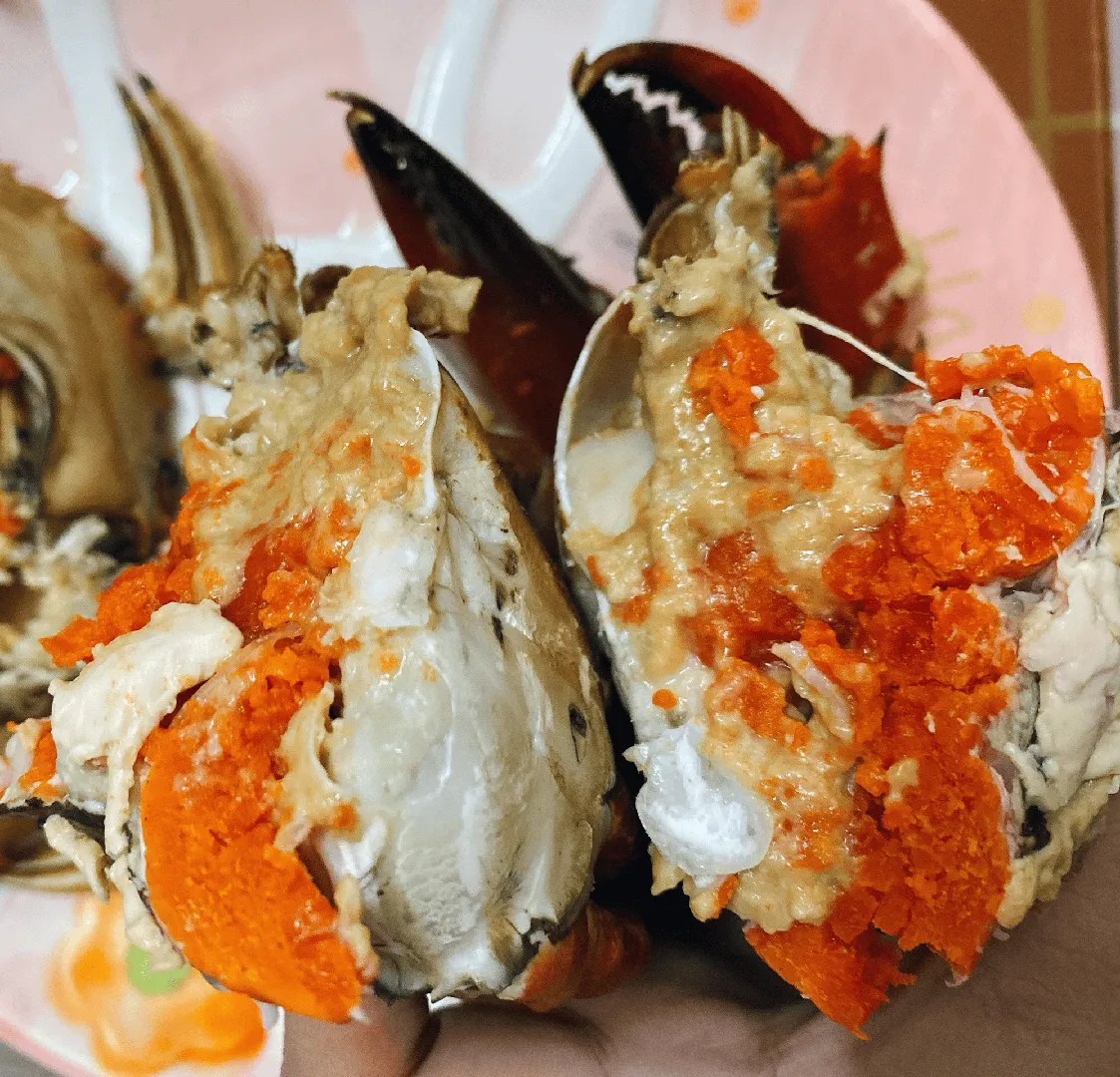
Heritage Ingredient
Ca Mau Roe Mud Crab
Ca Mau Roe Mud Crab
A female mud crab known for deep orange roe and a rich, creamy finish, often featured in celebratory Southern Vietnamese seafood meals.
A crimson treasure hidden within a shell, boasting rich, creamy roe that melts on your tongue like a golden sunset over the delta.
The preparation of Mekong Delta crab often leans into this inherent richness. While steaming is common, you'll also find it celebrated in dishes like crab stir-fried with tamarind, grilled crab with salted egg yolk, or in fragrant hot pots. These dishes amplify the crab's natural flavor with bold, aromatic spices, herbs, and sauces that are hallmarks of Southern Vietnamese cuisine.
3 Flavor, Texture, and Terroir: The Devil's in the Details
When we place Norwegian King Crab and Ca Mau Mud Crab side-by-side, the contrasts are stark, yet equally compelling:
Norwegian Crab
- Flavor Profile: Clean, subtly sweet, oceanic brine. Pure essence of the cold sea.
- Texture: Dense, firm, almost steak-like meat, particularly in the legs.
- Habitat: Arctic, sub-Arctic, deep cold waters. Pristine, minimal brackish influence.
- Cooking Style: Minimalist. Steamed, boiled, raw. Focus on preserving natural purity.
- Cultural Context: Symbol of the rugged North, hard work, and respect for abundant, high-quality resources.
Mekong Delta Crab
- Flavor Profile: Rich, savory, deeply sweet, with notes of the estuary and mangrove.
- Texture: Tender, succulent, with a delightful creaminess, especially in the roe.
- Habitat: Brackish waters, mangrove forests, tidal estuaries. A complex blend of fresh and saltwater.
- Cooking Style: Embraces bold flavors. Stir-fries, grills, hot pots, often with vibrant sauces and spices.
- Cultural Context: Integral to daily life, market culture, family gatherings, and regional identity.
The Norwegian crab is a champion of purity, a testament to how cold, clean waters can produce a singular, unadulterated taste. It's the haute cuisine of the crab world, where simplicity is key. The Mekong Delta crab, on the other hand, is a celebration of intensity and complexity. Its habitat imparts a more robust, layered flavor that stands up beautifully to the dynamic culinary traditions of Southern Vietnam.
4 Culture on a Plate: Beyond the Shell
The way crab is integrated into daily life and culinary rituals tells a story about a place.
In Norway, a grand presentation of a whole King Crab might be a celebratory meal, an event reserved for special occasions. It speaks of abundance and the sea's immense power. Diners often gather around, meticulously extracting every piece of meat, savoring the distinctively clean flavor. The experience is one of appreciating a prized, solitary prize.
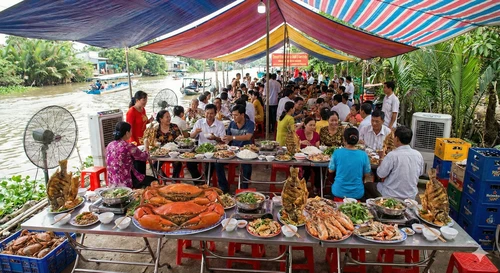
Contrast this with the Mekong Delta. Crab here is woven into the fabric of everyday life. Visit a floating market near Can Tho, and you’ll see vendors selling freshly caught crabs alongside vibrant produce. Riverside restaurants in Bac Lieu or Soc Trang will have live tanks where diners can choose their crab. The communal aspect is paramount. Dishes are often shared, served family-style, accompanied by rice, herbs, and dipping sauces. It’s a more boisterous, convivial experience, where the crab is a catalyst for connection and shared enjoyment.
The very act of purchasing crab in Vietnam is often a sensory overload – the bustling markets, the calls of vendors, the vibrant colors, the humid air thick with the scent of seafood and spices. This immersive market culture is as much a part of the crab experience as the eating itself.
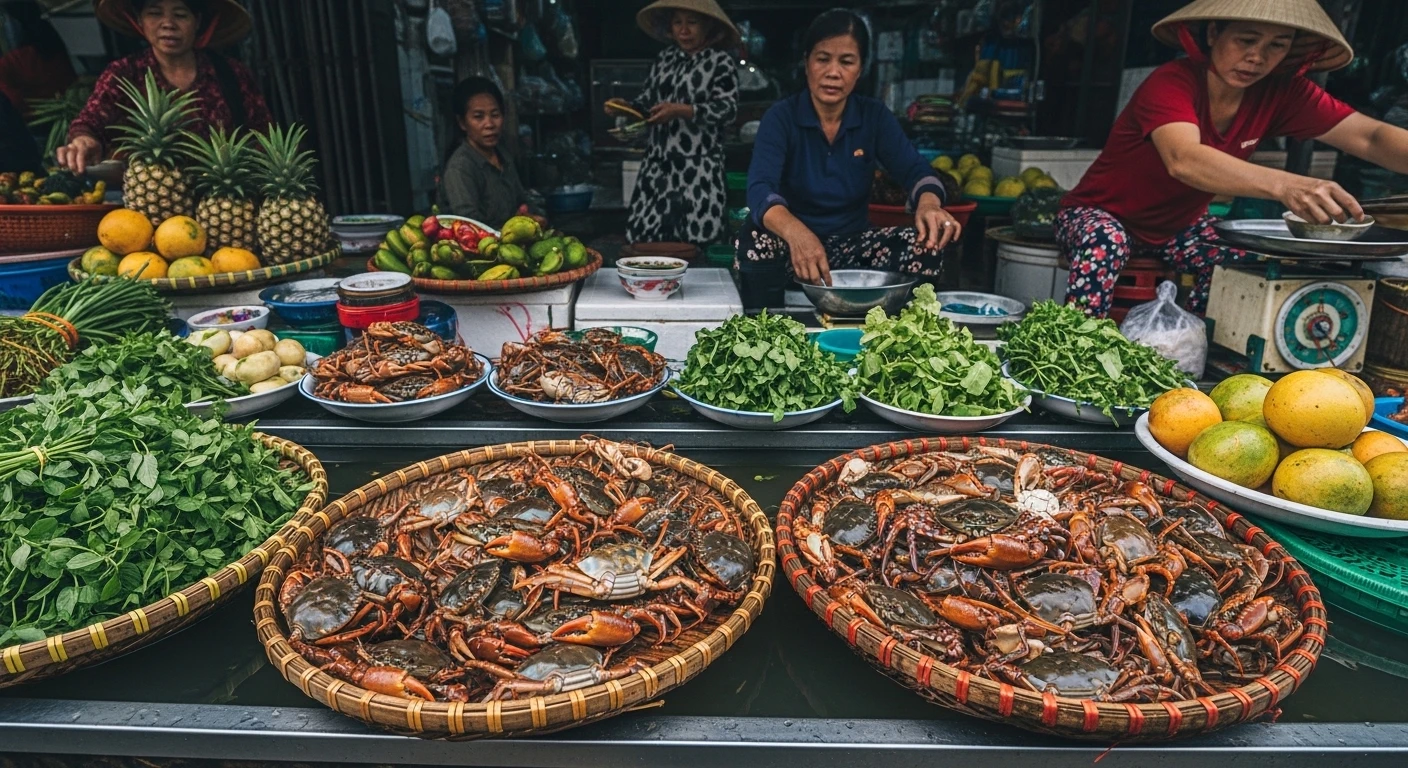
📸 A lively river market in the Mekong Delta, showcasing the abundance of fresh produce and seafood.
5 Taste on a Budget: Value and Accessibility
For many travelers, price and accessibility are key considerations. Here too, the two destinations present different landscapes.
Norwegian King Crab, due to its size, limited range, and premium positioning, is typically a significant investment. It's a luxury item, a special treat that commands a higher price tag, reflecting its exclusivity and the rigorous standards of its harvest.
In the Mekong Delta, mud crabs are a more everyday luxury, readily available and far more affordable for both locals and visitors. While premium grades of Ca Mau crab can still be expensive, the average mud crab offers incredible value for its intense flavor and culinary versatility. This accessibility means that enjoying delicious, freshly prepared crab is a common, delightful part of a Vietnamese travel experience, not an infrequent indulgence.
6 A Taste of Ca Mau: Embrace the Delta's Flavors
If your palate yearns for a crab experience that is rich, diverse, and deeply rooted in its environment, the Mekong Delta awaits. Visiting Ca Mau, Bac Lieu, or Soc Trang offers a chance to connect with the source of this incredible seafood.
Imagine starting your day at a local market, selecting your crab fresh from the water. Then, heading to a family-run eatery where it's transformed into a fragrant dish, perhaps steamed with lemongrass and chili or grilled to perfection. The experience is authentic, unpretentious, and utterly delicious.
The savory density of Mekong Delta mud crab, its tender meat, and the vibrant cultural tapestry it's a part of, offer a profound contrast to the clean, cold purity of Norwegian crab. Both are exceptional, but the Delta provides an immersion into a world where seafood is not just eaten, but lived.
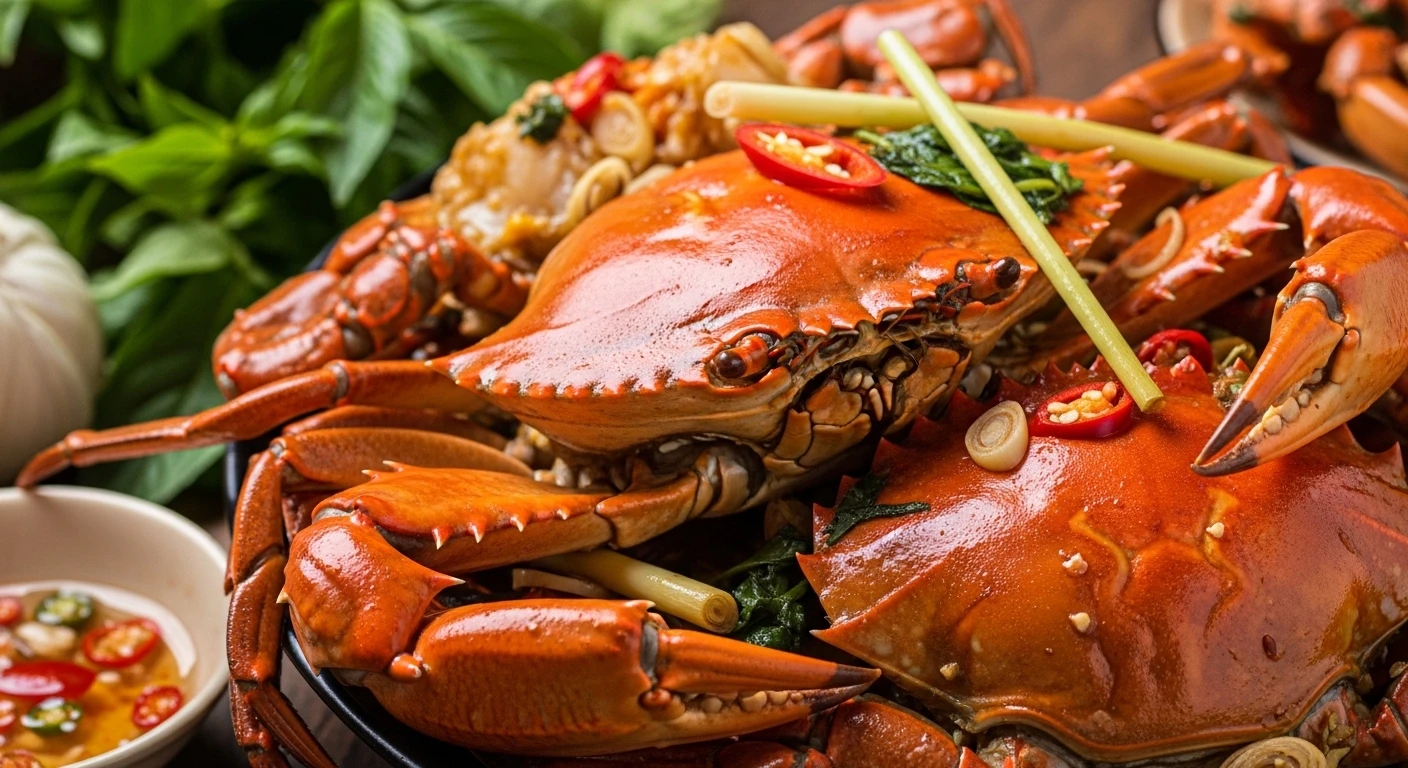
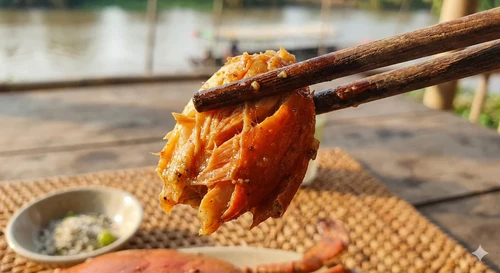
📸 Tender, flavorful Mekong Delta mud crab, a staple of Southern Vietnamese cuisine.
7 A Global Feast: Appreciating Every Crab
Ultimately, comparing Norwegian and Vietnamese crab is not about declaring a winner, but about appreciating the incredible diversity that nature and human culture bring to our tables. The clean, bracing sweetness of Arctic crab and the intense, savory richness of Delta crab are both masterpieces in their own right.
For the adventurous palate, exploring these differences is a journey. Norway offers a taste of the pristine, a benchmark of cold-water perfection. Vietnam, particularly the Mekong Delta, provides an immersion into a vibrant culinary landscape where crab is central to life and flavor. Both experiences are profound, unforgettable, and a true testament to the world's diverse and delicious crab cultures.
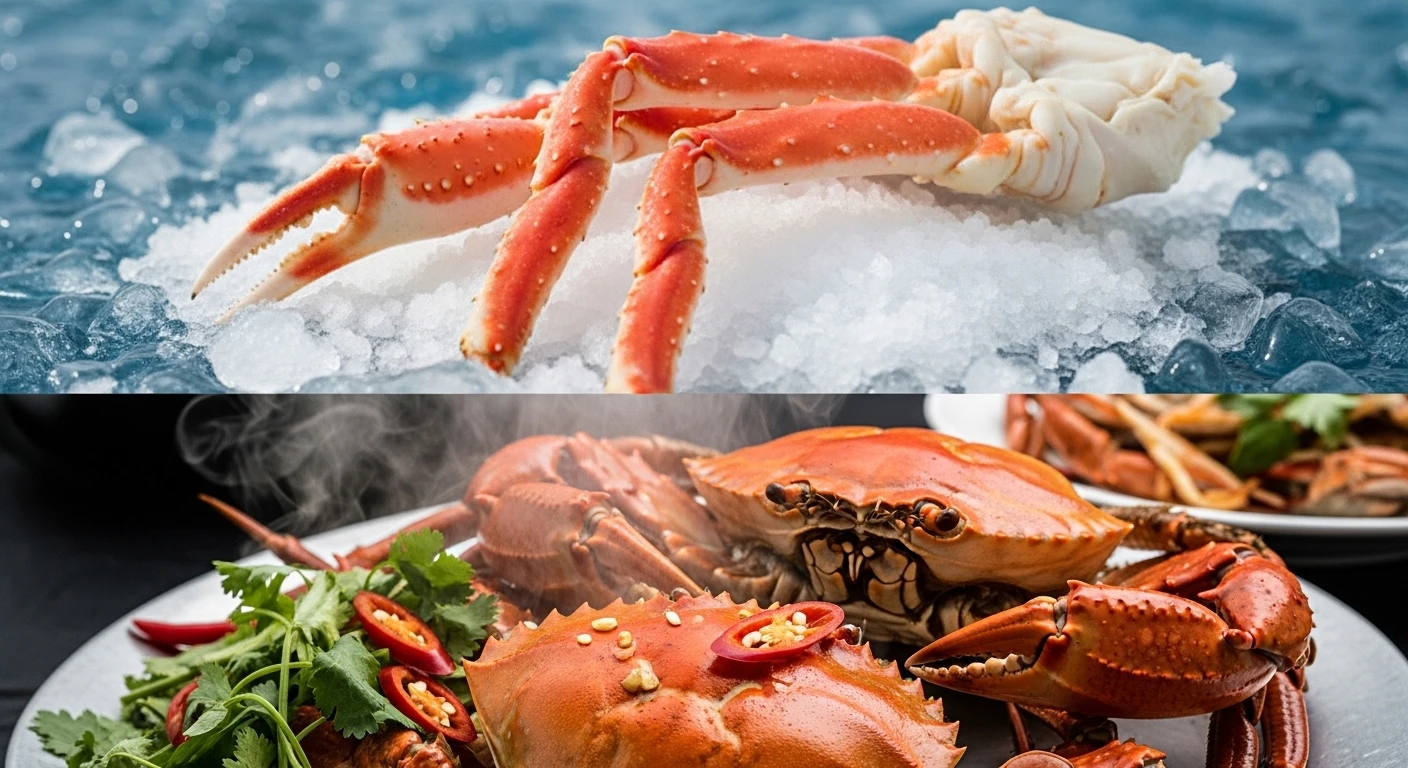
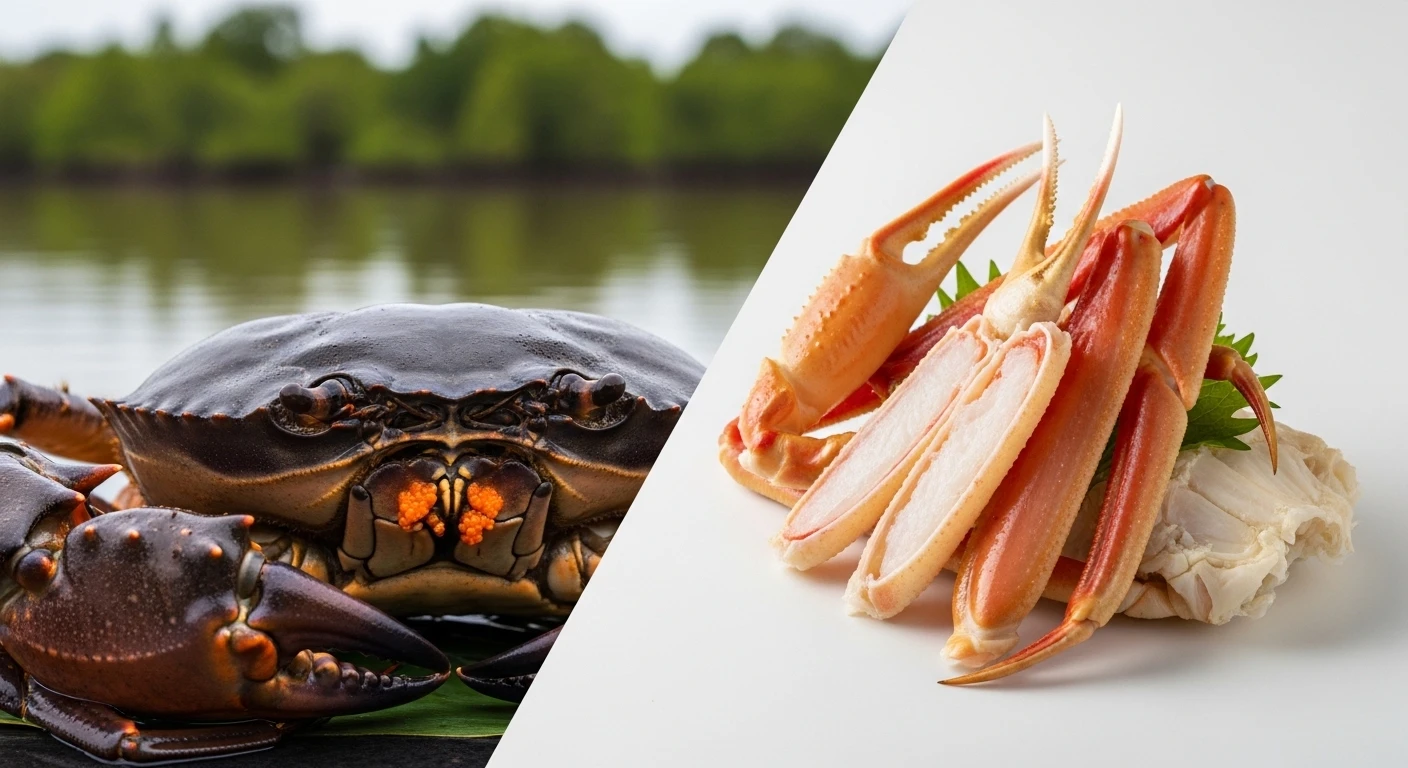
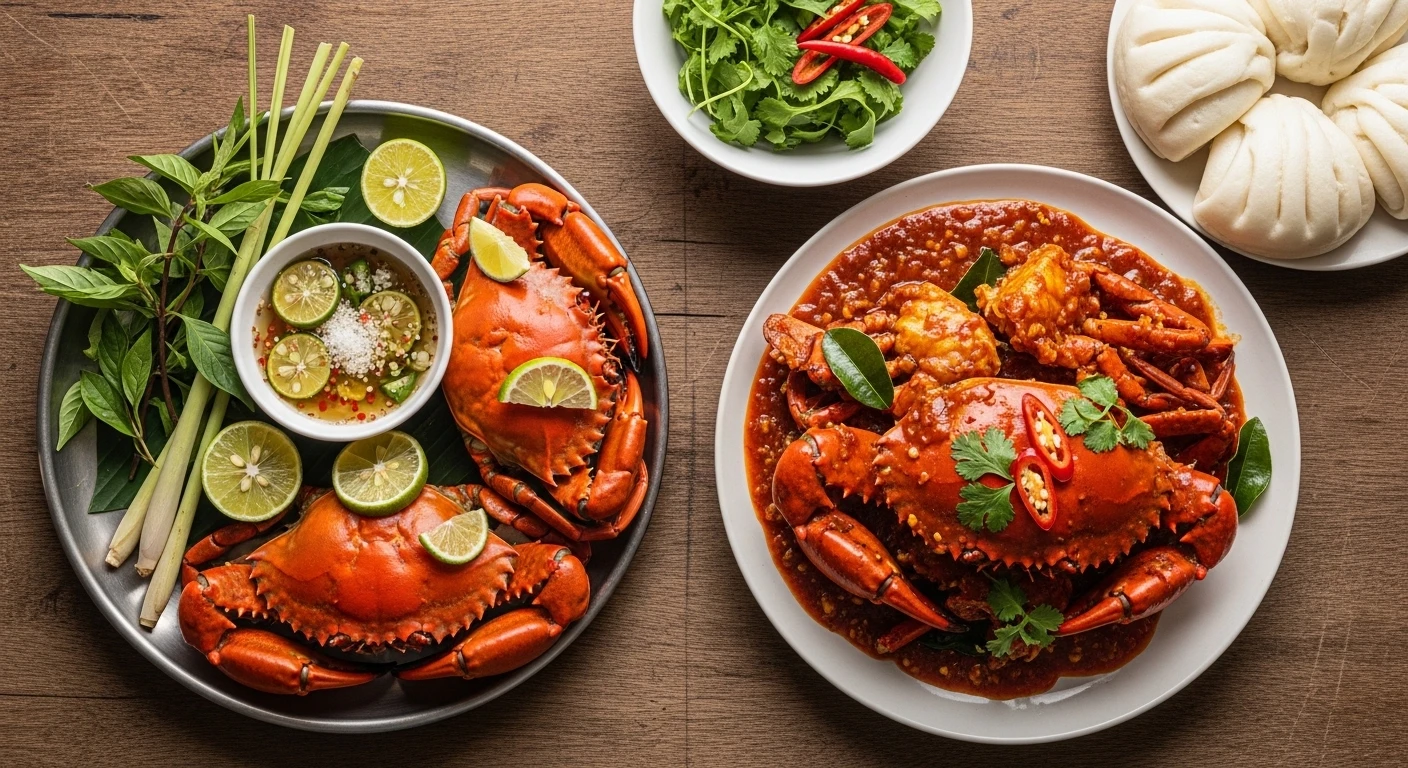
📸 A visual feast: Contrasting the iconic cold-water King Crab with the vibrant flavors of the Mekong Delta.
So, whether you find yourself dreaming of icy fjords or humid riverbanks, remember that the world of crab is an expansive one, waiting to be explored, one delicious shell at a time.