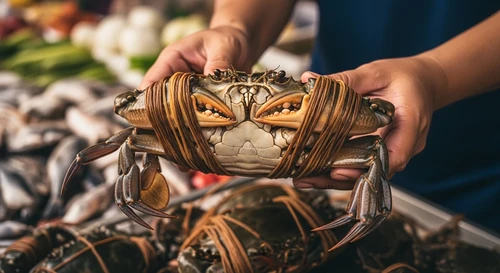
" There are few things more disappointing than cracking open a beautiful, promising crab to find... air. A culinary betrayal. But here, in the Mekong Delta, we’ve learned a secret: a simple press, a knowing touch, that separates the plump prize from the empty promise. "
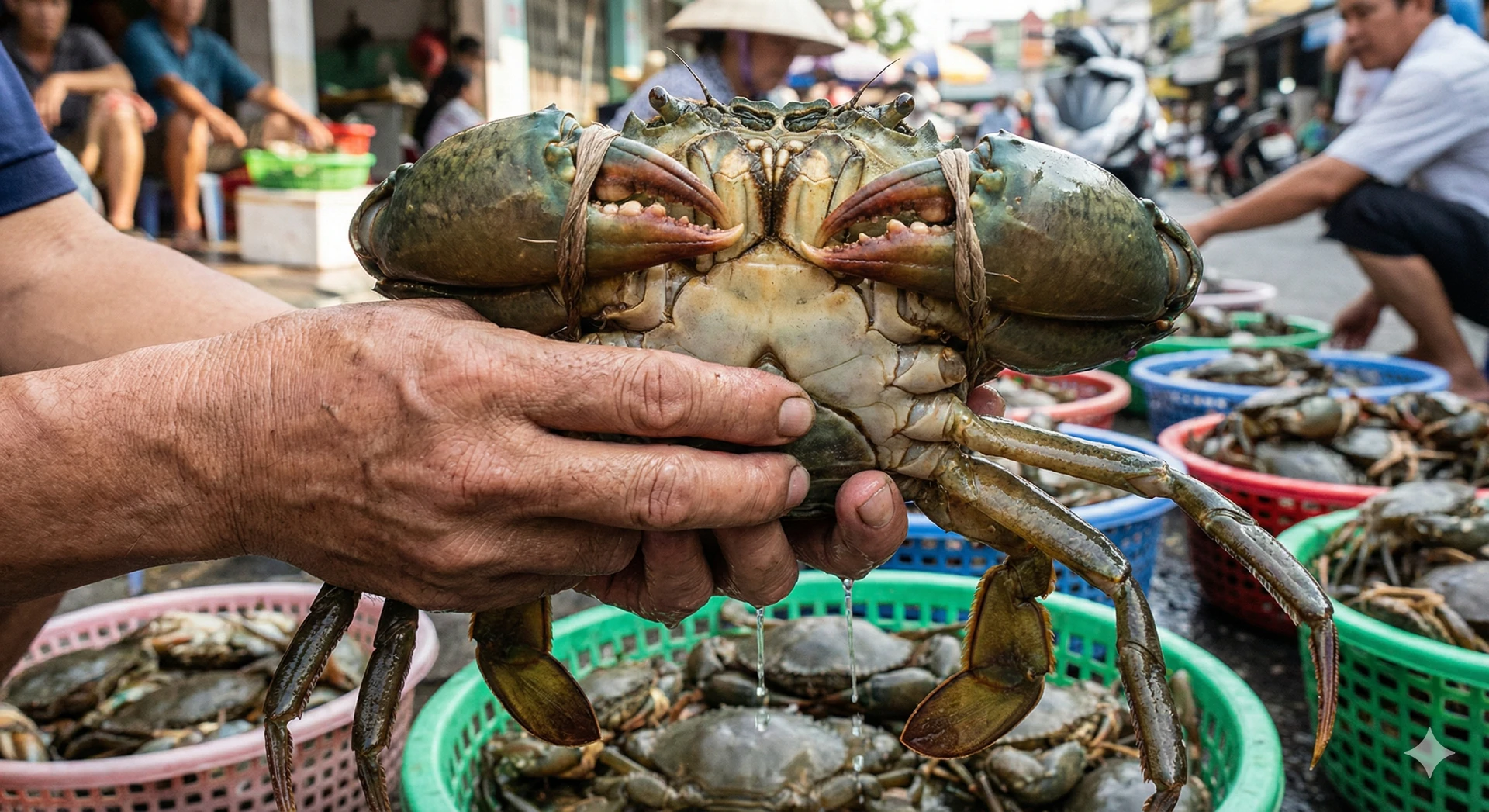
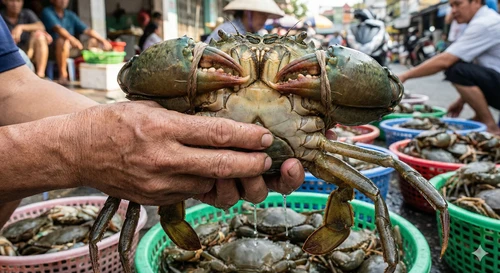
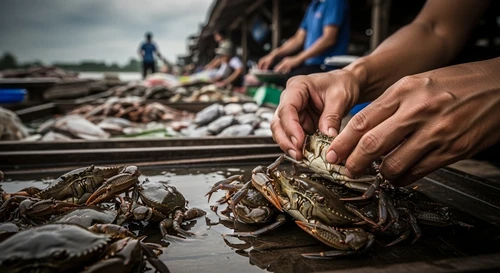
📸 The moment of truth: A careful hand inspecting a live mud crab for fullness.
1 The Crab Whisperers of the Mekong
The Mekong Delta is a labyrinth of waterways, a place where life revolves around the tides and what they bring. Here, fishing isn't just a livelihood; it's a way of life, an inherited wisdom passed down through generations. And among the delta's many culinary treasures, the crab stands supreme. These aren't your average supermarket specimens; these are powerful, wild creatures thriving in the nutrient-rich mud and brackish waters. But even the most pristine environment can yield a hollow crab. That's where the old-timers, the market veterans, become guides. They possess an almost telepathic connection with the crustaceans, a skill born from decades of observation and, crucially, touch. This "Press Test" is their secret, and now, it's yours.
It’s about more than just avoiding disappointment; it’s about respect for the ingredient, for the journey it’s taken from the mangrove roots to your plate. A full crab is a testament to nature's bounty and a culinary reward beyond measure. A hollow one? Well, that's just a waste of good effort.
2 From Mud to Market: A Delta Dawn
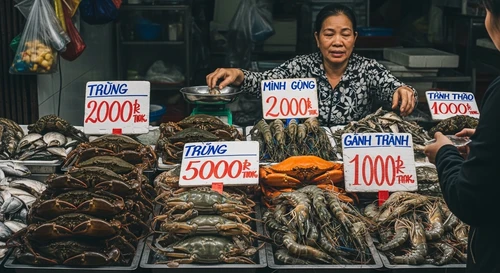
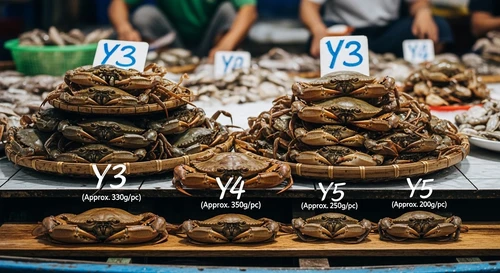
Imagine the cacophony of a delta morning market. The air is thick with the scent of fresh fish, pungent herbs, and the earthy aroma of the river itself. Piles of vibrant produce, live poultry clucking, and, of course, the star attraction: crabs. They sit in woven baskets, their claws bound, eyes darting, a formidable display of potential. You see mud crabs, sometimes called mangrove crabs – their shells ranging from mottled green to dark brown, often adorned with river mud. There are different sizes, different sexes, and wildly varying prices.
For the uninitiated, choosing can be a gamble. Many tourists, eager for the Mekong experience, simply point and pay, hoping for the best. But locals know better. They'll squat, observe, and, with a practiced motion, pick up crab after crab, applying their discerning touch. They're not just looking for signs of life; they're feeling for substance, for the promise of sweet, flaky meat and rich, unctuous roe. This is where the wisdom of the delta truly shines, where a simple technique can elevate a meal from good to legendary.
3 The Anatomy of Plumpness: Why Crabs Get Hollow
Before we dive into the "how," let's understand the "why." Crabs, like all crustaceans, grow by molting – shedding their old, restrictive shells for new, larger ones. This process is called ecdysis. Immediately after a molt, a crab's new shell is soft, and its body hasn't yet grown to fill the new space. It's in this vulnerable, post-molt stage that a crab will appear "hollow" or "thin." They actively absorb water to expand their new shell and begin the process of hardening it and filling it with meat.
A crab caught shortly after molting will have watery, sparse meat and feel disappointingly light for its size. Conversely, a crab that has had ample time to feed, recover, and grow into its shell before its next molt will be bursting with sweet, firm meat. Understanding this natural cycle is key to appreciating the science behind the "Press Test." We're essentially feeling for a crab that's fully "filled out" its current suit of armor.
It's nature's rhythm, and our job is simply to pick the crab that's in its prime.
4 The "Press Test" Revealed: Your Hands, Your Power
This is it. The moment of truth. With a careful yet firm hand, you can uncover the secret of the shell. There are two primary areas to focus on.
- The Belly (Underside Flap):
Flip the crab over. Locate the abdominal flap, which is the triangular (male) or broad, rounded (female) segment tucked against the underside of the shell. This is your first crucial spot.
How to do it: Gently but firmly press the edge of this flap inwards, towards the center of the crab, using your thumb.
What to look for:
- Full crab: You will feel a distinct firmness, a resistance indicating a tightly packed body cavity. It should feel solid, almost like pressing a ripe avocado.
- Hollow crab: You'll feel a softness, a squishiness, or even a slight give and recoil. This indicates water or air inside, not meat.
- The Carapace Sides (Top Shell):
Now, turn the crab upright again. Focus on the sides of the main shell (carapace), just above where the legs attach.
How to do it: Using your thumb and forefinger, gently squeeze the sides of the shell. You're not trying to crush it, just apply a light, consistent pressure.
What to look for:
- Full crab: The shell will feel hard and unyielding. There will be no give, a clear sign the meat has filled the shell.
- Hollow crab: You might feel a slight flex or sponginess in the shell itself. This is a tell-tale sign of a recently molted crab that hasn't hardened or filled out yet.
Practice makes perfect. The more crabs you examine, the more intuitive this "Press Test" will become.
5a Male vs. Female: A Note on Crab Roe
While the "Press Test" applies universally, knowing the sex of your crab can influence your choice, especially if you're a fan of crab roe.
- Female Crabs: Easily identified by their broad, rounded abdominal flap (often referred to as the "apron"). If full, a female crab, especially during spawning season, will contain rich, orange roe (coral) in addition to its meat. This is a prized delicacy.
- Male Crabs: Have a narrower, triangular abdominal flap. They tend to have more meat in their claws and body, but no roe.
Both sexes can be delicious, but for those seeking the buttery richness of roe, a heavy, firm female crab is the ultimate prize. The "Press Test" will confirm the fullness of both meat and, in the case of females, the potential for roe.
6 Beyond the Press: Other Telltale Signs of a Winner
The "Press Test" is your primary weapon, but a seasoned crab connoisseur employs a holistic approach. Combine the touch with these visual and sensory cues for absolute confidence in your selection:
- Weight: Pick up the crab. Does it feel disproportionately heavy for its size? A heavy crab is almost always a full crab. A light crab is a sign of emptiness, regardless of its dimensions.
- Activity: A lively, feisty crab is a healthy crab. Its eyes should be alert, and its legs and claws should show movement (even if bound). Avoid sluggish or motionless crabs. Freshness is paramount.
- Color: The shell should have a natural, vibrant color typical of its species (mud crabs usually dark green, brown, or mottled). Avoid crabs with faded, dull, or discolored shells, which can indicate poor health or an impending molt.
- Smell: This is fundamental for any seafood. A fresh crab should smell of the clean ocean or brackish water – briny, slightly sweet. Absolutely no strong "fishy" or ammonia-like odors. If it smells off, walk away.
- Shell Condition: Look for a hard, intact shell. While minor battle scars are common for wild crabs, avoid those with visibly damaged or severely cracked shells, which could indicate a weakened state or even decay.
7 Bringing Your Bounty Home: The Journey Continues
You’ve mastered the art of selection, now ensure your prized catches remain at their peak. Live crabs are best, and keeping them alive until cooking is crucial for optimal flavor and texture.
Transportation: If you're buying from a local market, vendors will usually bind their claws for safety. Transport them in a cool, dark place. A damp cloth over the basket helps keep them moist without suffocating them. Avoid direct sunlight or extreme heat.
Storage at Home: The refrigerator is your friend. Place the live crabs in an open container (like a cooler without ice, or a bucket with a damp cloth), covered loosely, in the coldest part of your fridge. Do NOT store them submerged in water; they will drown. Stored correctly, mud crabs can often survive for a day or two, though cooking them the same day you buy them is always recommended for the absolute freshest taste.
Remember, dead crabs should be cooked immediately if they were alive when purchased, but ideally, you want to cook them while they are still living for the best flavor and safety.
8 The Grand Feast: Rewarding Your Diligence
After all that meticulous selection, your reward is a crab so succulent, so sweet, it needs little adornment. The Mekong Delta respects the inherent flavor of its seafood, opting for simple preparations that allow the crab to sing.
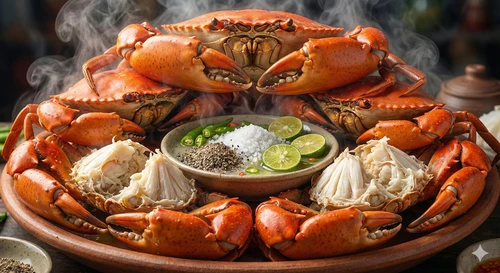
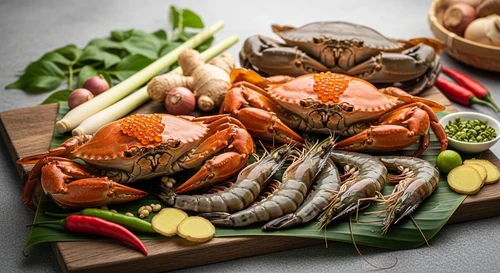
- Steaming with Lemongrass and Beer: A quintessential delta preparation. The gentle steam infused with aromatic lemongrass and a hint of beer (which tenderizes and neutralizes odors) brings out the crab's natural sweetness without overwhelming it. Served with a simple lime-salt-pepper dipping sauce. (See our related guide on Steamed Crab with Beer & Lemongrass).
- Grilled Crabs (Cua Nướng): For a smoky, caramelized crust, whole crabs are simply grilled over charcoal. The shell crackles, the meat inside becomes unbelievably tender, and the char adds a layer of depth.
- Tamarind Crab (Cua Rang Me): For those who crave bold flavors, this iconic dish tosses stir-fried crab in a tangy, savory, sweet tamarind sauce with garlic and chili. It's messy, glorious, and utterly addictive. (If you like this, check out our guide on Vietnamese Tamarind Crab).
No matter the preparation, knowing your crab is full transforms a meal into an experience.
Mastering the Delta's Delicacies
In the end, the "Press Test" isn't just a trick; it's an entry point into a deeper appreciation of food. It connects you to the wisdom of generations, to the rhythm of the Mekong, and to the sheer joy of a perfectly chosen ingredient. So, the next time you find yourself staring down a basket of live crabs, remember what you've learned. Feel the shell, trust your hands, and prepare for a truly exceptional culinary adventure. Your palate will thank you.