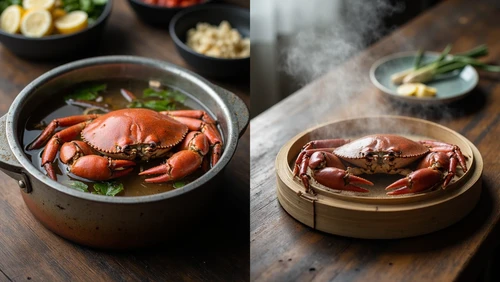
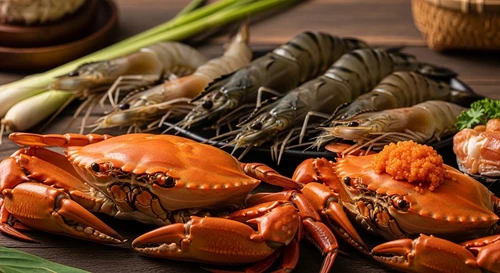
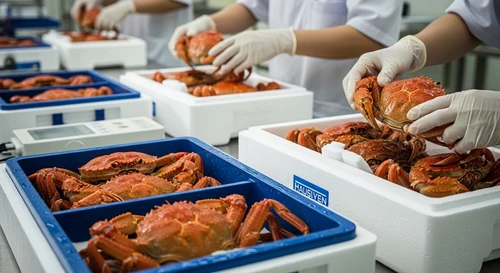
" There's a particular kind of joy that comes from primal eating, from getting your hands dirty, and from knowing you've conquered a culinary challenge. Eating mud crab in the Mekong Delta isn't just a meal; it's a declaration. A messy, glorious declaration of flavor and fortitude. "
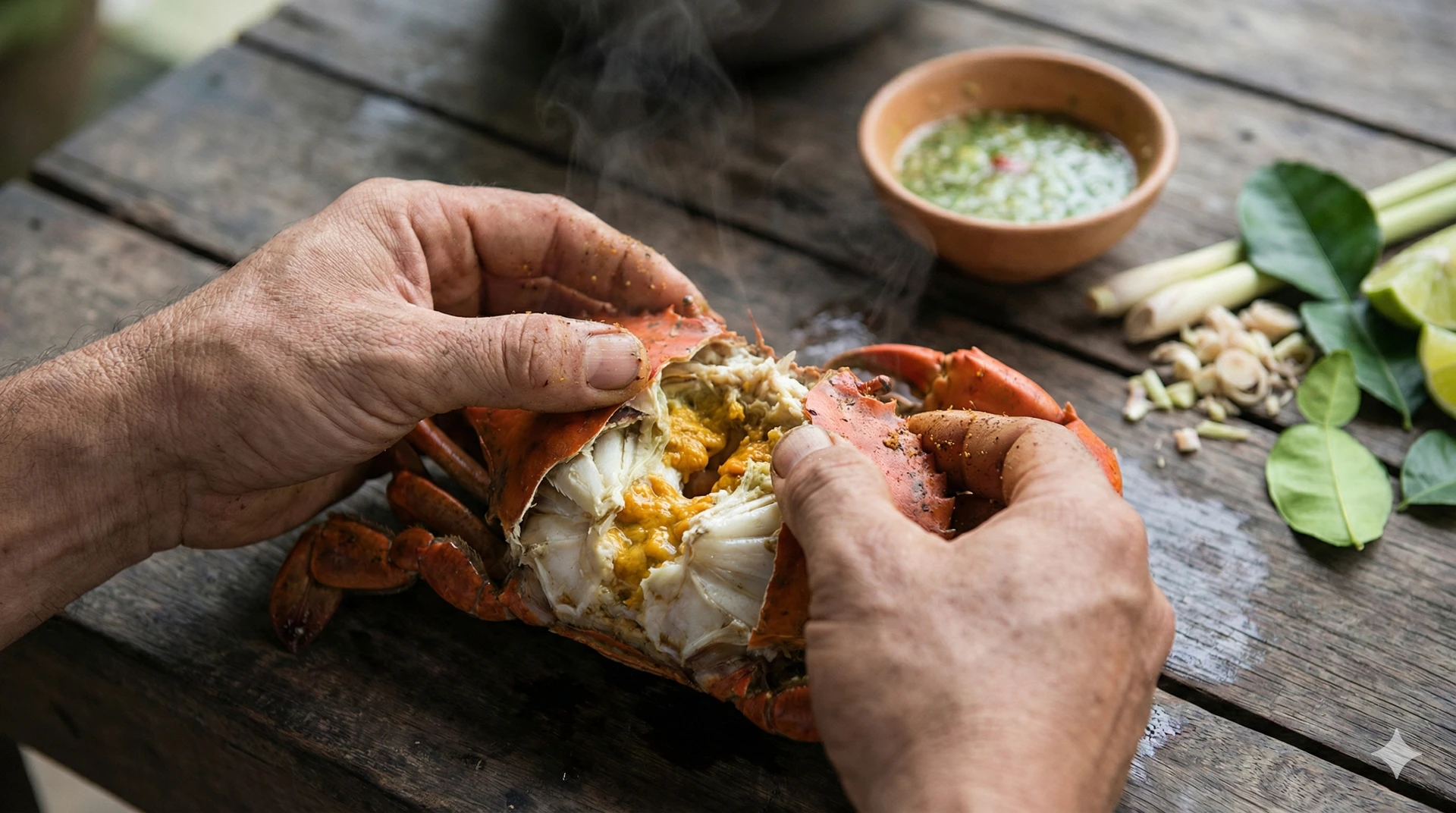
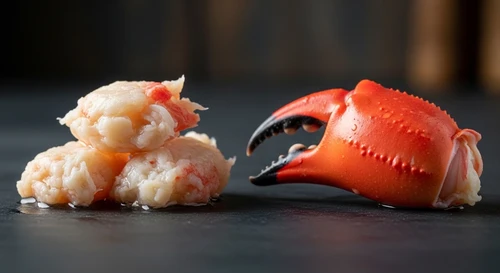
📸 The reward: Succulent meat, rich roe, and the satisfaction of a challenge met.
1 The Rite of Passage: Embracing the Mud Crab
The Mekong Delta, a labyrinth of rivers and canals, is a land of abundance. Here, life revolves around water, and its treasures are celebrated with unbridled passion. Among these, the mud crab (known locally by various names, but let's stick to English to keep it simple and universally appealing) stands supreme. It's not just a dish; it's an institution, a symbol of the Delta's rustic charm and culinary prowess. For the uninitiated Western palate, eating a whole mud crab can seem daunting. But fear not, for this is your definitive guide to unlocking every morsel of its sweet, briny meat.
This isn't a meal for the faint of heart, nor for those adverse to getting a little messy. This is an immersive experience that connects you directly to the source, to the very essence of the Delta. When you're done, your fingers will be sticky, your face might have a smear of sauce, and your soul will be utterly content. The goal? To extract every single, glorious bit of meat without leaving a crumb behind. It's a pledge to the palate, a commitment to zero waste, and a testament to your newfound crab-eating expertise.
2 From Mud to Market: A Delta Delicacy
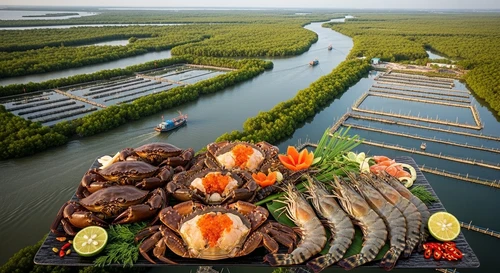
Picture this: early morning in Ca Mau province, the southernmost tip of Vietnam. Fishermen, weathered by sun and salt, navigate their small boats through dense mangrove forests, setting traps for the prized mud crab. These crustaceans thrive in the brackish waters, growing plump and robust, feeding on the rich organic matter of the muddy riverbeds. Their environment dictates their flavor – earthy, deeply savory, and intensely sweet.
When you choose a mud crab in the Delta, whether from a bustling wet market or a roadside vendor, you're looking for vitality. A good crab is a heavy crab, one that struggles vigorously, indicating a full body of meat and, hopefully, a generous amount of rich, golden roe (if it's a female). The best chefs here understand that half the magic lies in the quality of the ingredient. No amount of seasoning can compensate for a scrawny, lifeless crab. This pursuit of freshness is fundamental to the Mekong Delta culinary philosophy.
3 The Anatomy of a Gastronomic Challenge
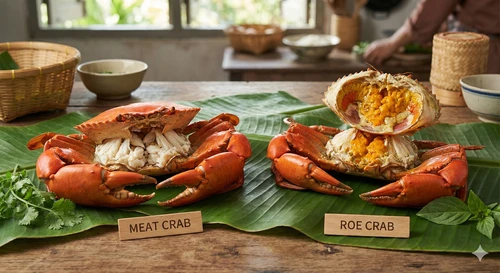
Before you dive in, it helps to understand your adversary, or rather, your culinary prize. A mud crab is a fortress of flavor, encased in a formidable shell. It has two main, meaty claws (one often larger than the other, the "crusher"), eight walking legs, and a main body packed with delicate meat and, if you're lucky, the coveted roe (orange-red) or tomalley (greenish-brownish liver/pancreas). Don't be squeamish about the tomalley; it's a rich, intensely flavored delicacy cherished by locals.
You won't need fancy tools. Most authentic Delta eateries provide simple nutcrackers (or even just a heavy spoon) and sometimes a small pick. But honestly, your best tools are your own strong hands and a sense of adventure. A small spoon might come in handy for scooping out the gooey bits, and plenty of napkins are essential.
4 The Art of Preparation: Setting the Stage for Extraction
While this guide focuses on eating, a word on common Delta preparations is warranted, as it affects your eating strategy. Mud crabs are often steamed with beer and lemongrass, grilled over charcoal, or stir-fried in a rich tamarind sauce. Each method brings out different nuances, but the core technique for meat extraction remains largely the same. Steaming offers the purest taste, allowing the crab's natural sweetness to shine, making it an excellent starting point for learning proper technique.
Ensure your crab is cooked through (its shell will turn a vibrant orange-red) and preferably still warm. A cold crab's meat can be harder to extract. Have your chosen dipping sauce ready – a simple mix of salt, pepper, and lime juice is a classic, but we'll delve deeper into sauces later.
5 Step-by-Step Extraction: The Carapace & Body Segments
- Remove the Apron: Turn the crab onto its back. You'll see a flap on its underside, near the tail. This is the "apron." For a male crab, it's narrow and pointed; for a female, it's broad and rounded (hiding the roe). Peel it back and away from the body, discarding it.
- Separate the Carapace: Hold the crab firmly in both hands. With your thumbs, push up on the underside of the crab where the apron was, while pulling the top shell (carapace) away from the body. It will come off with a satisfying *pop*.
- Clean the Gills: Attached to the body will be feathery, greyish structures on either side. These are the gills, often called "dead man's fingers." They are inedible and taste bitter. Scrape or pull them all away and discard them. Also, scrape away any greenish-brown viscera.
- Access the Roe/Tomalley: If you have a female crab, the bright orange-red roe will be clinging to the inside of the carapace. Scoop it out with a spoon – it's incredibly rich and flavorful. In both male and female crabs, you might find greenish-brown tomalley in the body cavity; this is also highly prized.
- Divide the Body: Now you're left with the main body, a central segment with leg attachments. Break this central body in half, then into smaller pieces. You'll see distinct segments of meat. Use a small pick or the tip of a spoon to scrape out the sweet meat from each chamber. Don't be shy about sucking the meat directly from the crevices – it's part of the experience!
6 The Claw Conquest: Unlocking the Muscle
The claws are where much of the prized, firm, and succulent meat resides. This requires a bit more force, but precision is key to avoid shattering the shell into tiny, sharp fragments.
- Detach the Claws: Twist each large claw where it meets the body to detach it. Repeat for the smaller walking legs. The walking legs contain less meat but are still worth a quick suck or crack for smaller bites.
- Crack the Crusher Claw: The larger, "crusher" claw is the toughest. Use a nutcracker, or if in a pinch, a heavy spoon or even a small rock. Place the cracker gently over the thickest part of the claw and apply firm, steady pressure until you hear a crack. Don't smash it; you want clean breaks, not pulverized shell.
- Extract Claw Meat: Once cracked, peel away the broken shell pieces. The meat should come out in large, satisfying chunks. Sometimes, you can even pull out the entire muscle in one go. Repeat for the other large claw.
- Joints and Knuckles: Don't forget the joints where the claws connect to the body and the smaller knuckle pieces within the claws themselves. These often contain surprisingly sweet pockets of meat. Use a pick or simply your teeth to get at them.
The Delta Duet: Dipping Sauces & Beverages 🍋🍺
A mud crab without its dipping sauce is like a boat without its river. The right accompaniment elevates the experience, cutting through the richness and awakening your palate.
The Holy Trinity of Dipping
- Lime-Salt-Pepper (Muối Tiêu Chanh): This is the undisputed king. A simple mix of fine salt, freshly ground white pepper (or black), and generous squeezes of fresh lime juice. Mix until it forms a greyish paste. The acidity of the lime perfectly brightens the sweet crab meat. Add fresh bird's eye chili for a kick.
- Green Chili Condensed Milk Sauce (Muối Ớt Xanh): A modern, creamy, and spicy delight. This vibrant green sauce offers a different dimension with its blend of condensed milk, green chilies, and lime. It's addictive and pairs wonderfully with the sweetness of the crab.
Beverage Pairings
- Local Beer: A cold bottle of Bia Saigon or Tiger beer is the quintessential companion. Its crisp bitterness acts as a palate cleanser, preparing you for the next succulent bite.
- Iced Tea (Trà Đá): For a non-alcoholic option, the ubiquitous iced tea provides a refreshing contrast to the rich flavors.
8 The Mud Crab Experience: More Than Just a Meal
Eating mud crab in the Mekong Delta is a sensory carnival. It's the sound of shells cracking, the smell of fresh seafood mingling with chili and lime, the sticky feeling of sauce on your fingers, and the burst of sweet, tender meat on your tongue. It's almost always a communal affair, shared with family or friends around a bustling table, often outdoors, under the shade of a coconut palm or by the river's edge.
Don't expect fine dining etiquette. This is about honest, unpretentious enjoyment. People laugh, talk loudly, and get their hands dirty with gusto. It's a fundamental part of Vietnamese hospitality – sharing good food and good company. Embrace the mess, soak in the atmosphere, and let the flavors transport you deeper into the heart of the Delta. This is where food, culture, and life intersect in the most delicious way possible.
Remember the "no waste" philosophy isn't just about efficiency; it's about respect for the ingredient, for the fisherman who caught it, and for the bounty of the Mekong. Every last sliver of meat, every drop of roe, is a gift to be savored.
Mastered Crab Eating?
Now that you're an expert, why not try cooking it yourself? Discover the freshest way to enjoy this Delta delicacy.
🦀 Steam Your Own Crab