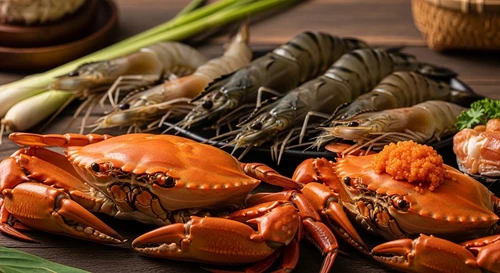
" In the watery embrace of the Mekong Delta, where the river meets the sea and life teems in the muddy depths, there lives a creature that sparks endless debate among epicureans: the crab. But not just any crab. We're talking about the fundamental, existential question that divides families and dictates dinner tables: male or female? "
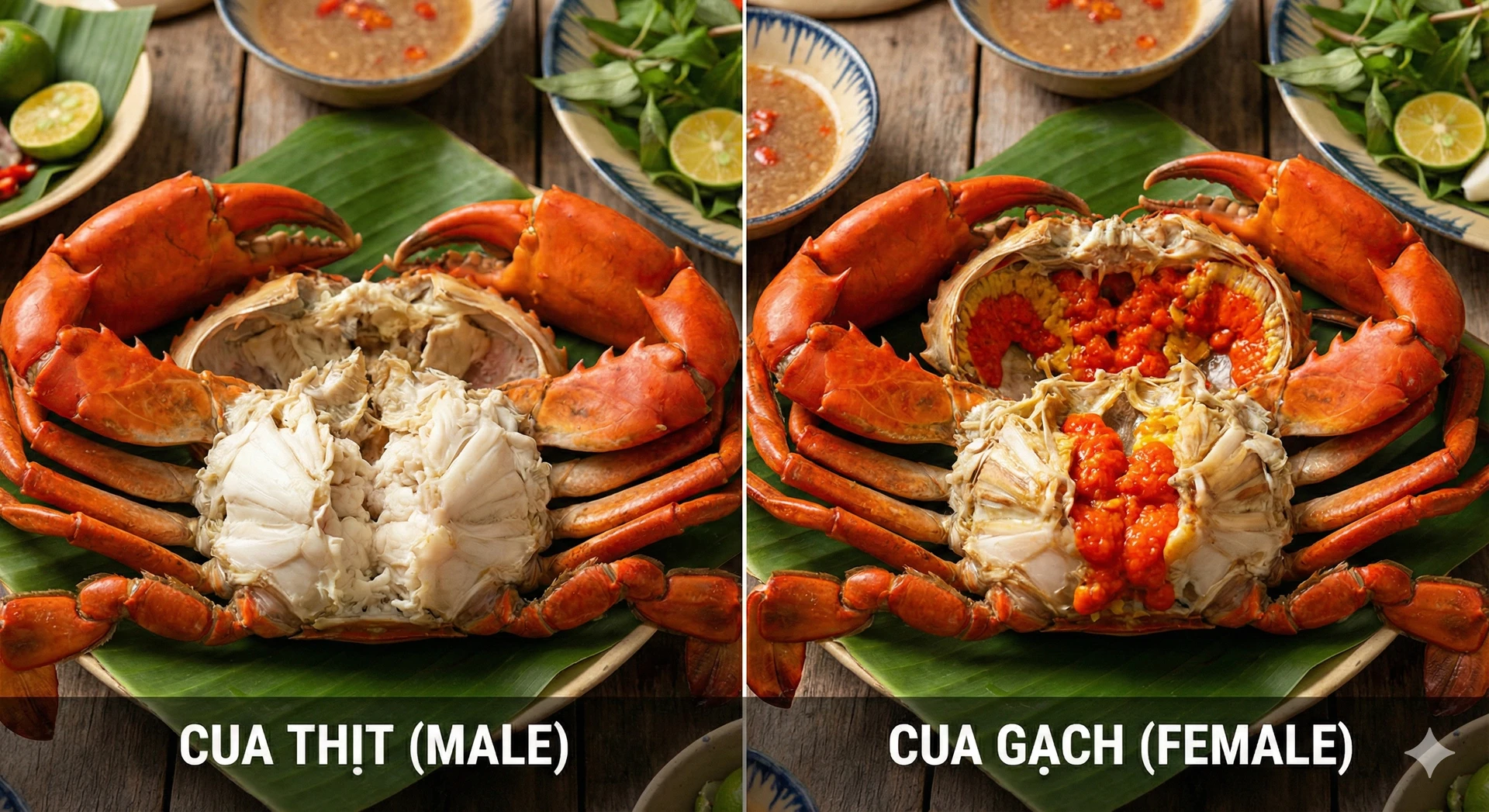
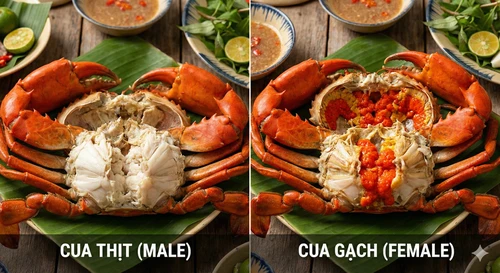
📸 The subtle, yet significant, differences that define your crab feast.
For those of us who chase flavor to the ends of the earth, a good crab is a pilgrimage. And in the vibrant, sprawling delta of southern Vietnam, crab isn't just food; it's an institution. Here, every local has an opinion, a nuanced preference honed over generations of cracking shells and savoring sweet, briny flesh. Forget what you think you know about picking seafood; in the Mekong, choosing a crab is a masterclass in biology, texture, and pure, unadulterated pleasure.
Let's dive headfirst into this delectable dilemma, exploring the distinct allure of both male and female crabs, and equip you with the knowledge to make your own informed, delicious decision next time you find yourself staring at a tank full of these magnificent crustaceans.
1 Unlocking the Shell's Secrets: A Tale of Two Genders
Before we even discuss flavor profiles, we need to understand the fundamental difference: how to tell a male from a female crab. This isn't just about curiosity; it's the critical first step in predicting your culinary experience.
The secret lies beneath the crab's belly, in a flap known as the "apron." This seemingly minor detail is, in fact, the most reliable identifier, a biological blueprint telling us exactly what kind of feast awaits.
2 The Apron's Whisper: Reading Nature's Clues
Imagine yourself at a bustling seafood market in Ca Mau, the southernmost tip of Vietnam, where the air hums with the scent of salt and the sounds of haggling. A vendor holds up a wriggling mud crab, its eyes darting. How do you know what to ask for?
♂️ The Male Crab: The "Y-Shape" Apron
Turn a male crab over, and you'll see a narrow, triangular flap tucked tightly against its body. This apron resembles a distinctive "Y-shape" or a narrow pagoda. This shape is designed to protect the crab's reproductive organs.
What it signifies: A crab primarily focused on lean, sweet, firm meat.
♀️ The Female Crab: The "Round-Shape" Apron
The female crab, conversely, boasts a broad, almost perfectly "round-shape" or wide oval apron that covers most of her underside. This wide apron serves a crucial purpose: to hold her eggs before they are released into the water.
What it signifies: The potential for rich, buttery, unctuous roe, often alongside softer meat.
Armed with this simple visual cue, you're no longer just buying a crab; you're making an informed choice, a declaration of intent for your taste buds.
3 The Warrior's Feast: Muscled, Meaty, and Magnificent (Male Crabs)
Let's talk about the boys. Male crabs are often larger, with more substantial claws. Their energy is focused on growth and strength, resulting in a different culinary profile. When you choose a male crab, you are choosing:
- Sweet, Firm Flesh: The meat of a male crab is typically denser and has a pronounced natural sweetness. It's less fatty than its female counterpart, offering a cleaner, more robust crab flavor. Think of it as the lean, prime cut.
- Larger Claws: These are often the prize! Male crabs, especially species like the mud crab prevalent in the Mekong, can have impressively large claws packed with sweet, fibrous meat that demands some effort to extract but rewards handsomely.
- Less "Mess": Without the rich roe, male crabs are generally less messy to eat. This makes them ideal for dishes where you want the pure, unadulterated crab meat to shine, or simply for those who prefer a straightforward cracking and picking experience.
- Versatility: Their firm texture holds up beautifully to various cooking methods – steaming, grilling, stir-frying with sauces, or even in soups. The meat won't disintegrate easily.
In the Delta, a perfectly steamed male crab, dipped in a simple concoction of lime juice, salt, and chili, is a testament to the purity of flavor. It's an honest dish, celebrating the ingredient without elaborate disguise.
4 The Empress's Treasure: A Golden Hue of Pure Indulgence (Female Crabs)
Now, for the queens of the sea, the female crabs. These are chosen for a very specific reason: the roe. If you've ever had the pleasure of tasting rich, golden crab roe, you know exactly what the fuss is about. When you opt for a female crab, you are unlocking:
- The Glorious Roe (Gạch Cua): This is the holy grail for many. The roe, often bright orange or yellow, is incredibly rich, buttery, and intensely savory with a creamy, sometimes grainy, texture. It's an umami bomb that coats the palate and adds a luxurious dimension to the entire dish.
- Softer, More Delicate Meat: While still sweet, the meat of a female crab can be slightly softer and more delicate than a male's, often infused with a subtle richness from the surrounding roe.
- A "Fuller" Experience: Eating a female crab, especially one laden with roe, is a more indulgent, complex affair. It's less about the sheer volume of meat and more about the interplay of textures and the decadent flavor of the roe.
- Seasonal Delicacy: The presence and abundance of roe can vary seasonally. Experienced vendors in the Delta know exactly when female crabs are at their peak "fatness" (a local term referring to the quantity of roe and fat).
For dishes like Bún Riêu Cua (crab noodle soup) or when stir-frying with tamarind, that rich, flavorful roe becomes the heart and soul of the sauce. It's a culinary indulgence that few can resist.
5 Beyond the Binary: The True Art of Crab Selection
While gender is a huge factor, it's not the only one. A scrawny female crab with no roe or a sickly male crab with watery meat is still a bad crab. The true connoisseur looks for vitality and weight, regardless of apron shape. Here’s how to choose a truly magnificent crab:
- Always Choose Live Crabs: This is non-negotiable in the Mekong Delta. If it’s not alive and moving, don’t buy it. A dead crab means decaying meat and potential food safety issues. Look for activity, even aggression.
- Check the Weight: A good crab feels heavy for its size. This indicates a full, meaty body, not one that's recently molted or is starved. Gently lift the crab; it should feel substantial.
- Press the Apron: For both male and female, gently press the apron (the flap under its belly) against the body. If it feels firm and full, it's a good sign. If it's soft or hollow, the crab might be watery or lacking meat. For females, a firm, full apron often indicates abundant roe.
- Inspect the Shell: Look for a hard, intact shell. A soft shell means the crab has recently molted and its meat will be watery and less flavorful. Avoid crabs with damaged shells.
- Observe Activity: A lively crab is a healthy crab. Its eyes should be moving, and its legs should react when touched. If it's sluggish or unresponsive, pass on it.
These simple checks, combined with your gender preference, will elevate your crab-eating game significantly.
6 From Mudflats to Market Stalls: The Delta's Crab Ritual
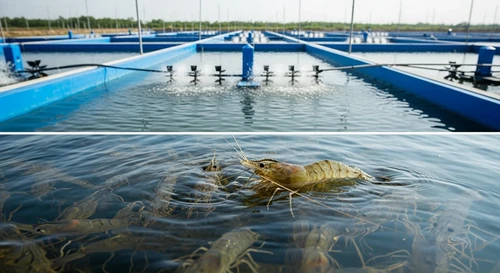
To truly appreciate the crab, one must understand its journey. In the Mekong Delta, crabs aren't factory-farmed. They're part of the natural rhythm of life along the muddy shores and intricate mangrove forests. Fishermen (often women, actually) navigate small boats through brackish waters, setting traps, or even patiently hand-picking these crustaceans from their burrows.
The crabs are then rushed to local markets, often still coated in the rich, dark mud they call home. This freshness is paramount. You'll see vendors expertly tying their claws to prevent escape, a flurry of motion and sound that is uniquely Vietnamese. The entire ecosystem, from the murky water to the bustling market, contributes to the crab's flavor and significance.
Cooking methods in the Delta are typically straightforward, designed to highlight the crab itself. Simple steaming with lemongrass and ginger, or perhaps a quick stir-fry with tamarind or garlic, are preferred. No heavy sauces to mask the delicate flavors of the sea. This respect for the ingredient is a cornerstone of Delta cuisine.
7 The Final Verdict (If You Can Even Call It That)
So, after all this deliberation, which is truly better: male or female crab?
The honest answer, the truly Mekong-Delta-authentic answer, is: it depends on what you're craving.
- If you yearn for pure, sweet, firm, abundant crab meat, especially from those mighty claws, then the male crab is your champion.
- If you dream of rich, creamy, intensely flavorful roe, with its unique umami depth, then the female crab, ideally in season, will sweep you off your feet.
Many seasoned eaters in the Delta often opt for a mix, ordering both male and female to get the best of both worlds – the satisfying chew of male claw meat alongside the luxurious melt of female roe. It's a balanced approach, a culinary compromise that guarantees maximum enjoyment.
8 Your Personal Odyssey: Embracing the Crab's Call
The beauty of food, much like travel, lies in discovery and personal preference. There is no single "right" answer. The true magic lies in the act of choosing, the anticipation, the cracking of the shell, and the unadulterated pleasure of pulling out that first piece of pristine crab meat.
Next time you encounter these magnificent crustaceans, whether at a bustling Vietnamese market or your local seafood counter, remember the apron's whisper. Look closely. Feel the weight. And then, choose your adventure. The Mekong Delta has offered its wisdom; now, it's up to you to savor the bounty.
And when in doubt? Get one of each. Life's too short for culinary regrets.
Craving More Crab?
Now that you know how to pick the perfect crab, learn one of the most beloved ways to prepare it in Vietnam.
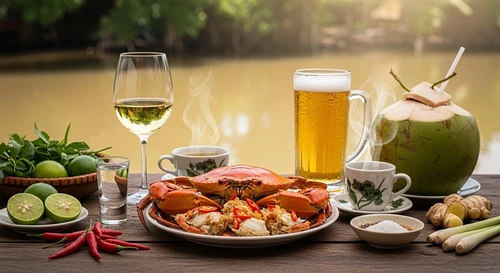
🍺 Pure Steamed Crab with Beer