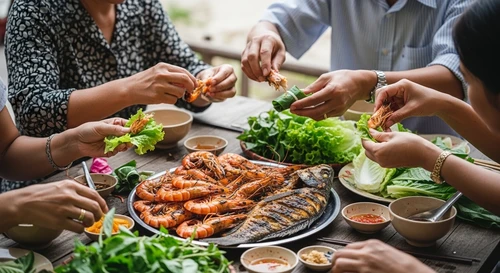
" In the labyrinthine markets of the Mekong Delta, where the air hangs thick with the scent of river mud and exotic spices, a culinary treasure awaits: the Ca Mau crab. But buyer beware, for not all that scuttles is gold. "
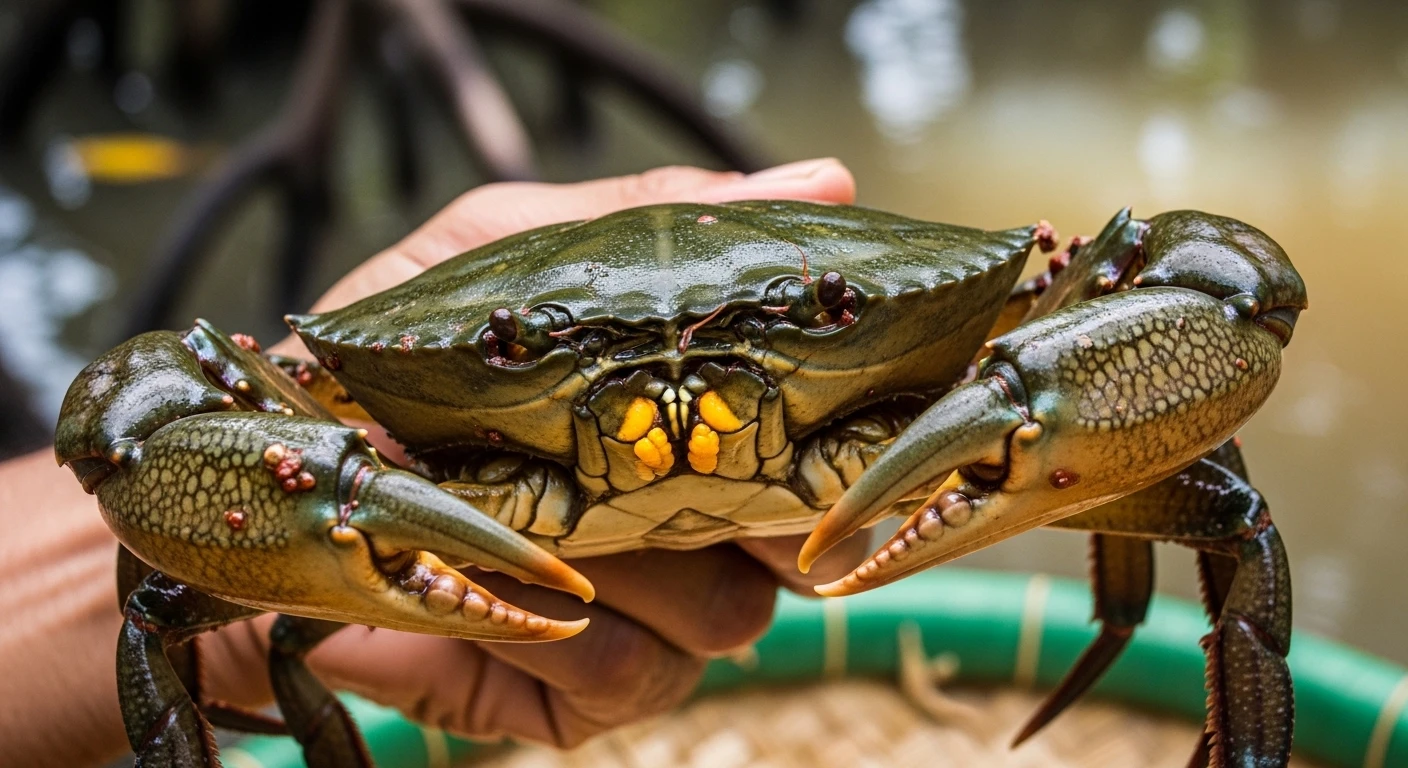
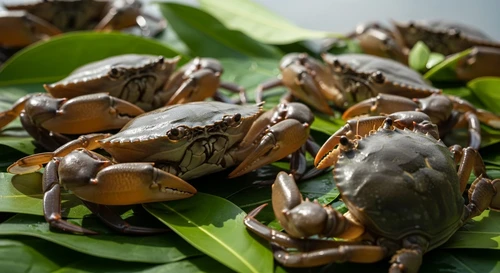
📸 The real deal: A robust Ca Mau crab, fresh from the mangroves.
1 The Ca Mau Crab Legacy: A Tale of Mud and Mangroves
For centuries, the southernmost tip of Vietnam, Ca Mau province, has been synonymous with one of the world's most coveted crustaceans: the Ca Mau (Viet Nam) mud crab (Scylla paramamosain). Unlike their farmed cousins or those from less nutrient-rich waters, these crabs thrive in a unique ecosystem where freshwater rivers meet the saltwater tides of the East Sea. This blend of environments, coupled with the abundant mangrove forests and muddy deltas, provides the perfect nursery for crabs to grow slow, strong, and incredibly flavorful. They are not merely crabs; they are a direct culinary expression of the land and water that birthed them, a true taste of the Mekong Delta's wild heart.
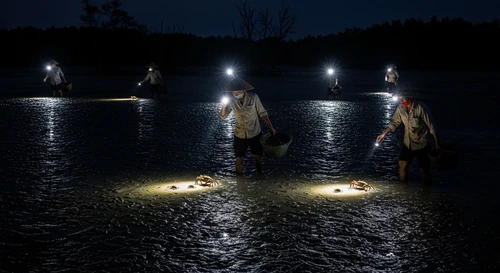
The local fishermen, with generations of knowledge etched into their hands, brave the intricate waterways, setting traps and patiently waiting for nature's bounty. This isn't industrial fishing; it's a careful dance with the environment, which adds to the allure and, indeed, the price of an authentic Ca Mau crab. Their distinct sweetness, firm texture, and rich roe are legendary, drawing gourmands from across the globe. But with such fame comes a dark shadow: counterfeits.
2 The Shadow Economy: Why Fake Crabs Appear
The demand for Ca Mau crab, especially the prized female with its golden roe, far outstrips supply. This creates a lucrative market for unscrupulous vendors to pass off cheaper, often inferior crabs as the genuine article. These "fake" crabs aren't necessarily bad; they might be farmed crabs from other regions, or even wild crabs from less prestigious environments. The problem isn't their existence, but their misrepresentation and the inflated prices charged for them. For travelers eager to experience the authentic flavors of Vietnam, falling victim to such a scam can be a bitter disappointment, eroding trust and leaving a bad taste in the mouth.
Distinguishing the real from the impostor isn't just about saving money; it's about preserving the culinary integrity of a region and honoring the hard work of those who genuinely harvest these magnificent creatures. It's about ensuring your Mekong Delta journey includes genuine gastronomic delights, not ersatz experiences. So, how do you, the discerning epicurean, navigate this muddy terrain?
3 The Visual Cues: Anatomy of Authenticity
Before you even pick one up, a real Ca Mau crab tells a story through its appearance. Pay close attention to these tell-tale signs:
- Shell Color: Authentic Ca Mau crabs typically have a darker, often greenish-brown to dark gray shell, sometimes with hints of purple or blue. This isn't uniform; it's often mottled and reflects their muddy habitat. Farmed crabs tend to have lighter, more uniform brown or greenish shells. Think "earthy" rather than "clean."
- Shell Texture: The shell of a genuine Ca Mau crab often feels rougher, more textured, and might even have traces of mud or algae clinging to it. This indicates a life spent foraging in natural environments, not pristine tanks.
- Claws: Look for strong, robust claws that are often slightly darker at the tips. The size should be proportional to the body, indicating a well-developed, wild crab. If the claws look delicate or disproportionately small, it might be a younger, less mature crab, or one from a different environment.
- Vibrancy: A fresh, authentic Ca Mau crab should be lively and feisty. Its eyes should be clear and alert, and it should react when you gently poke it (carefully!). A sluggish crab might be old, sick, or poorly handled.
4 The Ca Mau Fingerprint: Scars from the Mangroves
Beyond the general appearance, there are specific subtle indicators that only an insider would know. These are the "Ca Mau fingerprint" – direct evidence of their upbringing in the challenging, yet nutrient-rich, mangrove forests:
- Mud Stains: True Ca Mau crabs, especially those directly from the wild, often bear stubborn mud stains, particularly on the underside of their shell and around their leg joints. These aren't easily washed off and are a badge of honor from their natural habitat.
- "Barnacle Bits": Sometimes, you might find tiny, almost microscopic barnacles or other small marine growths clinging to their shells. This is a common sight on wild-caught crabs and is rarely seen on farm-raised ones.
- Slight Imperfections: Don't be turned off by minor nicks or scratches on the shell. These are often signs of a crab that has lived a robust life, navigating roots and competing for food in a natural environment. A perfectly pristine shell can sometimes be a red flag for a less active, farm-raised crab.
- The "Smell" of Ca Mau: Before cooking, a truly fresh Ca Mau crab might carry a subtle, earthy scent, a mix of brackish water and damp soil, distinct from a generic "fishy" odor. This is the scent of its home.
5 The Weight of Truth: Feeling for Density and Firmness
Once you've passed the visual test, it's time for the tactile assessment. This is where you physically interact with the crab (politely, of course!). A good Ca Mau crab feels surprisingly heavy for its size, a strong indicator of dense, plentiful meat. Here’s how to check:
- The Lift Test: Pick up the crab (holding it by the rear of the shell, away from the claws!). It should feel substantial, not hollow or light. A light crab means less meat, or worse, a crab that's recently molted and hasn't filled its shell back out.
- The Abdominal Press (for males): Gently press on the underside of the crab's abdomen, between the last two walking legs. It should feel firm and hard. If it's soft or squishy, the crab is likely to be watery and lack meat.
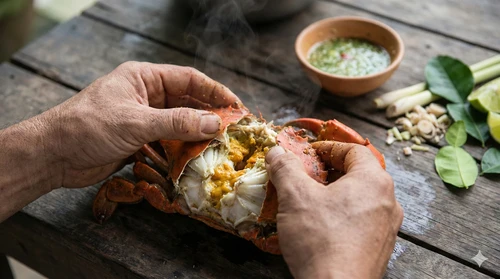
- The Roe Check (for females): For female crabs, the tell-tale sign of rich roe (gạch cua) is a prominent, rounded abdomen, which should also feel firm. Sometimes, you can even see a slight yellowish hue peeking from the edges of the shell where the abdomen meets the carapace. This golden roe is highly prized for its creamy texture and intense flavor.
6 Beyond the Shell: The Unmistakable Taste Test
Ultimately, the proof is in the pudding – or, in this case, the sweet, succulent meat. While you can't taste before you buy, understanding the profile of an authentic Ca Mau crab will help you confirm your purchase after cooking, and educate you for future visits. The taste of a genuine Ca Mau crab is:
- Sweetness: A clean, profound sweetness that lingers on the palate. This isn't just a hint; it's a defining characteristic. Inferior crabs might taste bland or slightly metallic.
- Texture: The meat should be firm, flaky, and moist, not watery or mushy. It should pull cleanly from the shell, offering a satisfying bite. The claw meat, especially, should be dense and fibrous.
- Roe (Gạch Cua): For female crabs, the roe is a deep, vibrant orange or yellow, creamy in texture, and intensely savory with a slightly nutty undertone. It's truly a delicacy and a strong indicator of a prime specimen.
- Lack of "Fishiness": Despite being a marine creature, a fresh Ca Mau crab should have no overpowering "fishy" smell or taste. Its aroma should be clean, sweet, and faintly oceanic.
7 Navigating the Labyrinth: Where to Buy with Confidence
Even armed with knowledge, buying in a bustling Vietnamese market can be daunting. Here are expert tips to minimize your risk and maximize your chances of securing the real deal:
- Go to Reputable Markets: In Ca Mau itself, markets like the Ca Mau City Market or those in districts like Nam Can, famous for its abundant seafood, are your best bet. If buying in Ho Chi Minh City, seek out trusted seafood distributors or high-end restaurants known for sourcing authentic Ca Mau products.
- Look for Dedicated Sellers: Often, vendors who specialize solely in crabs, especially those displaying their catches directly from the water in large basins, are more reliable. They usually have a reputation to uphold.
- Observe Local Buying Habits: Watch where locals, particularly older women or restauranteurs, are buying. They know the good spots.
- Don't Be Afraid to Ask (or Point): While language can be a barrier, pointing to the crabs and demonstrating the "squeeze test" or "lift test" can communicate your intent. A good vendor won't mind a discerning customer.
- Price Check: Be wary of prices that seem too good to be true, especially for large, roe-filled female crabs. Quality comes at a price. Research typical market rates beforehand.
8 The Ethical Epicurean: Supporting the Real Deal
Beyond personal satisfaction, choosing an authentic Ca Mau crab has broader implications. By knowing how to identify and insisting on the real deal, you:
- Support Sustainable Livelihoods: You empower the local fishermen and communities who rely on the traditional, often sustainable, harvesting of these crabs.
- Preserve Culinary Heritage: You help maintain the reputation and unique culinary identity of Ca Mau province.
- Encourage Ethical Practices: Your informed choices deter vendors from engaging in deceptive practices, pushing them towards transparency and authenticity.
The quest for a truly authentic Ca Mau crab is more than just a gastronomic pursuit; it's an immersion into the culture, environment, and traditions of the Mekong Delta. It’s a journey that rewards the patient, the observant, and the truly passionate food lover.
9 Conclusion: A Culinary Quest Worth Embarking On
So, next time you find yourself wandering the bustling markets of Vietnam, don't just look for a crab. Look for a Ca Mau crab. Armed with these tips, you're no longer just a tourist; you're a seasoned explorer, capable of discerning the authentic from the imitation. And when you finally crack open that vibrant shell, revealing the sweet, pristine meat within, you'll know you haven't just eaten a crab – you've experienced a genuine piece of the Mekong Delta, in all its muddy, mangrove-rich glory. Happy hunting, and may your culinary adventures always be authentic.
Common Questions About Ca Mau Crab
How can I tell if a Ca Mau crab has roe (gạch cua)?
Is it safe to buy live crabs from street vendors?
What's the best way to cook an authentic Ca Mau crab to appreciate its flavor?
Explore More of the Delta!
The Mekong Delta is a treasure trove of culinary wonders and authentic experiences. Ready for your next adventure?
🛶 Discover the Mekong Delta