" There are food experiences that reshape your understanding of a dish, and then there are those that redefine joy. The soft shell crab of Vietnam's Mekong Delta falls squarely into the latter. Forget the mallets, the elaborate tools, the endless picking. This, my friends, is crab, unapologetically, blissfully whole. "
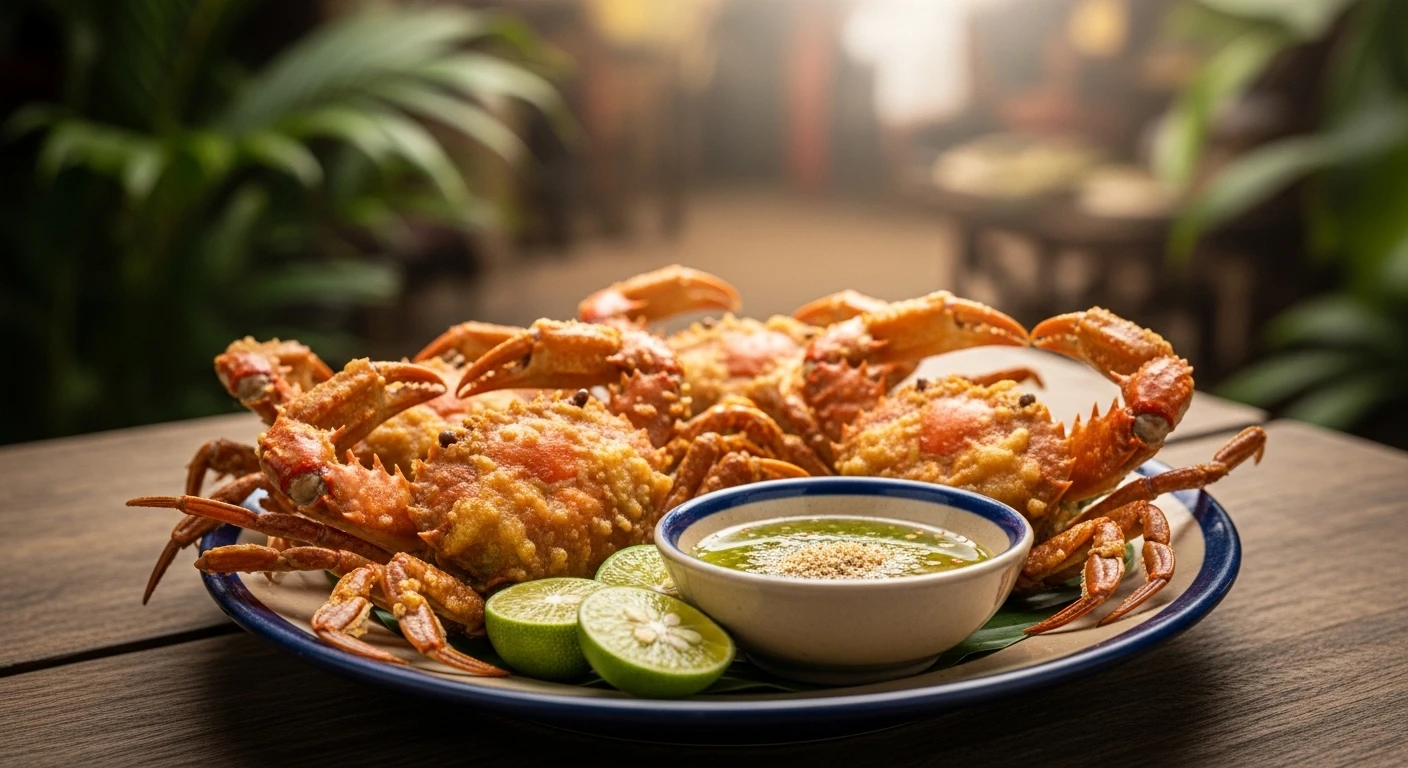
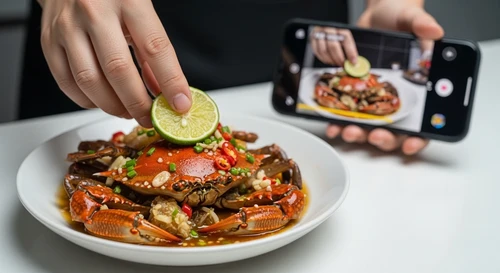
📸 Golden-fried perfection: A plate of succulent soft-shell crabs, ready to be devoured.
The Mekong Delta's Elusive Treasure: What Makes It Special?
Imagine a crab, sweet and succulent, with a shell so tender you can eat every last morsel. No struggle, no mess, just pure, unadulterated crustacean bliss. This isn't a fantasy; it's the reality of a perfectly timed soft-shell crab, a fleeting culinary phenomenon found in the labyrinthine waterways of Vietnam's Mekong Delta.
Unlike their hard-shelled brethren, these creatures represent a rare window into nature's cycle. They are crabs caught in the delicate act of molting, shedding their old, restrictive exoskeletons to grow bigger. For a brief period – mere hours after emerging from their old shells – their new casings are paper-thin, almost like a silky membrane, transforming what's usually a battle into an effortless feast. The flavor is intensely sweet, with a subtly creamy texture that gives way to a satisfying, delicate crunch.
The Secret Cycle: When Nature Whispers "Eat Me"
The entire allure of soft-shell crab lies in its seasonality and the precision of its harvest. It’s not just a specific species; it's a particular stage in a crab's life. In the Mekong Delta, this primarily applies to mud crabs (often species like Scylla serrata), which thrive in the brackish waters of the mangrove forests. Their growth isn't uniform; it's a series of transformations, and each molt is an opportunity.
So, when is the best time to buy soft-shell crabs? It's less about a fixed month and more about observing the crabs' natural rhythm, influenced by lunar cycles and environmental conditions. Farmers in the Mekong Delta, with generations of accumulated wisdom, closely monitor their crab ponds. They look for subtle signs: a darker line appearing under the old shell, indicating a new, soft shell forming underneath; a sudden decrease in activity, signaling an impending molt.
This usually peaks during the rainy season (roughly May to October), when the crabs are most active and growing rapidly. However, modern aquaculture techniques, particularly the rise of dedicated soft-shell crab farms, have extended this availability. These farms create controlled environments, carefully separating crabs nearing a molt into individual tanks to prevent cannibalism, allowing them to be harvested at their peak softness.
- Traditional Peak Season: May to October (rainy season).
- Farm-Extended Availability: Increasingly year-round, though freshness and quality can still vary.
- Key Indicator: Look for farms or reputable suppliers who specialize in this delicacy, as they understand the timing best.
While you might find them outside the traditional peak, the crabs harvested during the natural molting frenzy of the rainy season often possess a richer, more profound sweetness, reflecting their robust health and active growth.
From Mud to Market: The Art of the Harvest
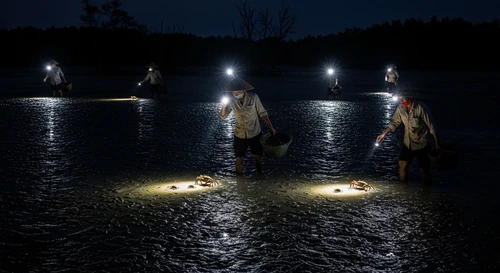
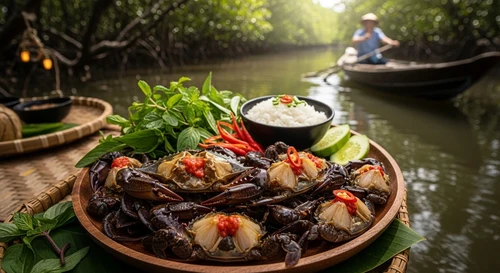
Picture this: the sun just breaking over the horizon, painting the delta sky in hues of orange and pink. Small wooden boats navigate narrow canals, propelled by weathered hands. Crab farmers, with keen eyes honed by years on the water, meticulously check their traps or individual crab enclosures. This isn't industrial fishing; it's a delicate dance with nature, a testament to the delta's resourcefulness.
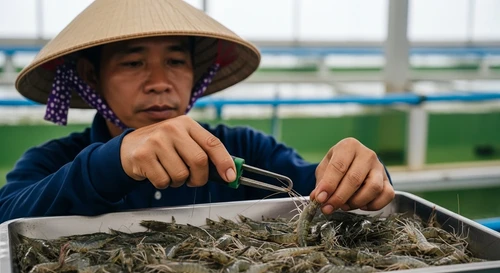
Each soft-shell crab is a result of careful observation and swift action. Once a crab is identified as having just molted, it's quickly moved to ensure its new shell doesn't begin to harden. This immediacy is crucial, as the window of "softness" can be as short as a few hours. This labor-intensive process, combined with the inherent unpredictability of nature, is why genuine soft-shell crabs remain a prized commodity and why they command a higher price than their hard-shelled counterparts.
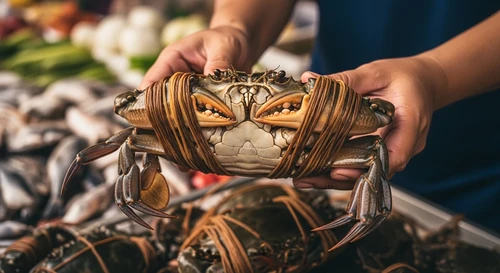
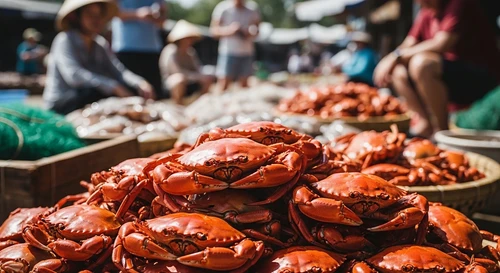
When these precious catches arrive at local markets – bustling hubs like those in Ca Mau or Can Tho – they are often kept in oxygenated tanks, waiting for discerning buyers. The vibrant energy of these markets, the aroma of fresh seafood mingling with exotic spices, sets the stage for a truly authentic delta experience.
Identifying Your Prize: A Buyer's Guide to Freshness
Buying soft-shell crabs, especially if you're not a local expert, requires a little know-how. Here’s what to look for to ensure you're getting the freshest, most delicious specimen:
- Origin: Always ask about the source. The Mekong Delta, particularly provinces like Ca Mau, is renowned for its mud crabs and soft-shell crab aquaculture.
- Appearance: A truly soft-shell crab will have a duller, almost paper-like shell, often slightly wrinkled. It should not be hard or crunchy. The crab's overall color should be natural, indicating vitality, not discolored or pale.
- Feel: Gently press on the carapace (top shell). It should yield to pressure, feeling pliable and soft, not rigid. The legs should also be soft and flexible. If it feels even slightly firm, it's likely already begun to harden.
- Smell: Like all good seafood, it should smell of the fresh ocean or brackish water – clean and briny, never fishy or ammoniated.
- Activity (if alive): If buying live, it should show some signs of life, even if sluggish. However, many are sold freshly killed and cleaned, which is perfectly fine.
- Size: While not a direct indicator of softness, medium to large crabs often yield more meat and a more satisfying eating experience.
Don't be afraid to engage with the vendor. A good local vendor will be proud of their produce and happy to educate you on the nuances of their catch. This interaction is part of the true delta market experience.
The Symphony of Simple Preparation: Unleashing Unadulterated Flavor
The beauty of soft-shell crab lies in its inherent deliciousness, meaning the best preparations are often the simplest, allowing its delicate flavor to shine. Here are two iconic Mekong Delta approaches:
Deep-Fried Perfection (The Classic)
This is arguably the most popular and utterly addictive way to enjoy soft-shell crab. The goal is a golden, impossibly crispy exterior that gives way to the tender, sweet meat within.
- Preparation: Gently clean the crabs, removing gills and mouthparts. Lightly dust with seasoned flour or a mixture of flour and cornstarch, perhaps with a pinch of salt and white pepper.
- Cooking: Deep-fry in hot oil (around 170-180°C or 340-350°F) until golden brown and crispy, typically only 3-5 minutes per crab, depending on size. Drain on a wire rack.
- Result: A textural masterpiece – crunchy shell, juicy meat, a symphony of savory and sweet. It’s a pure, unadulterated crab experience.
The fried version is often served with a simple lime-salt-pepper dipping sauce, cutting through the richness with bright acidity.
Stir-Fried with Tamarind (A Tangy Twist)
For those who crave a punchier flavor profile, soft-shell crab stir-fried with tamarind is a revelation. It introduces a tangy, sweet-savory glaze that complements the crab's natural sweetness.
- Preparation: After cleaning, the crabs are often lightly fried first to achieve some crispness.
- Sauce: A vibrant sauce is made with tamarind paste, fish sauce, sugar, a touch of water, and sometimes a hint of chili. Garlic and shallots are typically sautéed as the aromatic base.
- Cooking: The crabs are then tossed in the hot tamarind sauce until thoroughly coated and glistening.
- Result: A sticky, finger-licking dish where the crab absorbs the complex flavors of the delta – sweet, sour, salty, and a whisper of spice.
This dish is fantastic served with plain steamed rice to soak up every drop of that incredible sauce.
Pairing Perfection: The Essential Companions
A dish as singular as soft-shell crab deserves equally thoughtful pairings. In the Mekong Delta, simplicity reigns supreme, allowing the star ingredient to shine.
The Dipping Sauce Revelation
For fried soft-shell crab, there’s truly only one essential companion: Muối Tiêu Chanh (Salt, Pepper, and Lime). It's incredibly basic yet profoundly effective. Mix fine sea salt, freshly ground white pepper (or black), and a generous squeeze of fresh lime juice until it forms a slightly greyish, granular paste. The bright acidity and salinity cut through the richness of the fried crab, enhancing its sweetness and ensuring each bite is as vibrant as the last. For a kick, add thin slices of fresh bird's eye chili.
An increasingly popular alternative, especially for those who love a creamy heat, is Muối Ớt Xanh Sữa Đặc – a unique green chili condensed milk sauce. Its sweet, spicy, and creamy profile offers a modern, addictive counterpoint.
Drink It Down
To cleanse the palate and complement the meal, locals typically opt for:
- Local Beer: A cold, crisp lager like Bia Saigon or Tiger Beer is a classic choice, offering a refreshing counterpoint to the rich seafood.
- Fresh Coconut Water: For a non-alcoholic option, nothing beats the natural sweetness and hydrating properties of fresh coconut water, often served directly from the young coconut itself.
- Iced Tea (Trà Đá): A ubiquitous Vietnamese beverage, simple iced green or black tea is always a refreshing choice.
A Taste of Impermanence: Why You Must Seize the Moment
The soft-shell crab is a culinary whisper, not a shout. Its existence is fleeting, a delicate balance of timing and nature. To experience it is to embrace impermanence, to appreciate a rare moment when the natural world gifts us something truly extraordinary. It's not always available, and when it is, the best specimens are quickly snapped up. This rarity only adds to its mystique and desirability.
So, if you find yourself traversing the fertile lands of the Mekong Delta, perhaps in the bustling markets of Can Tho, the crab capital of Ca Mau, or a humble riverside eatery, and you see the words cua lột (molted crab) or notice the tell-tale pliable shells, do not hesitate. This is your chance. Seize it. Indulge in it. Because, like all the most profound travel experiences, it might not be there tomorrow.
Beyond the Plate: A Cultural Snapshot of the Delta
More than just a delicious dish, the soft-shell crab embodies the spirit of the Mekong Delta. It speaks of a deep connection to the environment, of livelihoods intricately tied to the rhythms of the tides and the growth cycles of its creatures. It highlights the ingenuity of farmers who have learned to coax this delicacy from the muddy waters, and the culinary philosophy that celebrates freshness and simplicity.
Eating soft-shell crab in the Delta isn't just a meal; it's an immersion. It's the taste of brackish water, the warmth of tropical air, the murmur of river life, and the generous spirit of the Vietnamese people, all wrapped up in one glorious, edible package. It’s a testament to how the most profound culinary experiences often come from respecting ingredients, understanding their journey, and celebrating their natural brilliance.
As the sun sets over the delta, casting long shadows across the water, and the aroma of sizzling garlic and fresh seafood wafts through the air, you’ll understand why this humble, transient crab holds such a special place in the heart of Vietnam's food landscape. It's not just a meal; it's a story. And it's one you should absolutely taste for yourself.