" Forget everything you thought you knew about spring rolls. Nem Cua Be is a revelation – a crispy, golden fortress protecting a treasure trove of flavor. "
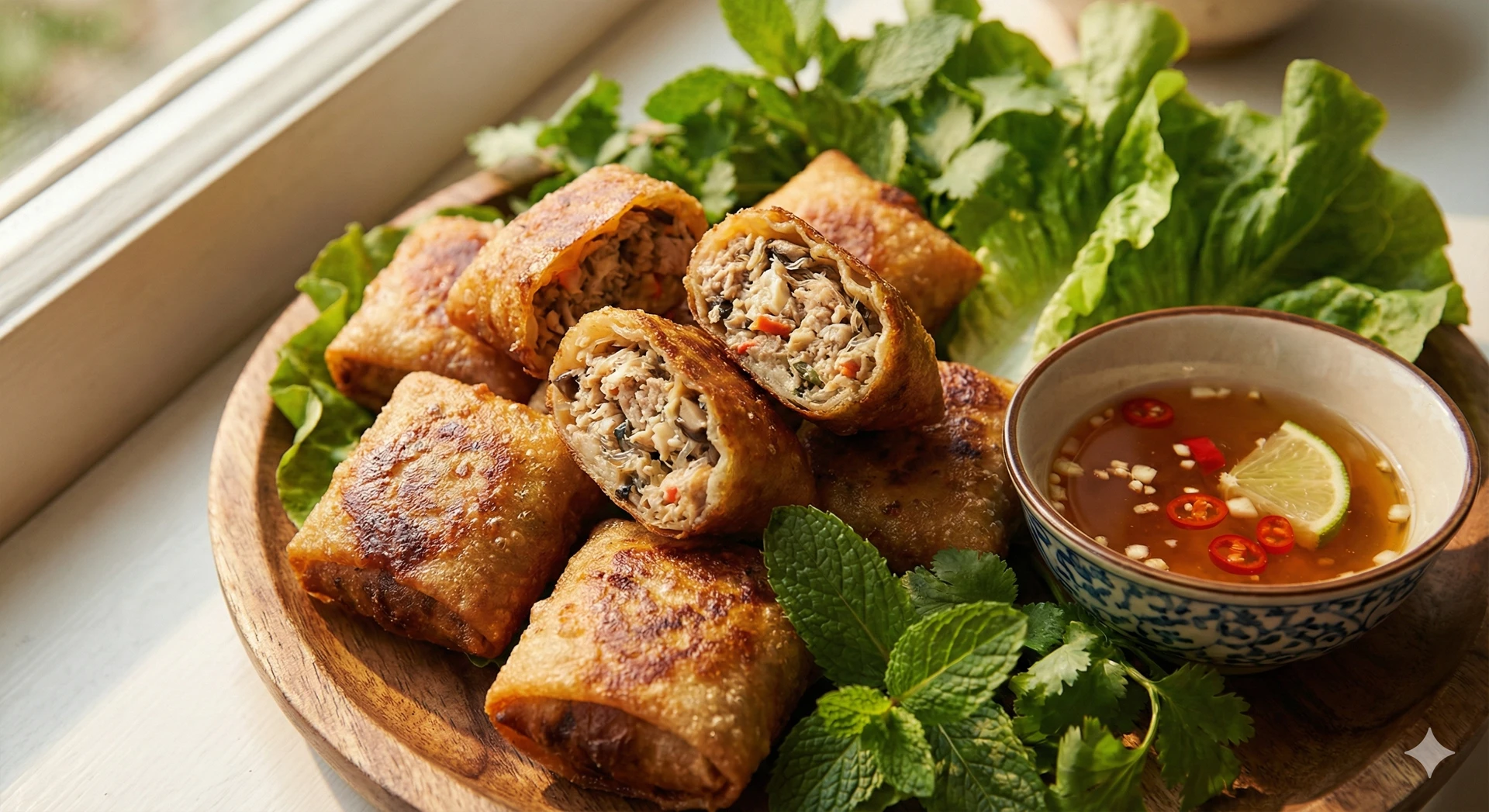
📸 The unmistakable square shape and golden crunch of Nem Cua Be.
1 Introduction: The Golden Squares of Delight
In the vibrant tapestry of Vietnamese cuisine, spring rolls hold a revered spot. But among the myriad variations, there's one that stands out for its unique shape, luxurious filling, and unparalleled crispness: Nem Cua Be, or Vietnamese Crab Spring Rolls. Hailing from the coastal city of Hai Phong, these square bundles of joy are more than just an appetizer; they're a culinary experience, a testament to the art of Vietnamese frying.
Unlike their cylindrical cousins, Nem Cua Be are meticulously crafted into distinct squares, offering a substantial bite filled with succulent crab meat, savory pork, and aromatic vegetables. Each bite delivers a symphony of textures – the shatteringly crisp exterior yielding to a tender, flavorful interior.
2 What is Nem Cua Be? A Culinary Gem from Hai Phong
The name "Nem Cua Be" directly translates to "Crab Square Roll." Originating from Hai Phong, a major port city in northern Vietnam, this dish benefits greatly from the city's abundant fresh seafood. What distinguishes Nem Cua Be from other Vietnamese spring rolls (like Nem Ran or Cha Gio) are a few key characteristics:
- Square Shape: The most striking difference. This allows for a thicker, more generous filling.
- Rich Filling: Primarily features fresh crab meat, often combined with lean ground pork, shrimp, wood ear mushrooms, glass noodles, and jicama or taro for sweetness and texture.
- Rice Paper Wrapper: While common, the specific way it's folded into a square creates multiple layers, contributing to its incredible crunch.
This dish is a source of immense pride for Hai Phong locals and is a must-try for any food traveler exploring northern Vietnamese cuisine.
3 The Heart of the Roll: Essential Ingredients
The secret to Nem Cua Be's irresistible flavor lies in the quality and balance of its filling. Here's what you'll typically find:
The Stars of the Show
- Fresh Crab Meat: This is non-negotiable. Use fresh lump crab meat, picked clean from the shell, for the best sweetness and texture.
- Ground Pork: Lean ground pork provides a savory base and binds the filling.
- Shrimp (Optional): Finely chopped shrimp can be added for extra sweetness and oceanic depth.
The Supporting Cast
- Rice Paper Wrappers: The large, round, thin type is preferred for its crispness.
- Glass Noodles (Mien): Rehydrated and chopped, they add a chewy texture.
- Wood Ear Mushrooms (Moc Nhi): Provide an earthy flavor and a slight crunch.
- Jicama (Cu Dau) or Taro: Finely diced, these add a subtle sweetness and crisp texture.
- Shallots & Garlic: Aromatic foundation.
- Eggs: To bind the filling ingredients.
- Seasonings: Fish sauce, sugar, salt, black pepper – simple yet potent.
4 Crafting Perfection: A Step-by-Step Guide
Making Nem Cua Be is a labor of love, but the results are incredibly rewarding.
Prepare the Filling
Combine all filling ingredients (crab, pork, shrimp, noodles, mushrooms, jicama, eggs, seasonings) in a large bowl. Mix thoroughly until well combined.
The Square Fold
Lay out a damp rice paper. Place a generous spoonful of filling in the center. Fold the bottom edge over the filling, then fold in the sides to create a square. Roll up tightly. The square shape is key!
The Double Fry for Ultimate Crunch
Fry the rolls twice. First, at medium heat (160°C/325°F) until cooked through and lightly golden. Drain. Then, fry a second time at higher heat (180°C/350°F) until deep golden brown and shatteringly crispy.
The Essential Companion: Nuoc Cham 🌶️
No Nem Cua Be experience is complete without its soulmate: the classic Vietnamese dipping sauce, Nuoc Cham. Its balance of sweet, sour, salty, and spicy perfectly cuts through the richness of the fried rolls.
Classic Nuoc Cham
Fish sauce, sugar, lime juice, water, minced garlic, and bird's eye chilies. Proportions are key to a perfect balance.
Spicy & Tangy Variations
For an extra kick, add more chili or a dash of Sriracha. Some prefer a slightly sweeter version with more sugar.
Fresh herbs like mint and cilantro, along with lettuce leaves, are crucial for wrapping. It's how Vietnamese people eat fried spring rolls!
6 Serving Suggestions: Beyond the Appetizer
While Nem Cua Be makes a fantastic standalone appetizer, it's also versatile enough to be incorporated into heartier meals:
- Bún Nem Cua Be: The quintessential way to enjoy these rolls. Serve over a bed of fresh vermicelli noodles (bún), fresh herbs (lettuce, mint, perilla), pickled daikon and carrot, and a generous drizzle of Nuoc Cham.
- Lettuce Wraps: A lighter option. Wrap a piece of Nem Cua Be in a lettuce leaf with fresh herbs and dip into sauce. The coolness of the lettuce perfectly complements the hot, crispy roll.
- Party Platter: Cut into smaller pieces and serve alongside other Vietnamese appetizers for a diverse tasting experience.
7 Expert Tips for the Crispiest Rolls
Fresh is Best
Especially for the crab meat. Its natural sweetness is the star. Avoid pre-packaged or frozen crab if possible.
The Double Fry Method
As mentioned, this is crucial. The first fry cooks the interior, and the second fry (at higher heat) achieves that golden-brown, bubble-crisp exterior.
Oil Temperature Control
Use a thermometer! Too low, and the rolls absorb too much oil. Too high, and they burn before cooking through.
Don't Overfill
While generous, too much filling can lead to burst rolls or uneven cooking. Aim for a firm but not bulging roll.
8 Cultural Significance & Variations
Nem Cua Be isn't just a dish; it's often a highlight of family gatherings, especially during holidays like Tet (Lunar New Year) in northern Vietnam. Its rich ingredients signify prosperity and celebration. While Hai Phong's version is the most famous, regional variations might include slightly different ratios of crab to pork, or the addition of other local vegetables. In some Southern regions, you might find similar rolls, but the signature square shape remains largely a Northern tradition.
This dish truly embodies the Vietnamese philosophy of balancing flavors and textures in every bite.
9 Nutritional Highlights & Healthier Options
While deliciously indulgent, Nem Cua Be is a fried dish. Crab meat is an excellent source of protein, Omega-3 fatty acids, and essential minerals. Pork and shrimp also contribute protein.
For those looking for a healthier twist:
- Air Fryer Method: Lightly brush the rolls with oil and air fry until golden and crispy. This significantly reduces oil content.
- Baking: Bake in a hot oven (around 200°C/400°F) until golden, flipping halfway through.
- Leaner Fillings: Increase the ratio of crab and vegetables to pork.
Enjoy in moderation, especially when served with plenty of fresh greens to balance the meal!
Craving More Vietnamese?
Explore another classic appetizer that bursts with flavor and freshness.
🥗 Try Fresh Spring Rolls (Gỏi Cuốn)