" There's a primal satisfaction that comes with cracking open a perfectly cooked crab. But the experience is incomplete, a symphony without its second movement, if you haven't found its liquid soulmate. "
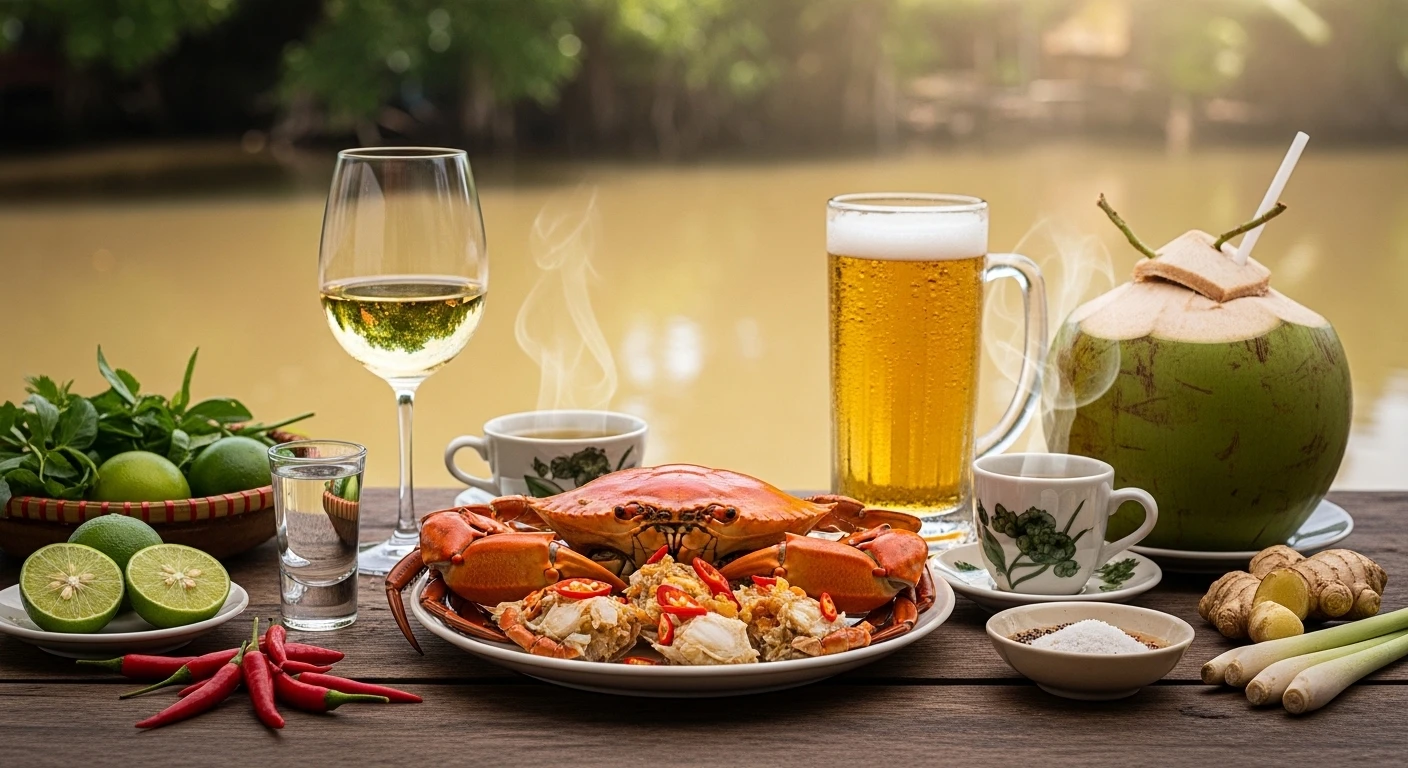
📸 The eternal question: What to drink with the king of crustaceans?
The Unspoken Language of the Sea: Crafting the Perfect Crab Pairing
In the vast culinary landscape of the world, few ingredients command as much reverence as crab. From the sweet, delicate flesh of a blue crab steamed simply, to the rich, unctuous intensity of a mud crab wok-fried in tamarind, its versatility is as boundless as the ocean itself.
But here in the Mekong Delta, where waterways crisscross the land like ancient veins, crab is more than just food; it's a way of life. The mud crabs (often referred to locally as cua biển, though they thrive in brackish waters) harvested from the mangrove forests of Ca Mau are legendary – plump, sweet, and bursting with flavor. And just like any great culinary treasure, finding its perfect liquid counterpart is an art form, a dance between texture, taste, and tradition.
Forget the old-school rules for a moment. We're diving deep into what truly elevates the crab experience, not just what's expected. We're asking: white wine, beer, or tea? And more importantly, which white wine, which beer, and which tea?
Beyond the Bubbly: Why Traditional Pairings Often Fall Short with Mekong Crab
For centuries, the culinary gospel dictated that seafood, especially delicate shellfish, must be paired with crisp, dry white wines. And while there's certainly a time and place for a glass of elegant Sancerre, the unique characteristics of crab, particularly those from the robust ecosystem of the Mekong Delta, demand a more nuanced approach.
The Mekong's crabs often boast a richer, sweeter meat than their colder-water cousins, sometimes with a faint mineral brininess that can clash with overly acidic wines. The way they're prepared also plays a crucial role. Are we talking about a simply steamed crab with lemongrass, where the purity of the meat shines? Or a decadent tamarind crab, a spicy, sour, sweet, and savory explosion that demands a drink with equal fortitude?
This isn't about snobbery; it's about synergy. It's about finding that perfect partner that cleanses the palate, enhances the sweetness, or cuts through the richness without overpowering the star of the show. So, let's explore the options, starting with the classic.
The White Wine Conundrum: Navigating the Grape Maze with Crab
Ah, white wine. The default setting for seafood. But like a river, not all white wines flow in the same direction. The key here is to match the wine's acidity, body, and aromatic profile to the crab's preparation and natural sweetness.
Crisp & Zesty: Sauvignon Blanc or Vinho Verde
For simply steamed or boiled crab, especially if served with a squeeze of lime and a sprinkle of salt (the traditional Vietnamese dipping sauce, muối tiêu chanh), a wine with bright acidity and herbaceous notes is a winner. Think of how lime cuts through richness – a similar principle applies here.
- Sauvignon Blanc: Especially from the Loire Valley (Sancerre, Pouilly-Fumé) or New Zealand. Its characteristic grapefruit, passionfruit, and grassy notes are a beautiful counterpoint to the crab's sweetness and the aromatics of lemongrass.
- Vinho Verde: From Portugal, these wines are typically low in alcohol, slightly effervescent, and bursting with lemon and green apple. They are incredibly refreshing and light, perfect for warm Mekong evenings.
Rich & Buttery: Oaked Chardonnay (Use with Caution!)
This is where things get tricky. A heavily oaked Chardonnay with its creamy texture, vanilla, and butter notes can be glorious with rich lobster dishes or crab cakes. However, with fresh, unadorned crab meat, it can sometimes overpower the delicate sweetness and make the pairing feel heavy.
- Best Use: Consider a lightly oaked or unoaked Chardonnay (Chablis, for example) with richer crab preparations like crab baked with cheese or a creamy crab soup. The wine’s body can stand up to the richness without clashing.
- Mekong Delta Tip: If you're having tamarind crab, stay clear. The fruitiness and acidity of the tamarind will wrestle with the oak, and neither will emerge victorious.
Aromatic & Off-Dry: Riesling or Gewürztraminer
These aromatic whites are the secret weapon for more complex or spicy crab dishes. Their inherent sweetness (even if off-dry) and floral or lychee notes can beautifully complement the sweetness of the crab and temper any chili heat.
- Riesling (Dry or Off-Dry): Especially from Alsace, Germany, or Australia. The stone fruit and mineral notes, combined with searing acidity, make it fantastic with crab stir-fried with ginger and spring onion or even a mildly spicy chili crab.
- Gewürztraminer: With its exotic perfume of lychee, rose petals, and ginger, it's a daring but rewarding choice for crab cooked with a hint of curry powder or a dish boasting a complex array of Southeast Asian spices.
A Beer for Every Claw: From Crisp Lagers to Bold Ales
Forget the notion that beer is a less sophisticated choice. In the humid climes of Southeast Asia, a cold beer isn't just a drink; it's a lifeline. And for crab, it can often be the most forgiving and downright delightful pairing.
The Ubiquitous Lager: Crisp, Clean, and Classic
This is the workhorse of the Mekong Delta. Local lagers like Tiger, Bia Saigon, or 333 (Ba Ba Ba) are light, refreshing, and possess enough carbonation to cleanse the palate after each succulent bite of crab.
- Best Use: The ultimate pairing for steamed crab. Its clean profile allows the crab's natural sweetness to shine, and it washes down the salty dipping sauce perfectly. It's also fantastic with crab porridge (cháo cua).
- Why it works: Low bitterness, high carbonation, and a neutral flavor profile prevent it from competing with the crab. It's the ultimate thirst quencher in the tropical heat.
Wheat Beers (Hefeweizen/Witbier): Fruity & Aromatic
With their cloudy appearance, citrusy notes (often from orange peel or coriander), and low bitterness, wheat beers offer a different dimension. They bring a gentle fruitiness that can enhance the crab's inherent sweetness without overwhelming it.
- Best Use: Excellent with crab salads or lightly dressed crab meat. A Belgian Witbier, with its spice notes, can also be a surprising hit with ginger and scallion crab.
Pale Ales & IPAs: For the Adventurous Palate
This is a bolder choice, best reserved for more robustly flavored crab dishes. The hoppy bitterness and often citrusy or piney notes of a Pale Ale or IPA can stand up to strong flavors, but choose wisely.
- Best Use: Consider a moderately hoppy Pale Ale with chili crab or black pepper crab. The bitterness can cut through the richness and spice. Avoid overly bitter IPAs with delicate crab preparations, as they will obliterate the flavor.
The Elixir of Serenity: Unlocking Crab's Potential with Tea
Perhaps the most unexpected pairing for a Western palate, but in Asia, tea is a beverage of profound cultural significance and an incredible partner to food. Its ability to cleanse, refresh, and subtly enhance flavors makes it a dark horse contender for the ultimate crab pairing.
Green Tea: The Cleansing Stream
Light, grassy, and often with a hint of oceanic umami, green tea is a phenomenal palate cleanser. Its astringency can cut through the richness of crab fat, while its delicate flavors won't compete with the meat's sweetness.
- Best Use: Brewed cold, a quality Japanese Sencha or a crisp Chinese Dragonwell is sublime with steamed crab or crab spring rolls. It prepares your palate for the next delicious bite.
Oolong Tea: The Aromatic Bridge
Oolong teas, with their spectrum of oxidation levels, offer a wide range of flavor profiles from floral to toasty. A lighter, greener Oolong can mimic some of the qualities of a good white wine.
- Best Use: A Tie Guan Yin Oolong (with its floral and buttery notes) pairs surprisingly well with crab with garlic butter or crab noodles (bánh canh cua). Its complexity can complement, not overshadow.
Jasmine or Chrysanthemum Tea: The Floral Whisper
For those who prefer a gentler, more aromatic experience, floral teas can add a beautiful dimension.
- Best Use: Jasmine green tea, hot or cold, with its intoxicating perfume, is wonderful with ginger and lemongrass crab preparations. Chrysanthemum tea offers a lighter, slightly sweet floral note that is incredibly refreshing.
The Mekong Delta's Secret Sips: Local Libations You Must Try
When in the Delta, do as the Deltans do. Beyond global choices, there are local drinks that, while perhaps less known to the Western palate, are inherently designed to complement the region's cuisine.
Rượu Đế: The Rice Spirit with a Kick
This is Vietnam's traditional clear rice liquor, often homemade in various Mekong Delta provinces like Can Tho or Soc Trang. It's potent, often with an earthy, slightly sweet undertone.
- Best Use: Sip rượu đế sparingly, alongside intensely flavored dishes like roasted chili crab or crab hot pot. Its strength can cut through rich sauces and refresh the palate with its raw, clean finish. This is not for the faint of heart, but it’s an authentic experience.
Fresh Coconut Water (Nước Dừa Tươi): Nature's Own Pairing
Perhaps the purest and most natural pairing of all. Straight from the coconut, this slightly sweet, subtly salty, and incredibly hydrating drink is a match made in heaven for all seafood.
- Best Use: Any and every crab dish, especially steamed crab (cua hấp). Its delicate sweetness enhances the crab's natural flavors, and it's incredibly refreshing. Some locals even steam crab directly with coconut water for an extra layer of sweetness.
The Art of the Match: How to Taste and Choose Your Perfect Pour
Ultimately, taste is subjective, but a few guiding principles can help you become a master crab-pairing connoisseur:
- Consider the Crab's Preparation:
- Simple & Steamed: Lean towards crisp white wines, light lagers, or delicate green teas.
- Rich & Buttery/Creamy: Medium-bodied Chardonnays, wheat beers, or lighter Oolongs.
- Spicy & Aromatic: Off-dry Rieslings, hoppy Pale Ales (with caution), or robust black teas.
- Sweet & Sour (Tamarind): This is tough. Look for something that can handle complexity – maybe a fruit-forward Rosé or a crisp lager.
- Balance Flavors: The drink should enhance, not compete with or overpower, the crab. If the crab is delicate, choose a delicate drink. If it’s bold, go bold.
- Acidity is Your Friend: Especially with rich seafood, acidity cleanses the palate, making each bite as exciting as the first. This is why white wines and crisp beers work so well.
- Temperature Matters: Always serve white wines and beers chilled. Teas can be hot or cold depending on preference, but cold tea is incredibly refreshing in the tropics.
- Experiment! The best pairing is the one you enjoy most. Don't be afraid to try something new, especially with the incredible bounty of the Mekong Delta.
Beyond the Plate, Beyond the Glass: The Mekong Delta Experience
Pairing drinks with crab isn't just about chemistry; it's about the experience. It's about sitting by the river in Ca Mau, the air thick with the scent of salty water and grilling seafood, a cool drink in hand, and the sound of distant sampans. It's about respecting the ingredient, understanding its origins, and celebrating the culinary traditions that bring it to life.
Whether you choose the elegance of a perfectly chilled Sauvignon Blanc, the refreshing simplicity of a local lager, or the calming embrace of a green tea, remember that the true joy lies in the moment. The Mekong Delta offers not just food, but a journey for the senses. So, next time you crack open that shell, choose your liquid companion wisely – it's an invitation to a deeper understanding of this incredible region.
Cheers, or rather, "Chúc sức khỏe!" (to your health!) from the heart of the Delta.