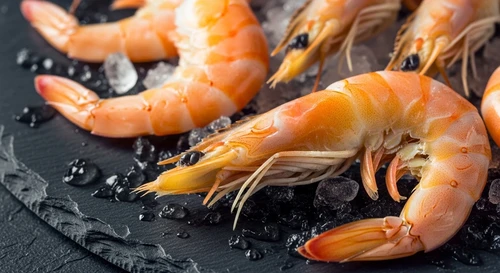
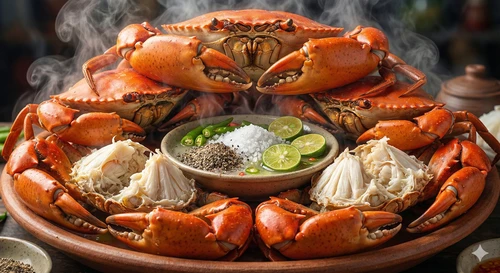
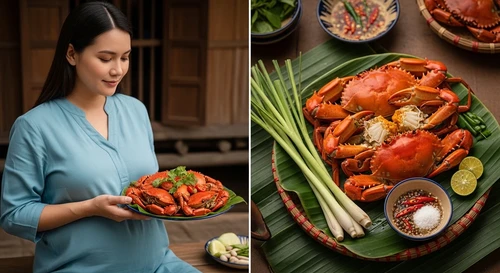
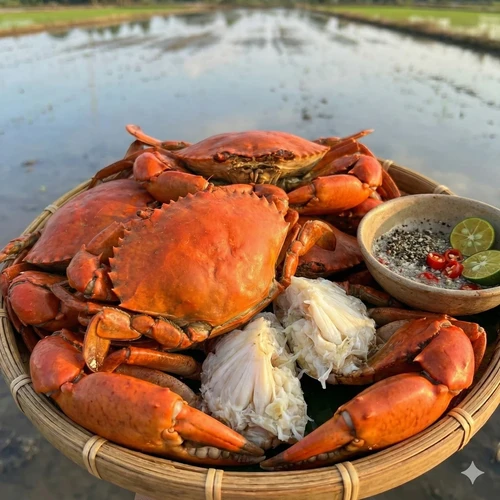
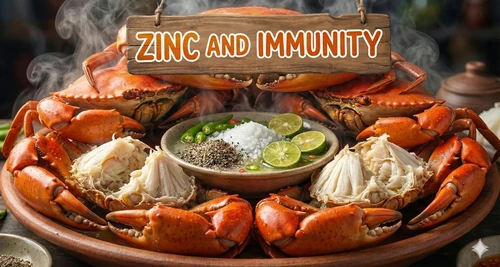
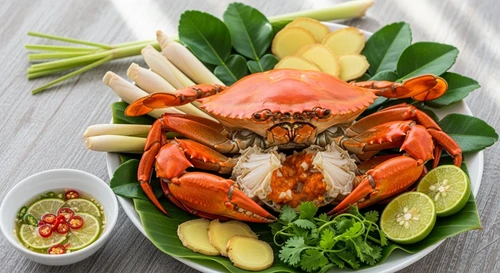
" In the grand culinary debate, certain foods earn a hallowed status not just for their taste, but for the invisible power they wield over our well-being. Today, we put two seafood champions on the block: the revered salmon, and the underdog with a colossal claw – the crab, especially those magnificent specimens from the Mekong Delta. "
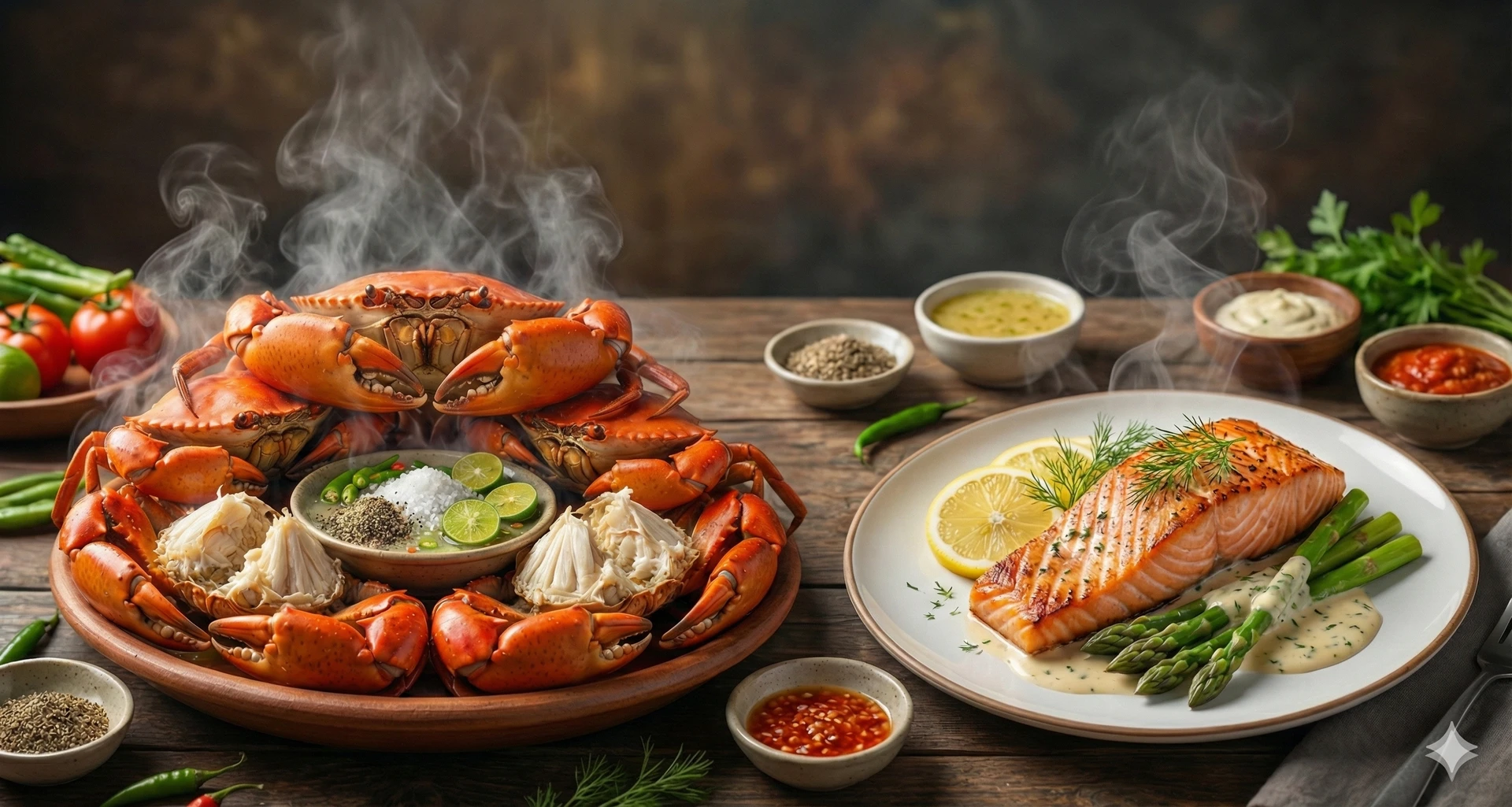
📸 A symphony of flavor and health: Mekong crab meets the mighty salmon.
1 The Soul of the Mekong: Crabs and Their Culinary Pedigree
Before we delve into the hard science, let's set the scene. Journey with me to the southern tip of Vietnam, to the labyrinthine waterways of the Mekong Delta. Here, amidst the mangroves and silt-rich estuaries, thrive some of the world's most prized crabs. Mud crabs, blue swimmer crabs, or the glorious king crab – these crustaceans aren't just food; they're a way of life, an economic backbone, and a source of immense pride.
The sweet, delicate flesh of a Mekong crab, often simply steamed with lemongrass and beer, is an experience in purity. It's a taste of the river, the ocean, and the sun-drenched landscape all at once. For generations, locals have revered these creatures not just for their exquisite flavor but for their inherent goodness. But how does this humble, hard-shelled delight stack up against the global darling of healthy eating, salmon?
2 Salmon's Reign: A Global Omega-3 Superstar
On the other side of the world, in the colder, deeper waters of the Atlantic and Pacific, swims the undisputed champion of the healthy fats game: salmon. From Norwegian fjords to Alaskan rivers, salmon has earned its reputation as a nutritional powerhouse, revered by dieticians, chefs, and health enthusiasts alike.
Its vibrant, orange-pink flesh is synonymous with Omega-3 fatty acids, promising everything from heart health to brain function. Grilled, baked, pan-seared, or enjoyed raw as sashimi, salmon's versatility and universally appealing flavor make it a staple in countless diets. But are we giving enough credit to other seafood contenders in the Omega-3 arena?
3 The Science of Good Fats: Understanding Omega-3s (EPA & DHA)
Before we pit our contenders against each other, let's clarify what we're talking about. Omega-3 fatty acids are a type of polyunsaturated fat essential for human health. Our bodies can't produce them, so we must get them from our diet. The two most crucial long-chain Omega-3s found in seafood are:
- EPA (Eicosapentaenoic Acid): Known for its anti-inflammatory properties and benefits for heart health.
- DHA (Docosahexaenoic Acid): Critical for brain development and function, vision, and cognitive health.
These fats play a vital role in reducing the risk of chronic diseases, supporting mental well-being, and even improving skin health. So, when comparing seafood, their EPA and DHA content is often the primary metric for "health."
4 The Head-to-Head: Crab vs. Salmon - The Omega-3 Numbers
Let's get down to the nitty-gritty. While both are excellent choices, there are clear differences in their Omega-3 profiles. Nutritional data can vary slightly based on species, wild vs. farmed, and cooking methods, but here's a general comparison per 100-gram (approx. 3.5 oz) cooked serving:
Salmon (Atlantic, farmed)
Total Omega-3s: ~1.5 - 2.5 grams
- EPA: ~0.5 - 1.0 gram
- DHA: ~0.7 - 1.5 grams
- Also rich in Vitamin D, B vitamins, Selenium.
Crab (Blue Swimmer/Mud Crab)
Total Omega-3s: ~0.3 - 0.5 grams
- EPA: ~0.1 - 0.2 grams
- DHA: ~0.2 - 0.3 grams
- Excellent source of Vitamin B12, Zinc, Copper, Selenium, Chromium.
Conclusion on numbers: Salmon undeniably packs a significantly higher punch when it comes to the sheer quantity of Omega-3s per serving.
5 Beyond Omega-3s: The Broader Nutritional Spectrum
While Omega-3s are a star player, a healthy diet is about more than just one nutrient. Both crab and salmon offer a wealth of other beneficial compounds.
The Crab's Arsenal
- Vitamin B12: Crucial for nerve function and red blood cell formation, crab is one of the best sources.
- Zinc: Essential for immune function and wound healing.
- Copper & Selenium: Powerful antioxidants and vital for metabolic health.
- Protein: High-quality, lean protein with fewer calories than many other meats.
- Lower Mercury: Generally, crab is considered to have lower mercury levels than many larger fish.
Salmon's Nutritional Prowess
- Vitamin D: One of the few natural food sources of this essential vitamin for bone health and immunity.
- B Vitamins: A full spectrum, supporting energy metabolism.
- Astaxanthin: The carotenoid responsible for salmon's pink hue, it's also a potent antioxidant.
- Protein: An excellent source of complete protein.
So, while salmon dominates in Omega-3 quantity, crab offers a unique and impressive array of micronutrients that are often harder to find in other foods.
6 The Sensory Experience: Flavor, Texture, and Culinary Harmony
Beyond the numbers, food is an experience. This is where our two contenders diverge dramatically, each offering a distinct pleasure to the palate.
The Allure of Crab Meat
Crab meat is renowned for its delicate sweetness, tender flakiness, and subtle brininess. It's often described as tasting "clean" and "pure." The experience of cracking open a shell, digging out the succulent morsels, and savoring that unique texture is immensely satisfying. In the Mekong Delta, crab is often celebrated in its simplest form – steamed, perhaps with a whisper of ginger and lemongrass, served with a vibrant lime-salt-chili dipping sauce. This allows its natural flavors to shine unadulterated.
The Richness of Salmon
Salmon, in contrast, offers a richer, meatier flavor profile with a distinctive buttery texture thanks to its higher fat content. Its versatility is legendary: from smoky grilled fillets to delicate sashimi, from hearty baked dishes to lighter pan-seared preparations. The flavors tend to be more robust, often standing up well to stronger marinades, sauces, and spices.
7 Sustainable Sourcing: Eating with Conscience and Care
In an era of heightened environmental awareness, how and where our seafood is sourced is as important as its nutritional content.
The Mekong Crab Story
Many crabs from the Mekong Delta are wild-caught using traditional, low-impact methods like traps or nets, supporting local communities. Aquaculture for crab is also developing, with efforts to ensure responsible farming practices that protect mangrove ecosystems vital for crab habitats. Always inquire about the source and look for certifications if available.
The Salmon Narrative
Salmon sourcing is more complex. Wild-caught Alaskan salmon (Sockeye, Coho, King) is generally considered a highly sustainable choice. Farmed Atlantic salmon has had its controversies regarding environmental impact, but advancements in sustainable aquaculture are making it a better option. Look for certifications like ASC, MSC, or recommendations from guides like Monterey Bay Aquarium Seafood Watch.
Choosing sustainably sourced seafood ensures we can enjoy these delicacies for generations to come.
8 The Verdict: A Symphony of Choices, Not a Single King
So, after weighing the Omega-3 counts, the micronutrient profiles, the sensory experiences, and the environmental considerations, who wins the crown in our seafood showdown?
The truth is, there isn't a single victor. Salmon reigns supreme for sheer Omega-3 quantity, making it an excellent choice for those specifically targeting higher EPA and DHA intake. Its robust flavor and versatility also make it a reliable and beloved option worldwide.
However, to overlook crab would be a nutritional and culinary injustice. While lower in Omega-3s, Mekong Delta crab offers a bounty of vital minerals and vitamins, a delicate, unparalleled flavor, and often comes with a more accessible, traditional sourcing story in local communities. It's a testament to the fact that nutritional value isn't just about one metric; it's about the entire package.
My advice? Embrace both. Rotate your seafood choices. Enjoy the fatty richness of a perfectly cooked salmon fillet one week, and the sweet, pure indulgence of a Mekong crab the next. Variety truly is the spice of life, and in this case, the key to a comprehensive, delicious, and healthy diet. The world's waters offer an incredible diversity of life, each with its unique gifts for our palates and our well-being.
Craving More Healthy Mekong Eats?
Discover the wholesome beauty of Vietnamese cuisine, designed to nourish body and soul.
🌿 Explore Healthy Recipes