" There are dishes that merely satisfy hunger, and then there are those that transport you. This isn't just crab curry; it's a passport to the humid, vibrant chaos of the Mekong Delta, simmering in a bowl. Each spoonful is a journey, a taste of its generous waters and its warm, inviting kitchens. "
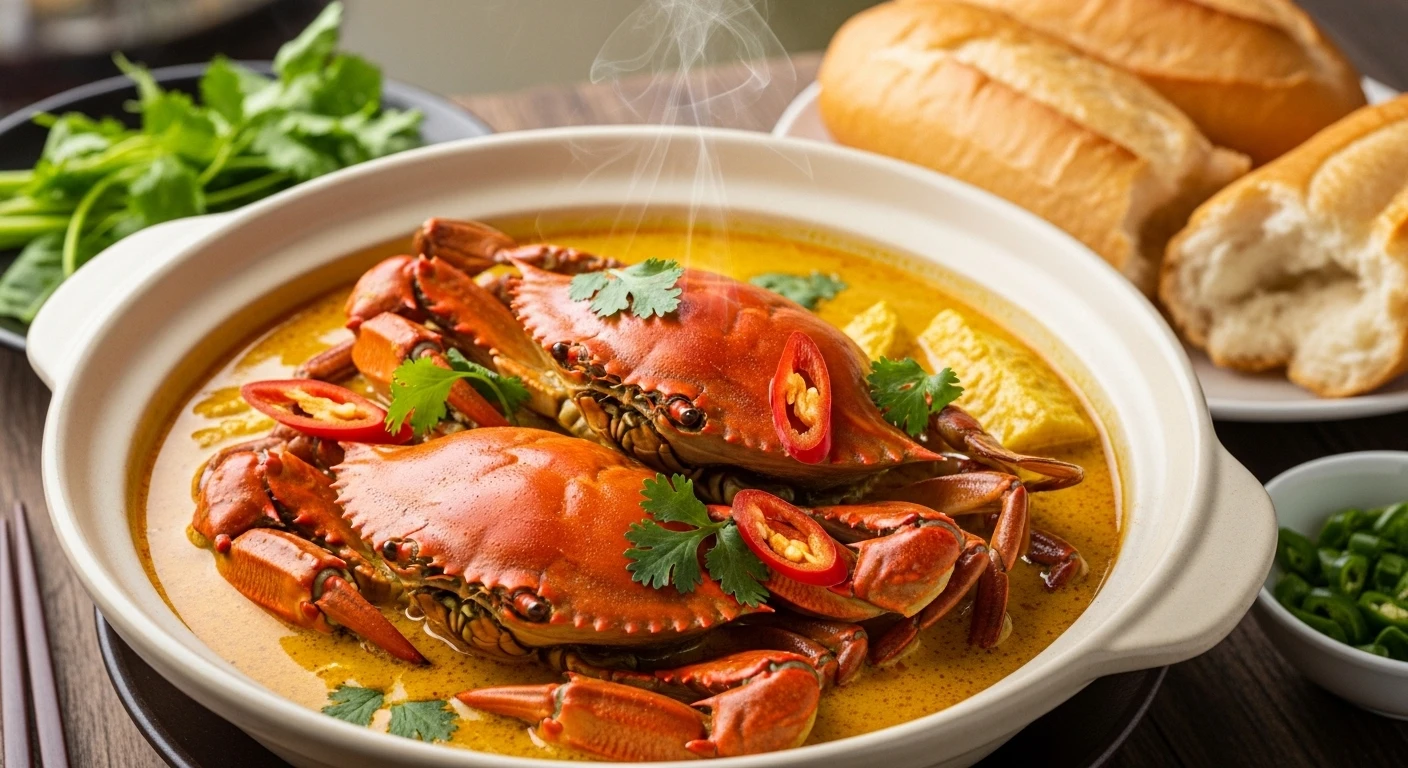
📸 A bowl of liquid gold: The vibrant hue of authentic Vietnamese crab curry, rich with coconut and fresh crab.
1 The Mekong's Golden Secret: Where Curry Meets the River
Forget what you think you know about curry. In Vietnam's southern breadbasket, the Mekong Delta, curry isn't just an import; it's been lovingly adopted, subtly tweaked, and made irrevocably its own. Here, amidst the labyrinthine waterways, emerald rice paddies, and bustling floating markets, seafood reigns supreme. And when that seafood is the plump, sweet flesh of local river crab, magic happens. Vietnamese crab curry, or Cà Ri Cua, isn't just a dish; it's a testament to the region's culinary philosophy: humble ingredients elevated to sublime heights.
This isn't the fiery, intense curry of Thailand, nor the complex, layered spice bomb of India. This is distinctly Vietnamese—a mellow, fragrant symphony where the richness of coconut milk forms a creamy embrace around the delicate sweetness of the crab, all brightened by a carefully balanced yellow curry paste. It’s comfort food, elevated, a dish you'd find simmering gently in a family kitchen in Ca Mau, or served piping hot from a street stall in Can Tho. The essence of the delta—its fertility, its warmth, its generosity—is captured in every golden spoonful.
2 From Mud to Market: The Soul of the Crab
The secret to any truly great seafood dish lies in its freshness. In the Mekong Delta, this isn't a luxury; it's a given. Crabs are plucked from the brackish waters of the river estuaries, often just hours before they land on your plate. We're talking about robust mud crabs (like the local cua gạch, a female crab prized for its rich, orange roe, often referred to as "brick crab" for its color) or blue crabs, their shells still glistening with estuary water. You’ll see them, tied up with string, scuttling around buckets at dawn markets, full of life and promise.
The best crab curry starts with a crab that's not just alive, but full of fight. This ensures sweet, firm meat that won't get lost in the luscious curry sauce. If you're not in the Delta, seek out live blue crab or Dungeness crab from your local fishmonger. Trust me, the difference between fresh and previously frozen crab in this dish is the difference between a whisper and a scream—the former is a culinary declaration, the latter, a compromise. Choose the declaration.
3 The Symphony of Flavors: Deciphering the Golden Paste
At the heart of our Vietnamese crab curry lies the yellow curry paste. Unlike its spicier cousins, this paste leans heavily on aromatics and a gentler blend of spices, designed to enhance, not overpower, the delicate crab. It’s a masterclass in subtlety, a fragrant foundation upon which the entire dish is built.
The Base Notes
Lemongrass, shallots, garlic, and fresh turmeric (which gives it that signature golden hue and earthy warmth) form the aromatic backbone. These are traditionally pounded into a fragrant paste in a mortar and pestle, often with a hint of galangal for a floral-peppery kick that deepens its character.
The Spice Whisperers
Dried red chilies (often rehydrated and deseeded for milder heat), star anise, cinnamon, and sometimes a touch of coriander and cumin round out the spice profile. The key is balance—enough to intrigue the palate and add warmth, but never to dominate the star of the show: the sweet, pristine crab.
This paste, when sautéed until fragrant, unleashes its complex aromas, turning your kitchen into a miniature Mekong Delta. It’s then ready to meld with the creamy coconut milk, creating the luscious, golden embrace for our star ingredient.
4 Crab Curry Vietnamese Style: The Recipe Unveiled
Enough talk, let's cook. This recipe is designed to bring the true flavors of the Mekong Delta into your kitchen. Prepare for a rich, aromatic experience that’s surprisingly straightforward, yielding a dish that tastes complex and deeply satisfying.
Yields: 4 servings | Prep time: 30 minutes | Cook time: 30 minutes
For the Curry
- 2-3 large live mud crabs (or Dungeness/blue crabs), about 1.5-2 kg total, cleaned and sectioned
- 2 tablespoons cooking oil (vegetable or canola)
- 1 large yellow onion, roughly chopped
- 2-3 tablespoons Vietnamese yellow curry paste (see notes for homemade, or use a good quality store-bought)
- 2 cans (400ml each) full-fat coconut milk
- 1 cup chicken or seafood broth
- 2-3 stalks lemongrass, smashed and cut into 3-inch pieces
- 2 tablespoons fish sauce (essential for umami and depth)
- 1-2 tablespoons sugar (to balance flavor, adjust to taste)
- 1 large sweet potato or taro root, peeled and cubed (optional, for texture and a subtle sweetness)
- 1/2 cup fresh pineapple chunks (optional, for sweetness and a touch of acidity that complements the crab)
For Garnish & Serving
- Fresh cilantro, chopped
- Fresh bird's eye chilies, sliced (optional, for heat)
- Lime wedges
- Toasted baguette or fluffy steamed rice (for soaking up the glorious sauce)
5 Mastering the Pot: Step-by-Step Culinary Journey
- 1
Prepare the Crab
Humanely dispatch the live crabs (a quick chill in the freezer for 15-20 min will put them to sleep, or a swift pierce to the heart in the underside for a quicker end). Clean thoroughly under cold running water: scrub the shell, remove the apron (the flap on the underside) and gills (feathery bits under the top shell). Crack the main body into quarters or halves, and gently crack the claws with a mallet or back of a heavy knife to allow the curry flavors to penetrate the meat.
- 2
Build the Base
In a large pot or Dutch oven, heat 2 tablespoons of cooking oil over medium heat. Add the chopped yellow onion and sauté until softened and translucent, about 5 minutes. Stir in the Vietnamese yellow curry paste and continue to cook, stirring constantly, for 2-3 minutes. This crucial step, known as "blooming" the spices, intensifies their flavor and aroma.
- 3
Simmer the Sauce
Pour in the two cans of full-fat coconut milk and the chicken or seafood broth. Add the smashed lemongrass stalks, fish sauce, and sugar. Bring the mixture to a gentle simmer, then reduce heat to low. If you're using sweet potato/taro and pineapple, add them now. Let the curry cook for 10-15 minutes, or until the vegetables are tender, allowing the flavors to meld beautifully.
- 4
Add the Crab
Increase the heat slightly to medium-low. Carefully add the cleaned and cracked crab pieces to the simmering curry, ensuring they are mostly submerged in the fragrant sauce. Cover the pot tightly and cook for 8-12 minutes, depending on the size of your crab. The shells should turn a vibrant red-orange, and the crab meat should be opaque and cooked through. Be vigilant and avoid overcooking, as this will toughen the delicate crab meat.
- 5
Taste and Serve
Carefully taste the curry and adjust seasoning if necessary. You might want to add more fish sauce for saltiness, sugar for sweetness, or a fresh squeeze of lime juice for brightness. Before serving, remove the woody lemongrass stalks. Ladle the golden, aromatic curry generously into bowls, garnish with fresh cilantro and a few slices of bird's eye chilies if you like extra heat. Serve immediately with warm, crusty baguette (essential for soaking up every last drop of that glorious sauce!) or fluffy steamed rice. This is a dish best enjoyed hot, with messy hands and a full heart.
The Pantry Essentials: Building Your Mekong Kitchen
The success of this curry lies not just in the technique, but in the quality and authenticity of its components. Here's what to look for and how to elevate your dish by making your own curry paste.
Sourcing Quality Ingredients
- Live Crab: Absolutely non-negotiable. Visit Asian markets or specialty seafood stores. Look for active crabs with no missing limbs. If they’re sluggish, they’re past their prime.
- Full-Fat Coconut Milk: This is crucial for the curry's creamy texture and rich flavor. Opt for unsweetened varieties from Thailand or Vietnam, often found in cans. Shake well before opening to emulsify.
- Premium Fish Sauce: Invest in a good quality Vietnamese fish sauce (like Red Boat, Three Crabs, or Phu Quoc brand). Its depth of umami flavor is unmatched and forms the backbone of many Vietnamese dishes.
- Fresh Aromatics: Lemongrass, fresh turmeric (if making paste), shallots, and garlic should be firm, plump, and intensely fragrant.
- Sweet Potatoes/Taro: If adding, ensure they are firm and free of blemishes. They add a comforting sweetness and thicken the curry naturally.
Crafting Your Own Curry Paste (Optional but Recommended)
While good quality store-bought pastes (like Maesri yellow curry paste, though it's Thai-style, it can be adapted) exist, making your own truly elevates the dish to another level of freshness and complexity. It’s worth the effort for that authentic Mekong flavor.
- Ingredients: 2-3 stalks lemongrass (white part only), 1 large shallot, 4-5 cloves garlic, 1-inch piece fresh turmeric (or 1 tsp ground), 1-inch piece galangal (optional, for added floral notes), 2-3 dried red chilies (rehydrated in hot water and deseeded for milder heat), 1 tsp shrimp paste (optional, for a deeper savory "funk"), 1/2 tsp ground cumin, 1/2 tsp ground coriander.
- Method: Roughly chop all fresh ingredients. For best results, pound everything in a mortar and pestle until a smooth, fragrant paste forms. Alternatively, blend in a small food processor with a splash of water or oil, scraping down the sides as needed, until you achieve a fine paste. Store any extra in the fridge for up to a week.
7 The Perfect Accompaniment: Serving Your Golden Feast
In Vietnam, a curry isn't just a meal; it's a communal experience, a centerpiece that brings families and friends together. The table is laid with bowls of steaming jasmine rice or, more commonly in the south, a generous basket of crusty baguettes. There’s a dance to eating this dish—a delightful, slightly messy ritual that’s part of its charm.
- Baguette (Bánh Mì): The ultimate vehicle for soaking up every drop of that heavenly, coconut-rich sauce. Tear off chunks and dip directly, ensuring you don't miss a single flavor particle.
- Steamed Rice: A classic pairing, allowing the curry to be the undisputed star. A bowl of fluffy white rice provides a comforting contrast to the rich sauce.
- Fresh Herbs: A side plate of fresh cilantro, mint, and Thai basil adds an aromatic lift and brightens the palate. Don't underestimate the power of fresh herbs!
- Lime Wedges: A final squeeze of fresh lime juice just before eating adds a crucial tangy brightness that cuts through the richness and awakens the flavors.
- Chili: For those who crave an extra kick of heat, a small bowl of sliced bird's eye chilies or a drizzle of Sriracha on the side.
Don't be shy about getting your hands dirty. Eating crab is a tactile experience, a messy pleasure that’s part of the authentic enjoyment. Crack those claws, suck out the sweet meat, and let the golden curry coat your fingers. It’s all part of the fun.
Beyond the Bowl: Variations and Expert Tips
Once you've mastered the classic, don't hesitate to experiment with the Mekong Delta's dynamic culinary spirit. Cooking is an art, and every artist adds their own brushstroke.
Mekong Delta Pro Tips:
- The Sweet Spot of Balance: The Vietnamese palate reveres the balance of sweet, sour, salty, and spicy. Always taste and adjust sugar, fish sauce, and lime juice to your preference. It’s an iterative process.
- No Crab? No Problem: While crab is king in this dish, the rich curry base works beautifully with other seafood. Try it with large shrimp, firm white fish fillets (like snapper or cod), or even chicken for a different take. Adjust cooking times accordingly.
- Add Depth with Pork: Some traditional recipes might include a few pieces of pork belly or sliced pork shoulder, simmering alongside the crab to add an even deeper layer of richness and texture.
- Spice It Up: For those who enjoy more heat, keep some seeds in your dried chilies when making the paste, or add a few fresh Thai bird's eye chilies directly to the curry during the simmering process.
Storage and Reheating:
- Storage: Leftover curry can be stored in an airtight container in the refrigerator for up to 2-3 days. The flavors often deepen overnight!
- Reheating: Gently reheat on the stovetop over low heat, stirring occasionally. Be careful not to boil, especially if there's still crab in it, to avoid toughening the meat. A microwave can work, but stovetop is preferred for even heating.
A Taste of Home, Miles Away
Vietnamese Crab Curry is more than just a meal; it's an experience. It's the taste of sun-drenched deltas, the whisper of river breezes, and the joyous clamor of family meals. Whether you're an armchair traveler dreaming of distant shores or a seasoned chef looking for your next challenge, this dish offers a profound connection to the culinary soul of Vietnam. It’s bold yet comforting, exotic yet familiar—a true golden embrace that beckons you back for more. So, roll up your sleeves, crack open those crabs, and let the flavors of the Mekong wash over you. You won't regret it.
Craving More Mekong Flavors?
The Delta offers an endless bounty of culinary treasures. Dive deeper into its seafood wonders!
🌊 Discover Other Seafood Delights