" Forget champagne and caviar. In the Mekong Delta, when the Lunar New Year rolls around, the true king of the feast emerges from the muddy depths: the humble, yet magnificent, red crab. It's more than just a meal; it's a vibrant, clacking declaration of hope and prosperity, a sensory explosion that captures the very soul of Tet. "
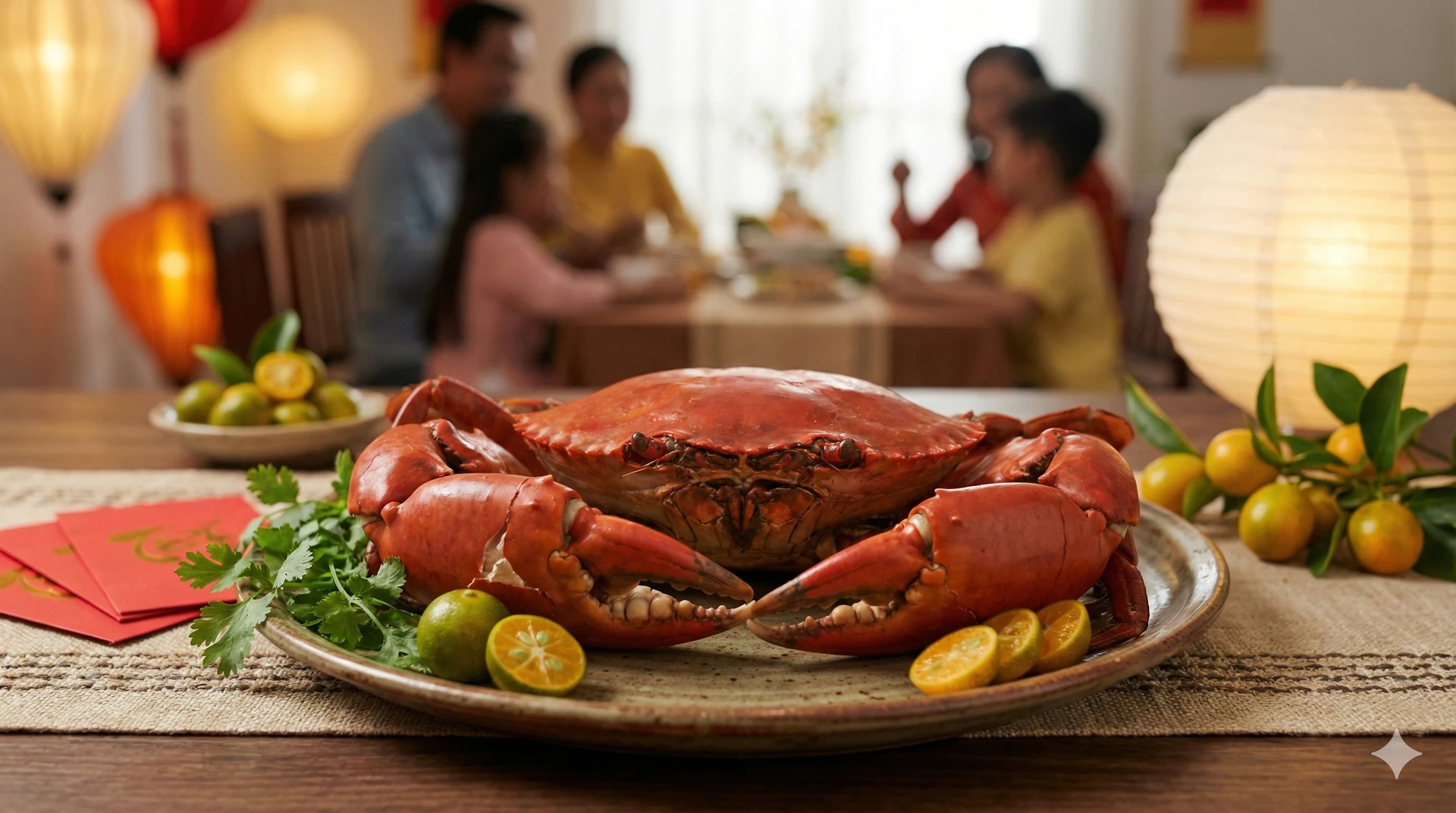
📸 The crimson beacon of good fortune: a perfectly prepared crab, ready for the Tet table.
1 The Crimson Tide of Tet: A Time of Renewal
Imagine a country collectively holding its breath, then exhaling a vibrant burst of color, sound, and flavor. That’s Lunar New Year, or Tet, in Vietnam. It’s more than just a new year; it’s a complete reset, a time for family reunions, honoring ancestors, and ushering in good fortune for the months ahead. Every corner of the home, every dish on the table, every garment worn, is steeped in meaning and ancient tradition.
In the Mekong Delta, Tet takes on an especially rustic charm. The bustling markets are awash with kumquat trees and vibrant flowers, while the air hums with the excited chatter of families preparing for the most important holiday. And among the myriad auspicious symbols, the color red reigns supreme. It’s everywhere: lucky money envelopes, festive decorations, traditional outfits, and, critically, on the plates of families across the country. It’s the color of prosperity, happiness, and vitality. Which brings us, quite naturally, to the crab. Not just any crab, but a specific, glorious crimson king that commands respect.
2 From Mangrove Mud to Festive Plate: The Mekong Delta's Culinary Treasure
To understand the Tet crab, you must first understand its origins, deep within the tangled roots of the Mekong Delta’s mangrove forests. This vast, fertile labyrinth of rivers, canals, and estuaries in southern Vietnam is a culinary paradise. Here, the brackish waters where river meets sea create the perfect habitat for some of the world's most prized mud crabs. These aren't your average supermarket crustaceans; they are robust, full-bodied creatures, whose meat is exceptionally sweet, firm, and abundant. Known locally as "cua gạch" (roe crab) or "cua thịt" (meat crab), depending on their state, they are truly a product of their unique environment.
During Tet, the demand for these crabs skyrockets. Fishermen in provinces like Ca Mau and Nam Can, famous for their abundant seafood, work tirelessly, navigating their small boats through winding waterways to bring in their catch. Watching them expertly net or trap these formidable creatures is a dance between man and nature. The journey from the murky mangrove roots to a bustling market, and then to a family's festive table, is a testament to the region's deep, respectful connection to its natural bounty. It's a raw, unpretentious beauty that only the Delta can offer, a taste of the land and water itself.
3 More Than Just a Meal: Unpacking the Red Crab's Mystique
The choice of crab for Tet is no accident. It's deeply woven into the fabric of Vietnamese folklore and belief, embodying powerful wishes for the coming year.
Prosperity & Wealth
The vibrant red color, especially when cooked, symbolizes incredible good fortune and a prosperous year ahead. Its hard, protective shell represents resilience, strength, and the ability to guard one's assets and family from harm.
Unity & Togetherness
Crab is inherently a communal food, requiring effort to crack open and share. This act fosters interaction, laughter, and strengthens family bonds during the most important holiday, emphasizing the value of coming together.
Growth & Vitality
In some beliefs, the crab's forward-moving nature and its ability to regenerate lost limbs represent continuous growth, adaptability, and unwavering progress in life, business, and personal endeavors.
So, when you see a glistening red crab on a Tet table, remember it's not just protein. It's an edible prayer, a silent wish for all the good things life can offer, a beacon of hope for the year ahead.
4 A Symphony of Flavors: Tet Crab Dishes
While the symbolism is profound, let's not forget the sheer culinary pleasure. Tet crab dishes are a celebration of freshness and flavor, often favoring methods that highlight the crab's natural sweetness and succulent texture.
- Steamed with Beer and Lemongrass: This is arguably the purest expression, a method I’ve seen countless times in homes across the Delta. A bed of aromatic, smashed lemongrass and thick-sliced ginger cradles the crab, while a splash of local beer (often a light lager like Bia Saigon or Tiger) at the bottom of the steamer gently infuses the steam. The result? Tender, sweet meat, subtly scented with bright citrus and a faint, malty earthiness. No heavy sauces, just honest, unadulterated flavor that lets the crab truly shine.
- Steamed with Coconut Water: Another immensely popular method, especially in the coconut-rich provinces. The fresh, young coconut water lends a delicate, almost ethereal sweetness and incredible tenderness to the crab meat, a softer, more mellow flavor profile that offers a delightful contrast to its beer-steamed cousin. It’s a taste of tropical luxury.
- Tamarind Crab (Cua Rang Me): For those who crave a punchier, more decadent experience, this dish is a flavor bomb. The crab is wok-fried with a sticky, tangy-sweet tamarind sauce, often amplified with fragrant garlic, a hint of fish sauce, and a kick of chili. It’s messy, glorious, and utterly addictive, leaving you with sticky fingers and a deeply satisfied smile. This is the kind of dish that makes you want to lick the plate clean.
- Crab Hotpot (Lau Cua): A quintessential communal dish, perfect for lively family gatherings. Fresh crab, often lightly fried or briefly boiled, is added to a simmering, savory broth. This broth is a complex symphony of flavors, often infused with herbs, ripe tomatoes, and fermented bean curd, giving it a rich umami depth. It’s a heartwarming experience, where everyone dips fresh noodles, crisp vegetables, and additional seafood into the shared pot, fostering conversation and connection.
Each dish offers a unique journey for the palate, but all share the common thread of celebrating the magnificent Mekong Delta crab, transformed into a centerpiece for Tet.
5 The Art of the Crack: Eating Crab Like a Local
Eating crab during Tet is not merely a meal; it's a performance, a hands-on ritual that brings families closer and embodies the festive spirit. There's no delicate fork-and-knife business here. It's about getting down and dirty, quite literally, with focused determination and joyous abandon. You'll often see entire families huddled around a shared platter, each person armed with their tools and an unshakeable resolve to extract every last morsel of sweet meat.
- The Tools of the Trade: You’ll typically be armed with a small, sturdy hammer or nutcracker for the formidable claws, and often a pair of sharp kitchen scissors to navigate the intricate shell of the body. Forget your Western table manners; this is an exercise in primal joy and efficiency.
- The Essential Dip: The essential accompaniment is a simple but potent concoction: a small dish of fine sea salt, freshly ground white pepper (or black, if that's what's available), and a generous squeeze of fresh lime juice. Some brave souls add thinly sliced bird's eye chili for a fiery kick. This zesty, salty, and often spicy dip is critical; it cuts through the richness of the crab, enhances its sweetness, and provides that quintessential Vietnamese flavor balance.
- Mastering the Technique: Begin with the largest claws. A satisfying crack with the hammer, then meticulous extraction of the sweet, chunky meat. Next, tackle the body. Gently pry open the top shell, remove the inedible gills (often called "dead man's fingers") and any other undesired parts, then break the body into sections. Carefully pick out every last succulent morsel. If you’re lucky enough to have a female crab, don't forget to savor the rich, creamy, orange-red roe – a true delicacy.
- The Shared Experience: Eating crab is inherently communal and interactive. Piles of discarded shells grow quickly, laughter and conversation fill the air, and hands get wonderfully sticky and aromatic. It’s a powerful bonding experience, sharing the bounty and the collective effort, often accompanied by sips of local beer or fresh coconut water.
Embrace the mess. Embrace the joy. This hands-on, flavorful exploration is precisely what makes Tet so unforgettable.
6 Beyond the Banquet: The Spirit of Tet Hospitality
While food is undeniably central, Tet is ultimately about people, connection, and profound hospitality. It's a time when homes are meticulously cleaned, freshly painted, and vibrantly decorated, not just for the family, but for an influx of honored guests. Hospitality is paramount during Tet, and offering the finest dishes, including the prized red crab, is a deeply respectful way to welcome visitors and extend sincere wishes for a prosperous and happy year ahead.
Throughout the holiday, you'll find families gathering for multiple elaborate meals, visiting relatives, and paying solemn respects to elders and ancestors. The air buzzes with an infectious excitement, the comforting scent of burning incense, and the lingering, mouth-watering aroma of delicious food wafting from every kitchen. The red crab, in its prominent and beautiful place on the Tet table, serves as a delicious and tangible reminder of these enduring values: family unity, cherished tradition, generosity, and the powerful hope for a bountiful future.
7 The Journey's Reward: Discovering Ca Mau, The Crab Capital
For the truly adventurous food traveler, a visit to Ca Mau province, Vietnam’s southernmost tip and undisputed crab capital, is an essential pilgrimage. While Tet itself might see some closures, the days leading up to and immediately following the main holiday offer an unparalleled glimpse into the heart of Delta life and its relationship with seafood.
- Witness the Source: In areas around Nam Can, you can often observe the traditional methods of crab farming and fishing. The sheer scale and sustainable practices are fascinating, providing an appreciation for where your festive meal originates.
- Market Marvels: The local markets in Ca Mau city or smaller towns are vibrant, chaotic symphonies of commerce. Look for tanks overflowing with live crabs – a crucial indicator of ultimate freshness. Don't be shy; point, haggle good-naturedly, and absorb the energy.
- Beyond Crab: While crab is king, Ca Mau offers other Delta delicacies. Try the fresh shrimp, diverse fish, and unique local fruits. Experience the rustic charm of wooden stilt houses over the water and the genuine warmth of the Mekong people.
- Local Eateries: Seek out family-run restaurants and street food stalls. They often serve the freshest catch, prepared with time-honored techniques. Trust your nose and the crowd; where the locals gather, the food is sure to be authentic and delicious.
A journey to Ca Mau isn't just about eating; it's about understanding the culture, the environment, and the hardworking people who bring these culinary treasures to life. It's an adventure that promises not just incredible food, but a deeper connection to a rich and ancient way of life.
8 Your Mekong Delta Tet Crab Quest: Insider Tips for Western Travelers
Planning a trip to the Mekong Delta during Tet, or even just eager to incorporate this festive tradition into your own life? Here's how to make the most of your red crab culinary adventure:
- Timing is Everything: Tet typically falls between late January and mid-February. Check the Lunar Calendar for the exact dates. Be aware that many larger businesses might close for a few days, but family-run eateries and markets will eventually reopen, often with even more festive energy.
- Freshness is Paramount: Whether you're in Vietnam or recreating the experience at home, always choose live crabs. The difference in taste and texture is undeniable. Look for active, heavy crabs.
- Embrace the Simplicity: For your first Tet crab experience, I highly recommend the steamed varieties (beer or coconut water). They truly allow the natural sweetness of the crab to be the star.
- Don't Fear the Spice: The lime-salt-pepper-chili dip is non-negotiable. Adjust the chili to your preference, but don't skip it entirely; it's a vital counterpoint to the crab's richness.
- Connect with Locals: Vietnamese people are incredibly hospitable. Don't be shy to ask about the significance of the crab, or how they prepare their favorite Tet dishes. It enriches the experience immeasurably.
- Recreate at Home: Can't make it to Vietnam for Tet? Source the freshest mud crabs you can find, gather your lemongrass, ginger, and beer or coconut water. You can bring a piece of the Delta’s auspicious culinary tradition to your own table.
It’s an adventure that promises not just incredible food, but a deeper connection to a rich and ancient culture, wherever you choose to experience it.
9 The Unforgettable Taste of Prosperity: Embracing the Tet Crab Tradition
As the festive period of Tet draws to a close, the lingering taste of sweet crab, the echoes of family laughter, and the vibrant imagery of red decorations remain. The crab, in its delicious simplicity and profound symbolism, serves as a powerful anchor to this most important Vietnamese celebration. It’s a dish that transcends mere sustenance, becoming a conduit for wishes, hopes, and familial bonds.
It's a reminder that true wealth isn't just about monetary gain, but about the richness of culture, the strength of family ties, and the promise of a fresh, auspicious start. So, the next time you find yourself in the Mekong Delta during Tet, or even if you're simply celebrating the Lunar New Year from afar, seek out that crimson crustacean. Crack its shell, savor its succulent meat, and taste the true spirit of Vietnamese prosperity – a flavor that lingers long after the last claw has been devoured.