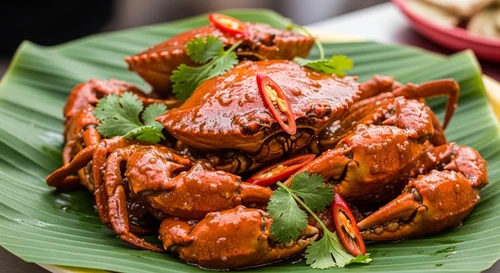
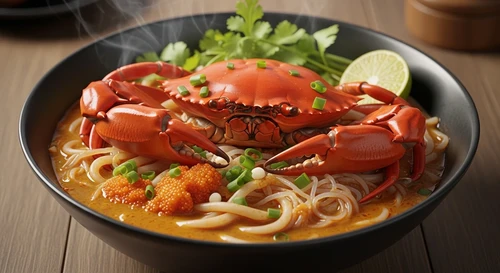
" The Mekong Delta. A vast, fertile plain crisscrossed by a thousand rivers and canals. It's the cradle of Vietnam's most prized seafood. And nowhere more so than Ca Mau, at the very southern tip, where the rich mangrove forests meet the sea. This is the land of the legendary Ca Mau mud crab. But travel south, along the endless ribbon of Highway 1A, and you'll find its reputation, like a wilting lotus, is sometimes twisted. "
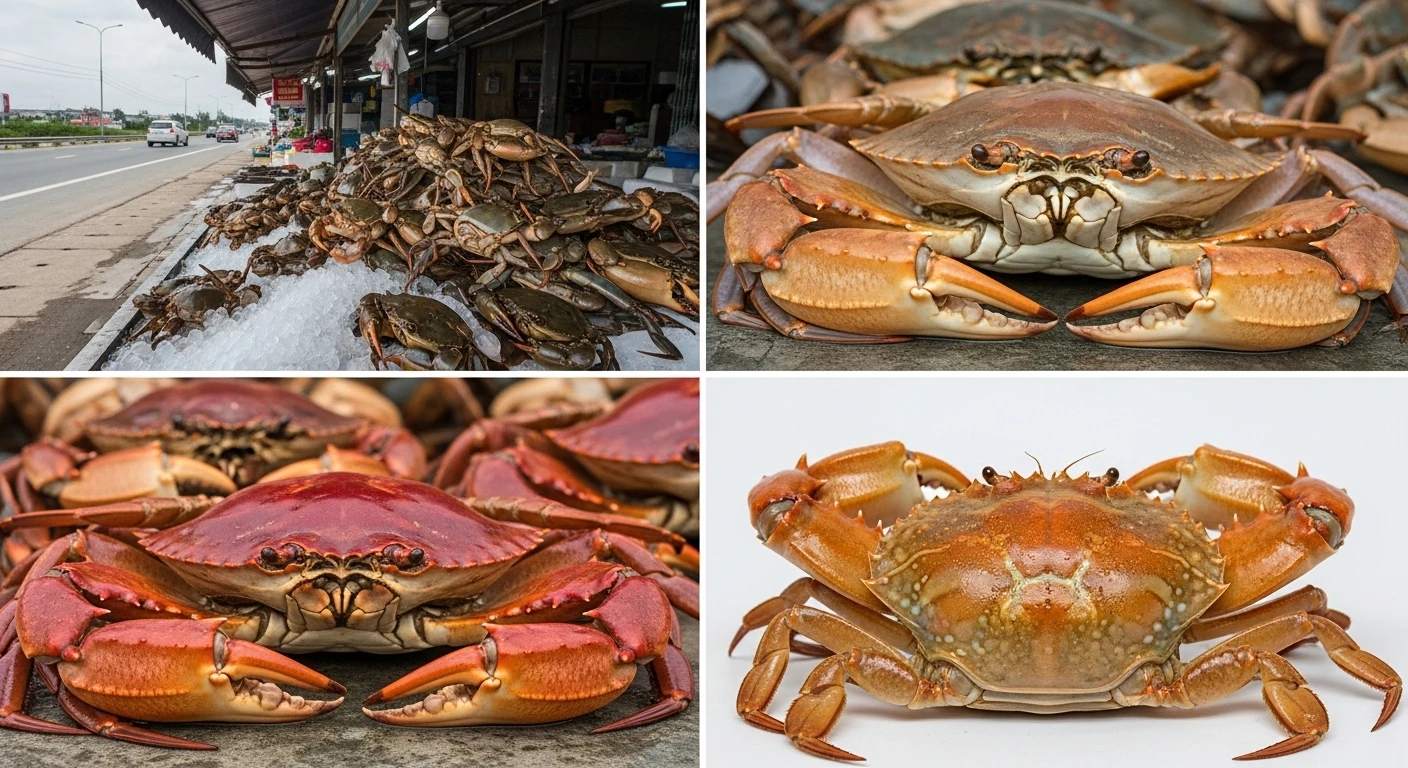
📸 The highway beckons: A tempting display of what seems like the freshest catch.
1 The Legend of the Ca Mau Crab
When you hear "Ca Mau crab," what comes to mind? For anyone who's ventured into Vietnam's southern culinary heart, it conjures images of deep-shelled, hefty mud crabs, brimming with sweet, dense meat or, if it's the roe variety, a rich, vibrant orange coral. Ca Mau's unique geography – a vast expanse of mangrove forests, brackish water channels, and a direct line to the Gulf of Thailand – creates an ecosystem perfectly suited for nurturing some of the world's finest mud crabs. These crabs are distinct; they are not merely seafood, they are a symbol of the region's rich biodiversity and the livelihood of its people.
The crabs from this specific coastal province are prized for their robust flavor, a testament to their diet and the pure, unpolluted waters they inhabit. Whether it's the "Cua Gạch" (Roe Crab) with its prized, creamy roe, or the "Cua Thịt" (Meat Crab) with its substantial, succulent flesh, true Ca Mau crabs command respect and a higher price tag. They are the benchmark against which other Vietnamese crabs are measured.
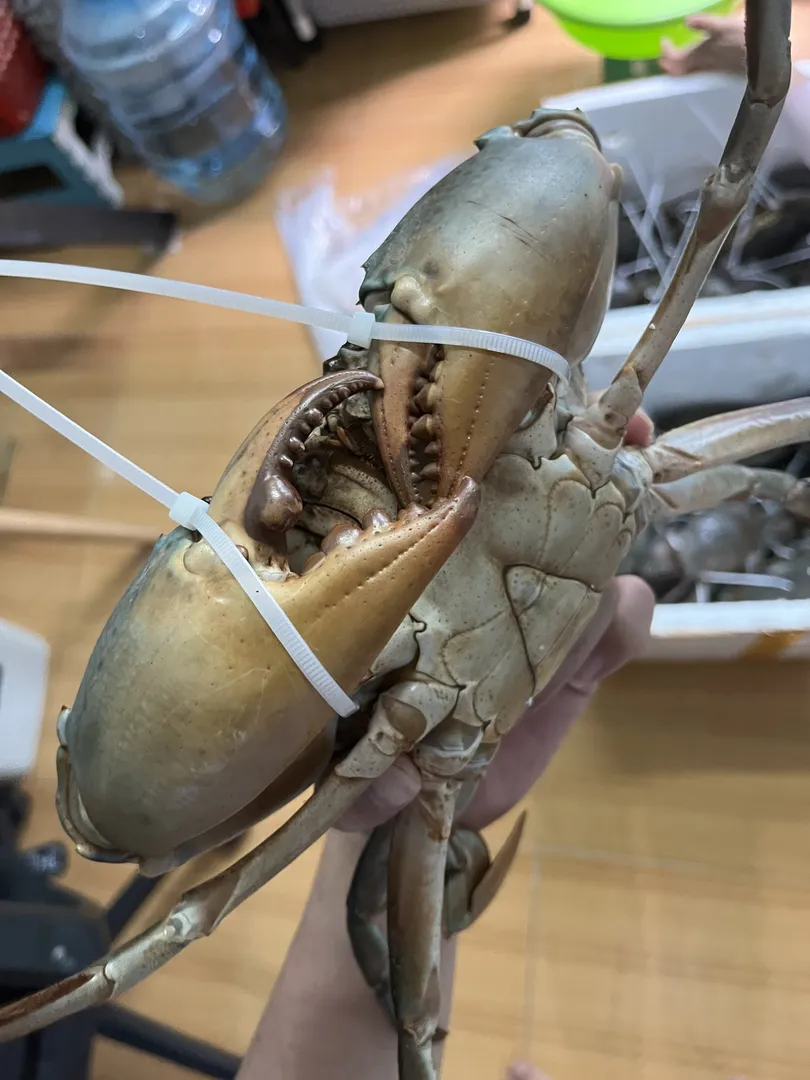
Heritage Ingredient
Ca Mau Jumbo Mud Crab
Ca Mau Jumbo Mud Crab
A large male mud crab prized for dense, sweet meat and thick claws, commonly used in steamed crab and grilled crab dishes across the Mekong Delta.
An icon of coastal culinary heritage, featuring firm, sweet meat that captures the raw power and freshness of Ca Mau's tides.
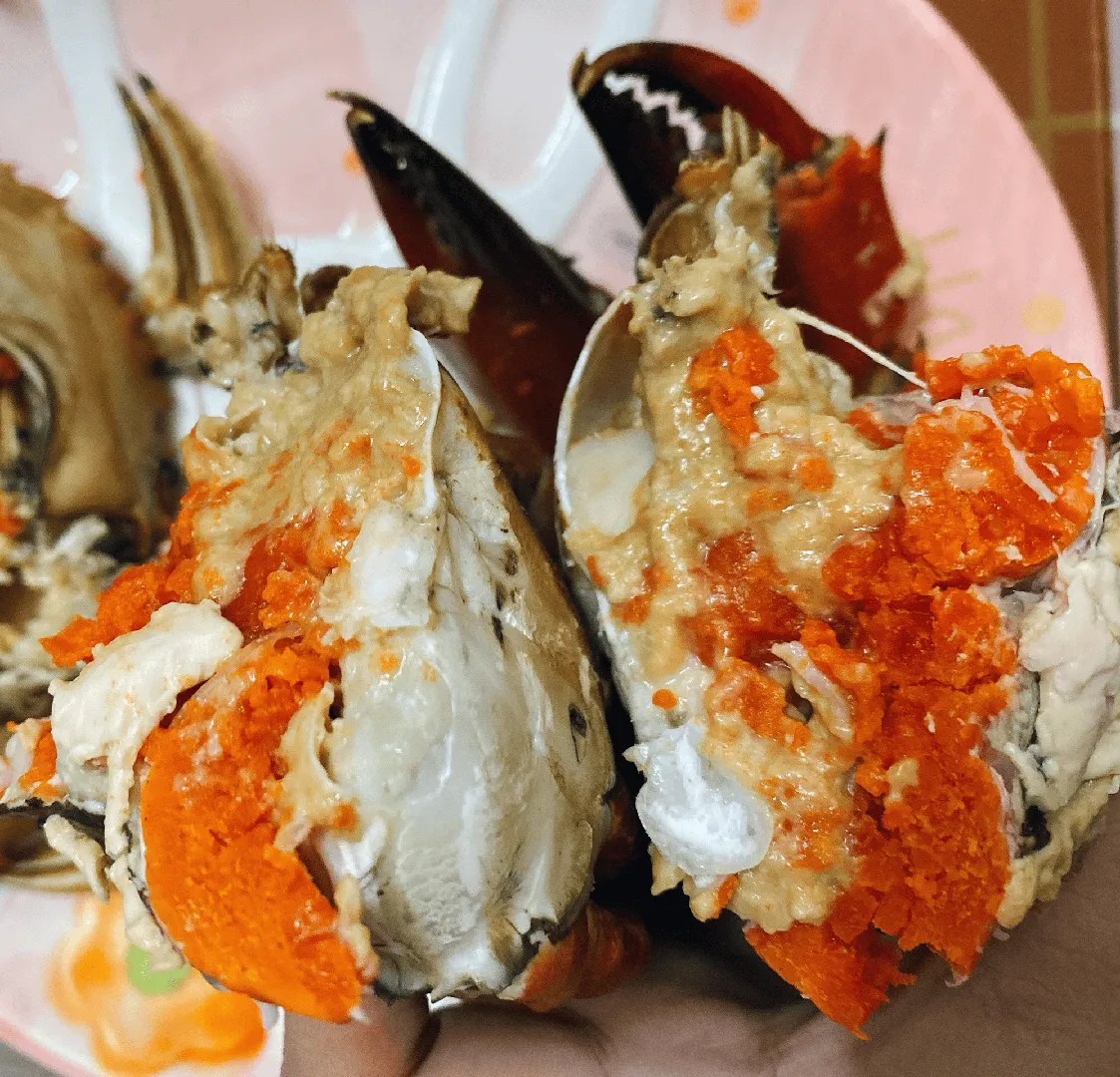
Heritage Ingredient
Ca Mau Roe Mud Crab
Ca Mau Roe Mud Crab
A female mud crab known for deep orange roe and a rich, creamy finish, often featured in celebratory Southern Vietnamese seafood meals.
A crimson treasure hidden within a shell, boasting rich, creamy roe that melts on your tongue like a golden sunset over the delta.
2 The Deceptive Roadside Stall
As you traverse National Highway 1A, the main artery connecting North and South Vietnam, you'll inevitably encounter seafood vendors. Often, these stalls are strategically placed in areas far from Ca Mau itself, yet they proudly display signs proclaiming "Ca Mau Crab." The crabs themselves might look impressive – large, heavy, and seemingly fresh. The prices, too, can be enticingly lower than what you'd expect for genuine Ca Mau produce. This is where the scam begins.
These vendors are rarely selling crabs sourced directly from Ca Mau. More often than not, they are peddling crabs from other coastal regions or even aquaculture farms in less pristine environments. These crabs might be from provinces like Binh Thuan, Khanh Hoa, or even areas closer to Ho Chi Minh City, where different species and cultivation methods yield a fundamentally different product.
The deception isn't just geographical; it's often about the species and quality. The crabs might be older, have thinner shells, less meat density, or lack the distinct flavor profile that makes Ca Mau crabs so sought after. In some cases, they might be injected with water or other substances to artificially increase their weight, a practice that further degrades the quality and flavor.
3 Cracking the Code: What to Look For
As a traveler navigating Vietnam's vibrant culinary landscape, protecting yourself from such scams is crucial. It's about respecting the ingredient and ensuring you get what you're paying for. Here’s what to observe:
Location, Location, Location
If you are hundreds of kilometers north or south of Ca Mau, and the vendor can't provide a verifiable story of direct transport, be skeptical. Genuine Ca Mau crabs are most reliably found in Ca Mau itself, or in high-end seafood markets and restaurants in major cities that specialize in regional produce.
Shell Texture and Color
True Ca Mau mud crabs, especially the meat crabs, typically have a hard, thick shell that's dark green to nearly black. Roe crabs have a rich, deep reddish-brown or dark brown shell. Any shell that looks unnaturally bright, pale, or has a chalky appearance might be from a different species or region.
Weight and Density
Ca Mau crabs are known for their substantial weight relative to their size. If a crab feels unusually light, or seems to have excessive gaps between its legs and body, it might be dehydrated, old, or even filled with water.
Claws and Legs
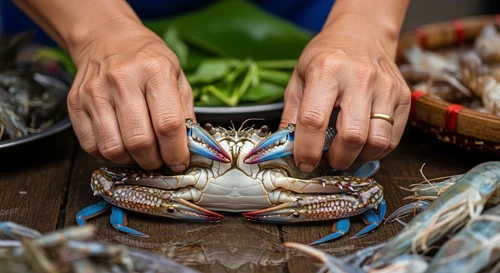
The claws of a healthy Ca Mau mud crab are substantial and filled with meat. If the claws seem disproportionately large or small for the body, or if the legs are detached or look shriveled, it’s a red flag. A good indicator of freshness is when the crab actively tries to move its legs and antennae.
Why Does the Source of Crab Matter So Much?
The Mekong Delta, particularly the coastal province of Ca Mau, is a unique environment. Its vast mangrove systems act as a natural nursery for marine life, including crabs. These mangroves filter the water, and the crabs feed on the rich detritus and smaller organisms found there, developing their characteristic sweet and dense flesh.
Mangrove Ecosystem
Crabs feed on diverse mangrove fauna, leading to complex, sweet flavors.
Water Purity
Unpolluted coastal waters contribute to cleaner-tasting, high-quality meat.
Livelihoods
Authentic Ca Mau crabs support local communities and sustainable fishing practices.
The finest quality, carefully selected crabs, like those destined for export, truly showcase the unique taste of Ca Mau.
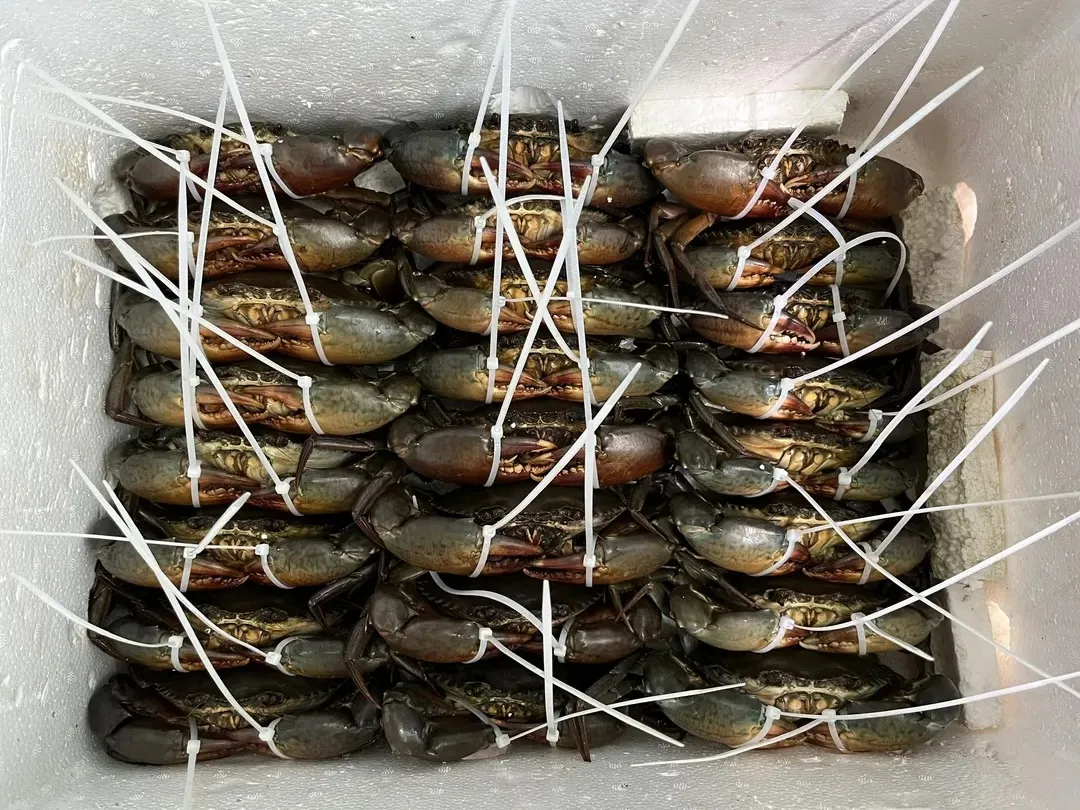
Heritage Ingredient
Export-Grade Ca Mau Roe Crab
Export-Grade Ca Mau Roe Crab
A carefully sorted roe crab selected for size, shell quality, and roe consistency, suitable for explaining premium grading in Vietnamese crab culture.
The pinnacle of perfection—pristine shells and bursting roe, meticulously selected to conquer the hearts of global gourmets.
5 Seeking Authenticity
So, how do you ensure you're getting the genuine article?
- Trust Reputable Seafood Markets: In cities like Ho Chi Minh City, look for established seafood vendors who are known for sourcing from specific regions. Ask questions!
- Dine at Specialized Restaurants: Restaurants that pride themselves on regional specialties often have direct suppliers. A good restaurant will be happy to tell you where their crabs come from.
- Visit Ca Mau Itself: The most surefire way is to travel to Ca Mau Province and experience its crabs fresh from the source. Explore local markets in cities like Ca Mau City or Nam Can.
- Be Wary of "Deals" on Busy Highways: While convenient, highway stalls are prime locations for disguised scams. The lower price is almost always a reflection of lower quality or incorrect origin.
6 More Than Just Seafood
The integrity of the Ca Mau crab is tied to the identity and economy of the region. For generations, fishing and crab farming have been the lifeblood for many communities in the southern tip of Vietnam. When you purchase a fraudulent "Ca Mau crab," you are not only being cheated out of a premium product, but you are also indirectly undermining the livelihoods of legitimate fishermen and farmers who adhere to sustainable practices. Supporting authentic regional produce means supporting the cultural heritage and the economic sustainability of places like Ca Mau.
The Business of Deception
The motivation is simple economics. Crabs from Ca Mau, due to their quality and reputation, fetch a higher price. By misrepresenting lower-quality, more readily available crabs as "Ca Mau," vendors can significantly increase their profit margins. The tourist, unfamiliar with the nuances of Vietnamese seafood and lured by a seemingly good deal and proximity to a 'famous' product, becomes the unwitting victim. It’s a practice that unfortunately tarnishes the reputation of genuine producers and can lead to disappointment for travelers seeking authentic culinary experiences.
A Word to the Wise Traveler
Vietnam's food scene is a treasure trove, and the Mekong Delta, with its bounty, is a culinary Shangri-La. When it comes to something as prized as Ca Mau crab, let your palate, not just the roadside signage, guide you. Ask questions, do your research, and when in doubt, err on the side of caution. The true taste of Ca Mau is worth seeking out, but it demands a discerning eye and an informed appreciation. Don't let a highway scam rob you of a truly exceptional crustacean experience.