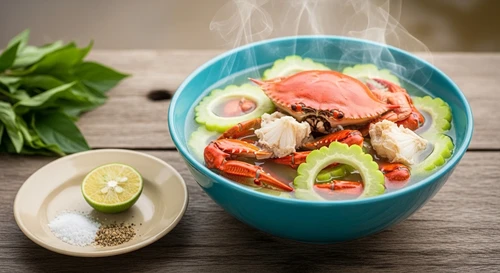
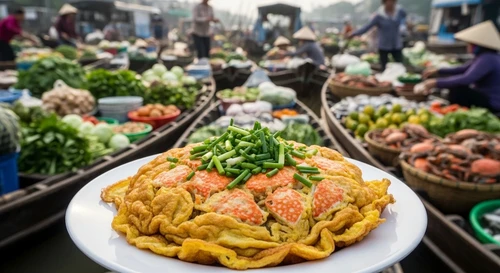
" You can't fake freshness. Not here, not in the Mekong Delta. The rivers and canals teem with life, and the people here know how to treat their bounty with the utmost respect. This crab dish? It's less a recipe, more a prayer to the ocean's sweetness. "

📸 Perfectly steamed mud crab, its shell radiating an inviting hue.
1 Where Rivers Kiss the Sea: The Mud Crab's Domain
The Mekong Delta, a labyrinth of rivers, canals, and fertile floodplains, is Vietnam's rice bowl and a treasure trove of seafood. Along the coast, particularly in provinces like Ca Mau, the brackish waters are ideal for raising mud crabs. These aren't just any crabs; they are the source of this deceptively simple dish. The crabs are typically farmed in mangrove forests, feeding on natural marine life, which imbues their meat with a firm texture and a unique sweetness. The best ones, caught fresh from these waters, are destined for a culinary fate that requires minimal intervention.
The Crab Itself
The quality of the crab is paramount. Look for lively, heavy crabs with hard shells. In the Delta, "cua thịt" (meat crabs) are prized for their plump, sweet flesh, while "cua gạch" (roe crabs) are celebrated for their rich, creamy orange roe.
The Living Water
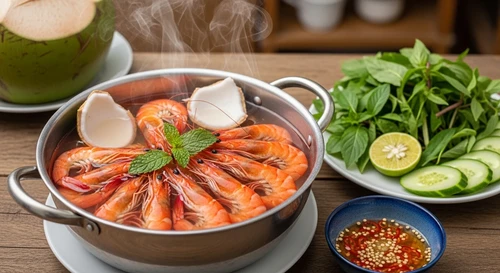
The secret to the enhanced sweetness lies in the liquid used for steaming. While some regions might use beer or wine, the Mekong Delta's iconic method employs fresh coconut water, straight from the young, green coconuts harvested from the region's groves.
2 The Sweet Elixir: Why Coconut Water?
Forget heavy marinades or complex spice blends. The magic here is in the simplicity. Fresh coconut water, with its natural sugars and delicate tropical aroma, becomes the perfect steaming medium. As it heats, the liquid gently infuses the crab meat, amplifying its inherent sweetness and adding a subtle, fragrant undertone that is unmistakably Southern Vietnamese.
Natural Sweetener
Coconut water contains natural sugars that caramelize slightly during steaming, enhancing the crab's sweetness.
Delicate Aroma
It imparts a light, tropical fragrance that complements, rather than overpowers, the crab's flavor.
Moisture Retention
The steaming process ensures the crab meat remains incredibly moist and tender.
3 Simplicity Personified: What You Need
The Star of the Show
- Live Mud Crab: Crucial for freshness and texture. Aim for a crab weighing at least 400-500g per person for a satisfying meal. The Jumbo Meat Crab is an excellent choice for its succulent meat and generous claws. For those who adore roe, the Premium Red Roe Crab is legendary.
- Fresh Coconut Water: About 1-2 liters, enough to fill the bottom of your pot. Get it straight from a green coconut if possible.
The Supporting Cast
- Lemongrass: 2-3 stalks, bruised to release their aroma.
- Ginger: A small piece, sliced.
- Optional: A few kaffir lime leaves for extra fragrance.
4 A Gentle Steaming: Respecting the Ingredient
Prepare the Crab
Ensure your crab is alive and well. Rinse it thoroughly under cold water. If you prefer, you can clean it by removing the apron and rinsing the underside. Some chefs place the crab in the freezer for 15-20 minutes to numb it before steaming, ensuring a quicker, humane process.
Set Up the Steamer
In a large pot or steamer, pour in the fresh coconut water. Add the bruised lemongrass stalks, ginger slices, and optional lime leaves to the water. Place a steamer rack above the liquid.
Steam to Perfection
Place the crab(s) on the steamer rack, ensuring they are not submerged in the coconut water. Cover the pot tightly and bring to a boil. Steam for approximately 15-25 minutes, depending on the size of the crab. The shell should turn a vibrant orange-red, and the meat should be opaque and firm.
The Perfect Partner: A Chili-Lime Dip
While the crab is naturally sweet, a simple dipping sauce elevates the experience. The classic Vietnamese approach is minimal, allowing the crab's flavor to remain the star.
Mekong Style Dip
Mix fresh lime juice, sea salt, and freshly ground black pepper. Add finely chopped bird's eye chilies for a kick. This bright, zesty dip cuts through the richness and enhances the crab's sweetness.
A Touch of Sweetness
Some variations include a tiny pinch of sugar or a drop of fish sauce in the dip, but use sparingly. The goal is to complement, not mask.
For the truly adventurous, try it with a dab of rich, golden roe if you're using a roe crab. It's pure indulgence!
5 More Than Just Food: A Taste of Home
In the Mekong Delta, food is deeply intertwined with family, community, and tradition. A dish like coconut steamed mud crab isn't just sustenance; it's a celebration of the region's natural abundance. It's the kind of meal shared during family gatherings, special occasions, or simply on a lazy afternoon by the river. The effortlessness of the preparation belies the rich flavor, a testament to the philosophy that the best ingredients need the least fuss.

The Livelihood
The fishing and farming communities of the Delta rely on these waters for their livelihoods. Enjoying a dish like this is also a way to appreciate their hard work and connection to the environment. Whether it's the famous Two-Skin Butter Crab for its unique texture or the sweet meat of a well-raised mud crab, it all tells a story of the Delta.
6 Other Ways to Enjoy Mekong Crab
While coconut steamed crab is a pure delight, the Mekong Delta's culinary landscape offers other exciting crab preparations. Each highlights different aspects of this prized crustacean.
Salt-Baked Crab
A rustic method where crabs are baked in a thick crust of coarse salt, locking in moisture and flavor.
Tamarind Crab
A popular, more intense flavor profile featuring a tangy, sweet, and savory sauce made with tamarind paste, garlic, and chili.
Crab Noodles (Banh Da Cua)
A hearty noodle soup with a rich, flavorful broth often made with crab roe and annatto seeds for color.